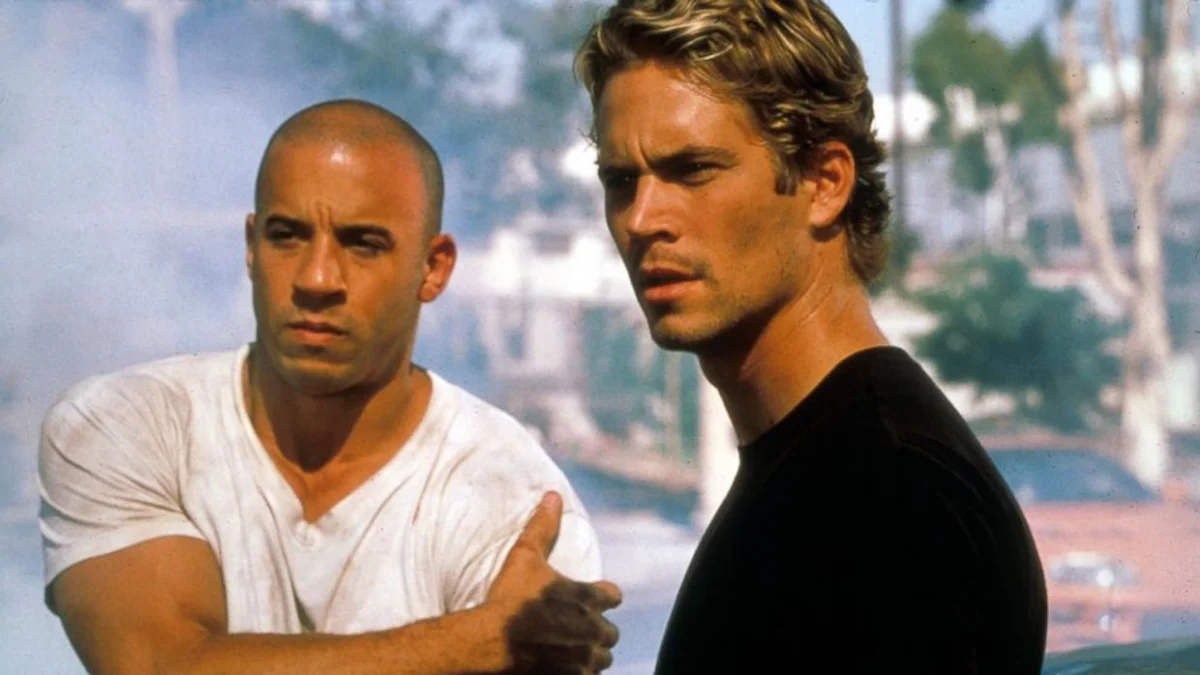
The Grand Théâtre Lumière, the crown jewel of the Palais des Festivals et des Congrès, served as the unlikely backdrop for a high-octane tribute to the origins of one of cinema’s most lucrative franchises. In a midnight screening that bridged the gap between elite arthouse sensibilities and global blockbuster appeal, the Cannes Film Festival honored the 25th anniversary of the 2001 film The Fast and The Furious. The event was characterized by a palpable sense of nostalgia, punctuated by an emotional address from the franchise’s central figure, Vin Diesel, who returned to the festival where his professional journey arguably began three decades prior.
The inclusion of the Rob Cohen-directed street-racing drama in the Official Selection occurred during an edition of Cannes noted for a relative scarcity of major Hollywood premieres. This scheduling choice was interpreted by industry analysts as a strategic move to maintain American star power on the Croisette, following in the footsteps of previous high-profile legacy screenings such as the 2022 launch of Top Gun: Maverick and last year’s preview of Mission: Impossible – Dead Reckoning Part One.
A Triumphant Return to the Croisette
The evening’s proceedings began with a high-profile red carpet appearance. Joining Diesel were long-time co-stars Michelle Rodriguez and Jordana Brewster, both of whom have been integral to the series since its inception. Also in attendance was Meadow Walker, daughter of the late Paul Walker, whose portrayal of Brian O’Conner remains the emotional cornerstone of the franchise. The group was received by Thierry Frémaux, the festival’s General Delegate, and Iris Knobloch, the President of the Cannes Film Festival, signaling the institutional respect now afforded to a series that began as a mid-budget action vehicle.
Diesel, donning a blazer encrusted with the slogan "FAST FOREVER," took a moment to acknowledge the crowd of 2,300 attendees before entering the theater. Inside, the atmosphere shifted from celebratory to somber as Diesel delivered a sonorous speech reflecting on his history with the festival. He recalled his 1995 debut at Cannes with the short film Multi-Facial, a project he wrote, directed, and starred in for just $3,000. Diesel noted that Frémaux had told him earlier in the day, "You, Vin, were born in Cannes," a sentiment that clearly moved the actor to tears.
The Evolution of a Global Juggernaut
To understand the significance of a 25th-anniversary screening at Cannes, one must examine the trajectory of The Fast and The Furious from a niche subculture film to a multibillion-dollar intellectual property. When it debuted in the summer of 2001, the film was produced on a relatively modest budget of $38 million. It focused on the localized stakes of the Los Angeles street-racing scene and a series of truck hijackings involving consumer electronics like VCRs and DVD players.
Chronology of a Franchise
- 2001: The Fast and The Furious premieres, grossing $207 million worldwide and establishing the core "found family" dynamic.
- 2006: The Fast and the Furious: Tokyo Drift introduces director Justin Lin, who would eventually pivot the series toward heist-oriented action.
- 2011: Fast Five transitions the series into a global ensemble heist franchise, nearly doubling the box office of its predecessor.
- 2013: The tragic death of Paul Walker during the filming of Furious 7 creates a massive cultural moment; the film goes on to gross over $1.5 billion.
- 2021: F9 sees the franchise reach new heights of absurdity, including a sequence involving a car in outer space.
- 2024: The 25th-anniversary screening at Cannes reaffirms the film’s status as a modern "classic" of the action genre.
The original film’s grounded nature stands in stark contrast to the later installments, which have been criticized by some for their reliance on digital effects and physics-defying stunts. Critics at the Cannes screening noted that re-watching the 2001 original highlighted a "hypnotic" quality and a commitment to practical stunts that defined early 2000s action cinema.
Supporting Data: The Economic Impact of "Family"
The Fast & Furious franchise, often referred to as the "Fast Saga," represents one of the most successful original IPs in Hollywood history. Unlike many of its contemporaries, it is not based on a comic book or a pre-existing toy line, but rather on a 1998 Vibe magazine article titled "Racer X" by Kenneth Li.
As of May 2024, the franchise has collectively grossed over $7.3 billion at the global box office. The series is particularly notable for its international appeal; while many domestic franchises struggle in foreign markets, the Fast Saga consistently earns over 70% of its revenue from international territories, with China and Brazil serving as major strongholds. This global footprint is largely attributed to the diverse, multicultural cast, which was a pioneering move in 2001 and has remained a hallmark of the series.

Furthermore, the franchise’s expansion shows no signs of slowing. While the eleventh and purportedly "final" main installment is slated for a 2028 release, Universal Pictures and Peacock have confirmed that four spin-off television series are currently in development. This expansion mirrors the strategies of the Marvel Cinematic Universe and Star Wars, aiming to sustain the brand across streaming platforms.
Official Reactions and Cultural Significance
The reception at Cannes suggests a broadening of the festival’s definition of "cinema." While the Cannes Classics sidebar is traditionally reserved for restored masterpieces from directors like Godard, Hitchcock, or Fellini, the inclusion of The Fast and The Furious in a high-profile midnight slot indicates an acknowledgement of the film’s cultural permanence.
Thierry Frémaux’s support of Diesel and the franchise reflects a pragmatic approach to the festival’s programming. By honoring a film that resonates with a global audience, Cannes maintains its relevance in a shifting media landscape. Diesel’s speech emphasized the concept of "brotherhood," a theme he claimed was introduced to the new millennium by himself and Paul Walker (whom he affectionately called "Pablo").
"This is the film where brotherhood was introduced to our millennium," Diesel told the audience. "We didn’t know we were making history; we just knew we were making something that felt real."
Broader Implications and Future Outlook
The 25th-anniversary celebration at Cannes serves as a bridge between the past and the future of the action genre. It highlights a growing trend of "legacy sequels" and "anniversary marketing" that utilizes prestigious film festivals to validate commercial products.
From an industry perspective, the event underscores the importance of star-driven franchises in an era dominated by streaming. The emotional response from the audience—many of whom grew up with the films—demonstrates the deep-seated brand loyalty that Universal Pictures has successfully cultivated over a quarter-century.
However, the event also raises questions about the future of the franchise without its original "brotherhood" intact. The reliance on Diesel as the sole remaining patriarch and the heavy involvement of Meadow Walker suggest that the franchise will continue to lean into the legacy of Paul Walker to maintain its emotional core.
As the credits rolled at nearly 3:00 a.m. on the Croisette, the consensus among attendees was that the 2001 film remains a surprisingly potent piece of melodrama. Stripped of the later films’ global stakes and high-tech gadgetry, the original The Fast and The Furious functions as a character study of marginalized figures seeking connection through speed.
The Fast Saga’s journey from the streets of East Los Angeles to the red carpet of Cannes is a testament to the power of consistent branding and the universal appeal of "family." As the franchise prepares for its final cinematic lap in 2028, the Cannes tribute ensures that its origin story is cemented not just as a box office success, but as a recognized piece of modern cinematic history. With four spin-offs on the horizon and a final film in development, the "Fast Forever" promise on Diesel’s blazer appears to be more than just a fashion statement—it is a roadmap for the franchise’s continued dominance in the global entertainment market.