
The Grand Théâtre Lumière, the crown jewel of the Cannes Film Festival, transformed into a high-octane tribute to modern action cinema last Wednesday as the festival hosted a special midnight screening of The Fast and the Furious to commemorate its 25th anniversary. In a year where the Official Selection has been notably light on traditional Hollywood blockbusters, the return of Rob Cohen’s 2001 street-racing classic provided a nostalgic anchor for the festival’s late-night programming. The event was not merely a retrospective; it served as a high-profile celebration of a franchise that has evolved from a mid-budget crime thriller into a multi-billion-dollar global phenomenon.
The atmosphere outside the venue was electric, characterized by a level of fanfare usually reserved for major world premieres. As the festival’s flagship venue prepared for the midnight showing, an announcement resonated through the speakers: “Vin, we are waiting for you on the stairs, please.” The man of the hour, Vin Diesel—the franchise’s patriarch both on and off-screen—was taking his time on the red carpet, engaging with a crowd of photographers and fans. Dressed in a blazer encrusted with the phrase “FAST FOREVER,” Diesel was joined by long-time co-stars Michelle Rodriguez and Jordana Brewster. Also present was Meadow Walker, the daughter of the late Paul Walker, whose presence underscored the enduring personal legacy of the series.
A Legacy Born on the Croisette
While The Fast and the Furious is often viewed through the lens of American car culture and Hollywood commercialism, Diesel’s connection to the Cannes Film Festival predates his international stardom. During an emotional address to the 2,300 attendees inside the Lumière, Diesel reminisced about his first visit to the festival in 1995. At the age of 28, the then-unknown actor had written, produced, directed, and starred in a 20-minute short film titled Multi-Facial. The film, which explored the difficulties of being a multiracial actor in Hollywood, was screened at Cannes, marking Diesel’s formal introduction to the global film community.
Thierry Frémaux, the General Delegate of the Cannes Film Festival, reportedly reminded Diesel of this history during a lunch earlier in the day, telling him, “You, Vin, were born in Cannes.” This sentiment appeared to weigh heavily on the actor as he stood before the audience. Diesel, known for his deep, resonant voice and stoic screen presence, was visibly moved to tears. He dedicated the evening to his late co-star Paul Walker, whom he referred to by the affectionate nickname “Pablo.” Walker’s death in a 2013 car accident during the production of Furious 7 remains a defining moment in the franchise’s history, shifting the narrative focus heavily toward themes of grief, remembrance, and the "found family."
“This is the film where brotherhood was introduced to our millennium by myself and my brother Pablo,” Diesel told the crowd, emphasizing the bond that has served as the emotional core of the ten-film saga.
The Evolution of a Cinematic Juggernaut
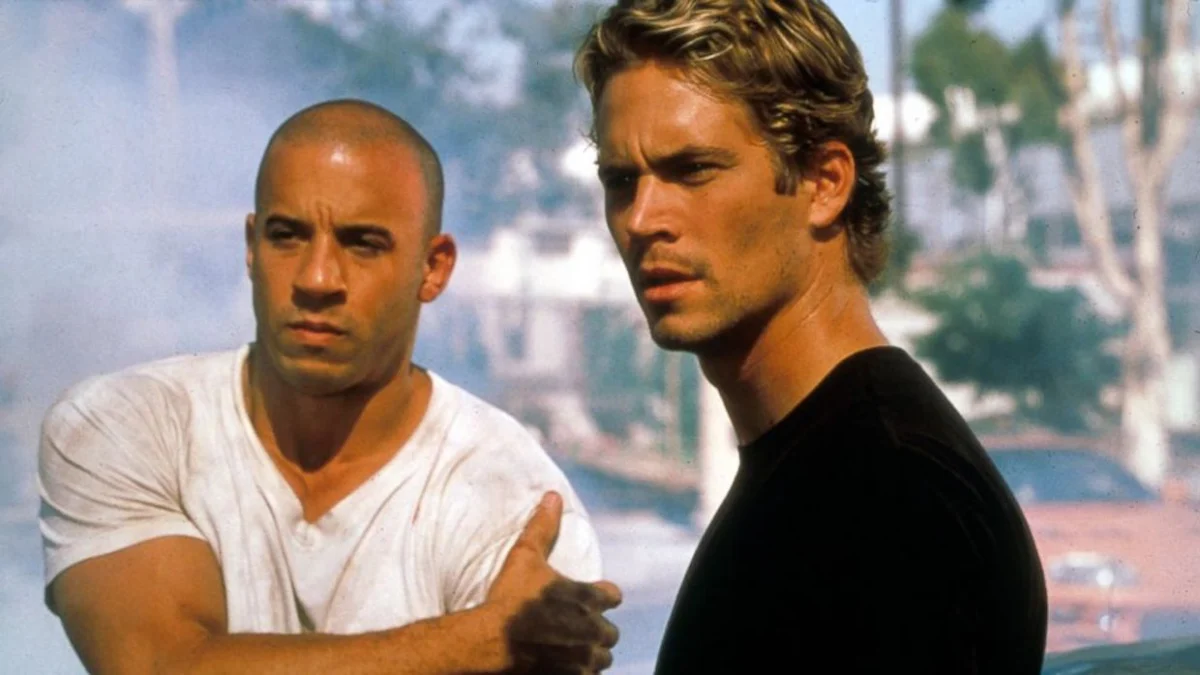
The screening of the original 2001 film offered a stark contrast to the current state of the franchise. While recent installments like F9 (2021) and Fast X (2023) have featured cars flying into space and elaborate international espionage plots, the original The Fast and the Furious was a relatively grounded affair. Inspired by a Vibe magazine article about New York City street racing, the plot centered on a group of hijackers stealing VCRs and DVD players.
The 25th-anniversary restoration highlighted the film’s practical effects and the chemistry of its young cast. Critics have often noted that the first film possessed a "Michael Mann-lite" aesthetic, focusing on the subculture of the Los Angeles underground racing scene. Since its debut, the franchise has undergone a radical transformation:
- Phase 1 (2001–2006): Focused on street racing and tuner culture (The Fast and the Furious, 2 Fast 2 Furious, The Fast and the Furious: Tokyo Drift).
- Phase 2 (2009–2013): Transitioned into heist-based action, reuniting the original cast and expanding the global scope (Fast & Furious, Fast Five, Fast & Furious 6).
- Phase 3 (2015–Present): Shifted into high-stakes "superhero" style action and international espionage, characterized by increasingly improbable stunts and massive budgets (Furious 7 through Fast X).
Statistical Impact and Commercial Dominance
The decision to honor the film at Cannes is supported by the franchise’s staggering commercial data. The Fast & Furious series is the seventh highest-grossing film franchise of all time, with a total global box office haul exceeding $7.3 billion.

| Film Title | Release Year | Global Box Office (USD) |
|---|---|---|
| The Fast and the Furious | 2001 | $207 Million |
| Fast Five | 2011 | $626 Million |
| Furious 7 | 2015 | $1.515 Billion |
| The Fate of the Furious | 2017 | $1.236 Billion |
| Fast X | 2023 | $714 Million |
The original 2001 film, produced on a modest $38 million budget, returned over five times its investment in theaters alone and became a massive hit on the home video market. This financial reliability has allowed Universal Pictures to maintain the series for over two decades, even as other action franchises have faltered.
The Future of the Fast Universe
While the main film saga is reportedly nearing its conclusion—with the eleventh and final flagship installment slated for a 2028 release—the brand shows no signs of slowing down. Diesel’s "FAST FOREVER" slogan is backed by significant corporate investment. Reports from industry insiders and recent announcements indicate that the franchise is expanding into the streaming landscape.
Universal-owned Peacock is currently developing four spin-off television series. While plot details remain under wraps, these series are expected to explore secondary characters and different eras within the Fast timeline. This move mirrors the strategies of the Marvel Cinematic Universe and Star Wars, aiming to maintain audience engagement through serialized content between major theatrical releases.
Institutional Recognition at Cannes
The inclusion of The Fast and the Furious in the 2024 Cannes lineup reflects a broader trend of the festival embracing populist cinema to maintain its relevance in a changing media landscape. In 2022, the festival famously hosted Tom Cruise for the premiere of Top Gun: Maverick, accompanied by a flyover of fighter jets. Last year, the festival featured the premiere of Mission: Impossible – Dead Reckoning Part One.
By screening a restoration of the 2001 film, Cannes organizers, led by Thierry Frémaux and President Iris Knobloch, acknowledged the cultural weight of "artifact" cinema. For the festival, these screenings serve as a "conciliatory gesture" to Hollywood, ensuring that while the competition remains focused on arthouse and international auteurs, the "Palais" still resonates with the global box office.
Analysis of Implications
The 25th-anniversary celebration at Cannes signifies the "canonization" of the Fast franchise. What was once dismissed by critics as a derivative action flick has now been afforded the dignity of a Cannes restoration. This shift suggests that the film industry is beginning to view the early 2000s action boom with the same historical reverence previously reserved for the New Hollywood era of the 1970s.
Furthermore, Diesel’s emotional performance at the Lumière highlights the blurring lines between a film’s narrative and its real-world production history. The "family" theme of the Fast films has become a self-fulfilling prophecy, with the cast and the families of deceased members maintaining a public bond that fuels the franchise’s marketing and fan loyalty.
As the credits rolled at nearly 3:00 a.m., the audience’s reaction suggested that the appetite for the Toretto saga remains robust. Despite the "astronomical" stakes of the newer films—which some argue have lost the soul of the original—the midnight screening proved that there is still a deep-seated appreciation for the franchise’s humble, high-octane beginnings. With four TV series on the horizon and a grand finale in development, the Fast legacy appears firmly entrenched in the cultural zeitgeist for the foreseeable future.