

Versant Media Group, the newly independent media entity that recently concluded its separation from Comcast’s NBCUniversal, released its first-quarter earnings report on Thursday, marking its inaugural financial disclosure as a standalone public company. The results highlighted a complex landscape for the media giant, characterized by the persistent erosion of traditional linear television revenues offset by explosive growth in content licensing and a steady climb in its digital platform business. Despite a slight decline in overall revenue, the company’s performance exceeded Wall Street expectations, prompting a surge in investor confidence that saw Versant’s stock price climb nearly 10% by the close of the trading session.
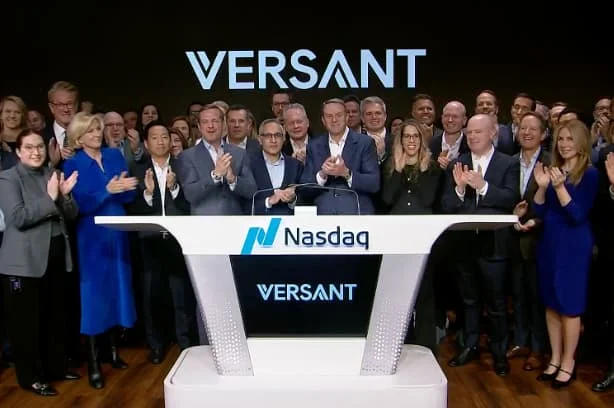
The report serves as a critical barometer for the company’s "Year One" strategy following its debut on the Nasdaq earlier this year. As the media industry grapples with the transition from legacy cable bundles to a fragmented digital ecosystem, Versant’s first-quarter data suggests a firm commitment to rebalancing its portfolio. While more than 80% of the company’s current revenue is still derived from its traditional pay TV business, executive leadership has signaled an aggressive pivot intended to diversify the top line, targeting a future where 50% of revenue stems from digital, subscription, and transactional streams.
Financial Performance and Market Expectations
For the fiscal period ending March 31, 2026, Versant Media Group reported total revenue of $1.69 billion. This figure represents a modest 1% decline compared to the $1.71 billion generated by the same portfolio of assets during the first quarter of the previous year. However, the result was viewed favorably by the market as it surpassed the $1.62 billion consensus estimate provided by analysts polled by LSEG.
The company’s net income attributable to the group stood at $286 million, or $1.99 per share. This marked a 22% decrease from the prior year’s pro-forma figures. Management attributed this bottom-line compression to several factors inherent in the company’s transition to independence, including higher public company compliance costs, interest expenses related to the debt structure established during the spinout, and a general decline in linear television advertising. These headwinds were partially mitigated by a more favorable tax rate during the quarter.
Adjusted earnings before interest, taxes, depreciation, and amortization (EBITDA) fell 7% year-over-year to $704 million. However, Versant provided a "standalone adjusted EBITDA" metric to offer a more direct comparison of the pre-spin portfolio’s performance against current operations. On this basis, adjusted EBITDA actually rose by approximately 5%. This improvement was driven by disciplined cost-management initiatives, including a reduction in entertainment programming expenses and a leaner approach to selling, general, and administrative (SG&A) costs.
The Linear Struggle and the Advertising Pivot
The core of Versant’s legacy business remains its suite of cable networks, which includes high-profile brands such as CNBC, MS NOW, the Golf Channel, USA Network, E!, Syfy, and Oxygen. Linear distribution revenue for these networks fell roughly 7% during the quarter, totaling $1.01 billion. The company acknowledged that the primary driver of this decline was the continued contraction of the traditional pay TV subscriber base, a trend affecting the entire domestic media sector. While Versant was able to implement contractual rate increases with distributors, these gains were not enough to fully neutralize the impact of "cord-cutting."
Advertising revenue also saw a downturn, falling 5% to $368 million. While a decline is rarely celebrated, executives pointed out that this represents a significant stabilization compared to the first quarter of the previous year, when advertising revenue plummeted by 12%. The relative improvement suggests that the advertising market for live news and sports remains more resilient than general entertainment programming. Versant has leaned heavily into its "Big News, Big Sports" identity, noting that CNBC and MS NOW have seen viewership increases, while the Golf Channel continues to benefit from a dedicated, high-net-worth audience.
Content Licensing: The "Kardashian Effect"
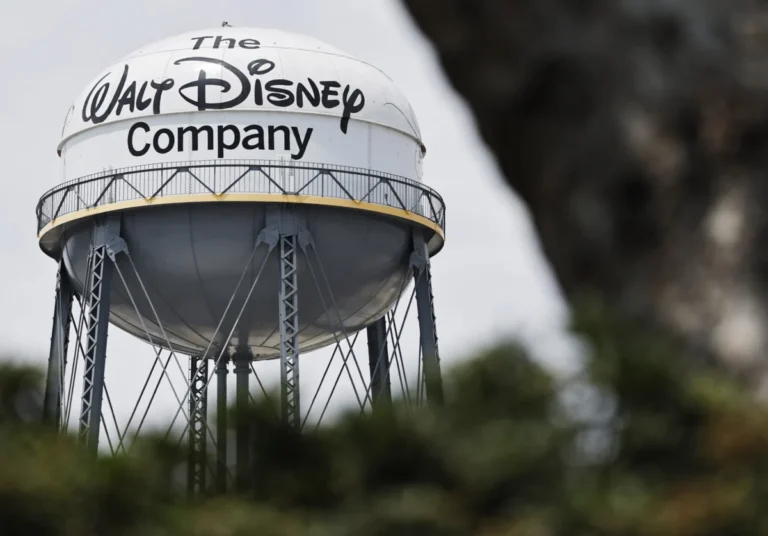
The most striking figure in the Q1 report was the 113.5% surge in content licensing revenue, which reached $121 million. This dramatic increase was largely fueled by a strategic decision to monetize Versant’s library of intellectual property through third-party platforms. Specifically, the company highlighted a major licensing agreement with Disney’s Hulu for the rights to the extensive library of "Keeping Up With the Kardashians" and its associated spin-offs.
This move underscores a broader industry trend where media companies are moving away from keeping content exclusively on their own platforms in favor of high-value licensing deals that provide immediate cash flow. For Versant, the licensing of legacy E! Network content to a competitor’s streaming service serves as a blueprint for how it intends to extract value from its 15,000-hour content library as it navigates the post-Comcast era.

Platforms and Digital Growth
Versant’s "Platforms" segment, which includes the movie ticketing giant Fandango, the golf tee-time booking service GolfNow, and several direct-to-consumer (DTC) units, reported a 9.5% increase in revenue to $192 million. CEO Mark Lazarus emphasized during the earnings call that this growth was largely organic, reflecting the company’s ability to leverage its niche market dominance in specific verticals.
Lazarus articulated a vision for the company’s DTC efforts that prioritizes revenue quality over mere subscriber volume. "Yes, we hope that comes with a large base of subscribers, and we’ll gauge ourselves as to how revenues look across all of our various forms of distributing content," Lazarus told investors. He further noted that the company is focused on "revenue diversification within each of our verticals," ensuring that each brand—whether it be in news, sports, or entertainment—has multiple ways to monetize its audience beyond traditional commercials.
Chronology of the Spin-Off and Strategic Context
The first-quarter results represent the culmination of a strategic pivot that began in late 2024. In November 2024, Comcast announced its intention to spin off its cable networks into a new, independent company. The move was designed to allow Comcast to focus on its core growth engines—broadband, wireless, and the Peacock streaming service—while giving the cable networks the autonomy to pursue their own consolidation or growth strategies.
Versant Media Group officially began trading on the Nasdaq under the ticker symbol "VSNT" in early 2026. The separation was structured to leave Versant with a relatively light debt load compared to other "pure-play" media companies like Warner Bros. Discovery or Paramount Global. This financial flexibility has been a central pillar of the company’s pitch to Wall Street, allowing it to focus on returning capital to shareholders while simultaneously scouting for acquisition opportunities.
Mergers, Acquisitions, and Future Outlook
A recurring theme during the Q1 earnings call was the potential for inorganic growth. With the media landscape ripe for further consolidation, Versant has positioned itself as a potential "consolidator" of mid-tier media assets. CEO Mark Lazarus confirmed that the company is "looking in a variety of areas" for potential deals, particularly those that would bolster its sports rights or news reach.
However, CFO and COO Anand Kini provided a cautionary note, stressing that while M&A remains a component of the strategy, the threshold for deals is high. "Our platforms revenue growth this quarter demonstrates that was really organic growth," Kini said. "So we’re going to look when there’s opportunities that are inorganic, but they have a very high threshold even as they fit within those markets and those strategies."
The company’s immediate focus appears to be on maintaining a healthy balance sheet and rewarding the investors who supported the spin-off. Versant declared a quarterly cash dividend of 37.5 cents per share, payable on July 22. Furthermore, the company announced a $100 million accelerated share repurchase agreement, set to begin immediately. This follows the repurchase of 2.7 million shares during the first quarter, leaving approximately $900 million in remaining authorization.
Analysis of Broader Implications
Versant’s first quarter as an independent entity suggests a "survival and evolution" model for legacy media assets. By separating from the larger Comcast umbrella, the company has the agility to make licensing deals that might have previously been complicated by internal corporate politics. The 113% jump in licensing revenue is a testament to this newfound flexibility.
Furthermore, the 10% jump in stock price suggests that investors are buying into the "rebalancing" narrative. By setting a target of 50% digital and transactional revenue, Versant is attempting to distance itself from the "decaying" label often applied to linear cable companies. The success of this transition will likely depend on the company’s ability to retain or acquire premium sports rights—which remain the only reliable "glue" for the traditional bundle—while continuing to aggressively monetize its library on platforms where the modern consumer lives.
As the company moves into the second half of 2026, the industry will be watching to see if Versant can maintain its licensing momentum or if the first-quarter surge was a one-time windfall from the Hulu deal. For now, Versant has demonstrated that there is still significant value to be extracted from its storied brands, provided the management team remains disciplined in its pivot toward a digital-first future.