The 55th edition of Visions du Réel (VdR), held in the lakeside town of Nyon, Switzerland, served as both a celebration of contemporary documentary cinema and a pivotal moment of transition for one of Europe’s most prestigious film festivals. As the 2024 edition unfolded against the backdrop of the Swiss Alps, the event was defined by an atmosphere of intense creative ambition and the looming departure of its Artistic Director, Emilie Bujès. After seven years at the helm, Bujès announced just weeks prior to the opening that she would be stepping down to lead the Geneva International Film Festival (GIFF) starting in August. Her final program at Nyon solidified the festival’s reputation as an essential platform for formally adventurous and politically urgent nonfiction storytelling, drawing an international community of filmmakers, critics, and industry professionals to the shores of Lake Geneva.
A Pivotal Moment for Leadership and Legacy
The 2024 festival was characterized by the omnipresence of Emilie Bujès, whose curation has redefined Visions du Réel’s identity since she took over the role in 2017. Under her leadership, the festival has leaned heavily into the "creative" aspect of creative nonfiction, moving away from traditional reportage toward films that experiment with hybridity, visual poetry, and unconventional structures. This year’s selection felt more global than ever, featuring works from Palestine, Iran, Algeria, India, and the United States, all while maintaining a strong commitment to Swiss production.
Bujès’s departure marks the end of an era that saw the festival navigate the challenges of the COVID-19 pandemic and emerge with a robust hybrid model that balances its local Swiss roots with a massive international industry presence. The festival’s ability to remain a "filmmaker’s festival" while simultaneously hosting a high-stakes marketplace—Visions du Réel Industry—is a testament to the balance she struck. As she transitions to GIFF, the industry is watching closely to see how the Nyon festival will maintain its momentum and who will be tasked with succeeding her.
Cinema as a Mirror to Geopolitical Conflict
The 2024 program was deeply colored by the ongoing conflicts in the Middle East and the repressive political climates in Iran and beyond. Nonfiction cinema has long functioned as a witness to history, but the films at this year’s VdR went beyond mere documentation, exploring the psychological and physical tolls of borders, surveillance, and displacement.
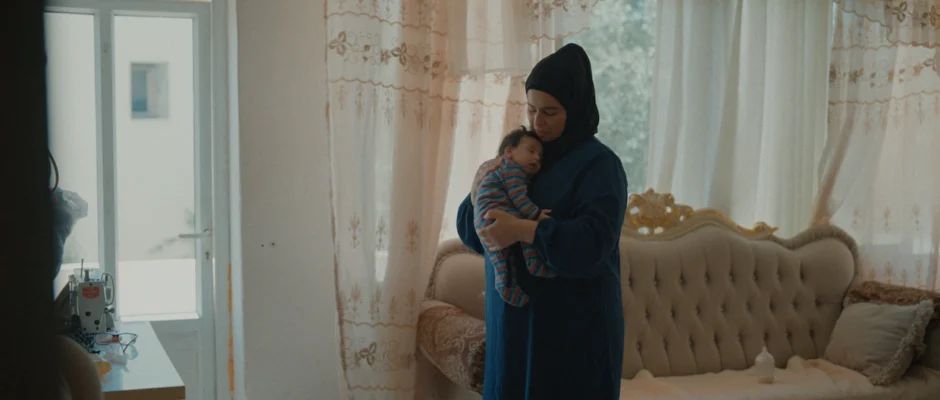
A central point of discussion was the world premiere of For Life (Ömür Boyu) by Ömür Boyu. The film offers a visceral, vérité-style portrait of Hind, a Palestinian woman navigating the labyrinthine obstacles of the Israeli occupation to conceive a child. The narrative focuses on the practice of smuggling sperm from Palestinian prisoners held in Israeli jails—a high-stakes act of resistance and hope. The film’s tension mimics that of a thriller, as Hind battles traffic, border closures, and the biological clock, yet it remains a deeply humanizing portrait of a woman’s right to family.
Other films in this thematic vein included American Doctor by Poh Si Teng, which explored the medical and humanitarian crises in Gaza, and Muddy Currents by Palestinian artist Shadi Habib Allah. These works were complemented by Faezeh Nikoozad’s In Between, a Place, which tracked the lives of three Iranian childhood friends scattered across the globe. Nikoozad’s feature examined the "lifelong relationship" between these individuals, illustrating how conflict and state repression fracture personal histories while forcing a reimagining of what "home" means.
The presence of these films was not just an aesthetic choice but a logistical feat. Many filmmakers and industry attendees arrived in Nyon having been personally impacted by these crises. Jurors and directors spoke of family members in Iran losing internet access or colleagues struggling to evacuate Gaza. The festival became a temporary sanctuary where these global narratives could be screened, debated, and shared collectively.
Ecological Narratives and the Archive of Loss
Visions du Réel has a long history of showcasing films that engage with the environment, and the 2024 edition continued this tradition with works that meditated on the fragility of the natural world. Nikolaus Geyrhalter’s Melt stood out as a haunting exploration of the climate crisis. Geyrhalter, known for his grand, static shots and observational style, presented images of melting glaciers and the futile efforts of "ice-workers" attempting to preserve them. The film served as a visual archive of landscapes that are disappearing in real-time, framed by the irony of luxury skiers in the Alps continuing their leisure activities amidst the collapse.

The festival also hosted the world premiere of Humboldt, USA, the first feature by G. Anthony Svatek. The film used the legacy of the 19th-century polymath Alexander von Humboldt to weave a poetic tapestry of contemporary American environmentalism. By connecting Silicon Valley AI optimists, community activists in Buffalo, and the migration patterns of bighorn sheep, Svatek and editor Kaija Siirala created an experiential meditation on how humans name, categorize, and ultimately impact the world around them. The selection committee reportedly chose the film within the first minute of viewing, a rarity that speaks to its immediate visual and narrative potency.
Urban Decay and the Ethics of Observation
The festival’s focus on "medium-length" films—a format often neglected by larger festivals—allowed for tight, focused explorations of specific locations. The Building Site, directed by Tiziano Locci and Tito Puglielli, won the Special Youth Jury Award for its portrayal of a decaying palazzo in Palermo, Italy. The film functioned as a micro-history of urban gentrification, showing how the demands of tourism and capitalism slowly chip away at affordable housing. Through the literal "apertures" of the building, the filmmakers captured a community in flux, where even the furniture seemed to resist being moved out by prospective investors.
In a similar vein of observation, Sophie Schrago’s What Comes From Sitting in Silence provided a rare look into the first female Islamic court in Mumbai. The film drew comparisons to the work of Claire Simon, utilizing a static lens to capture the domestic disputes and legal mediations presided over by Judge Khatoon. The film took a personal turn when Schrago herself broke the silence, sharing a confession that reframed the entire documentary. This shift from detached observer to participant highlighted the ethical complexities inherent in the documentary form, especially when dealing with vulnerable populations and religious institutions.
The Shifting Tides of the Global Documentary Market
While the screenings took place in Nyon’s various theaters, the "Visions du Réel Industry" section operated as a high-octane marketplace for the future of nonfiction. Led by Sabine Fayoux Cantillo, the market saw a notable influx of American and European professionals who are increasingly looking to Nyon as a primary hub for documentary financing and distribution.
There were persistent discussions among attendees regarding the shifting status of VdR in relation to the International Documentary Film Festival Amsterdam (IDFA). While IDFA remains the largest documentary festival in the world, many industry insiders suggested that VdR’s curated approach and supportive market environment are making it the preferred destination for high-end creative documentaries.
Key market highlights included:
- Trade by Todd Chandler: An atmospheric investigation into capitalism and human nature that received multiple industry awards.
- Hello?! by Sofie Benoot: A whimsical look at crane migrations that continued the director’s exploration of the intersection between nature and technology.
- To My Dearest by Grace Hsia: A tender 8mm feature exploring fertility and friendship, reflecting the festival’s broader interest in personal, intimate histories.
- The Vortex of Extinction by Ljubomir Stefanov: A unique project that used the study of Macedonian turtles to explore themes of toxic masculinity.
Creative Ambition vs. Economic Realities
The success of Visions du Réel 2024 highlights a stark contrast between the European and American documentary landscapes. Many American attendees noted the "utopic" nature of the festival, pointing to the robust state funding that supports European filmmakers. This funding allows for a level of creative risk-taking that is increasingly rare in the United States, where the documentary industry is grappling with contracting budgets, the collapse of traditional distribution models, and the dominance of "true crime" and celebrity-driven content on streaming platforms.
The films in Nyon served as a counter-narrative to the idea that the documentary industry is in terminal decline. Instead, they suggested a parallel reality where creative ambition is still valued over algorithmic appeal. Despite the high cost of living in Nyon—where a basic meal can cost upwards of 25 USD—the festival remains a vital enclave for those seeking films that challenge the viewer’s perspective.
As the 55th edition closed, the "Visions" of the festival’s name felt more relevant than ever. By providing a space where a film about sperm smuggling in Palestine can sit alongside a meditation on 19th-century scientists or the decay of a Sicilian palazzo, Visions du Réel continues to push the boundaries of what nonfiction can be. The departure of Emilie Bujès marks a period of uncertainty, but the 2024 program left the international film community with a clear sense of the festival’s enduring importance as a bastion of global, creative truth-telling.