

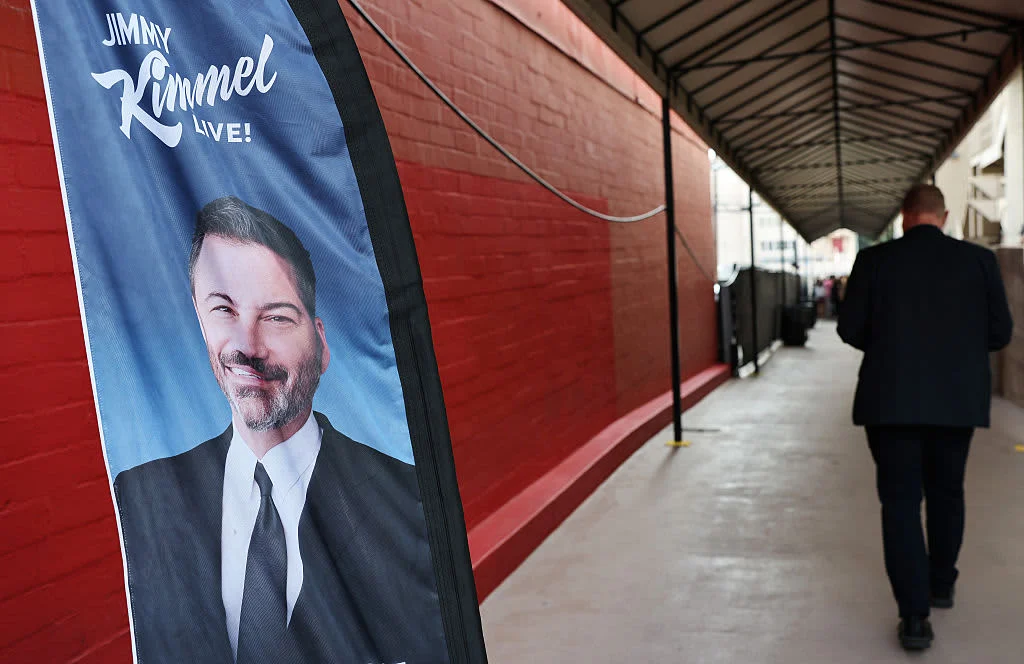
The intersection of executive power and national broadcast media has reached a new point of friction as President Donald Trump intensifies his calls for Disney-owned ABC to terminate late-night host Jimmy Kimmel. This latest confrontation, sparked by a controversial comedy sketch regarding First Lady Melania Trump, marks a significant escalation in the administration’s ongoing campaign against legacy media outlets and political satire. The development serves as a pivotal test for the American television industry, occurring simultaneously with a leadership transition at The Walt Disney Company and a period of heightened regulatory scrutiny by the Federal Communications Commission (FCC).
The current controversy stems from a monologue delivered by Kimmel last week, in which he referred to First Lady Melania Trump as an "expectant widow." The remark was made during a comedic segment discussing the President’s age and the upcoming White House Correspondents’ Dinner, an event that occurred just days before an alleged security threat at the venue. The White House and the Trump family immediately characterized the comment not as satire, but as a dangerous provocation.
First Lady Melania Trump addressed the matter directly on social media, describing Kimmel’s rhetoric as "hateful and violent" and accusing the host of attempting to further divide the nation. President Trump echoed these sentiments on his Truth Social platform, categorizing the monologue as a "call to violence" that exceeded the boundaries of protected speech. The administration’s response was further codified by White House Director of Communications Steven Cheung, who suggested that Kimmel should be "shunned" by the industry for failing to issue a formal apology and instead "doubling down" on the joke during subsequent broadcasts.
A Chronology of Conflict: The September Precedent
This is not an isolated incident in the relationship between the Trump administration and "Jimmy Kimmel Live!" In September, the program faced a brief but significant suspension following comments Kimmel made regarding the death of conservative activist Charlie Kirk. During that episode, broadcast station owners, including Nexstar Media Group and Sinclair Broadcast Group, expressed profound concern over the content. These entities, which control a vast network of local ABC affiliates, threatened to preempt the program, effectively cutting off the show’s access to millions of households.
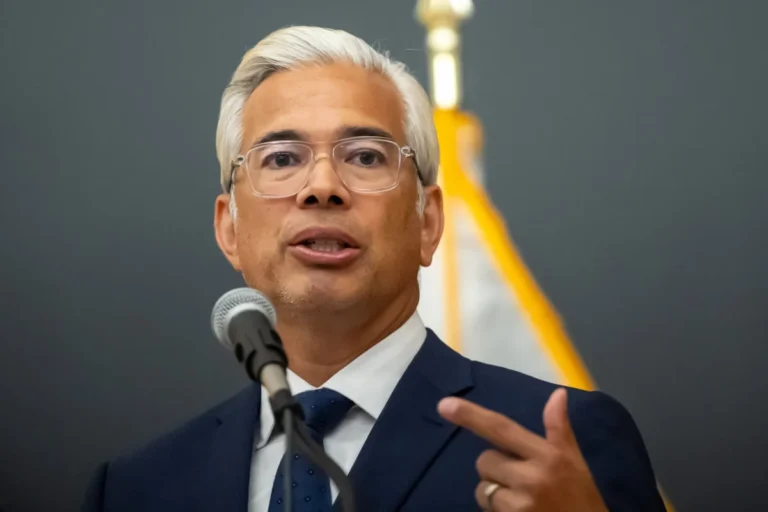
The September incident was notable for the direct involvement of FCC Chairman Brendan Carr. Carr publicly questioned whether the content aired by ABC met the "public interest" standards required for the maintenance of broadcast licenses. Under the Communications Act of 1934, broadcast licenses are granted to stations to serve the public interest, convenience, and necessity. While the First Amendment provides broad protections for speech, the FCC maintains the authority to review licenses based on whether a broadcaster’s overall conduct serves the community.
Following the FCC’s intervention and the pressure from affiliate owners, Disney briefly pulled Kimmel from the air. The host eventually returned after issuing a televised apology, a move that many industry analysts viewed as a temporary truce in a much larger ideological battle.
The Regulatory Climate and Broadcast License Reviews
The renewed calls for Kimmel’s termination coincide with reports that the FCC is preparing a comprehensive review of Disney’s broadcast licenses. While sources within the commission, as reported by Semafor, suggest the timing of the review is procedural and not directly linked to Kimmel’s recent monologue, the political context is unavoidable.
Broadcast licenses are typically renewed every eight years, but they can be challenged or subjected to special review if there are allegations of misconduct or failure to serve the public interest. President Trump has frequently suggested that the licenses of major networks—including ABC, NBC, and CBS—should be revoked due to what he terms "fake news" and "partisan bias."
The threat to licenses represents a potent lever of influence over media conglomerates. For a company like Disney, which operates eight owned-and-operated (O&O) ABC stations in major markets such as New York, Los Angeles, and Chicago, the loss of these licenses would be financially catastrophic. These stations are not only platforms for national news and entertainment but are also vital engines for local advertising revenue.
Leadership Transition at Disney: The D’Amaro Era
The timing of this political firestorm presents an immediate challenge for Josh D’Amaro, who was installed as Disney’s Chief Executive Officer just last month. D’Amaro, formerly the head of Disney’s Parks, Experiences, and Products division, took the helm of the storied company during a period of transition and external pressure.
Unlike his predecessors, D’Amaro must navigate an administration that has shown a willingness to use regulatory and public pressure to influence corporate content. Disney has historically attempted to maintain a neutral political posture to protect its broad family appeal, but the company has increasingly found itself at the center of the "culture wars."

Under D’Amaro, Disney must weigh the creative independence of its talent against the pragmatic necessity of maintaining a functional relationship with the federal government. The company’s silence following the latest White House demands suggests a strategy of internal deliberation as it assesses the potential for further regulatory blowback.
Comparative Industry Trends: The Case of CBS and Stephen Colbert
The pressure on ABC is mirrored by recent developments at other major networks. Last year, Paramount-owned CBS announced the conclusion of "The Late Show with Stephen Colbert." While Colbert had been a dominant force in late-night ratings, his program was frequently a target of criticism from the Trump administration.
The announcement of the show’s end came as Paramount was seeking FCC approval for its merger with Skydance Media. Industry observers noted that the timing appeared to alleviate a potential point of friction with regulators who would eventually decide the fate of the merger. The merger received regulatory approval shortly after the transition for Colbert’s time slot was finalized.
This trend suggests a shifting landscape for late-night television. Once considered a safe haven for sharp political satire, the genre is increasingly viewed by corporate parents as a liability in an era of intense political polarization and regulatory unpredictability.
Legal and Financial Settlements: ABC’s Recent History
The tension between ABC and the Trump administration is also rooted in a series of legal and personnel decisions. In December 2024, ABC News reached a $15 million settlement to resolve a defamation lawsuit brought by Donald Trump against the network and "Good Morning America" co-anchor George Stephanopoulos. The settlement included a direct contribution to the President’s future presidential library, a unique arrangement that underscored the network’s desire to move past the litigation.
Furthermore, ABC News recently terminated its relationship with national correspondent Terry Moran. The dismissal followed a social media post in which Moran characterized the President and senior advisor Stephen Miller in derogatory terms. These actions indicate that Disney and ABC have, at various points, taken steps to mitigate perceived bias or conflict with the administration, setting a precedent that the White House appears eager to exploit in the Kimmel matter.
Broader Implications for the First Amendment and Media Satire
The escalating campaign against Jimmy Kimmel raises fundamental questions about the future of political satire in the United States. Constitutional scholars point out that the First Amendment provides its strongest protections to speech that criticizes government officials. Satire and parody have historically been recognized by the Supreme Court as vital components of public discourse.
However, the current administration’s approach suggests a reinterpretation of "public interest" that includes the policing of rhetoric deemed "divisive" or "hateful" by the executive branch. If broadcast networks begin to preemptively censor or terminate talent to avoid regulatory scrutiny, it could lead to a "chilling effect" across the entire media industry.
Media analysts suggest that the business model of late-night television is already under stress due to the rise of streaming services and declining linear viewership. The added layer of political risk may accelerate the move toward less controversial, "evergreen" entertainment content, fundamentally altering the character of American television.
Conclusion
As the White House continues to demand accountability from Disney and ABC, the fate of "Jimmy Kimmel Live!" remains uncertain. The situation represents a complex collision of corporate governance, constitutional law, and partisan politics. For Josh D’Amaro and the Disney board, the decision involves more than just a single talk show host; it is a calculation about the company’s independence in an environment where the lines between entertainment, news, and political influence are increasingly blurred.
The coming weeks will likely see further developments as the FCC proceeds with its review of broadcast licenses and as affiliate owners monitor the public’s reaction to the ongoing controversy. For now, the late-night television landscape remains on a precarious footing, caught between the traditions of free expression and the realities of modern political power.