

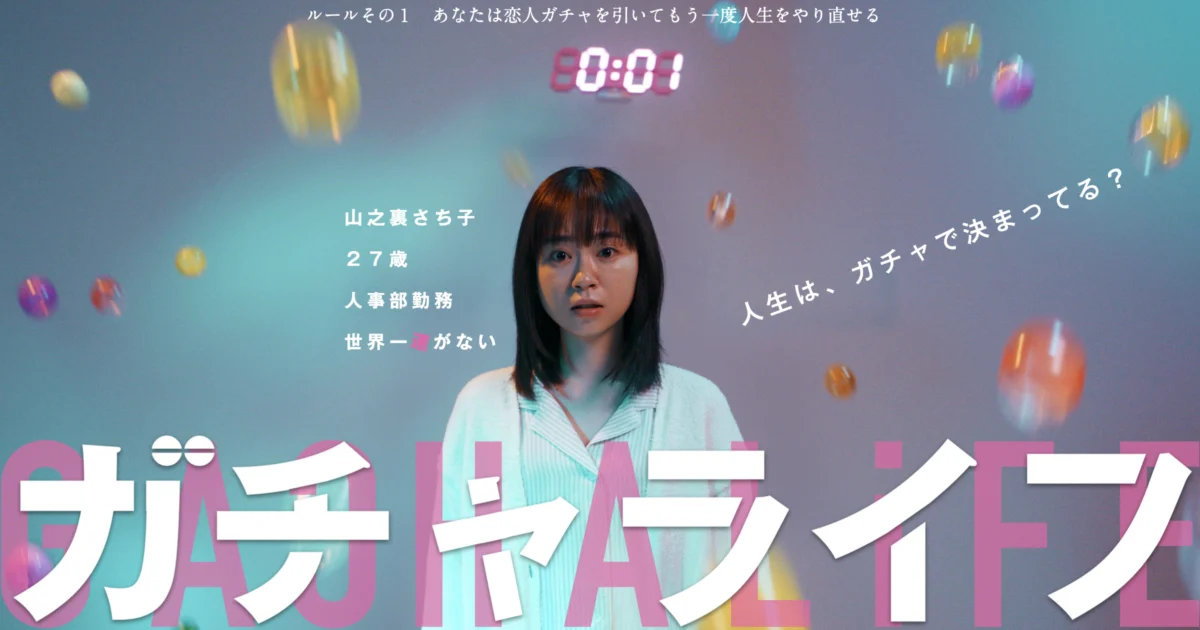
The burgeoning landscape of independent cinema continues to offer compelling narratives, and 2026 promises to introduce a uniquely Japanese dark comedy that delves into themes of fate, romance, and the often-absurd nature of modern relationships. The Unluckiest Girl in the World, known in its native Japan as Gacha Life (ガチャライフ), is set to make its international debut at the prestigious Raindance Film Festival in London. This distinctive feature, directed, written, and edited by Tokyo-based filmmaker Ryosuke Hayazaka, will screen on June 18th and 19th at Vue Piccadilly, Screen 2, marking a significant moment for the emerging talent.
A Debut Fueled by Festival Acclaim and Emerging Talent
Ryosuke Hayazaka is no stranger to the festival circuit. His previous short films, including "That Heat" and "I Order You," have garnered attention and screened at respected platforms such as the Short Shorts Film Festival & Asia. Furthermore, his feature project "Love is a MONSTER" achieved official selection for the NAFF It Project at the Bucheon International Fantastic Film Festival in 2025, signaling a growing trajectory in his filmmaking career. The production of The Unluckiest Girl in the World by FILMOQ Inc. represents a significant undertaking, aiming to translate Hayazaka’s distinctive vision to a global audience. The film’s 50-minute runtime and its unusual 1:1 aspect ratio immediately signal a departure from conventional filmmaking, hinting at a deliberate artistic choice to enhance its thematic explorations.
The Premise: A Cosmic Lottery of Love
At the heart of The Unluckiest Girl in the World is the story of Sachiko, a woman whose life takes an abrupt and absurd turn when she dies in a bizarre accident. Her journey doesn’t end there; she awakens in the afterlife, where she is presented with an unconventional and deeply unsettling proposition: she must choose her next romantic partner from a capsule-toy machine. This "gacha" mechanism, a ubiquitous fixture in Japanese culture, becomes the central metaphor for Sachiko’s predicament. Each capsule contains a potential suitor, a reflection of past romantic entanglements, transforming the afterlife into a bizarre, cyclical continuation of her earthly romantic failures.
The film’s narrative unfolds as Sachiko navigates through a series of disastrous encounters, each representing a flawed relationship from her past. These include a man perpetually in need of financial assistance, a manipulative scammer influencer, a self-absorbed genius, a married boss with familial obligations, and a fiancé who vanished without a trace. As she cycles through these predetermined pairings, Sachiko is compelled to confront the recurring patterns of misfortune in her romantic life. The film poses a profound question: is her persistent bad luck a matter of inescapable fate, the caprice of random chance, or a consequence of choices she has the agency to finally address? This introspective journey forms the core of the film, as Sachiko grapples with the men who populate her past and begins to scrutinize the romantic trajectory she has seemingly drawn for herself.
Thematic Resonance: Gacha, Fate, and the Illusion of Choice
The concept of the gacha machine, where individuals insert coins with a hopeful anticipation of a desired outcome, serves as the foundational commentary for Hayazaka’s film. This ubiquitous practice, deeply embedded in contemporary consumer culture, is satirized and examined as a reflection of broader societal trends. The Unluckiest Girl in the World uses this premise to critique various aspects of modern life, including the pervasive belief in manipulating fate, the complexities of online dating culture, the notion of inherent unluckiness, and the often-illusory sense of constant choice afforded by contemporary society.
The film’s style is described as oscillating between the humorous and the dramatic, consistently maintaining a quirky and offbeat tone. While the narrative offers a critical perspective on romantic relationships, particularly those involving men, the filmmakers emphasize that it is not a "girl-power" film in the conventional sense. Instead, it presents a more nuanced, albeit often negative, commentary on the male archetypes Sachiko encounters, highlighting their flaws and the impact they have on her life.
Cinematic Craftsmanship: A Deliberate Departure
The production’s deliberate choice of a 1:1 aspect ratio is more than an aesthetic flourish; it is intrinsically linked to the film’s thematic concerns. This square frame, often associated with early cinema and social media formats, can evoke a sense of introspection, confinement, or even a retrospective gaze. Coupled with the film’s 50-minute duration, it contributes to a concentrated and focused viewing experience.
Hayazaka’s editing plays a crucial role in dictating the film’s pace and its inherent quirkiness. The editing style, described as resulting in a "relative fast pace," contributes to the film’s energetic and somewhat frenetic quality. However, the article notes that the repetitive nature of Sachiko’s encounters can, at times, lead to an episodic structure, which might occasionally feel slightly drawn out.
Hiroki Matsui’s cinematography is characterized by a visual style that shifts between foggy atmospherics and moments of stark brightness. While this approach is noted to "work to a point," it also serves as a visual indicator of the film’s low-budget nature, particularly evident in the depiction of the afterlife sequences. Despite these limitations, the cinematography aims to support the film’s unique aesthetic and narrative.
Kyoka’s performance as Sachiko is highlighted as a significant strength. She is praised for her convincing portrayal of the protagonist, even when navigating the complexities of appearing as multiple characters on screen. Her rapport with the male actors portraying her various romantic interests is also noted as being quite effective, lending credibility to the often-absurd scenarios.
Festival Recognition and Broader Implications
The Raindance Film Festival, renowned for championing independent and experimental cinema, provides a fitting platform for The Unluckiest Girl in the World. The festival’s commitment to showcasing unique voices and unconventional storytelling aligns perfectly with Hayazaka’s artistic approach. This world premiere is not merely an introduction to a new film; it is an unveiling of a distinct cinematic voice exploring universal themes through a culturally specific lens.
The film’s engagement with the gacha concept extends beyond its narrative. It serves as a commentary on the modern human tendency to seek instant gratification, to leave outcomes to chance, and to project desires onto systems that offer a semblance of control but are fundamentally random. In an era dominated by algorithmic dating, curated online personas, and the relentless pursuit of idealized relationships, The Unluckiest Girl in the World offers a darkly comedic, yet poignant, reflection on the choices we make, the relationships we pursue, and the often-unforeseen consequences that follow.
The film’s exploration of fate versus free will, particularly within the context of romantic relationships, resonates with a broad audience. The question of whether individuals are destined for certain outcomes or if they possess the agency to alter their paths is a timeless one, and Hayazaka’s approach, embedded in the absurdity of a cosmic capsule-toy machine, provides a fresh and provocative perspective. The film’s success at Raindance could pave the way for wider distribution and further opportunities for Hayazaka and FILMOQ Inc. to share their distinctive brand of storytelling with international audiences.
Conclusion: A Budget-Conscious Triumph
Despite its acknowledged budget limitations, The Unluckiest Girl in the World emerges as a noteworthy cinematic achievement. Its strength lies not only in its innovative thematic exploration but also in the creative and engaging manner in which these ideas are presented. The film’s ability to blend humor, drama, and sharp social commentary, all within a visually distinct framework, positions it as a compelling and enjoyable experience for viewers. It stands as a testament to the power of independent filmmaking to deliver thought-provoking narratives even within budgetary constraints, offering a memorable and entertaining critique of modern romantic predicaments and the universal human desire for connection. The film’s eventual release and reception will be keenly observed by cinephiles and industry professionals alike, marking it as a significant entry in the 2026 festival circuit.