


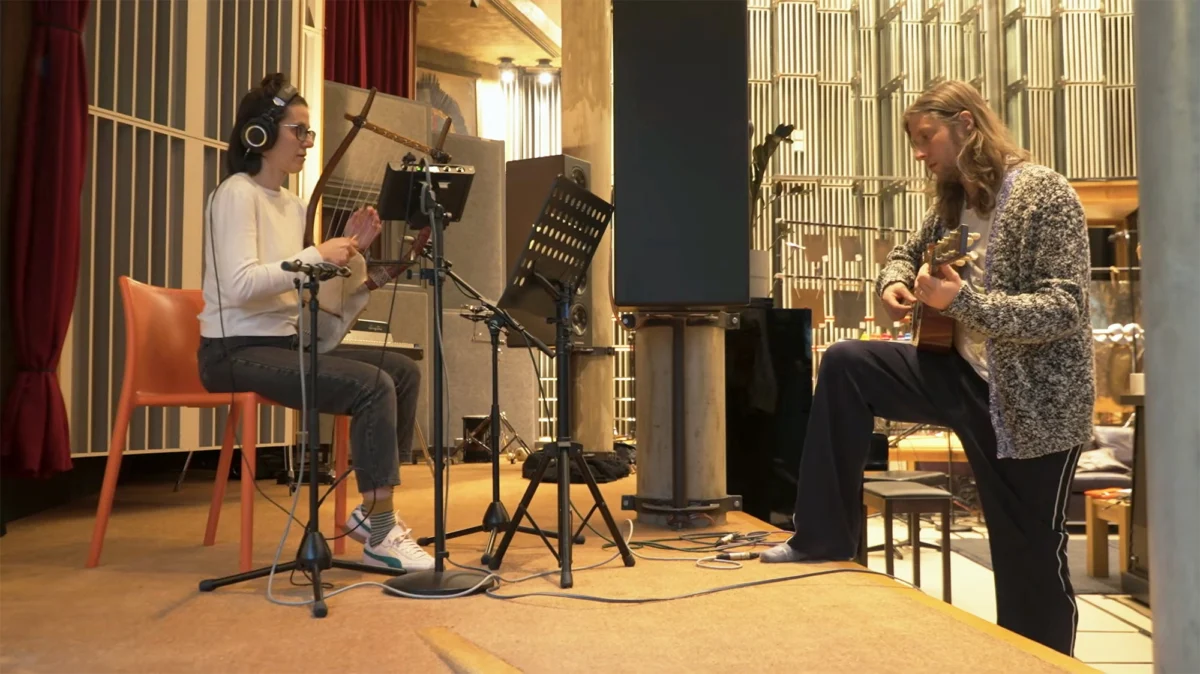
Universal Pictures has released an illuminating behind-the-scenes featurette for Christopher Nolan’s highly anticipated epic, The Odyssey, offering audiences a crucial first listen to the film’s musical score composed by the acclaimed Ludwig Göransson. The three-minute video, titled "In Studio," provides an intimate glimpse into Göransson’s creative process, showcasing his meticulous approach to crafting a score that promises both grandeur and profound emotional depth for Nolan’s ambitious adaptation of Homer’s ancient Greek poem. This early insight into the film’s auditory landscape underscores Nolan’s commitment to a holistic cinematic experience, where sound is as integral as the visuals in bringing the foundational saga to life.
A Director’s Meticulous Approach to Sound and Vision
Christopher Nolan, known for his cerebral narratives, intricate plot structures, and groundbreaking use of practical effects and large-format cinematography, has consistently pushed the boundaries of filmmaking. His collaboration with composers is a cornerstone of his distinctive style, previously forging a legendary partnership with Hans Zimmer before establishing a new creative synergy with Ludwig Göransson. Following their critically acclaimed work on Tenet and the Oscar-winning Oppenheimer, their reunion for The Odyssey signals a continuation of their shared vision for immersive storytelling.
Nolan’s direction for Göransson was remarkably specific, highlighting two ancient Greek instruments: the aulos and the lyre. This directive is indicative of Nolan’s meticulous attention to historical authenticity and his desire to imbue the film with a sonic palette rooted in the very culture from which the epic originates. The aulos, a double-reed wind instrument, often associated with Dionysian revelry and powerful, sometimes piercing, sounds, stands in stark contrast to the lyre, a stringed instrument typically linked with Apollonian serenity, poetry, and lyrical narrative. The integration of these instruments suggests a score that will navigate the full spectrum of human emotion and mythological chaos encountered by Odysseus, from the terrifying encounters with mythical beasts to the poignant longing for home and family. Nolan’s choice to shoot The Odyssey entirely on IMAX film cameras further amplifies his dedication to scale, promising an unparalleled visual spectacle that will undoubtedly be complemented by Göransson’s expansive score.
Ludwig Göransson: Crafting Intimacy Amidst Grandeur

Ludwig Göransson’s trajectory in the film scoring world has been meteoric, marked by an innovative spirit and an ability to seamlessly blend diverse musical traditions. His early collaborations with director Ryan Coogler (including Creed and Black Panther, for which he won his first Academy Award) and artist Donald Glover (Childish Gambino) showcased his versatility across genres. However, his work with Nolan on Tenet demonstrated his capacity for complex, genre-defying scores that are both intellectually stimulating and viscerally impactful. His triumph with Oppenheimer, earning him his second Oscar, solidified his status as one of Hollywood’s most sought-after composers, lauded for his experimental yet emotionally resonant compositions.
In the featurette, Göransson articulates his core philosophy for The Odyssey‘s score, stating, "There’s real intimacy and real humanity in the soundtrack." This statement provides a crucial insight into his approach. While The Odyssey is an epic of grand scale, filled with monsters, gods, and vast journeys, at its heart lies the deeply human story of Odysseus’s struggle for survival, his longing for home, and his enduring love for his wife, Penelope, and son, Telemachus. Göransson’s challenge, and his genius, lies in bridging this gap – creating a score that can underscore monumental battles and mythical encounters while simultaneously conveying the personal anguish, resilience, and hope of its protagonist.
The deliberate inclusion of the aulos and lyre is not merely a historical nod but a strategic choice to enrich the emotional tapestry. The aulos, with its ancient, often melancholic or exultant tones, could represent the primal forces Odysseus confronts, the harsh realities of his journey, and perhaps even the darker aspects of his own psyche forged in war. Conversely, the lyre, traditionally associated with storytelling, lament, and celebration, could evoke the memories of Ithaca, the beauty of Penelope’s fidelity, and the narrative threads that bind Odysseus to his destiny. By giving these instruments such prominence, Göransson is poised to create a score that feels both timeless and deeply personal, echoing the very essence of Homeric storytelling.
Reimagining Homer’s Timeless Saga for a New Generation
Homer’s Odyssey stands as one of the foundational texts of Western literature, a sprawling epic poem that has captivated audiences for millennia. It chronicles the ten-year journey of Odysseus, the cunning king of Ithaca, as he strives to return home following the Trojan War. His perilous odyssey is fraught with encounters with a pantheon of mythical beings and formidable challenges, including the one-eyed Cyclops Polyphemus, the seductive Sirens, the transformative witch-goddess Circe, and the vengeful suitors vying for Penelope’s hand in his absence. The poem explores profound themes of homecoming, perseverance, temptation, loyalty, and the very nature of heroism.
Nolan’s description of his adaptation as a "mythic action thriller" suggests a dynamic and high-stakes interpretation that aims to resonate with contemporary audiences while honoring the epic’s classical roots. This approach promises to leverage modern cinematic techniques to amplify the inherent drama and excitement of Odysseus’s trials. The challenges of adapting such a revered and lengthy epic are immense, requiring a delicate balance between fidelity to the source material and creative reinterpretation. Nolan, known for his narrative ambition, is uniquely positioned to craft a film that captures both the grand sweep of the original poem and its intricate psychological dimensions. Göransson’s score will be crucial in guiding the audience through these narrative shifts, distinguishing between moments of terrifying confrontation, profound introspection, and eventual triumph.

An All-Star Cast Embodies Legendary Figures
The sheer scale of Nolan’s The Odyssey is further underscored by its remarkable ensemble cast, featuring some of Hollywood’s most celebrated talents. Matt Damon takes on the titular role of Odysseus, a character demanding a blend of physical prowess, cunning intellect, and deep emotional vulnerability. Damon’s extensive experience in demanding roles, from action heroes to complex dramatic figures, positions him as an ideal choice to portray the legendary king.
Anne Hathaway, reuniting with Nolan after The Dark Knight Rises and Interstellar, steps into the role of Penelope, Odysseus’s steadfast and resourceful wife, whose unwavering loyalty and intelligence are central to the epic’s emotional core. Tom Holland, known globally for his portrayal of Spider-Man, will play Telemachus, Odysseus’s son, who embarks on his own journey of self-discovery and defends his mother’s honor in his father’s absence.
The supporting cast is equally star-studded, featuring Charlize Theron, Zendaya, Lupita Nyong’o, Robert Pattinson, and Jon Bernthal, among many others. The depth of talent assembled for The Odyssey not only signifies the film’s prestige but also ensures that each iconic character, however brief their appearance, will be rendered with compelling depth. A powerful score like Göransson’s will serve to amplify the performances of these actors, underscoring their emotional arcs and enhancing the dramatic impact of their legendary roles.
The Immersive Power of IMAX: A Visual and Auditory Spectacle
Christopher Nolan’s unwavering commitment to shooting on IMAX film cameras is a signature of his filmmaking, promising an unparalleled level of visual immersion. For The Odyssey, this means that the ancient world, from the windswept shores of Troy to the monstrous lairs of Cyclops and the enchanting islands of Circe and Calypso, will be rendered with breathtaking clarity, detail, and scale. Cinematographer Hoyte van Hoytema, another frequent Nolan collaborator known for his work on Interstellar, Dunkirk, and Oppenheimer, is once again behind the lens, ensuring that the visual grandeur matches Nolan’s ambitious vision.

The decision to film entirely on IMAX is not merely a technical preference; it is an artistic statement. It allows for sweeping vistas of natural landscapes, intensely detailed close-ups, and dynamic action sequences that fill the viewer’s peripheral vision, creating a truly immersive experience. This visual ambition directly complements Göransson’s musical strategy. The score, designed to evoke both the epic and the intimate, will work in tandem with Hoytema’s cinematography to create a sensory experience that is both overwhelming and deeply personal. The grandiosity of the IMAX format will amplify the emotional resonance of the aulos and lyre, allowing their ancient sounds to fill the vastness of the cinematic space, drawing the audience deeper into Odysseus’s perilous journey.
Awaiting the Grand Premiere: Production Milestones and Public Anticipation
The journey to the release of The Odyssey has been a carefully orchestrated process, building anticipation with each revealed detail. Following the initial announcement of the project and the subsequent casting news, principal photography, likely extensive given the film’s global scope and Nolan’s preference for diverse, authentic locations, would have been a monumental undertaking. The post-production phase, including the intricate work of score composition, sound design, and visual effects, represents the final critical stages.
Universal Pictures previously released two stunning trailers for The Odyssey, each offering tantalizing glimpses of the film’s epic scale, intense action, and dramatic performances. These trailers served to ignite widespread excitement, solidifying the film’s position as one of the most anticipated releases of 2026. The release of this "In Studio" featurette focusing on Göransson’s score serves as a strategic marketing move in the final month leading up to the premiere. It highlights the artistic integrity and meticulous craftsmanship behind the film, assuring audiences that The Odyssey will not only be a visual spectacle but also an auditory masterpiece. With its worldwide release scheduled for July 17th, 2026, the countdown to experiencing Nolan’s most ambitious project yet is nearing its end.
Potential Impact: Redefining the Epic and Awards Season Prospects
The Odyssey is poised to make a significant impact, not only on the summer box office but also within the broader cinematic landscape and the upcoming awards season. Given Christopher Nolan’s track record of critical acclaim and commercial success, coupled with the prestige of Homer’s source material and an all-star cast, the film is a strong contender for numerous accolades. Ludwig Göransson, with two recent Oscars under his belt, is already generating significant buzz for Best Original Score, especially given the unique and historically informed approach he is taking. Beyond the score, the film itself could be a major player in categories such as Best Picture, Best Director, Best Cinematography, and Best Sound.

Beyond awards, The Odyssey has the potential to redefine the "mythic action thriller" genre. Nolan’s ability to elevate genres and infuse them with intellectual depth and cinematic innovation could set a new standard for adaptations of classical epics. By blending ancient storytelling with cutting-edge IMAX technology and a deeply resonant score, the film promises to introduce Homer’s timeless narrative to a new generation of viewers in an unprecedentedly immersive way. Its cultural significance could extend to sparking renewed interest in classical literature and mythology, demonstrating the enduring power of these stories in a modern context.
The emphasis placed on Göransson’s score through this featurette also underscores the integral role of sound in Nolan’s filmmaking. It highlights how sound is not merely an accompaniment but a vital narrative element, capable of conveying emotion, foreshadowing events, and deepening the audience’s connection to the story. This holistic approach to filmmaking is what sets Nolan’s work apart and positions The Odyssey as a truly unique cinematic event.
As the release date approaches, the anticipation for Christopher Nolan’s The Odyssey continues to build, fueled by glimpses into its visual grandeur and, now, its compelling sonic landscape. The synergy between Nolan’s visionary direction, Ludwig Göransson’s innovative score, and the ambitious technical execution promises a cinematic experience that will be both epic in scale and profoundly human in its emotional core, destined to leave an indelible mark on film history.