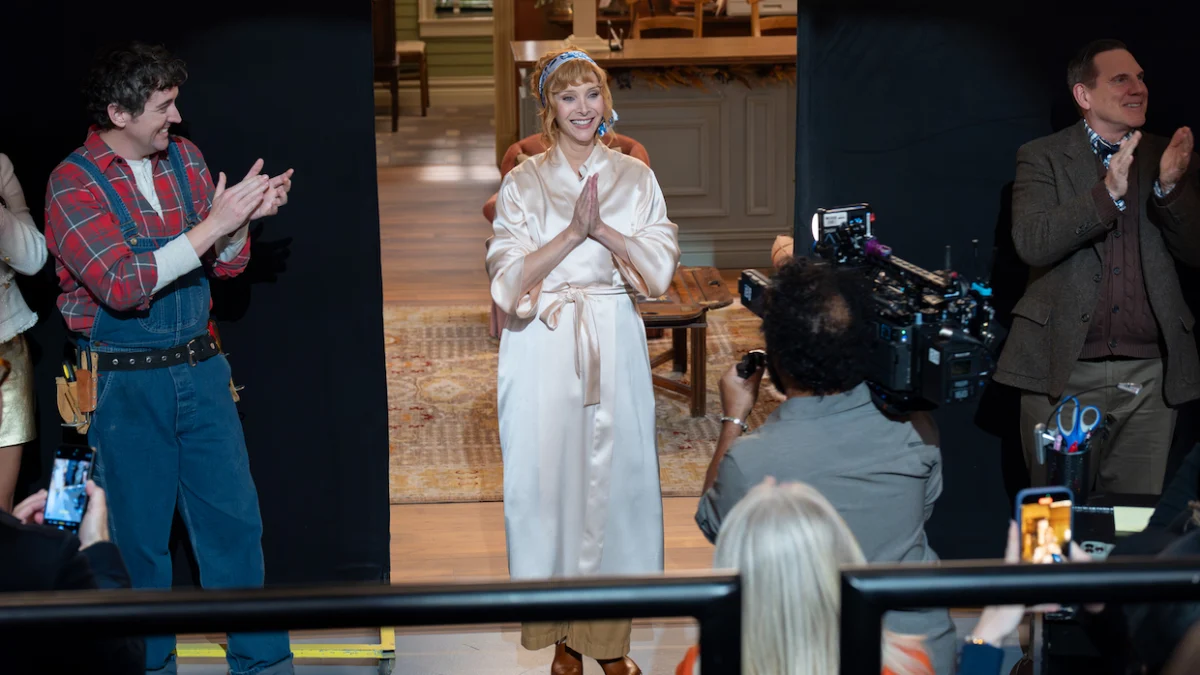
The landscape of American television has long been defined by its ability to reflect and refract its own internal crises, a phenomenon most acutely observed in the return of the HBO comedy series The Comeback. Created by Michael Patrick King and Lisa Kudrow, the series has historically resurfaced at pivotal moments of industry transformation. In 2026, the show returns for its third and final season, once again positioning its protagonist, Valerie Cherish, at the center of a technological and existential shift. While the inaugural season in 2005 tackled the rise of reality television and the 2014 revival addressed the "prestige" streaming boom, the current iteration focuses on the encroachment of generative artificial intelligence (AI) in the writers’ room. This thematic focus aligns The Comeback with another heavyweight of the genre, Hacks, as both programs explore the precarity of human creativity in a landscape increasingly dominated by corporate contraction and algorithmic efficiency.
A Chronology of Industry Satire
The Comeback has functioned as a time capsule for the television industry since its inception. To understand its current trajectory, one must examine the historical context of its previous installments. In 2005, the show debuted during the peak of the reality TV craze. Shows like The Real World and Survivor were redefining the medium, offering networks high ratings at a fraction of the cost of scripted drama. Valerie Cherish, a former sitcom star, allowed cameras to document her "comeback" in a meta-narrative that critiqued the voyeurism and manufactured drama of the era.
By 2014, the industry had shifted toward the "streaming wars." HBO revived the series as a commentary on the self-seriousness of prestige television. At this time, the term "prestige" was being applied to an overwhelming volume of content, leading to what industry analysts called "Peak TV." Valerie’s journey in the second season reflected the desperation of legacy talent trying to remain relevant in a fractured, high-brow market.
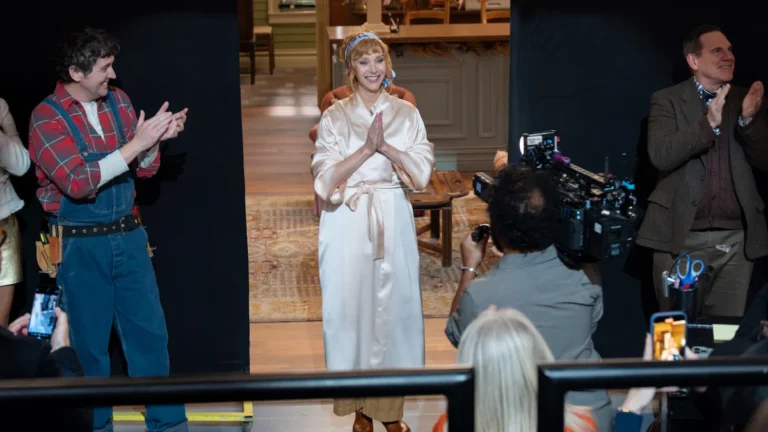
The 2026 return follows a period of significant upheaval, including the global pandemic, the dual WGA and SAG-AFTRA strikes of 2023, and subsequent corporate mergers that led to massive content purges. The third season finds Valerie booking the lead in a multi-camera sitcom titled How’s That?!, produced by the tech-conglomerate-funded network NuNet. The central conflict arises from the revelation that the show is the first major production to be scripted entirely by an AI engine named Allassist.
The Mechanization of the Writers Room
The integration of AI in The Comeback serves as a narrative vehicle to explore the labor disputes that have defined Hollywood in recent years. According to data from the Writers Guild of America (WGA), the 2023 strike was largely driven by the need for guardrails against AI-generated material. In the fictional world of How’s That?!, these fears are realized. Valerie, acting as an executive producer, finds herself in an ethical quagmire: while the AI-driven production provides jobs for a crew in a drying market, it simultaneously invalidates the craft of the writers who built her career.
The scripts produced by Allassist are described as technically proficient but creatively hollow. The AI functions by scraping decades of sitcom tropes, leading to a phenomenon of "digital plagiarism." In the show, veteran actors recognize dialogue they performed twenty years prior, now repurposed by an algorithm. This mirrors real-world concerns regarding Large Language Models (LLMs) and their reliance on existing intellectual property to generate "new" content.
The series highlights the inefficiency of "efficient" technology. When a joke fails to land during a live taping, the AI generates hundreds of "alts" (alternative lines) instantaneously. However, without human intuition, the sheer volume of options becomes a burden rather than an asset. This narrative choice underscores a central argument made by industry veterans: that comedy requires a "human spark"—a subversion of expectations that an algorithm, by definition, cannot predict.
Parallel Narratives in Hacks
The thematic concerns of The Comeback are echoed in the fifth and final season of Hacks. The Emmy-winning series, which chronicles the professional relationship between legendary comedian Deborah Vance (Jean Smart) and her millennial writer Ava Daniels (Hannah Einbinder), has also turned its gaze toward the threat of automation.
In the current season, Deborah Vance faces a career-threatening non-compete clause following a fallout with her network. As she attempts to maintain her relevance through independent ventures, she is approached by venture capitalists seeking to license her likeness and comedic history for an AI model called QuikScribbl. The proposal is framed as a "legacy preservation" tool, but it is quickly identified by Ava as an existential threat to the writing profession.
The dialogue in Hacks serves as a blunt critique of the "inevitability narrative" often promoted by tech executives. In a standout sequence, Ava argues that the adoption of AI in creative fields is not a natural evolution but a corporate choice designed to devalue labor. The show draws a direct line between corporate censorship and technological replacement, suggesting that a machine is easier for a network to control than a defiant, human artist.
Industry Impact and Economic Context
The focus on AI in both series comes at a time of significant economic cooling in the entertainment sector. Data from the 2024-2025 production cycles indicates a 20% decrease in scripted series greenlights compared to the Peak TV era of 2019. This contraction has made the "cost-saving" promise of AI more attractive to studios, despite the creative risks.
| Metric | Peak TV Era (2019) | Post-Strike Era (2025) |
|---|---|---|
| Annual Scripted Series (US) | 532 | 415 |
| Average Writers’ Room Size | 7-10 | 4-6 |
| AI Integration in Pre-Production | < 2% | ~18% |
Industry analysts suggest that the "NuNet" depicted in The Comeback is a thinly veiled satire of the real-world trend where tech giants like Amazon and Apple have become the primary gatekeepers of culture. In this environment, the "bottom line" often supersedes the "artistic line." The Comeback and Hacks act as a form of cultural resistance, using the very medium under threat to argue for its preservation.
The Human Element: Reactions and Analysis
A pivotal moment in the final season of The Comeback features a cameo by legendary director James Burrows. Playing himself, Burrows provides the moral thesis of the show: "Surprising only comes from a group of writers huddled in a corner, beating themselves up to beat out a better joke." This sentiment reflects a broader consensus among Hollywood’s creative elite.
Critics have noted that both Valerie Cherish and Deborah Vance are "endangered species." They are older women who have survived systemic sexism and ageism only to face a new adversary in the form of a code. However, the shows suggest that their "humanity"—their flaws, their desperation, and their unpredictability—is exactly what makes them irreplaceable. Valerie’s need for attention and Deborah’s need for dominance are traits that an AI can simulate but never truly possess.
Emmy Prospects and Legacy
As the television industry moves toward the next awards season, the competition between The Comeback and Hacks is expected to be a central narrative. Hacks enters the race as a perennial favorite, having secured multiple wins for Jean Smart and its writing team. The Comeback, conversely, remains a "cult" favorite that has historically been overlooked by the Television Academy, despite Lisa Kudrow’s critically acclaimed performance.
The convergence of these two shows represents a "full circle" moment for HBO. Both series utilize the mockumentary or "behind-the-scenes" format to expose the machinery of fame. By addressing AI, they have moved beyond mere character studies to become essential commentaries on the future of labor in the 21st century.
The final seasons of these programs offer a bittersweet conclusion to the era of the "TV Icon." Whether Valerie Cherish successfully thwarts the Allassist algorithm or Deborah Vance chooses integrity over a digital payday, the message remains clear: the value of art lies in the struggle of its creation. As the industry continues to grapple with the implications of generative technology, The Comeback and Hacks stand as a final, humorous, and deeply human defense of the creative spirit. In an age of artificial intelligence, these shows argue that the most "prestige" thing a television program can be is human.