
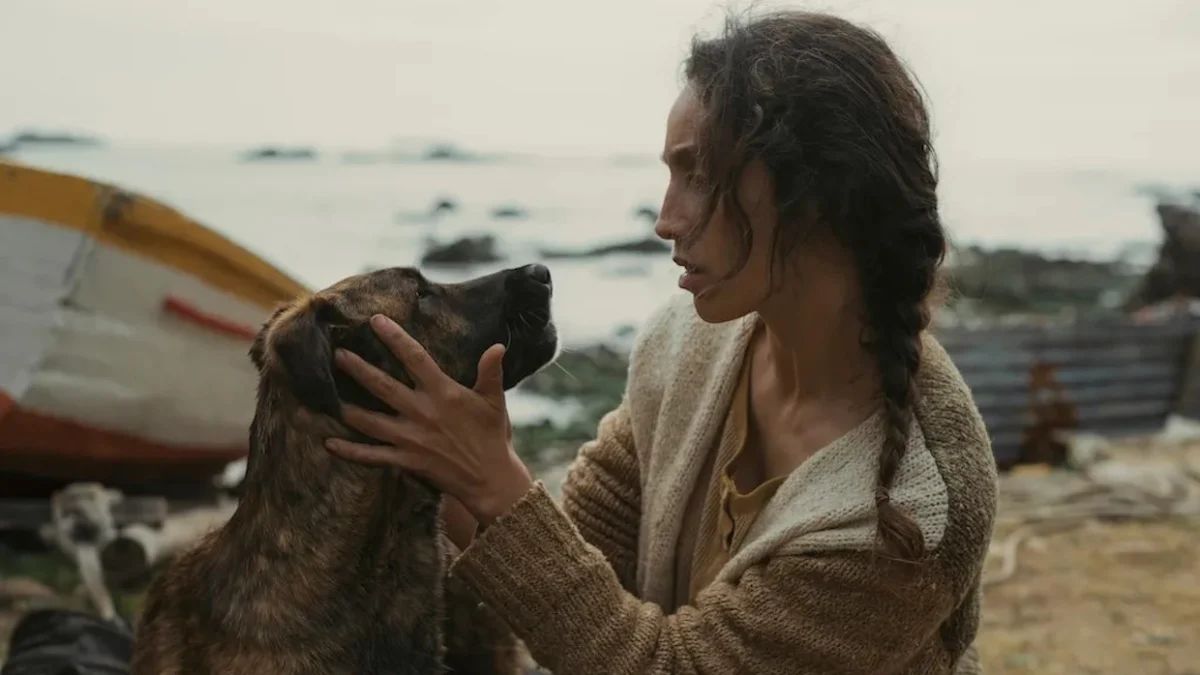
The international film community has turned its focus toward the windswept coasts of Chile with the premiere of La Perra at the Cannes Film Festival. Directed by Dominga Sotomayor, a filmmaker renowned for her intimate portrayals of domestic tension and environmental atmosphere, the film marks a significant departure from her previous autobiographical works. Adapted from the 2017 novel by Colombian author Pilar Quintana, La Perra represents a sophisticated evolution in Sotomayor’s career, blending her signature "cinema of confined spaces" with a broader, more enigmatic exploration of the relationship between humans, animals, and the landscapes they inhabit.
A Narrative Shift: From Autobiography to Adaptation
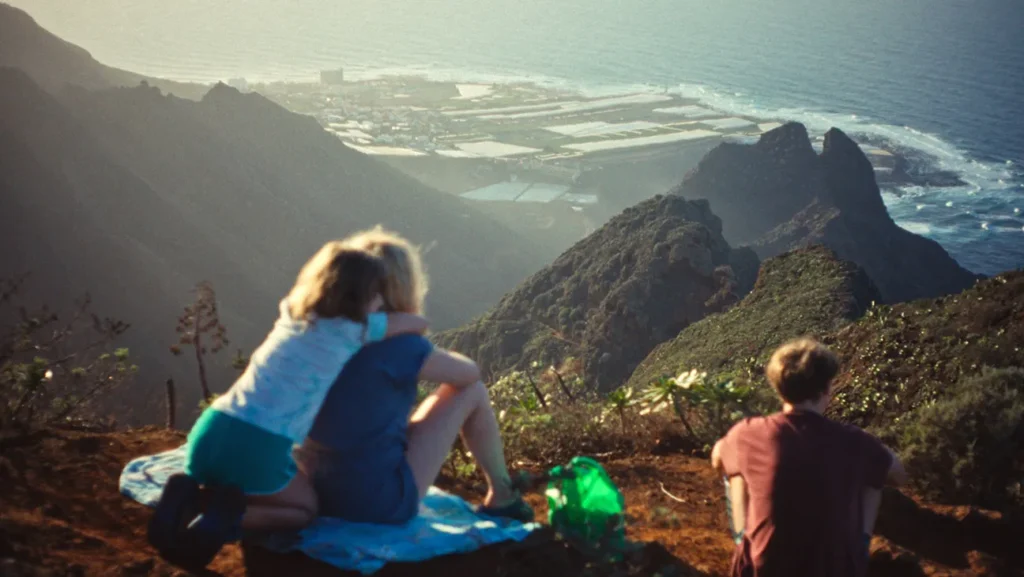
For much of her career, Dominga Sotomayor has been celebrated for a style of filmmaking that feels deeply personal, often drawing directly from her own childhood and the socio-political history of Chile. Her 2012 debut, Thursday till Sunday, captured the slow dissolution of a marriage during a family road trip, while her 2018 breakout, Too Late to Die Young, examined a bohemian commune at the end of the Pinochet era. The latter earned her the Leopard for Best Direction at the Locarno Film Festival, making her the first woman to receive the honor.
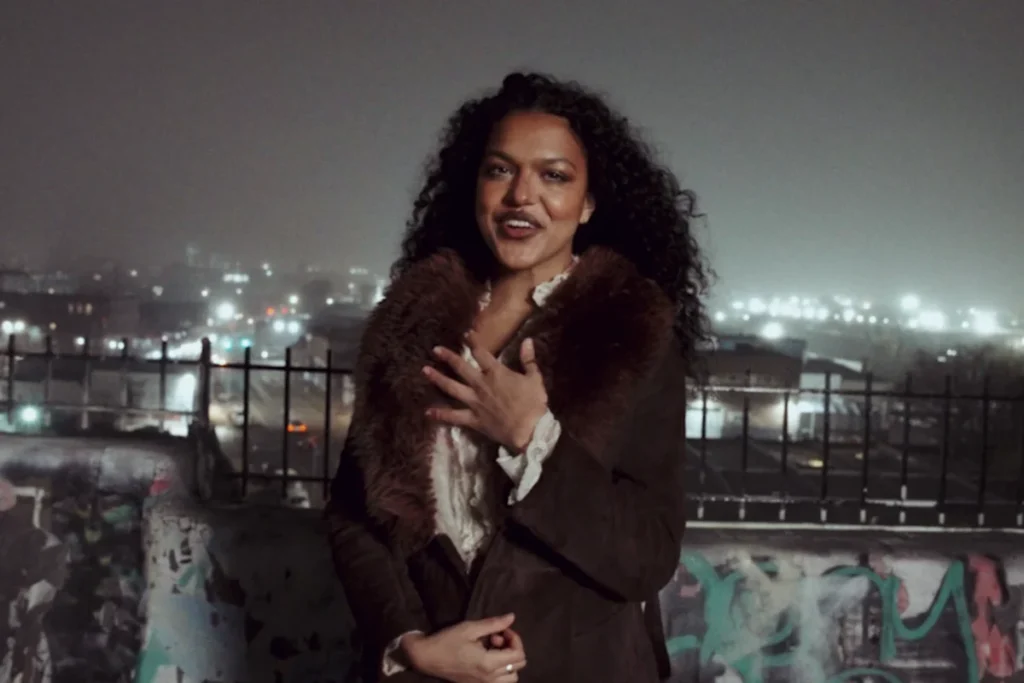
La Perra serves as Sotomayor’s second adaptation, following the Netflix-produced Swim to Me (2025), but it is the first to move entirely away from her own life story. Set on an island off the southern coast of Chile, the film centers on Silvia, played by Manuela Oyarzún, a woman in her 40s who lives a solitary life harvesting seaweed. Her world is upended when she adopts a stray puppy she names Yuri. What follows is not a sentimental tale of companionship, but a raw study of "domestication"—the attempt to own, control, or find oneself in another living being.
By moving the setting from Quintana’s original Colombian jungle to the rugged, cold terrain of southern Chile, Sotomayor recontextualizes the story within a landscape she understands. This change allowed the director to explore what she describes as an "exercise in empathy," approaching the unknown rather than reconstructing her own memories.
Thematic Architecture: Domestication and Enclosure
A recurring motif in Sotomayor’s filmography is the use of tight, often claustrophobic settings to mirror the internal states of her characters. In La Perra, the "enclosure" is the island itself—a geographical prison that dictates the rhythms of Silvia’s life. The film investigates the concept of ownership, questioning the extent to which an animal, or even a person, can truly belong to another.
The dog, Yuri, is not treated as a narrative device or a metaphor for Silvia’s childlessness. Instead, Sotomayor and cinematographer Simone D’Arcangelo afford the animal its own agency. Early in the film, the camera shifts from Silvia’s perspective to follow Yuri’s movements across the beach, establishing the dog as a protagonist in her own right. This refusal to anthropomorphize the animal adds a layer of mystery and tension to the film, as the bond between woman and dog fluctuates between affection and mutual foreignness.
Sotomayor’s interest in "dispersed cinema"—narratives that meander and refuse linear constraints—is evident in how the film handles time. La Perra exists in a state of atemporality. While modern cars and smartphones appear, they are juxtaposed with vintage television sets and 1980s pop music, creating a sense of temporal limbo. This is further emphasized by the director’s first use of a flashback sequence, which delves into Silvia’s childhood trauma without the traditional visual cues that signal a jump in time.
Technical Execution and Visual Influences
The visual language of La Perra was developed through a collaboration between Sotomayor and cinematographer Simone D’Arcangelo, whose previous work includes The Settlers (2023) and The Tale of King Crab (2021). Eschewing traditional storyboards, the duo worked from a "collage of pictures" and paintings to capture the specific atmosphere of the island.

The film’s aesthetic was heavily influenced by the work of Sotomayor’s grandmother, Carmen Couve, and her uncle, Adolfo Couve, both noted painters. Their influence is visible in the film’s dramatic, 19th-century-style landscape shots, featuring barren islands and bulbous, heavy clouds. To contrast these wide, atmospheric vistas, the team looked to the psychological portraiture of Lucian Freud and Francis Bacon, aiming to capture a more visceral, interior reality within the domestic scenes.
The production also took creative liberties with the island’s geography. While portions were filmed on the island of Santa Maria, other locations, including Silvia’s shack and an abandoned beachside villa, were constructed elsewhere to create an "imaginary geography." This blend of documentary-style realism and fictional invention extends to the film’s portrayal of the seaweed industry. Sotomayor invented a more visually striking method of transporting the algae—using tractors to ferry mounds of seaweed—rather than the plastic bags commonly used in real-life Chilean operations.
Sound and Score: The Influence of Clint Mansell
The film’s auditory landscape is punctuated by the work of renowned composer Clint Mansell. The score incorporates hits from 1980s Mexican pop stars, which serve as a namesake for the dog, Yuri. This musical choice reinforces the film’s atemporal feel and provides a stark, sometimes jarring contrast to the isolated, naturalistic setting of the island. The use of pop culture markers within a remote environment highlights the intrusion of the outside world into Silvia’s secluded existence.
Production Background and Industry Context
La Perra was produced by Rodrigo Teixeira of RT Features, a producer known for backing auteur-driven projects like Call Me by Your Name and The Lighthouse. The film was developed alongside Swim to Me, a project Sotomayor directed for Netflix. The director has noted the stark differences between the two production models; while the Netflix project required a more straightforward narrative to cater to a broader audience, La Perra was granted total creative freedom, allowing for a more radical and formally free exploration of its themes.
The casting of the dogs was a particularly rigorous process. Sotomayor insisted on using mutts rather than pedigree animals to maintain the film’s raw, unpolished tone. Adult Yuri was found in an animal shelter near Santiago just a month before filming began. Because the dog was not trained, lead actress Manuela Oyarzún spent weeks building a rapport with the animal. The "baby Yuri" was a two-month-old puppy found abandoned on a highway. The unpredictable nature of the animals often dictated the shooting schedule, with the crew having to react to the dogs’ spontaneous movements, a process Sotomayor claims eventually defined the film’s visual language.
Broader Implications and Global Reception
The premiere of La Perra at Cannes underscores the continued ascent of Chilean cinema on the global stage. Alongside directors like Pablo Larraín and Sebastián Lelio, Sotomayor has become a central figure in a movement that combines high-concept aesthetics with profound social and psychological inquiry.
Early reactions to the film suggest that it will be viewed as one of Sotomayor’s most challenging and rewarding works. By stripping away the comfort of the familiar and the autobiographical, she has created a film that is "rawer and more obscure" than her previous features. The film’s exploration of the "permeable border between the human and the non-human" aligns with a growing trend in contemporary cinema that seeks to decenter the human experience and examine our place within a larger, more indifferent ecological framework.
As La Perra moves from the festival circuit to international distribution, it stands as a testament to the power of adaptation when handled by a director with a distinct and uncompromising vision. It reinforces Dominga Sotomayor’s reputation as a filmmaker who can transform the most familiar settings—a car, a house, or an island—into a foreign and fascinating territory where the boundaries of self and other are constantly in flux.