The intersection of television satire and real-world industry upheaval has long provided a fertile breeding ground for prestige comedy, nowhere more evident than in the parallel trajectories of HBO’s The Comeback and Max’s Hacks. As both series navigate their respective final chapters, they offer a lacerating, deeply human look at the modern entertainment landscape, capturing an era defined by corporate contraction, the streaming wars, and the looming existential threat of generative artificial intelligence.
For decades, television comedies have poked fun at Hollywood’s self-absorption. However, the current television climate—marred by post-pandemic economic correction, two historic industry strikes in 2023, and a widespread contraction in scripted content spending—has raised the stakes for veteran creators and performers. Within this high-pressure ecosystem, the return of Lisa Kudrow’s Valerie Cherish in The Comeback and the continued dominance of Jean Smart’s Deborah Vance in Hacks highlight an endangered species of television icons: aging female entertainers fighting to preserve their artistic integrity against corporate algorithms and risk-averse studio executives.
Evolution of a Satire: The Chronology of Industry Anxiety
To understand the resonance of these current storylines, one must examine the specific historical contexts in which these series were born and revived. Created by Michael Patrick King and Lisa Kudrow, The Comeback originally premiered on HBO in 2005. At the time, the single-camera mockumentary served as a sharp, prescient critique of the burgeoning reality television boom, which network executives favored for its low production costs and sensationalized, tabloid-friendly drama. Valerie Cherish, a former sitcom star desperate to reclaim her lost spotlight, became the tragicomic avatar for an industry shifting away from traditional scripted development in favor of cheap spectacle.
When HBO unexpectedly revived The Comeback for a second season in 2014, the television landscape had shifted dramatically. Reality television had achieved a degree of institutional legitimacy, but the medium was on the immediate cusp of the streaming wars. The sudden proliferation of platforms hungry for content led to a massive surge in production volume, giving rise to the era of "prestige TV"—a term that would eventually lose its distinction as networks churned out volume over distinct creative vision.
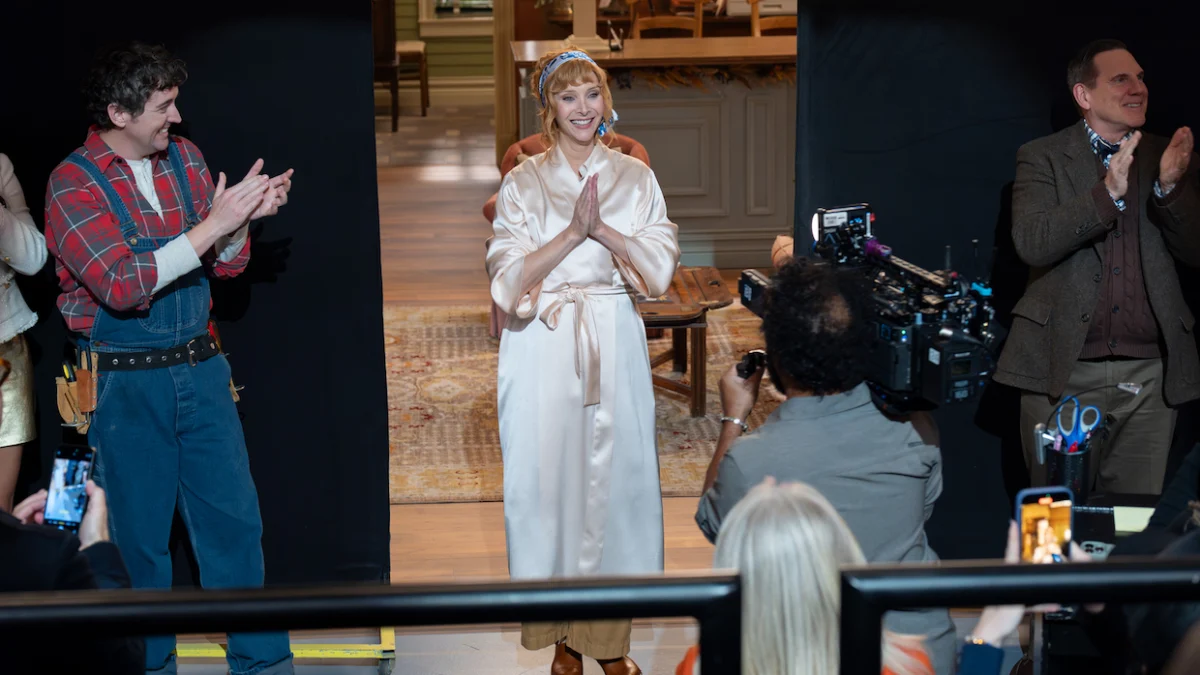
Twelve years after that second iteration—having weathered a global pandemic, the historic 2023 Writers Guild of America and SAG-AFTRA strikes, and severe corporate consolidation—Kudrow has returned for a third and final season. This time, Valerie Cherish finds herself cast in the lead role of the first sitcom written entirely by an artificial intelligence program.
This narrative choice mirrors real-world anxieties that paralyzed Hollywood during the 2003 and 2023 labor disputes. Writers and actors alike raised vehement concerns regarding the deployment of generative AI tools to draft scripts, replicate likenesses, and bypass human labor compensation. In The Comeback, Valerie is caught directly in the crosshairs of this technological shift. While her employment depends on the success of the AI-driven production as physical casting and production jobs dry up across Los Angeles, the underlying machine-generated scripts recycle clichés and plagiarize decades of television history, threatening the very foundations of the medium.
Parallels in Prestige: The Rise of Hacks and Showbiz Satire
Operating in a similar thematic register, Lucia Aniello, Paul W. Downs, and Jen Statsky’s Hacks has established itself as a critical and commercial powerhouse for Max. Framed around the intricate, combative dynamic between legendary stand-up comic Deborah Vance (Jean Smart) and her millennial head writer Ava Daniels (Hannah Einbinder), the series explores the arduous journey of a female comedian attempting to break through the final glass ceiling of late-night television.
The structural parallels between Deborah Vance and Valerie Cherish are striking. Both characters represent seasoned female performers navigating an entertainment industry historically hostile to aging women. In Hacks, Deborah’s hard-fought victory of securing a late-night hosting chair is upended by corporate interference, leading her to quit rather than comply with executive demands to fire her trusted writer. The subsequent fallout—featuring strict non-compete clauses and corporate censorship—coincided ironically with real-world network shake-ups, cementing the show’s reputation for prescient social commentary.
Furthermore, Hacks tackles the encroachment of artificial intelligence with characteristic cynicism. When Deborah seeks alternative revenue streams to finance a massive comeback performance at Madison Square Garden, she is courted by venture capitalists eager to license her voice, likeness, and intellectual property to a large language model known as QuikScribbl. The storyline underscores the tech industry’s persistent undervaluation of human artistry, positioning AI not as a partner in creativity, but as a reductive imitation of lived experience.
The Human Element: Rejecting the Algorithm
Despite the satirical distance built into both programs, the central thesis of both The Comeback and Hacks is a defense of human imperfection and collaborative struggle.
In The Comeback, the limitations of artificial intelligence are exposed not through apocalyptic tragedy, but through creative fatigue. Valerie’s AI-generated multi-camera sitcom, How’s That?!, airs on a Big Tech-funded network called NuNet, utilizing an automated scriptwriting program named Allassist. While the machine is capable of generating endless alternative jokes when a line fails to land with a live studio audience, the resulting material remains flat, derivative, and fundamentally predictable.
This limitation is encapsulated in a pivotal cameo by veteran television director James Burrows, who appears as himself to direct the pilot. Following a round of robotic script revisions, Burrows tells Valerie that true comedic surprise cannot be synthesized; it emerges exclusively from human writers huddled in a room, debating, failing, and refining material through shared emotional experience. A computer may fail to diminish an actor’s talent, but it equally fails to provide genuine narrative truth.
Similarly, Ava Daniels delivers impassioned monologues in Hacks warning against the false narrative of technological inevitability. The series argues that convenience and scale do not equal artistic merit. The humor in both shows derives from the distinct friction between the protagonist’s desperate ego and their undeniable resilience—qualities that cannot be replicated by a large language model trained on historical data.
Critical Reception and Industry Impact
As both series approach their respective conclusions, their presence in the cultural conversation highlights a broader evolution in television comedy. Comedies centered on the internal mechanics of the entertainment industry have enjoyed a notable renaissance, punctuated by awards-season sweeps from peer satires like The Studio.
The critical juxtaposition of Hacks and The Comeback creates a compelling narrative for the upcoming Emmy Awards cycle. Hacks maintains an exceptional track record, having secured 12 Emmy wins across its run, including consecutive victories for Outstanding Comedy Series and multiple lead actress accolades for Jean Smart. The Comeback, conversely, has historically maintained a dedicated cult following while securing selective recognition for Kudrow’s lead performances, writing, and casting.
Industry analysts note that the thematic overlap of these two programs reflects a broader institutional fatigue with corporate risk aversion. By centering stories on women who have survived multiple eras of industry disruption, both series provide an optimistic counter-narrative to corporate contraction.
Whether examining Valerie Cherish’s earnest crusade on a soundstage or Deborah Vance’s fierce defense of her creative autonomy, these narratives suggest that the survival of television as a vital medium relies entirely on the messy, irreplaceable friction of human labor. As Hollywood continues to grapple with the dual pressures of algorithmic content generation and economic restructuring, the resilience demonstrated by these fictional icons offers a timely blueprint for the industry’s future.