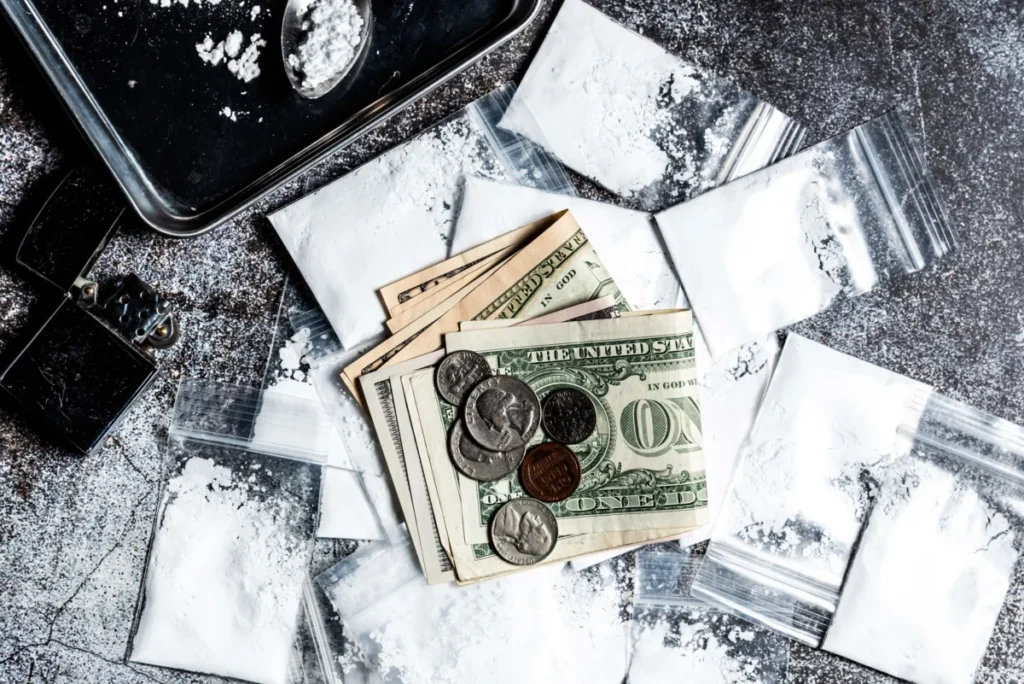




Spencer Pratt, once the primary antagonist of the 2000s-era MTV reality series The Hills and currently an insurgent candidate in the Los Angeles mayoral race, has shifted the trajectory of the local political discourse following a confrontational performance in his first televised debate. During the event, Pratt focused heavily on public safety and the city’s homelessness crisis, utilizing a rhetorical strategy that centered on the term "super meth." In a viral exchange, Pratt criticized incumbent Mayor Karen Bass and City Councilmember Nithya Raman for their approaches to addiction and housing, claiming that the potency of modern illicit substances has rendered standard city interventions obsolete.
Pratt’s assertions have ignited a fierce debate among public health experts, law enforcement, and policy analysts regarding the accuracy of his claims and the implications of such language in the context of urban governance. While the candidate’s message has resonated with a segment of the electorate concerned about street conditions, medical professionals and toxicologists argue that the term "super meth" is a scientific misnomer that risks simplifying a complex public health emergency into a manageable moral panic.
The Debate and the Rise of the "Super Meth" Soundbite
The breakthrough moment for Pratt’s campaign occurred when he addressed the intersection of unhoused populations and substance use disorders. Directly challenging Nithya Raman’s proposal to expand addiction treatment services, Pratt argued that the nature of the drugs currently on the street makes voluntary treatment a secondary concern for those in the grips of addiction.
"The reality is, no matter how many beds you give these people, they are on super meth," Pratt stated during the debate. He went further, challenging Raman to join him in a visit to the encampments beneath the Harbor Freeway, suggesting that the environment was too dangerous for standard outreach. "She’s gonna get stabbed in the neck," Pratt warned. "These people do not want a bed. They want fentanyl or super meth."
This rhetoric marks a departure from traditional mayoral campaign language, leaning into a dystopian vision of Los Angeles that Pratt, a registered Republican running as an independent, has made a cornerstone of his platform. By framing the issue through the lens of a new, hyper-potent drug, Pratt suggests that the city’s current strategies—largely based on the "Housing First" model—are fundamentally mismatched with the biological reality of modern addiction.
The Scientific Reality: Chemistry vs. Rhetoric
Despite the political potency of the term, "super meth" does not exist in a clinical or chemical sense. Claire Zagorski, a paramedic, harm reductionist, and PhD candidate at the University of Texas at Austin College of Pharmacy, notes that while the methods of producing methamphetamine have evolved, the resulting molecule remains the same.
The confusion often stems from the shift in manufacturing processes. Historically, much of the methamphetamine in the United States was produced using pseudoephedrine, a precursor found in over-the-counter decongestants like Sudafed. Following the federal Combat Methamphetamine Epidemic Act of 2006, which restricted access to pseudoephedrine, illicit manufacturers shifted back to an older method known as the P2P process (utilizing phenyl-2-propanone).
The P2P method was famously depicted in the television series Breaking Bad as a way to scale production to industrial levels. While the P2P process was common in the 1970s before being federally scheduled in 1980, its resurgence in the last decade has been driven by international cartels. According to Zagorski, P2P-produced meth is a "molecular mirror-image" of pseudoephedrine-based meth, but it is not inherently more neurotoxic or potent.
What has changed, however, is the scale and purity of the supply. Around 2020, drug manufacturers in Mexico adopted a refining process developed in Europe that allows for the separation and recycling of less desirable molecular forms of the drug. This has resulted in a market flooded with high-purity methamphetamine at significantly lower prices. "What has changed in the past several years is purity and price," Zagorski explains. This combination contributes to an uptick in use, but experts argue it does not constitute a "new" drug with different biological effects.
A Chronology of the "New Meth" Narrative
The narrative that a uniquely dangerous form of methamphetamine is responsible for the current crisis can be traced back to 2021. Journalist Sam Quinones popularized the idea in his book The Least of Us and a subsequent article in The Atlantic. Quinones argued that P2P meth was causing rapid-onset psychosis and a level of cognitive decline that made it nearly impossible for users to seek help or accept housing.
Following the Los Angeles mayoral debate, Quinones authored an op-ed in the Los Angeles Times in which he acknowledged that "super meth" is not a scientifically precise term. However, the narrative had already taken hold in political circles. For candidates like Pratt, the "super meth" framing provides a convenient explanation for why visible homelessness has persisted despite billions of dollars in city spending.
Clinical experts have pushed back against this chronology. Nicky Mehtani, an assistant professor at the UCSF Division of General Internal Medicine, states that P2P meth has been the dominant form in the U.S. supply for nearly a decade. "I’ve never heard it called ‘super meth’ in any clinical or scientific context," Mehtani says, adding that the term obscures the functional reasons why unhoused people might use stimulants.
Socio-Economic Drivers and Functional Drug Use
Medical professionals working on the front lines of the homelessness crisis argue that the "super meth" narrative ignores the survival strategies of those living on the streets. Mehtani notes that many unhoused individuals use methamphetamine as a tool for "vigilance." In an environment where personal safety is constantly at risk and poverty is increasingly criminalized, stimulants allow individuals to stay awake through the night to guard their belongings and avoid physical assault.
"Calling it ‘super meth’ reduces a complex public health problem to a moral panic," Mehtani warns. This shift in language often precedes a shift in policy toward more punitive measures. By labeling the unhoused as "zombies"—another term Pratt has frequently employed—the rhetoric moves the conversation away from evidence-based interventions like mental health care and permanent supportive housing and toward a logic of containment or incarceration.
Comparative Policy Outcomes: Lessons from Portland and San Francisco
The political appeal of "law and order" drug rhetoric is not unique to Los Angeles. Similar debates have played out in Portland, Oregon, and San Francisco, California. In Oregon, the recent recriminalization of small amounts of drug possession followed a period of decriminalization under Measure 110. However, early data suggests that the return to punitive measures has not significantly reduced homelessness or overdose rates. In Portland, the unhoused population has reached record highs despite the policy shift.
Ryan Marino, an associate professor at Case Western Reserve University specializing in addiction and toxicology, suggests that Pratt’s rhetoric mirrors "right-wing drug lies" that have historically led to worse public health outcomes. Research indicates a strong correlation between aggressive police drug busts and an increase in local overdose deaths, as supply disruptions often lead users to seek out more dangerous, unknown sources or shift to more potent synthetic opioids like fentanyl.
Marino argues that if the goal is truly to reduce illicit drug use and homelessness, the evidence supports public education, drug checking facilities, and supervised consumption centers—initiatives that Pratt and many of his supporters have mocked or dismissed.
Political Implications and the Path Forward for Los Angeles
As the mayoral race progresses, Spencer Pratt continues to poll in second place, trailing Mayor Karen Bass but outperforming several more traditional political figures. This polling data suggests that his focus on public safety and his use of alarming rhetoric regarding "super meth" are effectively tapping into the frustrations of a city grappling with a visible and persistent humanitarian crisis.
The success of the "super meth" soundbite highlights a growing divide in how the city views its most vulnerable residents. On one side are those who view the crisis as a failure of the housing market and social safety net; on the other are those who, like Pratt, argue that the crisis is driven by a unique pharmacological threat that requires a more aggressive, perhaps even involuntary, response.
By framing the issue as a battle against an unbeatable drug, the narrative risks convincing voters that the city’s unhoused population is a "hopeless cause." This has significant implications for future budget allocations and legislative priorities in Los Angeles. If the public believes that "no matter how many beds you give these people," they will refuse them in favor of drugs, the political will for expanding the housing supply may continue to erode.
As the election nears, the challenge for Los Angeles will be to navigate between the visceral appeal of campaign rhetoric and the nuanced reality of addiction medicine. While Pratt’s "super meth" claims may lack scientific validity, their impact on the political landscape is undeniably real, forcing a city at a crossroads to decide whether its future lies in evidence-based care or a return to the punitive strategies of the past.