The Birthday Party (original Histoires de la nuit), director Léa Mysius’ third feature, emerges as a lean, mean, and frequently terrifying home-invasion thriller, drawing comparisons to genre touchstones like Michael Haneke’s Funny Games and Christian Tafdrup’s Speak No Evil. While it skillfully navigates the psychological landscape of terror, it consciously stops short of the most sadistic shocks often associated with its more extreme counterparts. Adapted from a French bestseller by Laurent Mauvignier, the film establishes a remote, atmospheric setting and a palpable appetite for darkness, echoing elements seen in Mysius’ acclaimed 2022 fantasy drama, The Five Devils. However, The Birthday Party distinguishes itself by presenting a more cohesive narrative arc, a notable evolution from the scattershot genre-bending of its predecessor. Despite a climax marred by a pileup of improbable cinematic contrivances, the film stands as a taut nail-biter, anchored by a compelling narrative and a strong ensemble cast.
Setting the Stage: A Rural Nightmare Unfolds
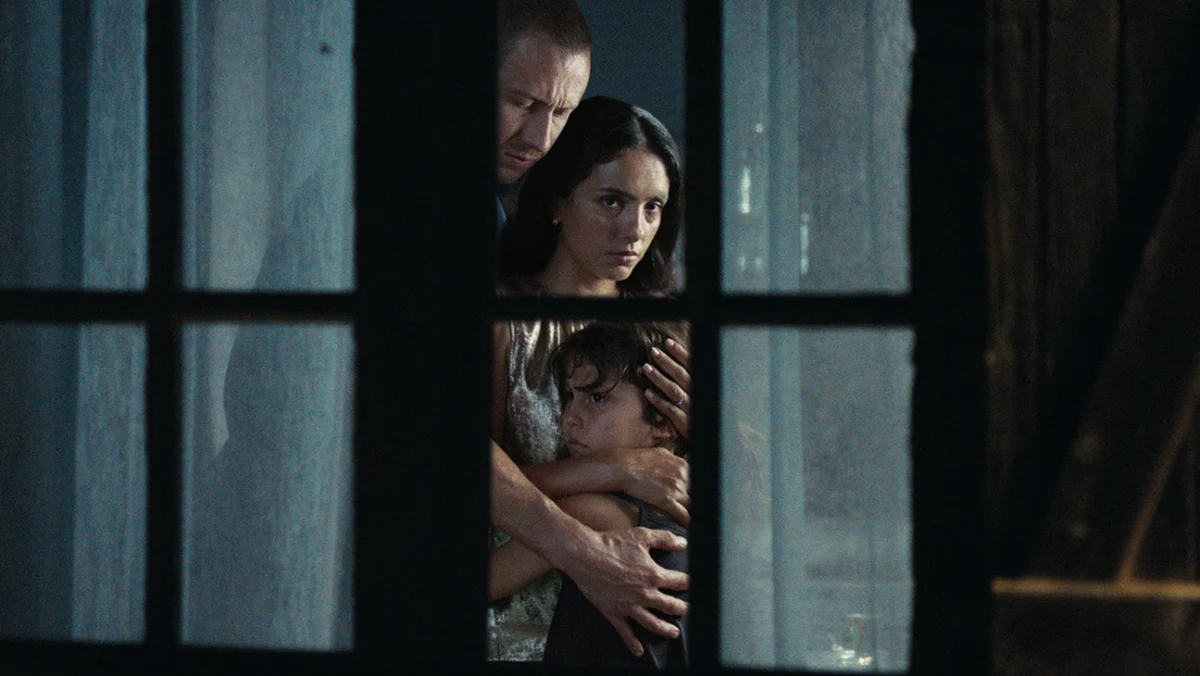
The film plunges viewers into the lives of the Bergogne family, whose seemingly tranquil existence in rural Western France is violently disrupted over the course of one hellish night. At the heart of this family is Thomas (Bastien Bouillon), a diligent dairy farmer striving to maintain their small farm amidst challenging economic conditions within the agricultural sector. His wife, Nora (Hafsia Herzi), is celebrating her 40th birthday, a milestone marked by a professional surprise: her promotion to head of town-planning at her office job, signaling a new chapter of ambition and responsibility. Completing the family unit is their sharp, observant preteen daughter, Ida (Tawba El Gharchi), whose innocence serves as a stark contrast to the encroaching darkness. Their sole immediate neighbor is Cristina (Monica Bellucci), a sophisticated Italian artist who resides and works in a stylishly converted barn, a space of creative refuge where Ida frequently stops to paint on her way home from school. This seemingly idyllic, albeit isolated, setting provides the perfect crucible for the escalating dread that defines the film.
Mysius’ Cinematic Vision and Thematic Undercurrents
Léa Mysius, known for her distinctive narrative voice and willingness to explore the fringes of genre, continues to refine her craft with The Birthday Party. Her previous work, The Five Devils, while critically praised for its atmospheric quality and ambitious genre fusion, occasionally struggled with narrative clarity. Here, Mysius demonstrates a sharpened focus, channeling her penchant for remote settings and psychological tension into a tightly wound thriller. The adaptation of Laurent Mauvignier’s Histoires de la Nuit provides a rich textual foundation, allowing Mysius and co-screenwriter Paul Guilhaume to delve into themes of hidden pasts, marital trust, and the profound violation of personal space and identity. Mauvignier’s literary style often explores the fragility of human relationships and the lingering shadows of history, elements that are expertly translated onto the screen. The film leverages the inherent vulnerability of the home-invasion genre not merely for jump scares or gratuitous violence, but as a vehicle to dissect the psychological toll of such an ordeal, particularly on the women at its center.
Chronology of Escalation: Seeds of Suspicion
The film meticulously builds its tension through a series of early signals and unsettling occurrences. A critical piece of foreshadowing emerges when Nora reacts with extreme alarm to a video Ida posts online of the family dancing. Despite Ida’s protestations about losing her 60,000 views, Nora’s insistence on its immediate removal underscores a deep-seated aversion to public visibility and hints at a desire to remain unseen, a detail that becomes profoundly significant as the narrative unfolds.
Another pivotal plot signal manifests with the arrival of a shifty-looking individual, later identified as Flo (Paul Hamy), while the Bergognes are away. Flo approaches Cristina, claiming he is there to view the farmhouse for sale. Cristina, aware of no such plans by the Bergognes, senses an immediate disingenuousness, and her eagerness to dismiss him proves to be a sharp, almost prescient, intuition. Flo’s departure is only temporary. He soon returns, accompanied by his seemingly dim-witted younger brother, Bègue (Alane Delhaye), who has a history of two years in a psychiatric ward. The true orchestrator of their sinister intentions, however, is their eldest sibling, Franck (Benoît Magimel), who unmistakably assumes control. When Ida later arrives at Cristina’s studio after school, the place appears deserted, even Cristina’s dog is missing. The brothers, however, have merely concealed Cristina, preventing her from warning Thomas upon his return, thereby setting the stage for the terrifying siege.
The Invasion and Unveiling of Secrets
As the intruders establish their presence, Mysius’ script delves deeper than mere physical threat, exploring the profound psychological violation inflicted by individuals who possess an alarming degree of intimate knowledge about their victims. Franck and his brothers are aware of Thomas’s precarious financial situation, knowing he purchased the family farm during a period of struggle within the agricultural sector. This intelligence allows them to play a cruel game, permitting Thomas to enter the farmhouse and even begin stringing up decorations for Nora’s birthday party before revealing their menacing presence.
Nora’s journey home is delayed by a flat tire, an unforeseen circumstance that prolongs her agony. Upon her eventual arrival, she is greeted by Franck with unsettling familiarity, who addresses her as "Leïla." Nora vehemently denies knowing him, asserting he has the wrong person. Yet, Franck remains unswayed, his persistence escalating the tension throughout the night. His subtle but pointed hints at a shared past with Nora cast a dark shadow over her relationship with Thomas, forcing him to question the extent of his knowledge about his wife’s life. This "chilling negotiation phase," as described by critics, is masterfully orchestrated by Mysius, maintaining a relentless hum of dread.
Character Dynamics and Powerful Performances
A significant strength of The Birthday Party lies in Mysius’ investment in her characters, particularly the women, who are portrayed not merely as trembling victims but as intelligent individuals quietly strategizing and actively seeking vulnerabilities in their captors. Nora and Cristina exemplify this resilience, demonstrating agency and a determination to survive.
Some of the film’s most compelling scenes unfold between Cristina and Bègue, who is left to guard her in the studio. Despite Bègue’s attempts to project toughness, Cristina astutely identifies his soft underbelly and vulnerability, cooing sympathetically over the demeaning treatment he receives from his brothers. Monica Bellucci delivers a nuanced performance as Cristina, portraying a character who appears to be plotting her next move with calculated patience, refusing to rush into action. Her discussions with Bègue about her art, combined with a shared glass of wine and a joint, create a disarmingly mellow atmosphere, almost like a casual hang, albeit one fraught with underlying peril. This dynamic highlights Cristina’s strategic use of empathy and intellect as a weapon.
Meanwhile, next door, Nora is relentlessly prodded about the aspects of her past she has meticulously kept secret from her family. When she is eventually forced to acknowledge her history with Franck, the revelation triggers a cascade of marital tensions and trust issues, compounding the terror of facing volatile strangers clearly capable of brutal violence. Throughout this ordeal, Ida, though encouraged to remain in the living room watching cartoons, remains acutely aware of the unfolding drama, observing everything with an unsettling alertness, even if her full comprehension is limited.
The trio of thugs also brings a powerful, disturbing dynamic to the narrative. Benoît Magimel, in what critics have dubbed his "Brando phase," delivers an imposing physical presence that is as unsettling as his menacing words, embodying the cold, calculating leader. Paul Hamy’s Flo is a magnetic livewire, a dangerous combination of cocky charm and unpredictability. Alane Delhaye’s portrayal of Bègue is almost touching; his profound lack of self-assurance makes him a poor fit for the criminal life, a truth he likely already understands, adding a layer of pathos to his character.
However, the standout performance is undoubtedly delivered by Hafsia Herzi. Widely recognized for her memorable role in Abdellatif Kechiche’s The Secret of the Grain and her acclaimed directorial work, such as last year’s exquisite queer coming-of-age drama The Little Sister, Herzi solidifies her status as a major talent. Her nuanced depiction of Nora, navigating fear, past trauma, and the desperate fight for her family’s survival, is both powerful and deeply resonant, cementing her as an actress deserving of wider international recognition on both sides of the camera.
Critical Assessment: A Flawed Finale and Potential for Retooling
Despite the film’s efficient crackle through its compelling setup and uncomfortable midsection, where the tension is almost unbearable and anything feels possible, critics have noted a significant fumble in Mysius’ execution of the big finish. The climax, intended to be the ultimate payoff for the sustained dread, is unfortunately marred by a series of "movie-ish improbabilities" and a "nagging inattention to verisimilitude." These narrative missteps jar the audience out of the immersive experience, undermining the carefully constructed realism and psychological depth.
Specific examples cited include a character bleeding profusely from a gunshot wound who inexplicably manages to put their pain on hold to attend to matters of the heart, a dramatic choice that strains credulity. Another point of contention is the sudden, unlikely skill with a rifle displayed by a character, an almost clichéd trope reminiscent of the "hoariest Westerns," which critics suggest would be "picked apart in any screenwriting for dummies class." These contrived elements detract significantly from the film’s otherwise masterful build-up, leaving viewers with a sense of dissatisfaction regarding the resolution.
The track record of European genre films being remade for American audiences is notably varied, with some adaptations finding success and others falling flat. However, The Birthday Party presents a compelling case for a potential remake. With its strong premise, compelling character development, and masterful tension-building, the film holds immense promise. A "smart retooling of the wobbly third act," as suggested by critics, could transform this otherwise potent thriller into a truly viable and critically acclaimed property, potentially solidifying its place within the pantheon of psychological home-invasion narratives. The inherent strength of its core narrative and performances remains undeniable, offering a foundation upon which a more consistent and impactful conclusion could be built.
Broader Implications and Enduring Themes
The Birthday Party stands as a testament to the enduring power of the home-invasion thriller when executed with psychological depth rather than relying solely on gore. It highlights the universal fears of invasion, loss of control, and the unsettling realization that even those closest to us may harbor hidden pasts. Mysius’ film contributes to a growing body of European cinema that uses genre conventions to explore deeper societal and personal anxieties, from economic precarity in rural areas to the complexities of marital trust and the resilience of the human spirit under duress. While its ending may invite debate and calls for refinement, the journey The Birthday Party offers through its dark, tense, and psychologically rich narrative solidifies Léa Mysius’ position as a compelling voice in contemporary cinema, capable of crafting stories that linger long after the credits roll, prompting reflection on the secrets we keep and the strength we find when faced with the unimaginable.