

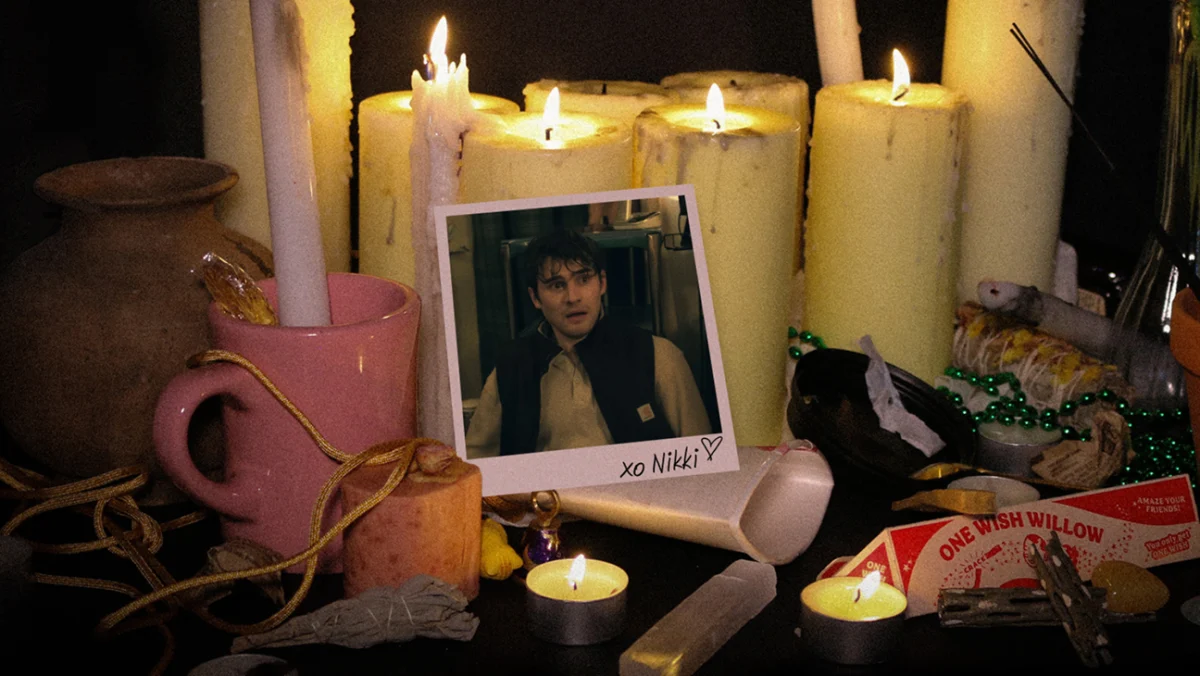
Haley Nicole Johnson is currently navigating the professional vertigo that follows a career-defining success. As a producer, she has found herself at the center of the industry’s renewed fascination with independent horror, specifically following the explosive box office performance of Curry Barker’s Obsession. Speaking at a TIFF: The Market panel this past Saturday, Johnson reflected on the transition from the grueling production phase to the high-stakes environment of international film festivals. "It’s a lot. I’m not gonna lie. It’s a lot," she admitted to an audience of industry peers. "But I’ve been overwhelmed with how welcoming the industry has been to everyone from Team Obsession."
For Johnson, the professional momentum has not slowed; she recently wrapped production on Alex Ullom’s 4X4: The Event for Neon, signaling that her approach to genre filmmaking—rooted in the collaborative spirit that defined Obsession—is becoming a blueprint for other emerging producers.
The Phenomenon of the $500 Million Horror Hit
The conversation at the Toronto International Film Festival comes at a time when the horror genre is undergoing a significant economic shift. The success of Obsession is not merely anecdotal; it represents a data-driven anomaly in the modern theatrical landscape. After being acquired by Focus Features for a reported $15 million, the film defied traditional indie trajectories to become a massive summer 2026 box office powerhouse, raking in $500 million globally.
This achievement sits alongside the success of Kane Parsons’ Backrooms, another project that utilized unconventional development pathways to reach a massive audience. These films have effectively rewritten the history of TIFF’s role in launching genre cinema, proving that independent, mid-budget horror can compete with, and often outperform, tentpole studio franchises. Analysts point to the "eventization" of horror as a primary driver, where the film serves not just as a piece of content, but as a social experience that draws younger demographics back to theaters.
Strategic Shifts in Genre Production
The TIFF panel, which brought together some of the most influential voices in the horror space, served as a masterclass in current production strategies. Adam Hendricks, the co-founder of the production banner Divide/Conquer, emphasized that the current market landscape is uniquely favorable for horror. According to Hendricks, the genre’s appeal lies in its inherent versatility and its ability to function without the need for massive A-list casts or bloated budgets.
"This is the place we can do the most," Hendricks argued, noting that the success of films like Obsession has opened a window of opportunity for producers who can deliver high-concept scares on efficient budgets. His sentiment is shared by many in the industry who have observed a cooling of interest in traditional mid-budget dramas, which have increasingly struggled to secure theatrical distribution. In contrast, horror remains a reliable draw, provided the execution matches the ambition of the concept.
Building Mythologies for Modern Audiences
While the economic potential of horror is clear, Nyla Innuksuk of Mixtape VR, who debuted her latest feature In the Heart of the South at this year’s festival, highlighted the creative challenges of the current landscape. Having previously directed the feature Slash/Back, Innuksuk noted that the modern audience is remarkably savvy. They are well-versed in genre tropes, meaning that filmmakers must be increasingly inventive with their narrative structures.
"There’s this wanting to connect with ideas and feelings that feel universal and being able to tell something unique to a place and culture, while also being able to connect to strong feelings that are familiar, whether fear or obsessive love," Innuksuk explained. Her focus on "cultural specificity" represents a departure from the generic horror tropes of the early 2000s, suggesting that audiences are increasingly seeking stories that feel grounded in a specific reality, even when the subject matter is supernatural or terrifying.
The "Minefield" of Audience Expectations
The panel discussion also touched upon the growing fatigue surrounding repetitive franchise content. Hendricks warned that the horror space is a "minefield" for those who rely on derivative storytelling. He specifically cited audience exhaustion with standard "zombie" or "werewolf" narratives, which have been exhausted by decades of iteration.
"We’re averse to stories we’ve seen before," Hendricks stated. The core problem, according to his analysis, is that audiences now possess an intuitive understanding of film grammar. They know the beats, they anticipate the jump scares, and they can predict the resolution before the second act concludes. Consequently, the challenge for modern producers is to identify "new mythologies"—narratives that subvert expectations while maintaining the emotional core that makes horror a communal experience.
This perspective was echoed by Greg Gilreath, co-founder of Divide/Conquer, who outlined the criteria he uses when evaluating potential scripts. For Gilreath, a strong script is only the baseline. He is actively seeking filmmakers who demonstrate a comprehensive mastery of the "full toolkit" of cinema. This includes a sophisticated integration of practical effects, high-level stunt choreography, and nuanced performances that elevate the material beyond a simple page-to-screen adaptation.
The Broader Implications for the Industry
The success stories of producers like Haley Nicole Johnson and directors like Curry Barker provide a clear roadmap for the future of independent film. The current industry climate is characterized by a "flight to quality" in the horror sector. Studios are no longer just looking for cheap thrills; they are investing in films that have distinct visual identities and strong, character-driven narratives.
The implications for the independent film market are profound. As mid-budget films find it harder to secure funding, horror has emerged as the safest harbor for producers looking to secure theatrical windows. The $500 million benchmark set by Obsession has effectively raised the ceiling for what independent horror can achieve, creating a "gold rush" mentality among financiers who are now scouring the festival circuit for the next breakout hit.
However, the panel also served as a cautionary tale. While the appetite for horror is high, the tolerance for "filler" content is at an all-time low. As Hendricks and his colleagues continue to review new projects, the focus remains on finding stories that feel vital, fresh, and inherently cinematic. The transition from indie darling to box office titan is not just a matter of luck; it requires a disciplined approach to development, an acute understanding of audience psychology, and a willingness to reject the derivative in favor of the innovative.
A Look Ahead at the Festival Circuit
As the Toronto International Film Festival continues, the buzz surrounding these horror producers suggests that the genre will remain a dominant force in the coming years. With films like 4X4: The Event and In the Heart of the South currently making waves, the industry is closely watching how these creators navigate their next projects.
The collaborative atmosphere at the festival—where established producers like Hendricks and Gilreath freely share their strategies with newcomers—is a testament to the community-driven nature of the current horror boom. While the competition for eyeballs and ticket sales remains fierce, there is a collective recognition that the health of the industry depends on the continued ability to surprise, unsettle, and ultimately delight the audience.
In conclusion, the rise of the independent horror producer marks a significant shift in the power dynamics of Hollywood. By prioritizing unique voices, cultural relevance, and technical craftsmanship, this new generation of filmmakers is not just producing movies—they are defining the future of the theatrical experience. For producers like Haley Nicole Johnson, the challenge ahead is to maintain that momentum in an increasingly crowded and demanding marketplace, ensuring that the next wave of horror hits continues to push the boundaries of the genre.