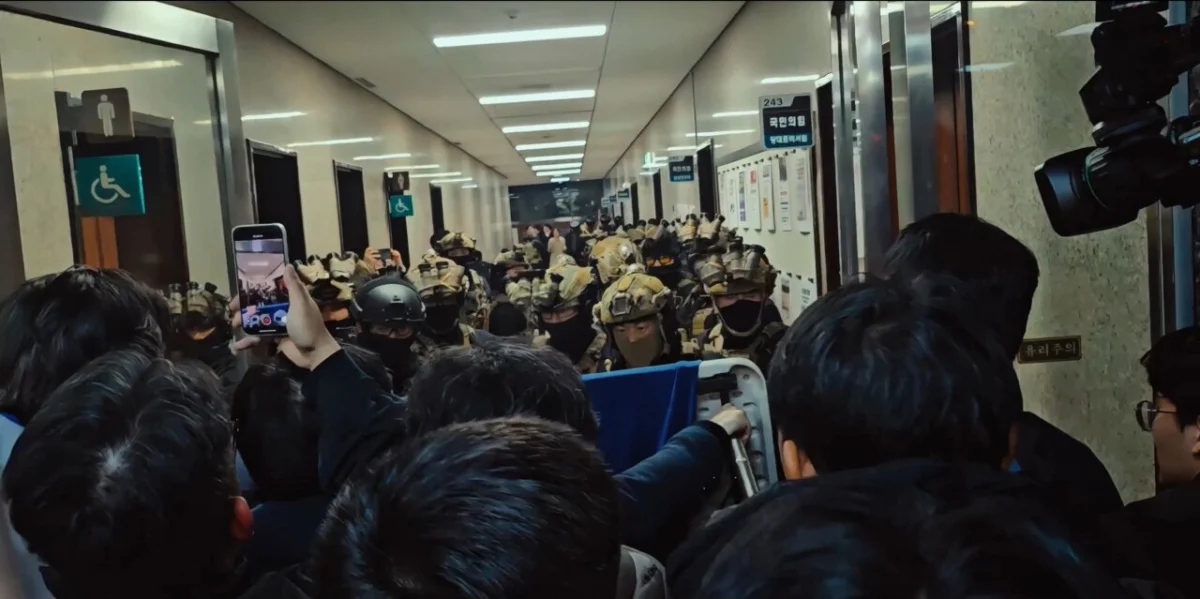
The Jeonju International Film Festival (JIFF) has long served as a bellwether for the trajectory of South Korean cinema, offering early insights into prevailing themes and artistic directions. In 2026, JIFF’s programming provided an undeniable testament to the nation’s turbulent political landscape, distinctly highlighting a surge in politically charged documentary filmmaking. This year’s festival, held amidst the delayed repercussions of the December 3, 2024, martial law crisis, showcased how swiftly documentary cinema transformed a national rupture into a potent medium for images, testimony, memory, and impassioned arguments. Events that might typically require years of societal processing were brought to the screen with startling immediacy at JIFF, reflecting a collective urgency to document and understand a pivotal moment in South Korean history.
H2: A Nation Under Duress: The Martial Law Crisis of December 3, 2024
The martial law declaration on December 3, 2024, plunged South Korea into a period of unprecedented political tension. The government, citing escalating domestic unrest and perceived threats to national security, invoked emergency powers, leading to the deployment of military personnel and significant restrictions on civil liberties. This move, unprecedented in decades, triggered widespread public outcry and protests, underscoring a deep societal division regarding the government’s actions and the future of democratic governance in the nation. The immediate aftermath was characterized by a palpable sense of uncertainty and a swift mobilization of citizens, activists, and political figures determined to safeguard democratic principles. The subsequent weeks and months saw ongoing demonstrations, legal challenges, and a fervent public discourse on the events that had transpired.
H3: The Speed of Documentation: Citizen Journalism and Archived Footage
The documentaries presented at JIFF in 2026 demonstrated an extraordinary capacity for rapid response. These new works drew heavily upon a diverse array of visual materials, including citizen-generated footage captured on mobile phones, extensive broadcast archives, powerful protest imagery, meticulously compiled maps, raw footage from court disturbances, live-streamed events, and the evocative visual language of street art and public demonstrations. This multifaceted approach allowed filmmakers to reconstruct the crisis from numerous perspectives, creating a rich tapestry of evidence and lived experience. JIFF screened a significant cluster of titles that collectively explored the martial law declaration, the ensuing civic resistance, instances of state-sanctioned violence, and the evolving landscape of democratic memory. Together, these films signaled the emergence of a distinct Korean documentary wave, characterized by its commitment to building a historical archive while the events were still raw and deeply felt.
H2: “The Longest Night: Namtaeryeong”: A Chronicle of Resistance Beyond the Capital
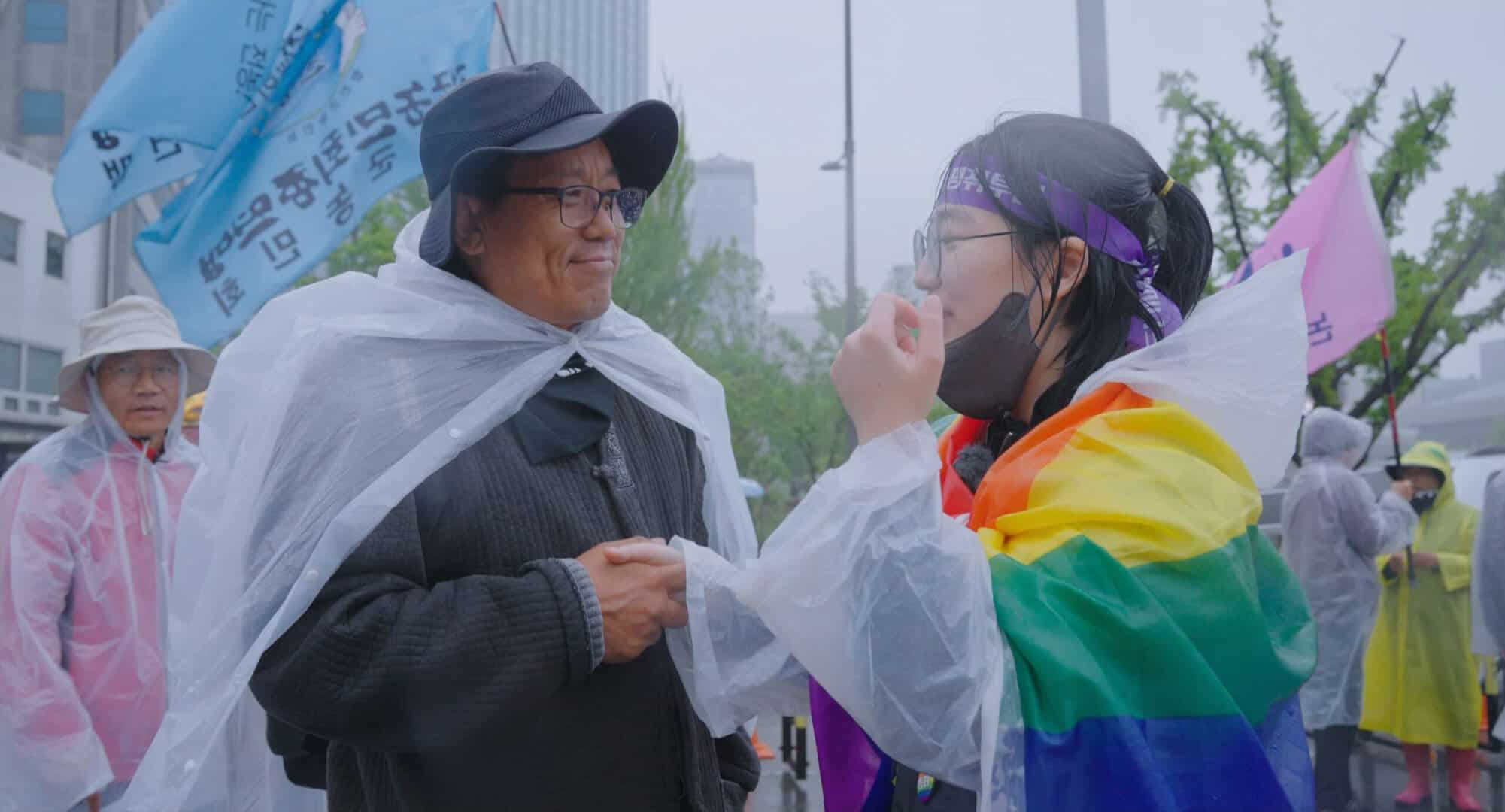
The festival’s pronounced political-documentary focus was perhaps most vividly encapsulated in its closing film, Kim Hyun-ji’s “The Longest Night: Namtaeryeong.” Rather than directly revisiting the tumultuous night of December 3, Kim’s documentary offers a profound examination of its aftermath. The film is set against the backdrop of protests that erupted in southern Seoul on December 21, 2024, capturing the enduring spirit of resistance in the wake of the martial law declaration. It illustrates how citizens, galvanized by the urgency of that night, channeled their determination into another public space, another gathering, and another act of defiance.
H3: Namtaeryeong: A Symbolic Threshold of Collective Action
The titular location of Namtaeryeong holds significant symbolic weight within the narrative. It emerged as one of the earliest major sites where the shockwaves of December 3 extended beyond the confines of the National Assembly and coalesced into a broader civic movement. The incident began when protesting farmers, en route to Seoul by tractor, were intercepted and blocked by police near Namtaeryeong Station. News of this confrontation quickly spread via social media, prompting a wave of solidarity. Individuals who heard about the farmers’ plight spontaneously gathered at the location. What started as a localized clash between farmers and law enforcement transformed into an extended 28-hour protest, drawing in ordinary citizens, seasoned activists, and impassioned demonstrators who were resolute in preventing the post-martial-law movement from losing momentum. Namtaeryeong, once merely a transit point on the outskirts of Seoul, became a potent symbol—a threshold where rural grievances, urban solidarity, and the enduring struggle for democracy converged.
The festival’s program notes poignantly describe the documentary as a record of an “accidental plaza of protest” on a winter solstice night. This evocative phrase underscores the spontaneous and organic nature of the gathering, suggesting a space that was not deliberately designated as a historic site but rather acquired that status through the powerful force of collective presence and shared purpose.
H3: From Individual Responsibility to Collective Action: Kim Hyun-ji’s Ethical Inquiry
Kim Hyun-ji’s documentary can also be interpreted as a collective extension of the moral framework explored in her earlier work, “Kim Jang Ha, the Adult.” That film centered on a philanthropist who dedicated decades to quietly redistributing his wealth back into society. While that earlier work posed the question of what it means for an individual to live as a responsible adult, “The Longest Night: Namtaeryeong” probes a critical societal question: what happens when this sense of responsibility becomes a collective endeavor? Kim’s latest film thus becomes a public manifestation of the same ethical inquiry, raising fundamental questions about civic engagement: who chooses to step forward, who assumes responsibility in times of crisis, and how does ordinary decency transform into potent democratic action?
H2: “The Seoul Guardians”: Reconstructing the Defense of Democracy
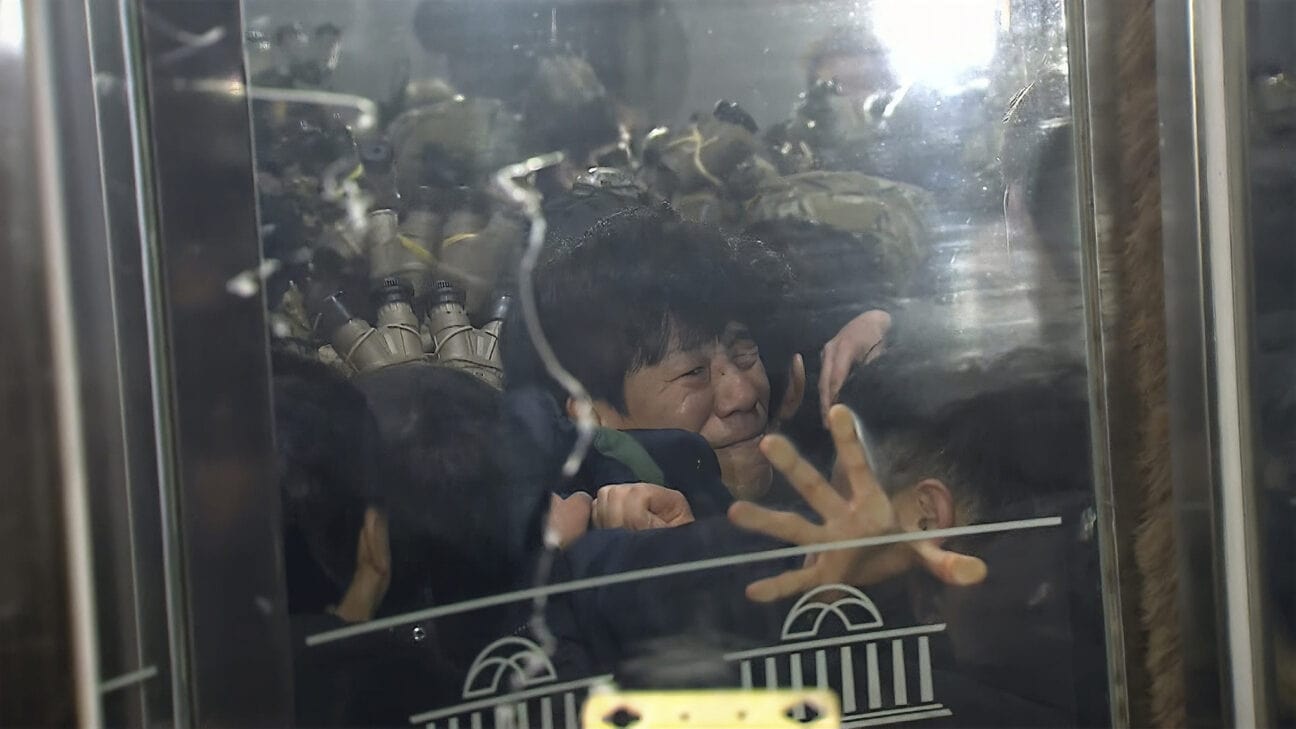
Another pivotal film at JIFF, “The Seoul Guardians,” hails from MBC, one of South Korea’s prominent broadcasting networks. This documentary revisits the events within the National Assembly itself on December 3, 2024. Employing a mosaic of multiple camera sources, the film meticulously reconstructs the unfolding drama of that night. It meticulously tracks the critical moments, from President Yoon Suk Yeol’s declaration of martial law and the movement of troops towards parliament, to the swift mobilization of citizens who rushed to block their advance, and the dramatic actions of lawmakers who scaled barricades and walls to cast their votes against the decree. The film’s profound impact lies in its near real-time reconstruction of a critical defense of democratic processes. In this portrayal, the National Assembly transcends its identity as a mere political institution; it becomes a visceral site of emergency, urgent movement, palpable risk, and determined resistance.
H3: Jung Yoon-suk’s “The Hollow Man”: A Fractured Vision of Societal Collapse
The political focus of JIFF’s programming extended beyond the immediate parliamentary crisis, delving into the broader societal repercussions. Jung Yoon-suk’s short film, “The Hollow Man” (original Korean “The World Ends Like That”), draws a direct line between the December 3 crisis and the subsequent riot at the Seoul Western District Court. The film masterfully employs text, audio recordings, and fragmented imagery to encapsulate the disorienting sensation of a world unraveling. It intricately links the martial law declaration, the court riot, subsequent protests, and the filmmaker’s own personal turmoil into a disquieting, absurdist convergence.
The film gains an even sharper resonance when viewed within the broader context of Jung’s distinguished documentary career. He has consistently demonstrated a profound interest in public events that expose the deep-seated fractures within Korean society, as well as in individuals who challenge the established norms and contradictions of prevailing rules. His earlier acclaimed work, “Non-Fiction Diary,” examined the notorious Jijon Clan murder case against the backdrop of South Korea’s transition from military rule to democracy and the profound social shocks of the 1990s. “Bamseom Pirates Seoul Inferno” documented a provocative punk band whose performances boldly challenged censorship, anti-communist paranoia, and societal hypocrisy. Seen through this lens, “The Hollow Man” is not an isolated response to the events of December 3 and their violent aftermath. Instead, it represents a continuation of Jung’s long-standing fascination with critical junctures where public crisis, political power, social disorder, and personal struggles intersect and collide.
H3: A Free Expression Controversy and the Filmmaker’s Criminalization
Jung’s work now carries an even more acute charge due to his personal involvement in a significant free expression controversy. During the festival period, the Supreme Court upheld a 2 million won fine against Jung for trespassing. The conviction stemmed from his entry into the Seoul Western District Court with a camera to record the riot that had occurred there. This ruling has ignited sharp criticism, particularly given the disparate treatment of institutional media outlets covering the same incident. While Jung faced punishment as a trespasser, a reporter who documented the same scene later received a prestigious journalism award. Jung’s short film, “The Hollow Man,” directly confronts this bitter irony. It opens with the stark declaration, “This is a record of being found guilty,” immediately framing the work not merely as a document of political violence but as a poignant record of the filmmaker’s own criminalization for the act of attempting to film and bear witness.
H2: Beyond Politics: The Culture and Aesthetics of Protest
JIFF’s programming also extended to exploring the cultural, design, and performance aspects of protest, revealing that the crisis produced a diverse range of documentary responses. Cho Youngsue’s short film, “Feminist-Queer-for Korean Democracy” (whose Korean title translates to “Anyone Want to Design Protest Banners?”), follows designers who were actively creating banners, placards, and other protest materials in the wake of the martial law declaration. The film compellingly illustrates how resistance can also take shape through the deliberate choices of typography, the crafting of resonant slogans, and the strategic visual coordination of protest messaging.
In a similar vein, Kang Nara’s short film, “Dear Fan,” traces the fascinating migration of K-pop fandom culture into the arena of protest. The film highlights how elements such as cheering sticks, traditionally associated with fan gatherings, became integral components of the visual vocabulary of democratic action. Together, these shorts powerfully suggest that the martial-law crisis was not solely confined to the machinations of politicians, courts, and established institutions. It was, and continues to be, a multifaceted phenomenon encompassing images, gestures, fan communities, the physical presence of bodies, and the dynamic nature of public space.
H2: Echoes of the Past: Gwangju and the Historical Context of Authoritarianism
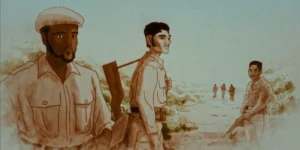
The festival’s commitment to political documentary extended beyond the immediate events of December 3, 2024, reaching back into South Korea’s fraught history. “The Yearbook: Waiting for the Teacher” offers a poignant look at May 27, 1980, the final day of the Gwangju Democratic Uprising. The film focuses on high school students who defied martial law during this pivotal period. The connection to the 2024 crisis is direct and deeply resonant. For many Koreans, the declaration of martial law in 2024 immediately conjures memories of the last time martial law loomed so heavily in the national consciousness: the brutal suppression of protests in Gwangju, where soldiers were deployed against demonstrators and innocent bystanders, resulting in thousands of deaths, injuries, and disappearances. The inclusion of “The Yearbook” at JIFF serves to firmly situate the 2024 crisis within the broader, historical arc of South Korean authoritarianism, state violence, and the enduring struggle for democracy.
H2: “RAN 12.3”: A Commercial Cinematic Response to Crisis
Beyond the confines of the Jeonju festival, Lee Myung-se’s “RAN 12.3” stands as a prominent example of this burgeoning documentary wave. Released theatrically in South Korea on April 22, the film captivated audiences and critics alike. Lee himself was present at JIFF, en route to a special screening at the historic Gwangju Theater, the nation’s oldest surviving movie house. The Gwangju Theater, situated in the city indelibly linked to the nation’s past trauma of martial law, provided a fitting and emotionally charged venue for the film. At the vast, single-screen cinema, which boasts a seating capacity of 856, “RAN 12.3” played to a sold-out audience. Although not an official selection of the Jeonju lineup, its thematic concerns and stylistic approach firmly place it within the same post-martial-law documentary movement.
Directed by one of Korean cinema’s most celebrated stylists, “RAN 12.3” employs a rich amalgamation of citizen footage, archival material, animation, and AI-generated imagery, underscored by the evocative music of Cho Sung-woo, to reconstruct the December 3 crisis. The film eschews the conventions of a traditional explanatory documentary. Instead, it transforms the crisis into a visceral, sensory cinematic experience. Constructed from videos and photographs contributed by citizens, alongside parliamentary records and media coverage, the production demonstrates that the documentary response to the December 3 events is not confined to the festival circuit. It has successfully entered commercial cinemas, reaching a broader general audience at the very time JIFF was presenting its own curated selection of martial-law-related works.
H3: A Collective Reckoning: Memory, Spectacle, and the Future of Korean Cinema
The overlap between festival programming and commercial releases is significant. It underscores a collective national effort, involving festival programmers, broadcasters, independent filmmakers, and theatrical distributors, to process a singular, profound crisis. The sheer speed of this creative response suggests that the events of December 3 have already transcended immediate impact, becoming fertile ground for memory, spectacle, civic self-examination, and, crucially, for cinematic exploration.
Taken in their entirety, the films featured at Jeonju, alongside related works such as “RAN 12.3,” reveal a documentary field responding with remarkable alacrity to a profound political rupture. What has emerged is not merely a collection of films dissecting a single night of turmoil. Rather, it represents the genesis of a new, vital archive of South Korean democracy under immense pressure. The December 3 martial-law crisis has catalyzed the creation of documentaries that grapple with fundamental questions: who holds the authority to record history? Who possesses the right to interpret public events? How do ordinary citizens become visible and their voices amplified? And, most critically, how can cinema effectively respond when the foundations of democracy appear suddenly fragile? JIFF 2026 has thus served as one of the earliest and most significant platforms to demonstrate that this story is far from over. It is a narrative still in flux, actively being edited, screened, debated, and continuously transformed into compelling moving images.