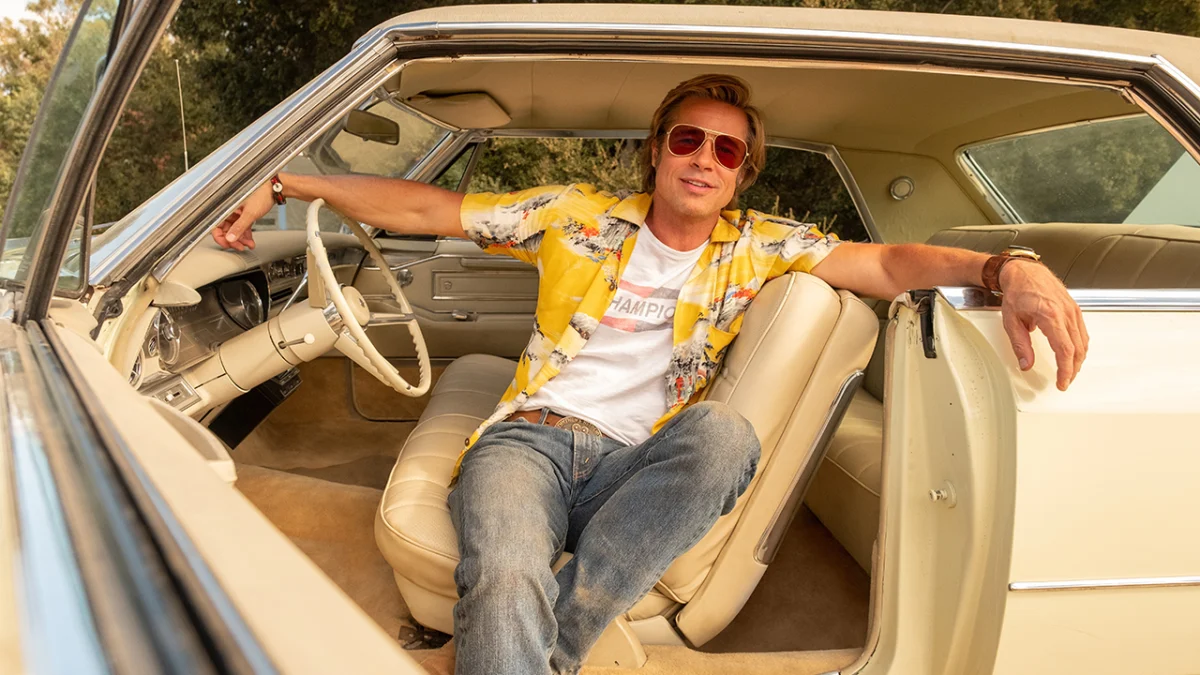
In a cinematic collaboration poised to redefine industry expectations, Netflix has officially confirmed a monumental project uniting three titans of modern film: director David Fincher, screenwriter Quentin Tarantino, and Academy Award-winning actor Brad Pitt. Pitt is slated to reprise his critically acclaimed role as stuntman Cliff Booth, a character first introduced in Tarantino’s 2019 Palme d’Or nominee Once Upon a Time… in Hollywood. This highly anticipated feature film, currently operating under the working title "The Adventures of Cliff Booth" though subject to change, represents a significant strategic move for Netflix, incorporating an exclusive two-week global engagement in IMAX theaters before its worldwide streaming premiere, a release model that underscores the prestige and ambition of the endeavor.
The project is slated for an ambitious holiday 2026 release, specifically targeting December 23rd for its Netflix debut, following a precedent-setting theatrical window. This date, notably, was originally reserved for Greta Gerwig’s The Chronicles of Narnia: The Magician’s Nephew, which has since been shifted to an "eventized" full theatrical release in early 2027. The repositioning allows the Fincher-Tarantino-Pitt collaboration to occupy a prime holiday viewing slot, a move that industry analysts had reportedly been predicting in recent weeks, highlighting Netflix’s agility in capitalizing on available premium release real estate.
An Unprecedented Alliance: Fincher, Tarantino, and Pitt
The convergence of David Fincher’s meticulous directorial vision, Quentin Tarantino’s distinctive narrative craftsmanship, and Brad Pitt’s profound acting prowess is a rare occurrence in contemporary cinema. Each artist brings a formidable legacy and a dedicated following, promising a film that is both stylistically unique and narratively compelling.
David Fincher, renowned for his psychological thrillers and dark, often unsettling narratives, has cultivated a reputation for precision and a mastery of atmosphere. From Se7en and Fight Club (which also starred Pitt) to Zodiac and The Social Network, Fincher’s filmography is characterized by intricate plots, striking visuals, and profound character studies. His return to a more action-oriented, character-driven narrative, especially one penned by Tarantino, signals a potentially fresh direction within his acclaimed body of work, while retaining his signature aesthetic.
Quentin Tarantino, a celebrated auteur, is lauded for his non-linear storytelling, sharp dialogue, eclectic soundtracks, and homage-laden filmmaking. His scripts often blend historical revisionism with genre pastiche, creating cinematic experiences that are instantly recognizable. Once Upon a Time… in Hollywood was a love letter to the golden age of Tinseltown, weaving fictional characters into the real-life backdrop of 1969 Los Angeles. The prospect of Tarantino writing for Fincher, a director known for his rigorous control over the script, suggests a fascinating creative tension and a potentially explosive outcome.
Brad Pitt, an actor with a career spanning decades, has consistently demonstrated versatility, transitioning seamlessly between blockbusters and critically acclaimed art-house features. His portrayal of Cliff Booth in Once Upon a Time… in Hollywood earned him an Academy Award for Best Supporting Actor, lauded for its effortless cool, underlying loyalty, and understated complexity. Booth’s character, a stuntman and confidante to fading star Rick Dalton, embodied a certain archetype of masculinity and resilience, resonating deeply with audiences and critics alike. His return to this role, under the guidance of Fincher and Tarantino, is a testament to the character’s enduring appeal and the creative potential seen in expanding his story.
Cliff Booth’s Evolution: A Journey into 1977 Hollywood
The official logline provided by Netflix offers a tantalizing glimpse into the film’s premise: "Brad Pitt returns to his Academy Award-winning role as Cliff Booth, only this time it’s 1977 and it’s a very different Hollywood." This temporal leap from 1969 to 1977 places Booth squarely in a transformative era for the American film industry.
By 1977, the "New Hollywood" era, characterized by auteur-driven, often gritty films, was beginning to give way to the burgeoning age of blockbusters, exemplified by the release of Star Wars that very year. The studio system was adapting, and the cultural landscape was shifting dramatically. Disco was ascendant, punk rock was brewing, and the counterculture movements of the late 60s had matured, often into cynicism or disillusionment. For a character like Cliff Booth, a man deeply embedded in the mechanics of the film industry, this "very different Hollywood" implies a world potentially less familiar, more commercialized, and perhaps more treacherous than the one he navigated eight years prior.
In Once Upon a Time… in Hollywood, Booth was depicted as a man seemingly at peace with his place in the industry’s pecking order, fiercely loyal, and possessing a quiet, almost mythic competence. His backstory, hinted at but never fully confirmed, involved shadowy rumors and a life lived on the fringes. The 1977 setting opens myriad narrative possibilities: Has Booth found a new purpose? Is he still working as a stuntman, or has the changing industry pushed him into different, perhaps more perilous, ventures? The era’s burgeoning drug culture, the rise of independent filmmaking, and the lingering shadows of the Manson Family murders (which concluded the previous film’s narrative arc) could all provide rich thematic material for Tarantino’s script and Fincher’s direction.
Netflix’s Strategic Gambit: The Theatrical-Streaming Hybrid
The most striking aspect of this announcement, beyond the star power, is Netflix’s innovative release strategy. The decision to grant an exclusive two-week global engagement in IMAX theaters starting November 25, 2026, before its streaming debut on December 23, 2026, signifies a calculated evolution in the streamer’s approach to prestige projects.
Historically, Netflix has been a disruptor of traditional theatrical models, often releasing films directly to its platform with minimal or simultaneous theatrical runs, primarily to qualify for awards. While this strategy has garnered critical success for films like Roma, The Irishman, and Marriage Story, it has also drawn criticism from exhibitors and filmmakers who champion the communal, big-screen experience.
The IMAX partnership for the Cliff Booth project represents a significant departure and a potential bridge between these two models. "Sources indicate that this doesn’t represent a permanent shift in Netflix’s overall theatrical strategy," suggesting it’s a bespoke approach tailored for films that "demand the biggest screen possible, particularly given the film highly appeals to cinephiles." This move allows Netflix to tap into the premium theatrical revenue stream and the cultural cachet associated with an IMAX release, while still maintaining its core identity as a streaming service.
The selection of the Christmas holiday window further amplifies its strategic importance. The period between Thanksgiving and New Year’s is traditionally a highly lucrative time for cinema, attracting large audiences. By securing the slot previously held by The Chronicles of Narnia: The Magician’s Nephew, Netflix positions the untitled Cliff Booth film as a major "eventized" release, capable of capturing both critical attention and broad audience engagement during a competitive season. This dual-release model could serve as a blueprint for future high-profile Netflix productions, allowing them to maximize both theatrical impact and subscriber value.
Behind the Lens: Fincher’s Trusted Collaborators
True to David Fincher’s directorial style, the project boasts a lineup of his most trusted and award-winning collaborators, ensuring the film adheres to his exacting standards of technical and artistic excellence. The film is produced by Fincher’s long-time producing partner, Ceán Chaffin, alongside Brad Pitt himself, indicating a hands-on approach from the star. Chaffin has been instrumental in nearly all of Fincher’s major works, from Panic Room to Mank, providing a consistent creative and logistical backbone to his complex productions.
Behind the scenes, the crew is packed with Fincher veterans, whose collective experience guarantees a distinctive visual and sonic landscape:
- Cinematography: While not explicitly named in the provided text, Fincher frequently collaborates with cinematographers who share his precise visual language, often employing dark, desaturated palettes and intricate camera movements. Erik Messerschmidt, who won an Oscar for his work on Fincher’s Mank, is a likely candidate, known for his masterful control of light and shadow, which would perfectly complement a 1977 Hollywood setting and Fincher’s aesthetic.
- Editing: Kirk Baxter, another frequent Fincher collaborator (and Oscar winner for The Social Network and The Girl with the Dragon Tattoo), is almost certainly onboard. His sharp, rhythmic editing is crucial to Fincher’s narrative pacing and tension building.
- Production Design: Donald Graham Burt, Fincher’s go-to production designer (also an Oscar winner for Mank), would be tasked with meticulously recreating the 1977 Hollywood era, ensuring historical accuracy and atmospheric depth.
- Costume Design: Trish Summerville, known for her work on The Girl with the Dragon Tattoo and Gone Girl, would bring her nuanced understanding of character and period detail to Cliff Booth’s wardrobe and the overall fashion of the late 70s.
- Music Composition: Trent Reznor and Atticus Ross, the Oscar-winning duo responsible for Fincher’s iconic scores (including The Social Network and Gone Girl), would undoubtedly craft a haunting and evocative score that blends period elements with modern sensibilities, a hallmark of their collaborative work.
This ensemble of seasoned professionals underscores the project’s commitment to cinematic excellence, promising a film that is not only star-studded but also technically impeccable.
The Road to Release: A Shifting Timeline
The journey of the untitled Cliff Booth project to its confirmed release date has been marked by a gradual unveiling and strategic adjustments. Initially, Netflix was "reluctant to reveal any details on or even acknowledge its existence for the longest time," a tactic often employed for highly anticipated, secretive projects to build anticipation.
The first major public confirmation arrived unexpectedly during the Super Bowl in February, with a surprise trailer drop. This high-visibility event served as a potent declaration of intent, immediately generating significant buzz across social media and entertainment news outlets. The Super Bowl has become a prime platform for major film and television announcements, leveraging its massive, diverse audience for maximum impact.
Following the initial reveal, the film’s release timeline underwent several revisions. "The movie had been cited numerous times for a Summer release on Netflix," aligning with the streamer’s traditional pattern of dropping major titles during peak viewing seasons. However, "in recent weeks, a Fall premiere was understood to be its new slot," perhaps to position it for early awards consideration or to avoid a crowded summer slate. The final pivot to the December 23, 2026, holiday slot, preceded by the IMAX window, suggests a calculated decision to maximize its visibility and commercial potential, capitalizing on the open Narnia slot. It is also "thought that this movie will be heading to one or multiple of the Fall film festivals," a common strategy for prestige films seeking critical acclaim and early awards momentum.
Broader Implications and Industry Anticipation
The collaboration between Fincher, Tarantino, and Pitt, coupled with Netflix’s ambitious release strategy, carries significant implications for the entertainment industry. For Netflix, it reinforces its commitment to attracting top-tier talent and producing high-quality, event-level cinema, further blurring the lines between traditional studios and streaming platforms. The success of this hybrid release model could pave the way for more theatrical engagements for Netflix’s premium content, potentially reshaping the future of film distribution.
For the creative talents involved, it offers a unique opportunity to explore a beloved character in a new context, benefiting from the extensive resources and global reach of Netflix while still enjoying the grandeur of a theatrical presentation. It also signifies a fascinating evolution for Tarantino, who has often expressed a desire to retire after ten films, and for Fincher, who continues to push the boundaries of visual storytelling.
The film is poised to be a major player in the 2027 awards season, particularly with its limited theatrical run satisfying eligibility requirements for major accolades. Its critical reception will be closely watched, not only for its artistic merit but also for its potential to influence future strategic decisions across the industry. Cinephiles and casual viewers alike are eagerly awaiting more details, including the official title and the full cast list, which is expected to include "a bunch more smaller castings" in the coming months.
In conclusion, the untitled Cliff Booth project is more than just another movie; it is a cultural event, a bold experiment in distribution, and a testament to the enduring power of cinematic storytelling when wielded by its most accomplished practitioners. Its arrival in late 2026 is set to be a defining moment for Netflix and a thrilling chapter in the careers of David Fincher, Quentin Tarantino, and Brad Pitt.