
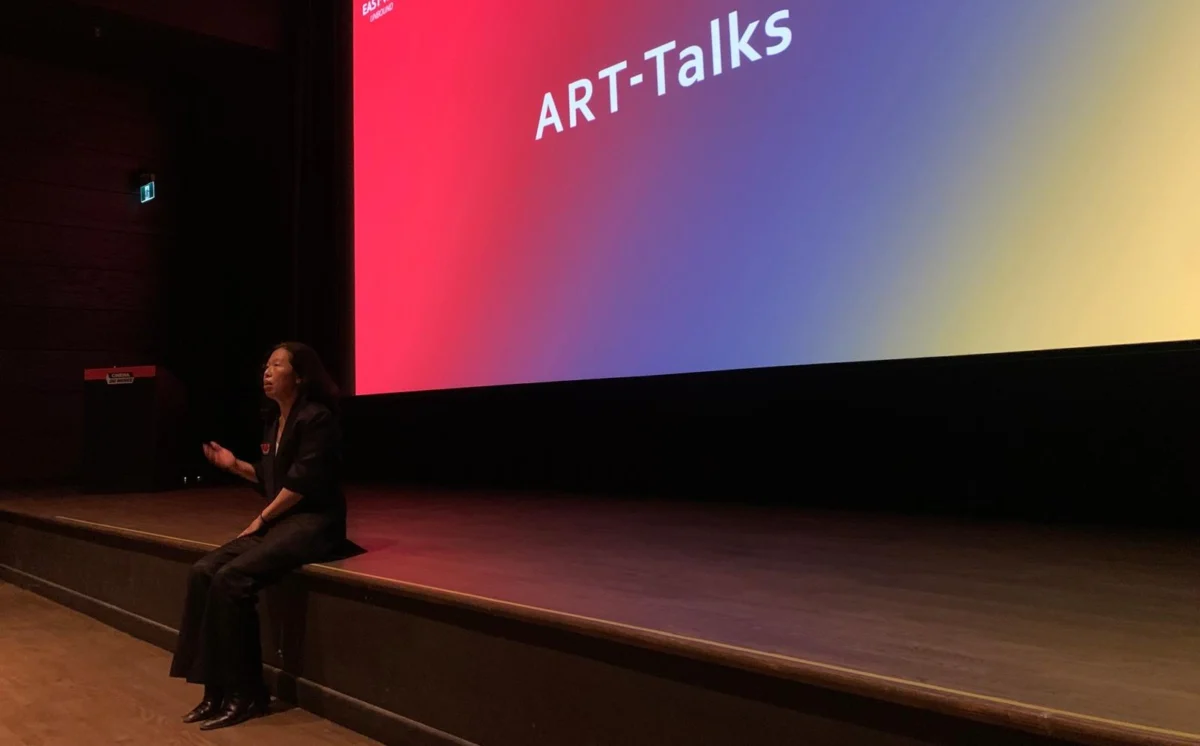
Renowned political activist and award-winning documentary filmmaker Min Sook Lee unveiled her deeply personal ninth feature, "There Are No Words," at the Montreal Asian International Film Festival, offering audiences a profound exploration of familial relationships, the fallibility of memory, and the enduring impact of unspoken histories. Lee, known for her impactful documentaries such as "Tiger Spirit" (2008) and "Migrant Dreams" (2016), which have shed light on marginalized communities and social justice issues, takes a distinctly introspective turn in her latest work. Born in South Korea and immigrating to Canada at the age of three, Lee’s own life experiences, including her current role as an educator at the Ontario College of Art and Design University focusing on the intersection of art and social change, inform the layers of her filmmaking.
"There Are No Words" delves into the filmmaker’s complex relationship with her father and the lingering memories of her mother, a subject Lee admits took decades to confront. The film’s genesis, Lee explains, was deeply rooted in the anxieties of the COVID-19 pandemic. "I was taking care of my father during the pandemic," Lee shared in an interview coinciding with the film’s screening. "And I thought about how, if he dies, he takes my mother, memories and information about her, with him. I wanted to make sure what happened to her wasn’t forgotten." This profound realization underscored a critical concern for Lee: the potential erasure of women’s narratives, particularly those from marginalized backgrounds, when their stories are not actively preserved and told by their descendants. "I know that if we don’t talk about these stories, not only would her life disappear from any archive, but all stories by women like her, with their lives narrated by the perpetrators," she elaborated, highlighting the imperative to reclaim and reframe these often-silenced histories.
The Genesis of a Personal Narrative
Lee’s decision to transition from documenting the struggles of others to exposing her own vulnerabilities was a significant ethical reckoning. For nearly 26 years, her documentary practice has been built on a foundation of trust with her subjects, many of whom faced considerable risks by appearing on camera. Migrant workers, for instance, could jeopardize their employment contracts by speaking out. This constant awareness of the ethical responsibilities inherent in documentary filmmaking eventually led Lee to question her own willingness to embrace such vulnerability. "Eventually, I started asking myself when I would be willing to take that same risk," Lee reflected. "If I was asking others to be vulnerable, perhaps I needed to do the same. That became one of the reasons for making this film." This profound realization marks a pivotal point in her directorial career, demonstrating a commitment to the very principles of empathy and risk-taking she has championed in her previous work.
Navigating Family Dynamics and Unearthing Lost Connections
The participation of family members in "There Are No Words" was a delicate and often challenging process. Among the most pivotal figures in the film is Lee’s childhood friend, Megan. Despite a period of diminished contact, a poignant phone conversation following the death of Lee’s sister rekindled their connection. When Lee confided her intention to make a film about her mother, Megan’s immediate response – "I’ve been waiting for you to make this film my whole life" – served as powerful validation, reinforcing the story’s significance and making her involvement relatively straightforward.
The path to including other family members, however, was more circuitous. The initial scope of the film, which Lee envisioned involving more relatives, had to be narrowed when one sibling opted out of participation, leading to a more focused narrative centered on Lee and her parents. Her father, now 90 years old, embraced the project with remarkable enthusiasm, even suggesting that the film was partly his idea. The search for her uncle proved to be a significant undertaking. Having lost touch for years and unsure of his whereabouts, Lee embarked on a personal journey to her hometown in South Korea. Her diligent efforts, involving inquiries at local shops, eventually led her to his door. The pre-release screening of the film for both her father and uncle was a crucial step, ensuring their comfort with the narrative’s portrayal. Lee noted her uncle’s satisfaction, stating he felt his sister’s story had finally been treated with the respect it deserved. This act underscores the film’s intent to honor and validate the experiences of its subjects.
The Lingering Echoes of Language and Identity
A particularly striking element of "There Are No Words" is the exploration of the language barrier between Lee and her father. Her fluency in Korean, which is not complete, has historically created a palpable distance in their relationship, representing a severed connection. This linguistic divide necessitated the use of interpreters throughout the film, a deliberate choice by Lee to highlight the mediated nature of their conversations. "Without language, it can feel as though an important connection has been cut," Lee explained.
Furthermore, her father’s Korean is described as possessing a unique cadence, a linguistic imprint of the 1950s, reflecting his age and his origins in Jeolla Province. This region in South Korea carries a significant legacy of political activism and resistance. Lee observes that native Korean speakers can immediately identify his regional dialect, placing him within the historical context of events like the Gwangju Uprising of May 1980, a pivotal moment that spurred South Korea’s democratic movement. This recognition is underscored by a degree of unease for Lee, given her father’s staunch alignment with authoritarian regimes. "It’s a little unsettling, because he’s such a fascist, so aligned with the authoritarian regime," she candidly stated. This juxtaposition of his historical linguistic markers with his political leanings adds a complex layer to his character and the film’s narrative.
The Fragility and Power of Memory
The film grapples directly with the reliability of memory, particularly concerning Lee’s father, who, despite his advanced age, recalls numerous events with striking clarity. Lee acknowledges this as a central question of the film, admitting there is no simple answer. While her father has always possessed an exceptional memory, inconsistencies occasionally surface in his recollections. However, Lee finds greater assurance in his accounts of her mother, as they are often corroborated by others who knew her.
Lee also extends this skepticism to her own memory, describing it as "terrible" and riddled with gaps. Her childhood friend Megan’s recollections during the filmmaking process served as poignant reminders of events Lee had entirely forgotten, including being present at her mother’s death. This personal experience reinforces the ephemeral nature of memory, comparing it to a dream that fades upon waking. "Memory can disappear like a dream," Lee mused. "You wake up, try to hold onto it, and it slowly fades away." This exploration of memory’s unreliability is not merely an academic exercise but a deeply felt personal struggle, directly impacting how Lee constructs and understands her family’s past.
The Quest for Understanding and Connection
At its core, "There Are No Words" is driven by Lee’s desire to understand her mother. Through her research and conversations with individuals who knew her mother in Korea, Lee uncovered aspects of her life previously unknown to her. These accounts painted a portrait of a woman who was "incredibly strong, fearless, and independent," often defying the societal expectations for women of her era. Lee learned of her mother’s difficult upbringing, her hard work, and her significant sacrifices for her family, all of which contributed to a deeper comprehension of her as an individual.
The process of making the film has also fostered a stronger sense of connection for Lee with her mother. She recalls a visit from an aunt in her twenties, who was struck by Lee’s resemblance to her mother, an encounter that felt almost spectral. "Making the film gave me a stronger connection to my mother," Lee stated, acknowledging a desire to feel closer to a figure who had, for much of her life, remained an enigma. This newfound proximity allows Lee to contemplate her own identity in relation to her mother’s legacy.
Broader Implications: Personal and Political Resonance
Lee articulates a dual purpose for "There Are No Words": a personal quest for remembrance and a broader political and social commentary. On a personal level, the film represents a journey toward greater closeness with her mother, a goal she acknowledges may take time to fully realize. However, the film has undeniably initiated this crucial process.
On a larger scale, Lee hopes audiences will find resonances with their own experiences and engage with critical issues such as domestic violence, authoritarianism, complex family dynamics, and the enduring spirit of resistance. Her assertion that "Families are not separate from politics, they are deeply shaped by political forces" serves as a powerful concluding thought. This statement challenges the notion of the private sphere as being insulated from the broader socio-political landscape, emphasizing how personal lives are intrinsically interwoven with and influenced by historical and political contexts. The film, therefore, transcends a singular family narrative to become a microcosm of larger societal struggles and the universal human need for understanding, connection, and the preservation of memory in the face of loss and silence. The film’s screening at the Montreal Asian International Film Festival provides a significant platform for these themes to resonate with a diverse international audience, prompting reflection on the untold stories within their own families and communities.