


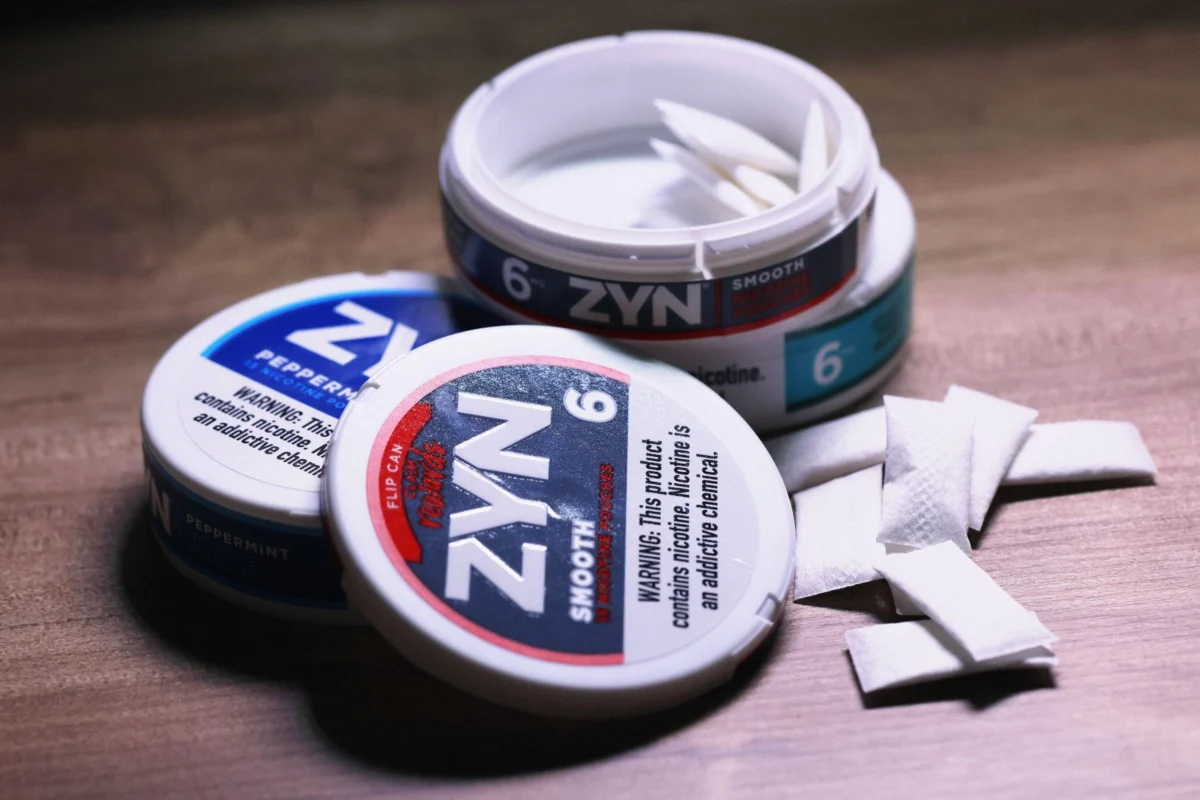
Entrepreneur Garrett Campbell maintains a rigorous 15-hour daily work schedule, fueled by a 6-milligram "cool mint" Zyn nicotine pouch tucked beneath his upper lip. For Campbell, the founder of a software company and a former sales recruitment executive, the pouch is more than a habit; it is a tactical tool for cognitive endurance. Aside from meal times, the stimulant is a constant presence, providing what he describes as a psychological edge during high-stakes sales calls and marathon coding sessions.
Campbell was not always an advocate for nicotine. In his earlier years, he viewed the substance with skepticism, labeling its use among college peers as a "degenerate" activity. However, as he ascended into the upper echelons of the tech startup world, he witnessed a cultural pivot. Nicotine, once associated with the "dirty" stigma of combustible cigarettes and the polarizing aesthetics of vaping, has been rebranded within Silicon Valley as a "clean" nootropic. Today, Campbell observes that nearly every fellow founder in his professional circle utilizes nicotine pouches to maintain focus and productivity.
This shift is reflected in the explosive market growth of Zyn, the industry leader owned by Philip Morris International. In the most recent financial year, the company distributed 794 million cans in the United States alone, marking a 37 percent increase over the previous year. The product’s ascent signifies a broader trend in American industry: the emergence of tobacco-free nicotine as the preferred stimulant for a new generation of "high-performance" workers.
The Evolution of Nicotine From Stigma to Performance Hack
The history of nicotine delivery has undergone a rapid transformation over the last century. For decades, the primary method of consumption was the combustible cigarette, which became a symbol of mid-century corporate life before being marginalized due to severe health risks and social stigma. The 2010s saw the rise of electronic cigarettes and vapes, which offered a smoke-free alternative but were eventually marred by concerns over lung health and youth appeal.
Nicotine pouches represent the third wave of this evolution. Composed of tobacco-free nicotine salt, synthetic fibers, and food-grade sweeteners, these pouches are placed between the lip and gum, allowing the chemical to enter the bloodstream through the oral mucosa. This delivery method eliminates the smoke, smell, and visible vapor associated with previous iterations, making it a "stealth" stimulant compatible with modern office environments and Zoom-heavy schedules.
In Silicon Valley, this transition has been framed through the lens of biohacking—the practice of using science and technology to optimize human biological systems. Tech workers, often describing themselves as "racehorses" or "machines," have adopted nicotine for its purported ability to enhance memory, concentration, and reaction time. By stripping the drug of its traditional delivery mechanisms, proponents argue they have distilled the chemical’s benefits while minimizing its "dirty" associations.
The Normalization of Nicotine in the Corporate Landscape
The integration of nicotine pouches into the professional sphere reached a symbolic milestone with the reported adoption of the product at Palantir, a prominent AI and data analytics firm. Unlike the 19th-century factory model, which required workers to step away for smoke breaks, nicotine pouches allow for continuous labor. This "industrial-relations milestone" suggests that the drug has become an invisible fuel for the modern workforce, enabling longer periods of uninterrupted output.
The cultural normalization of pouches is further bolstered by high-profile endorsements across the political and entertainment spectrums. In the realm of media and politics, former Fox News host Tucker Carlson has become a vocal proponent, launching his own brand, ALP (American Lip Pillow). Carlson has characterized nicotine as a vital tool for national happiness and mental clarity, despite acknowledging its highly addictive nature. Similarly, Robert F. Kennedy Jr., the U.S. Health Secretary, has publicly referred to pouches as a safe alternative to smoking.
In the entertainment industry, the "upper decky"—a slang term for a pouch placed under the top lip—has made appearances on the red carpet. Actor Leonardo DiCaprio was noted for using a pouch at the Golden Globes, and Josh Brolin has spoken openly about using them nearly 24 hours a day. These endorsements have contributed to a sense of "fist-pumping camaraderie" among users, particularly within the "manosphere"—a digital subculture focused on traditional masculinity, fitness, and financial success.
Market Dynamics and the Multi-Billion Dollar Gold Rush
The rapid adoption of nicotine pouches has sparked a significant economic expansion. Philip Morris International’s acquisition of Swedish Match, the original manufacturer of Zyn, for $16 billion in 2022, underscored the massive potential of the smoke-free market. Analysts suggest the global nicotine pouch market is projected to grow at a compound annual growth rate (CAGR) of over 30 percent through the end of the decade.
This "gold rush" has led to a flurry of new brands and strategic partnerships. The UFC (Ultimate Fighting Championship) recently partnered with the brand Fre, utilizing marketing language like "bold" and "performance-driven" to align the product with the high-intensity world of professional fighting. These branding efforts are meticulously designed to appeal to demographic groups that value resilience and competitive advantage.
New entrants into the market are also attempting to differentiate themselves through "cleaner" ingredients. Brands like Lucy, backed by biohacking influencer Dave Asprey, claim to avoid synthetic fibers and artificial additives that some critics worry could contain microplastics. This internal competition within the industry highlights a growing rift between users who prioritize convenience and those who seek the "purest" possible form of the drug.
Scientific Analysis: The Nootropic Claim vs. Medical Reality
The central appeal of nicotine in the tech sector is its dual effect as a stimulant and a relaxant. Neuroscientifically, nicotine mimics the neurotransmitter acetylcholine, binding to receptors in the brain that trigger the release of dopamine, glutamate, and norepinephrine. This chemical cascade can lead to heightened alertness and a sense of calm—a state often referred to by users as being "wired but collected."
Nick Bostrom, a renowned philosopher and author of Superintelligence, uses nicotine-coated toothpicks to leverage what he calls the drug’s "nootropic benefits for memory and concentration." Bostrom, who avoids pouches due to their "gunk" and fillers, views the pure form of nicotine as a tool for cognitive optimization.
However, the medical community remains divided on the long-term implications of this trend. Brian Erkkila, a neuroscientist and head of executive affairs at Philip Morris, notes that while nicotine has measurable effects on the brain, the science is "not solid enough" to definitively categorize it as a long-term cognitive enhancer. Furthermore, critics point to the rapid development of dependence. Cory Firth, a flow-state coach, admits that while nicotine allows for massive output, he must strictly cycle his usage to avoid losing his "neurochemical baseline."
The most strident opposition comes from longevity advocates like Bryan Johnson, who argues that the trade-off for a short-term productivity boost is the loss of autonomy. Johnson warns that nicotine is a "highly addictive chemical" that can lead to oral lesions, gum recession, and a permanent alteration of the brain’s reward system.
Broader Implications for the Future of Work
The rise of nicotine pouches in Silicon Valley raises fundamental questions about the future of workplace culture and the ethics of productivity. As the tech industry becomes increasingly competitive, the pressure to "optimize" every hour of the day has led to the widespread adoption of substances that were once considered vices.
For entrepreneurs like Garrett Campbell, the risk of addiction is secondary to the immediate demands of the market. He acknowledges the possibility that future research may reveal long-term harms—similar to the trajectory of vapes—but for now, the ability to endure a 15-hour workday remains his primary metric of success.
As the industry continues to expand, regulatory bodies like the FDA are expected to increase scrutiny on the marketing and health claims of pouch manufacturers. Whether nicotine pouches remain a staple of the "performance-driven" executive’s toolkit or eventually face the same social and regulatory backlash as cigarettes remains to be seen. For the moment, however, the "lip cushy" has firmly established itself as the unofficial sponsor of the modern technological revolution, fueling the minds behind the next generation of AI and software.