




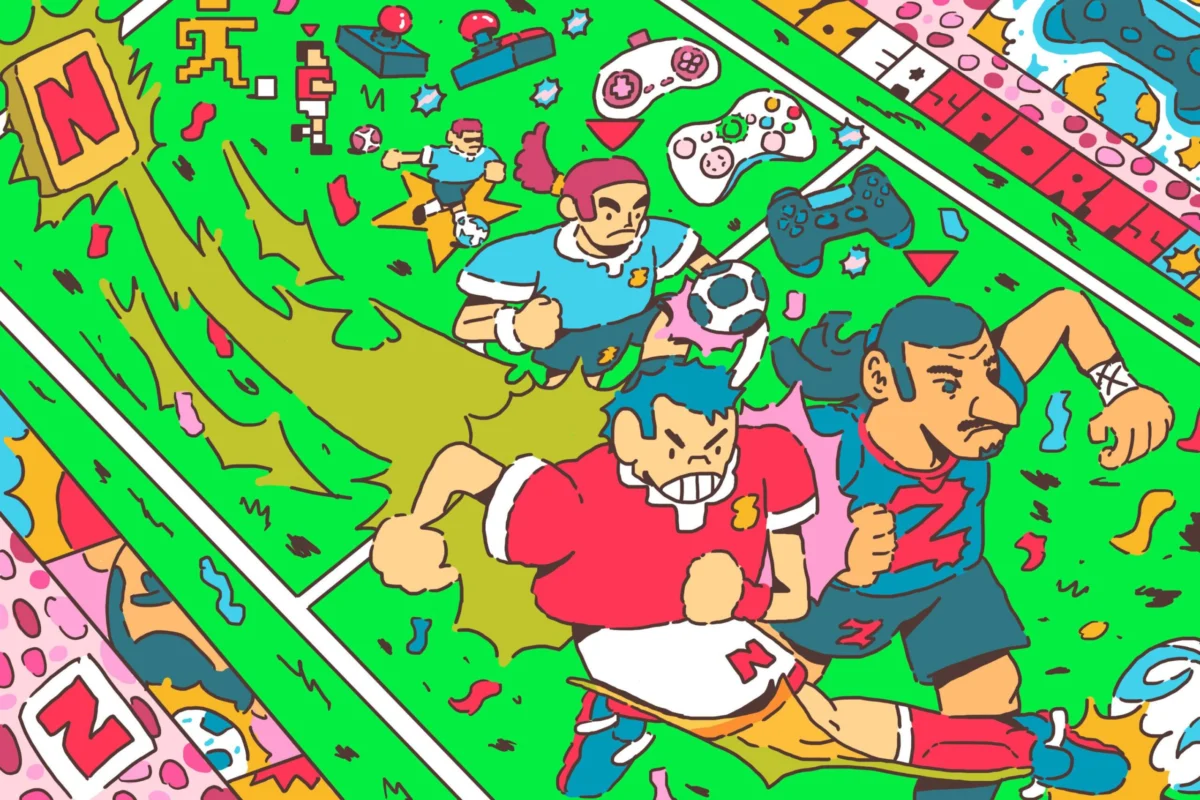
The year 2026 represents a definitive landmark in the intersection of global sports and digital entertainment. While the FIFA World Cup expands its physical footprint to 48 teams across the United States, Canada, and Mexico, a parallel expansion has occurred within the virtual landscape. For over three decades, the soccer video game market was characterized by a near-monopoly or, at best, a duopoly. However, the current landscape has fractured into a multifaceted ecosystem where Electronic Arts (EA), Konami, Strikerz Inc., and a surprising partnership between FIFA and Netflix are competing for dominance. This shift signifies more than just a change in branding; it represents a fundamental transformation in how digital sports are consumed, monetized, and distributed to a global audience of billions.
The Evolution of the Incumbent: EA Sports FC 26
When Electronic Arts and FIFA ended their high-profile partnership in 2022, many industry analysts predicted a period of instability for the publisher. Instead, the launch of the EA Sports FC brand has proven that brand loyalty in the gaming sector is often tied more to licensing and technical fidelity than to a specific acronym. By the time EA Sports FC 26 hit the shelves in late 2025, it was clear that the "rebrand risk" had been fully mitigated.
Data from the first quarter of the 2025-2026 fiscal year indicates that EA Sports FC 26 secured the top sales position in 16 of the 17 major European markets. This commercial success is underpinned by the refinement of HyperMotion V technology. By utilizing volumetric data from more than 180 top-tier matches, including the UEFA Champions League and major domestic leagues, EA has achieved a level of animation fluidity that blurs the line between a simulation and a live broadcast.
Despite its $70 price point, the game continues to thrive through its "Ultimate Team" ecosystem. However, the entry of aggressive competitors has forced EA to pivot its strategy. While they maintain the "Premium Experience" through exclusive licenses with the Premier League and La Liga, they have had to increase the frequency of free content updates to prevent player churn to free-to-play alternatives.
The Ubiquity of eFootball: Konami’s Billion-User Milestone
While EA Sports focuses on the high-end console market, Konami has successfully executed a "platform-agnostic" strategy with eFootball. In 2026, the franchise announced a staggering milestone: 1 billion downloads across all platforms. This achievement is the result of a five-year pivot from the traditional "Pro Evolution Soccer" annual release model to a free-to-play service-based model.
Konami’s success is particularly visible in emerging markets where mobile gaming is the primary form of digital interaction. By optimizing the game for high-performance mobile devices while maintaining cross-progression with PlayStation 5 and Xbox Series X|S, Konami has created a seamless ecosystem. A player can start a tactical masterclass on their commute via a smartphone and conclude the match on a 4K television at home.
Industry analysts note that eFootball’s gameplay philosophy—often described as more deliberate and physics-based than its rivals—has retained a core audience of "simulation purists." By removing the $70 barrier to entry, Konami has successfully democratized soccer gaming, prioritizing user acquisition and microtransactions over upfront sales.
UFL and the Rise of the "Fair to Play" Movement
The most significant ideological challenge to the status quo has come from UFL, developed by Strikerz Inc. The project gained international headlines when Cristiano Ronaldo joined a consortium of investors to inject $40 million into the game’s development. This was not merely a marketing endorsement; it was a strategic move to position UFL as the "ethical" alternative to the "pay-to-win" mechanics often criticized in other major titles.
Since its full release in December 2024, UFL has amassed over 25 million active users. The game’s core philosophy, "Fair to Play," ensures that matchmaking and team progression are determined by player skill and strategic depth rather than the size of a player’s real-world wallet. In UFL, the virtual representation of a player’s club grows through on-field achievements.
This approach has resonated deeply with the competitive gaming community. By focusing on a "skill-first" environment, UFL has carved out a niche in the eSports circuit, forcing both EA and Konami to re-evaluate their own monetization structures to avoid alienating a growing segment of players who demand competitive integrity.
The Netflix-FIFA Alliance: A Cloud Gaming Paradigm Shift
The most disruptive development of 2026 is the entry of Netflix into the sports simulation arena. Following the expiration of its exclusivity with EA, FIFA sought a partner that could offer unprecedented reach. The resulting alliance with Netflix and the developer Delphi Interactive has bypassed the traditional hardware limitations of the gaming industry.
Through Netflix’s cloud gaming infrastructure, the official FIFA World Cup 2026 game is available to more than 300 million subscribers without the need for a dedicated console. The technology allows users to stream the game directly to their smart TVs, using their smartphones as a touch-screen controller. This move targets the "casual observer"—the hundreds of millions of fans who follow the World Cup every four years but do not necessarily own a PlayStation or Xbox.
By integrating the game directly into the Netflix interface, FIFA has ensured that its intellectual property remains central to the World Cup experience. This strategy reflects a broader trend in the tech industry: the move away from hardware-dependent software toward platform-integrated services.
Chronology of the Transformation (2022–2026)
- May 2022: FIFA and Electronic Arts officially announce the end of their 30-year partnership.
- September 2023: EA launches EA Sports FC 24, successfully transitioning its player base to the new brand.
- December 2023: Cristiano Ronaldo announces his $40 million investment in UFL, signaling a shift toward investor-backed independent titles.
- August 2024: Konami’s eFootball surpasses 750 million downloads, cementing its lead in the mobile sector.
- December 2024: UFL officially launches, reaching 10 million users within its first month.
- October 2025: EA Sports FC 26 launches, utilizing HyperMotion V to set new benchmarks for visual fidelity.
- January 2026: Netflix and FIFA announce their cloud-based partnership for the 2026 World Cup.
- June 2026: The World Cup begins, with four major soccer titles competing for record-breaking user engagement.
Comparative Market Analysis: Business Models and Reach
The current market is defined by four distinct business philosophies:
- The Premium Model (EA Sports FC): Focuses on high-fidelity graphics, deep licensing, and a high-entry cost, supplemented by recurring revenue from the Ultimate Team mode.
- The Service Model (eFootball): Focuses on ubiquity and accessibility, removing the cost of entry to maximize the user base across mobile and console.
- The Competitive Model (UFL): Focuses on "Fair to Play" mechanics, targeting the hardcore eSports demographic and those disillusioned by microtransaction-heavy systems.
- The Streaming Model (FIFA/Netflix): Focuses on the "low-friction" consumer, utilizing cloud technology to reach non-gamers through existing subscription services.
Broader Impact and Industry Implications
The fragmentation of the soccer gaming market has led to a "feature war" that ultimately benefits the consumer. To remain competitive, developers are investing more heavily in artificial intelligence, ball physics, and community-driven content. The 2026 World Cup has served as the ultimate stress test for these models.
Furthermore, the entry of Netflix into the space suggests that the future of sports gaming may not lie in $500 consoles, but in the screens that people already own. As 5G and fiber-optic internet become more prevalent globally, the barrier between "watching" a match and "playing" a match continues to thin.
From a socio-economic perspective, the rise of free-to-play and cloud-based options has made soccer gaming more accessible in regions like Africa, Southeast Asia, and Latin America. In these territories, the cost of a new console and a $70 game can equal a month’s wages. By shifting to mobile and cloud platforms, the industry has tapped into a massive, previously underserved demographic.
As the 2026 World Cup concludes on the pitch, the battle in the digital arena shows no signs of slowing down. The dominance of a single entity has been replaced by a diverse market where realism, accessibility, fairness, and convenience are the new pillars of success. The "Beautiful Game" has finally found a digital landscape as diverse and competitive as the sport itself.