
The landscape of American media reached a definitive turning point during the 2026 upfront presentations in New York City, as the traditional boundaries between Hollywood studio productions and independent creator content effectively dissolved. At Lincoln Center and various high-profile venues across Manhattan, the annual ritual where media companies pitch their upcoming programming to advertisers saw a radical shift in priority. While live sports—specifically the NFL—and big-budget scripted dramas remained fixtures of the presentations, the "creator economy" emerged as the primary engine for growth, engagement, and advertiser interest. This evolution reflects a broader transformation in how content is produced, distributed, and monetized in an era dominated by streaming and social integration.
The Financial Surge of the Creator Economy
The pivot toward creator-led programming is underpinned by massive shifts in capital allocation. According to a comprehensive report by the Interactive Advertising Bureau (IAB), advertiser spending on creator-focused content reached a staggering $37 billion in 2025. This figure is not merely a plateau but a springboard; the IAB projects that spending will climb to $44 billion by the end of 2026. This nearly 19% year-over-year growth outpaces many traditional advertising sectors, signaling that brands are no longer viewing "influencers" as a peripheral marketing tactic but as a core pillar of their media buys.
Industry executives attribute this spending surge to the inherent trust and community engagement that creators command. Brian Albert, managing director of YouTube Solutions, emphasized during the YouTube Brandcast event that creators have evolved into "this generation’s storytellers, tastemakers, and stars." The data supports this: while traditional television ads rely on broad reach, creator partnerships offer a "one-to-one" relationship with audiences. This intimacy translates into higher conversion rates and brand loyalty, particularly among younger demographics who view traditional commercial interruptions with increasing skepticism.
YouTube’s Dominance and the Nielsen Gauge
The shift in power is perhaps most visible in the viewership data provided by Nielsen’s "The Gauge," a monthly report that tracks how consumers spend their time on television screens. As of February 2026, YouTube maintained its position as the single most-watched streaming platform in the United States, accounting for 12.7% of total streaming viewership. For comparison, Netflix, the pioneer of the subscription video-on-demand (SVOD) model, followed at 8.4%.
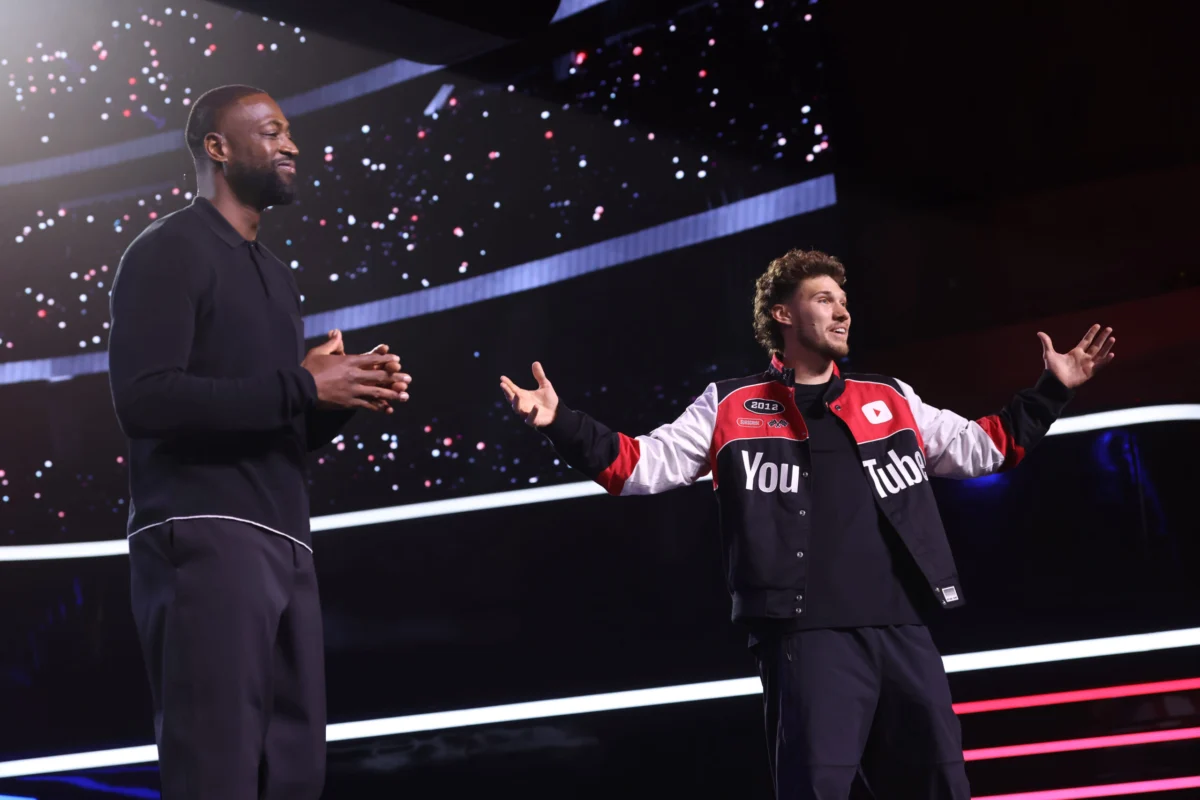
This dominance forced a change in the atmosphere of the "Brandcast," YouTube’s version of an upfront. The event featured a blend of traditional celebrities and digital-native stars, including NBA legend Dwyane Wade alongside YouTube personality Jesse "Jesser" Riedel. The presence of comedian Trevor Noah and podcast powerhouse Alex Cooper further illustrated the platform’s ability to attract top-tier talent from both the legacy and digital worlds. The message to advertisers was clear: YouTube is no longer a repository for user-generated clips; it is a primary destination for premium, long-form entertainment that rivals the production value of traditional networks.
A Timeline of the 2026 Upfront Week
The 2026 upfront week followed a strategic chronology that highlighted the industry’s unified focus on digital integration:
- Monday, May 11: Fox Corporation opened the week by emphasizing the synergy between its sports properties and its creator-led initiatives. NFL legend Tom Brady appeared alongside Gordon Ramsay to announce new ventures within Fox Creator Studios.
- Tuesday, May 12: Amazon Prime Video and Wondery showcased the power of "360-degree content," highlighting their multiyear deal with Oprah Winfrey for "The Oprah Podcast." The presentation focused on the ability to reach audiences across audio, video, and social platforms simultaneously.
- Wednesday, May 13: A pivotal day featuring both Warner Bros. Discovery (WBD) and YouTube. WBD announced an expansion of its Food Network social channels, while YouTube’s Brandcast at Lincoln Center served as a high-tech showcase of creator influence.
- Friday, May 15: The week concluded with a focus on free ad-supported streaming television (FAST) services, notably Tubi, which premiered an exclusive soccer series led by Jesse Riedel, demonstrating a direct pipeline from YouTube to streaming apps.
Legacy Media’s Strategic Adaptation
For legacy media giants like Fox and Warner Bros. Discovery, the rise of creator content has necessitated a "if you can’t beat them, join them" strategy. Rather than competing directly for the same eyeballs with identical formats, these companies are leveraging their existing intellectual property and production infrastructure to incubate creator talent.

Fox’s launch of "Fox Creator Studios" marks a significant investment in digital-first talent. By utilizing established stars like Gordon Ramsay—who already possesses a massive social media footprint—Fox is creating a bridge between linear television and digital platforms. This strategy allows the network to maintain its prestige while tapping into the "always-on" nature of social media engagement.
Warner Bros. Discovery has adopted a similar approach, particularly within its lifestyle and unscripted segments. Karen Bronzo, Chief Global Marketing Officer for WBD’s U.S. networks and news, noted that the company has been integrating influencers into its ecosystem for years. However, 2026 marks the first time these creators are being positioned as the vanguard of the company’s ad-supported inventory. The Food Network’s new series featuring chef Esther Choi is a prime example of a "YouTube-original" format being elevated to a central role within a traditional media portfolio.
The Gen Z Imperative and the Role of Tubi
A driving force behind this transformation is the "elusive" younger audience, specifically Gen Z and Gen Alpha. Traditional media consumption among these groups has plummeted, leaving advertisers searching for new ways to achieve "reach." Streaming platforms that offer free, ad-supported content have become the primary beneficiaries of this shift.
Tubi, owned by Fox, has emerged as a critical player in this space. By inking deals with YouTube personalities to create exclusive content, Tubi is effectively migrating established fanbases from social media to its streaming service. The launch of "Tubi for Creators" further incentivizes digital talent to view the platform as a viable pathway to "Hollywood-style" distribution without the gatekeeping of traditional studios. This "pathway to Hollywood" serves a dual purpose: it provides creators with higher production values and prestige, while providing Tubi with a steady stream of low-cost, high-engagement content that appeals directly to the 18-34 demographic.
Economic Implications and the "Bang for the Buck"
The economics of the 2026 upfronts reflect a pragmatic shift in advertiser expectations. While live events like the NFL command the highest absolute ad rates due to their massive, simultaneous reach, streaming and creator content offer what industry executives call "more bang for the buck."
In the streaming environment, advertisers benefit from advanced data targeting and the ability to place ads within specific "niches" that boast high engagement. For example, a video podcast or a specialized tutorial series may have fewer total viewers than a prime-time sitcom, but those viewers are often more attentive and more likely to interact with the brand. This efficiency is particularly attractive to marketers who are under pressure to demonstrate a clear return on investment (ROI) in an increasingly fragmented media market.
Analysis: The Future of the Unified Media Landscape
The events of the 2026 upfronts suggest that the "merger" of studio-led and creator-led content is now an irreversible reality. Julie Clark, Senior Vice President at TransUnion, observed that the content landscape has shifted from a bifurcated model to a "singular view." This unification has several long-term implications for the industry:
- Talent Fluidity: The distinction between a "YouTuber" and a "TV Star" will continue to fade. Talent will be expected to maintain a multi-platform presence, using social media for daily engagement and streaming platforms for tentpole projects.
- Production Shifts: Traditional studios may move away from high-risk, expensive pilots in favor of "testing" concepts on social platforms first. If a creator’s short-form series gains traction, it becomes a candidate for a full-scale streaming production.
- Ad-Tech Integration: As creator content becomes a staple of the upfronts, the technology used to sell those ads will become more sophisticated. Expect to see more "shoppable" video integrations where viewers can purchase products directly through their connected TV or mobile device while watching creator content.
- Brand Safety vs. Authenticity: The challenge for media companies will be balancing the raw, authentic appeal of creators with the brand safety requirements of major advertisers. This will likely lead to more robust "creator management" divisions within companies like Fox, WBD, and Amazon.
As the 2026 upfront cycle concludes, the narrative of "Old Media vs. New Media" has been replaced by a story of integration. The $44 billion being funneled into the creator economy is not just a trend; it is a fundamental restructuring of the entertainment industry. In this new era, the most successful media companies will be those that can most effectively blend the scale and prestige of traditional broadcasting with the agility and intimacy of the digital creator.