The relationship between Wall Street and the streaming industry has undergone a fundamental transformation over the past decade. What began as an era of unbridled optimism and a singular focus on subscriber acquisition has evolved into a disciplined, often ruthless pursuit of bottom-line profitability. As of late 2025, the narrative driving media stocks is no longer about how many millions of users a platform can attract, but rather how much revenue can be extracted from each individual household. This shift has forced a total re-evaluation of the direct-to-consumer (DTC) business model, leading to price hikes, crackdowns on password sharing, and a surprising return to the advertising-supported models that streaming was originally intended to replace.
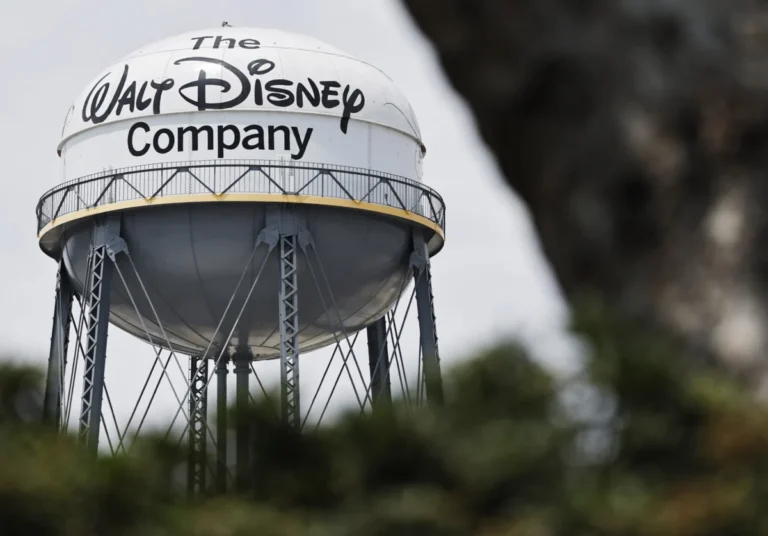
For nearly ten years, investors rewarded companies that could demonstrate rapid expansion. The "streaming wars" saw legacy media giants like The Walt Disney Company, Warner Bros. Discovery (WBD), and Paramount Global spending billions of dollars on original content to compete with Netflix. However, as the market reached saturation and the decline of linear television accelerated, the financial reality of these massive investments became impossible to ignore. Today, the industry is defined by a stark divide between the clear market leader, Netflix, and a group of legacy players struggling to make the math work.
The Evolution of the Streaming Business Model: A Chronology
To understand the current state of the industry, it is necessary to trace the timeline of its development. The streaming revolution began in earnest around 2010–2015, as high-speed internet became ubiquitous and Netflix transitioned from a DVD-by-mail service to a global digital powerhouse. During this first phase, the goal was simple: facilitate "cord-cutting." Consumers were encouraged to abandon expensive, bloated cable TV bundles in favor of cheaper, more flexible on-demand services.
By 2019, the "Streaming Wars" entered their most aggressive phase with the launches of Disney+, Apple TV+, and later, HBO Max and Peacock. During this period, companies prioritized subscriber counts above all else, often offering deep discounts or free trials to pad their numbers. This strategy was largely supported by Wall Street until early 2022. In April of that year, Netflix reported its first quarterly subscriber loss in more than a decade. The market reaction was swift and severe, wiping billions off Netflix’s market capitalization and sending a shockwave through the entire media sector.
The years 2023 through 2025 have been characterized by a "correction." Legacy media companies realized they could no longer sustain massive losses in their streaming divisions while their traditional "cash cow" linear networks withered. This led to the current era of consolidation and monetization, where the primary objective is reaching double-digit operating margins.
Netflix: The Uncontested Scale Leader
As of 2025, Netflix remains the gold standard against which all other services are measured. By January 2026, the company announced it had reached a staggering 325 million global paid customers. This scale provides Netflix with a structural advantage that its competitors find difficult to replicate. Because Netflix can spread its fixed content costs across a massive, global subscriber base, its path to profitability is significantly shorter.
In 2025, Netflix reported an operating margin of 29.5%, a figure that would have been unthinkable for a streaming-only business just a few years prior. This success is the result of a multi-pronged strategy. First, Netflix was the first major player to aggressively crack down on password sharing, converting millions of "borrowers" into paid subscribers or "extra member" accounts. Second, the company successfully pivoted to include an ad-supported tier, which has opened a new, high-margin revenue stream.
Industry analysts, such as Robert Fishman of MoffettNathanson, have noted that while streaming is a "good business," it is only truly lucrative for those with sufficient scale. Netflix’s ability to generate significant free cash flow allows it to continue investing in content while its peers are forced to cut budgets to satisfy investors.
The Legacy Media Struggle and the Profitability Gap
For traditional media conglomerates, the transition to streaming has been far more painful. Companies like Disney, Warner Bros. Discovery, Paramount, and Comcast (via Peacock) are essentially managing a "managed decline" of their linear television businesses while trying to build a digital future. The advertising revenue and carriage fees from cable TV, which once generated billions in reliable profit, are disappearing faster than streaming profits can replace them.
Disney has been the most successful among the legacy players in narrowing this gap. The company has guided investors toward an operating margin of 10% for its DTC business by fiscal 2026. While this is a significant improvement from the multi-billion dollar losses recorded in 2022 and 2023, it still pales in comparison to Netflix’s nearly 30% margin.
Other players have seen more volatile results. Warner Bros. Discovery and Paramount have reported occasional profitable quarters, but these are often the result of heavy cost-cutting and content licensing rather than organic growth. Comcast’s Peacock has narrowed its losses, but it remains a domestic-heavy service in an industry that increasingly requires global reach to survive.
Price Hikes and the Ceiling of Consumer Spending
To bridge the profitability gap, streamers have turned to the most direct lever available: subscription price increases. Over the course of 2024 and 2025, almost every major service raised its monthly fees. Netflix, for example, implemented a series of increases that brought its premium tiers to record highs, yet analysts suggest there may still be "pricing runway" left. Matthew Condon, an analyst at Citizens, pointed out that Netflix’s revenue per streaming hour remains low relative to its peers, suggesting the company has the leverage to charge even more.
However, there are growing signs of consumer fatigue. Between the rising costs of individual services and the sheer number of platforms required to access a full range of content, many households are beginning to "balk" at the total cost. This has led to the re-emergence of "bundling." In a move that mirrors the old cable model, competitors are now partnering to offer discounted packages. Disney, for instance, has successfully bundled Disney+, Hulu, and ESPN+, while other platforms are exploring similar cross-company arrangements to reduce "churn"—the rate at which customers cancel their subscriptions.
The Return of Advertising: A High-Margin Necessity
Perhaps the most significant shift in the streaming landscape is the industry-wide embrace of advertising. For years, Netflix and Disney+ positioned themselves as premium, ad-free environments. Today, the ad-supported tier is a central pillar of their business strategies.
The economics of advertising in streaming are highly attractive. Netflix reported that its ad revenue exceeded $1.5 billion in 2025, representing about 3% of its total revenue, with expectations for that figure to double in short order. By offering a cheaper ad-supported tier, streamers can lower the barrier to entry for price-sensitive consumers while simultaneously generating high-margin revenue from brands.
Former Disney CEO Bob Iger has explicitly stated that the company is attempting to steer customers toward ad-supported plans, as the total revenue per user (ARPU) on these plans can actually exceed that of the ad-free versions. This "upfront" focus on advertising has transformed streaming from a simple subscription service into a sophisticated digital advertising platform, competing directly with tech giants like Google and Meta for marketing dollars.
Consolidation and the Future of the Industry
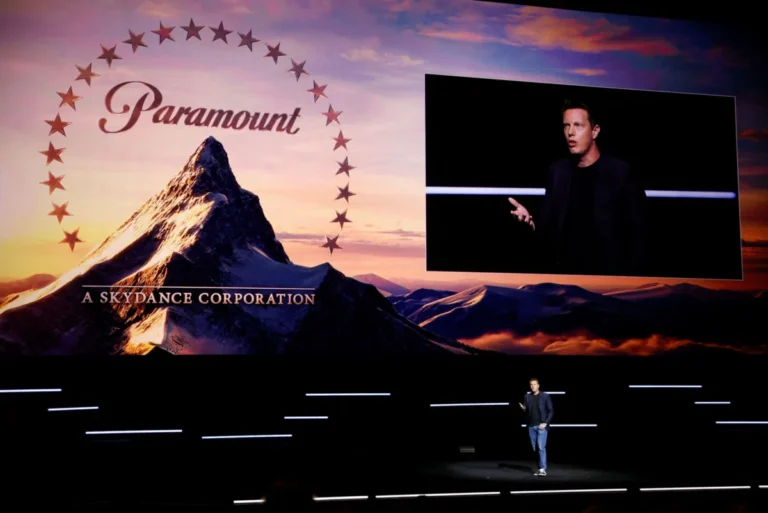
As the "smaller players" struggle to reach the scale necessary for long-term viability, the industry is entering a phase of inevitable consolidation. The most prominent example is the pursuit of Warner Bros. Discovery by Paramount and Skydance. Such a merger would combine WBD’s massive library and HBO Max’s prestige branding with Paramount’s storied studio and sports rights.
The rationale behind these mergers is simple: survival through scale. By combining libraries, companies can reduce content spend, eliminate redundant corporate overhead, and offer a more compelling value proposition to consumers. As Doug Creutz, senior research analyst at Cowen, noted, the big question remains whether these streaming businesses can ever be as profitable as the linear businesses they are replacing.
Implications and Outlook
The streaming industry in 2026 is no longer a wild frontier of growth; it is a mature, competitive market focused on efficiency. The implications of this shift are profound for both creators and consumers. For creators, the era of "blank check" content spending is over, replaced by a more disciplined approach to greenlighting projects with clear commercial appeal. For consumers, the days of cheap, ad-free access to everything are a thing of the past.
The future of streaming likely involves a two-tier system. At the top will be a few "must-have" global platforms—led by Netflix and potentially a consolidated Disney/Hulu entity—that command high margins and massive audiences. Below them will be a secondary tier of specialized or bundled services fighting for the remaining share of the consumer’s wallet. As the industry continues to evolve, the metrics of success will remain firmly rooted in the bottom line, as Wall Street’s "love affair" with streaming depends entirely on whether these digital dreams can finally deliver consistent, sustainable profits.