The passing of James Burrows on Friday at the age of 85 marks the end of an era for television comedy, yet solidifies the enduring legacy of a director whose influence on the medium is arguably unmatched in the past five decades. While French film critics famously championed the "auteur theory," celebrating cinema as a director-driven art form, television has historically been perceived more as the domain of writers, producers, and even stars, from Gertrude Berg and Lucille Ball to Rod Serling, Norman Lear, David Chase, Matthew Weiner, and Aaron Sorkin. This traditional perspective, however, often overlooks the profound contributions of directors and other technical craftspeople who have been instrumental in developing and reshaping television’s aesthetic over its 80-plus year history.
Just as the auteur theory offered a somewhat reductive lens through which to view the inherently collaborative process of filmmaking, conversations that have historically marginalized directors, cinematographers, and other technical artisans in television have left countless influential figures largely unacknowledged. The very fabric of television, particularly its early "Golden Age," owes an immense debt to pioneering cinematographers like Karl Freund, the legendary film director of photography behind Metropolis and Dracula. Recruited by Desi Arnaz to shoot I Love Lucy, Freund brought a sophisticated, polished black-and-white photographic style to the nascent medium, simultaneously advancing and perfecting the look and process that would define the multi-camera comedy format. His innovations, including the three-camera setup, allowed for continuous shooting and a more dynamic interplay between performers, fundamentally altering how sitcoms were produced and consumed.
The evolution of television aesthetics also saw significant contributions from legendary directors who helmed weekly installments of anthology shows like Playhouse 90 in the 1950s and early 1960s. These directors, operating in a television landscape where the term "prestige TV" would have been an oxymoron, forged a distinctive look and feel for the small screen. Their ranks included future cinematic giants such as John Frankenheimer (The Manchurian Candidate), Sidney Lumet (12 Angry Men, Network), George Roy Hill (Butch Cassidy and the Sundance Kid, The Sting), and Arthur Penn (Bonnie and Clyde). These filmmakers honed their craft under the demanding conditions of live or near-live television production, learning to work with remarkable speed and to prioritize authentic performance, skills that would later lay a crucial foundation for the American independent film movement of the 1960s and 1970s. Their experience in television instilled a discipline and a focus on character-driven narrative that profoundly impacted their later cinematic endeavors, demonstrating a symbiotic relationship between the two mediums often overlooked.
Further pushing television beyond its often "boxy" and contained compositions were directors like Robert Butler, who notably directed the pilot for Hill Street Blues. Butler introduced a gritty realism and a fluid, documentary-style camera work that was largely unprecedented on the small screen, radically redefining what serialized drama could look like. Following in his footsteps, figures such as Rod Holcomb, Mimi Leder, and Thomas Schlamme continued this aesthetic revolution with shows like ER and The West Wing. Their dynamic camera movements, long takes, and sophisticated blocking helped transition television from static, theatrical presentations to a more cinematic and immersive experience, laying the groundwork for the visual sophistication that characterizes television’s more recent "Golden Age."
James Burrows: A Titan of Television Comedy
It is within this rich, evolving tapestry of television history that James Burrows carved out his unparalleled niche. Standing firmly on the shoulders of these aforementioned giants, Burrows mastered, refined, and ultimately redefined the multi-camera comedy. It is not an exaggeration to suggest that no single figure in the past 50 years has been more instrumental in shaping the look, feel, tone, and rhythmic precision of television comedy. Perhaps only prolific writer-producers like Norman Lear or Lorne Michaels, typically the more valorized figures in television’s narrative, have a comparable claim to such widespread, enduring influence.
Burrows’ impact can be quantified in staggering mathematical terms. His career began in 1974, directing his first of four episodes of The Mary Tyler Moore Show, a seminal sitcom that itself pushed boundaries. Over a career spanning nearly five decades, Burrows amassed an extraordinary 11 Emmy Awards and five Directors Guild of America (DGA) Awards. He directed an astonishing number of pilots—more than 50—many of which went on to become iconic series. His directorial credits include 237 episodes of Cheers, a show he also co-created with Glen and Les Charles, establishing its unique blend of wit, warmth, and character eccentricity. He directed 75 episodes of Taxi, a groundbreaking workplace comedy that offered a raw, often poignant look at the lives of ordinary people. Beyond these, he directed dozens of episodes apiece for beloved series such as Frasier and Friends, two of the most successful and enduring sitcoms in television history. His extensive work also included Mike & Molly and every single episode of Will & Grace, both in its original run and its critically acclaimed revival.
Remarkably, nearly 50 years after his initial stints behind the camera, and almost a decade after NBC paid tribute to his 1,000th episode milestone in a star-studded primetime special, Burrows directed all 10 episodes of Hulu’s Mid-Century Modern, which stands as his final helming credit. The 2016 NBC special, a testament to his monumental career, was specifically timed to commemorate his 1,000th episode as a television director, achieved with an episode of NBC’s Crowded—a deep cut for any serious bar trivia aficionado.
Qualitative Impact and Enduring Style
Beyond the sheer volume of his work, Burrows’ importance and influence are profoundly evident in qualitative terms. The list of titles he directed reads like a syllabus for the history of American sitcoms. One could meticulously examine each of these series and identify countless individual acting performances, meticulously guided by Burrows, that garnered Emmy Awards and other prestigious accolades. These are the shows that not only entertained millions but also shaped decades of television output, establishing templates that were widely emulated but rarely equaled.
Cheers, co-created by Burrows, along with Taxi, represents a pinnacle for the workplace sitcom. The cozy confines of a Boston bar and the bustling environment of a Manhattan taxi garage served as perfectly contained "Petri dishes" for crafting wacky situations, showcasing perfectly calibrated performances, and developing characterizations that stretched but never quite broke the precarious balance of the multi-camera format. Burrows understood the inherent theatricality of the multi-cam setup, leveraging it to highlight ensemble performances and sharp dialogue, creating a sense of intimacy and immediacy for the home viewer.
Friends and Will & Grace, on the other hand, epitomized the "hangout comedy" subgenre. These shows, under Burrows’ direction, became cultural touchstones, spawning countless imitators but few true equals. The DNA of Norman Lear’s groundbreaking shows and The Mary Tyler Moore Show is clearly visible in Taxi and Cheers, which in turn served as foundational blueprints for virtually everything that followed, even through periods when the multi-camera format periodically fell out of mainstream favor. Burrows’ mastery lay in his ability to extract the best from his actors, creating a rhythm and pacing that felt natural and effortless, even as it was meticulously constructed. He was known for his precise blocking, his keen eye for comedic timing, and his ability to make a studio audience an integral part of the comedic experience without ever overwhelming the narrative.
Behind the Scenes: Anecdotes and Innovations
Burrows’ significance is also richly illuminated by the countless anecdotes shared by the director himself and the legion of admirers who worked with him and followed in his footsteps. Stories abound regarding his hands-on contributions to the visual and narrative fabric of his shows. For instance, the specific curved shape of the bar in Cheers was meticulously designed by Burrows to ensure that all characters were visible to the camera, facilitating fluid interactions and optimal sightlines for the audience. Similarly, the iconic pillar in Monica’s apartment on Friends, rather than being an obstacle, was ingeniously integrated into the set design to allow for dynamic blocking and visual interest.
Perhaps even more profoundly, Burrows played a pivotal role in the depiction of gay intimacy on Will & Grace, helping to normalize LGBTQ+ relationships on network television at a time when such portrayals were rare. His direction ensured that the characters’ relationships were handled with humor, sensitivity, and authenticity, contributing significantly to broader cultural acceptance. While Burrows rightly deserves immense credit for the aspects of these beloved shows that audiences consciously noticed and appreciated, his genius arguably shines brightest in the subtle, often unnoticed directorial choices that subtly enhanced the narrative, honed performances, and perfected the comedic timing, creating a seamless and immersive viewing experience.
Industry Recognition and the Meta-Performance
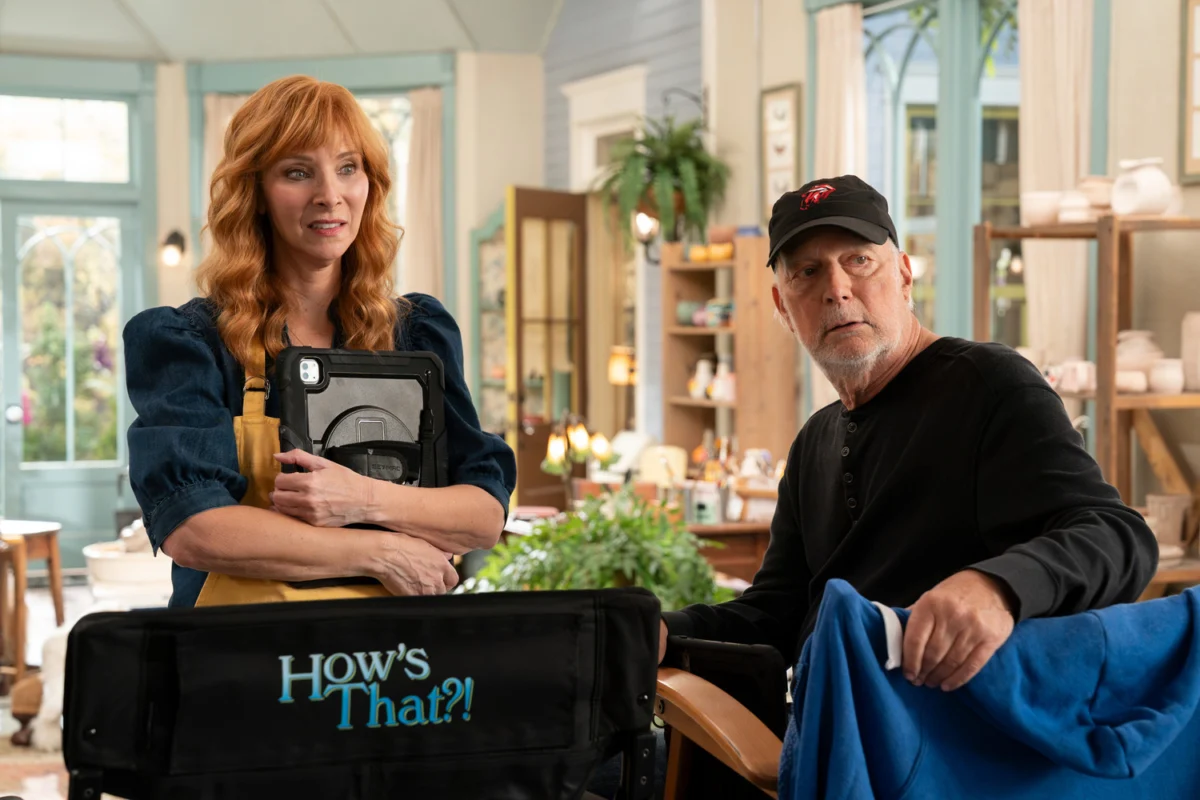
The television industry itself has, over time, become increasingly vocal about Burrows’ profound importance and influence. As Emmy nominations approach in a few weeks, there is a strong case to be made for a posthumous recognition, though perhaps not for directing his final series. Instead, Burrows’ memorable performance as "James Burrows, television comedy icon" in HBO’s critically acclaimed series The Comeback serves as a remarkably fitting, meta-textual career capstone.
As explored in numerous reviews, The Comeback, starring Lisa Kudrow as a fading sitcom actress, was a poignant and prescient commentary on an entertainment industry under existential threat—from the rise of cable, the advent of streaming, the encroachment of reality programming, and even the looming specter of artificial intelligence. In this context, the series’ creators, Michael Patrick King and Lisa Kudrow, ingeniously cast Burrows as the most believable embodiment of the industry’s enduring spirit. Burrows played himself as a character who was intelligent, empathetic, occasionally crotchety, and, despite generations of experience, remarkably forward-looking. His portrayal was the ultimate compliment to Burrows’ real-life stature, and his performance, in turn, offered the ultimate complement to the ensemble and thematic approach of The Comeback, cementing his place as not just a director, but a symbol of television’s resilience and enduring craft.
Challenging the "Snobbery" and Preserving a Legacy
There remains a tendency among some "snobbier" viewers to denigrate the multi-camera comedy, often dismissing it as ugly, old-fashioned, or creatively lazy. While it is true that some examples of the genre might exhibit these traits, such accusations simply do not hold against the meticulously crafted episodes of Taxi or Cheers, shows that retain their freshness and comedic power today, decades after their premieres. These critics often contend that the studio audience, or worse, the laugh track, does all the heavy lifting. This assertion fundamentally misunderstands the artistry involved.
The truth is that James Burrows, alongside his exceptional collaborators—from writers and producers to cinematographers and actors—did the profound work. They built upon a rich tradition stretching back to pioneers like Gertrude Berg and Karl Freund, continuously innovating and perfecting a form that, in their hands, transcended mere entertainment to become cultural touchstones. Burrows’ legacy is not merely in the number of episodes directed or awards won, but in the indelible mark he left on the collective consciousness of television viewers, shaping generations of comedic storytelling and proving, unequivocally, that there was nobody quite like him. His work stands as a testament to the enduring power of well-crafted, character-driven comedy, reminding us that even in a rapidly evolving media landscape, the fundamentals of great storytelling and masterful direction remain timeless.