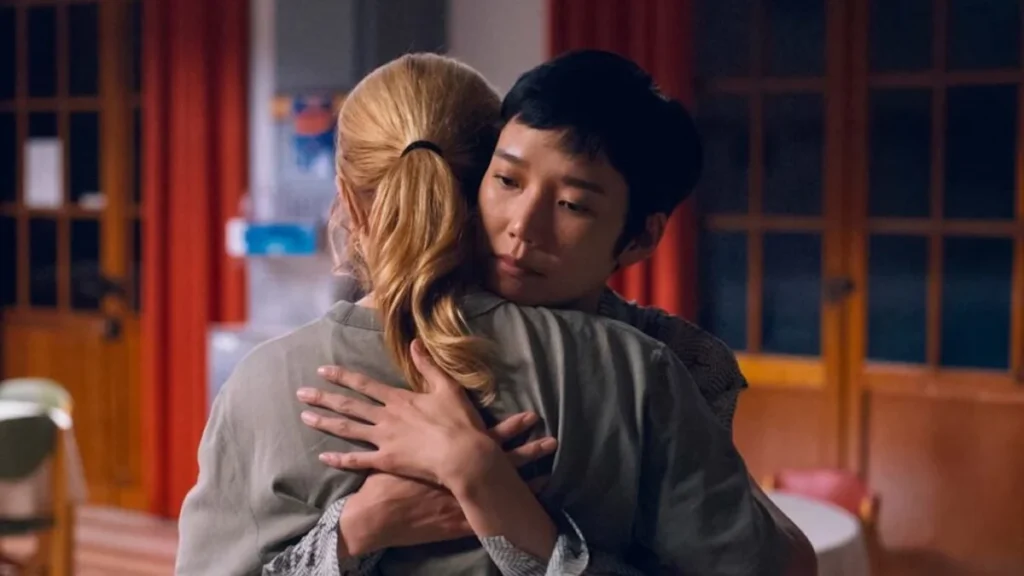
Tony Leung Chiu-wai, a titan of world cinema whose career has spanned over four decades, recently made a rare and significant appearance in New York City to support a career retrospective at Film at Lincoln Center and promote his latest international project, Silent Friend. Directed by the Academy Award-nominated Hungarian filmmaker Ildikó Enyedi, the film marks a distinct chapter in Leung’s filmography, placing the actor within a meditative triptych that spans more than a century of human and botanical history. The film, which arrived in U.S. theaters on May 8 via 1-2 Special, explores the intersections of nature, neuroscience, and human connection through the presence of a single ginkgo tree in a German botanical garden across three specific years: 1908, 1972, and 2020.
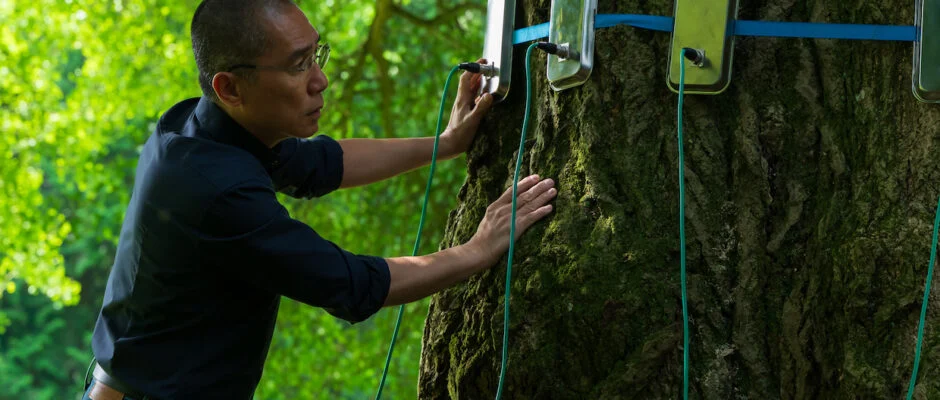
In the final segment of the film, Leung portrays a neuroscientist whose career and personal life are disrupted by the onset of the COVID-19 pandemic. His character, focused on the brain activity of newborns, finds himself in a state of professional and social stasis, leading him to develop a profound fixation on a 200-year-old ginkgo tree. This role serves as a testament to Leung’s enduring ability to convey complex internal landscapes, a trait that has made him a muse for legendary directors such as Wong Kar-wai, Hou Hsiao-hsien, and Ang Lee.
The Philosophical Architecture of Silent Friend
Silent Friend is structured as a narrative triptych, a format that allows Enyedi to examine the passage of time and the persistence of nature amidst human volatility. The ginkgo tree serves as the silent witness to the changing world. While the earlier segments of the film delve into the historical and social pressures of their respective eras, Leung’s 2020 segment deals with the contemporary intersection of science and spirituality.
Leung’s preparation for the role was characteristically exhaustive. To inhabit the mind of a high-level neuroscientist, the actor spent six months immersed in the study of early cognitive development and plant intelligence. He collaborated with actual neuroscientists from various universities to understand the mechanics of EEG studies and the philosophy of consciousness. Leung even went as far as hiring a British tutor to refine a specific accent, imagining his character as a product of the Oxford or Cambridge academic systems.
During his press engagements in New York and at the Busan International Film Festival, Leung revealed that the film fundamentally altered his perception of the natural world. "I’ve really changed my entire perspective towards plants," Leung noted, citing his research into botanical sentient life. This shift reflects the film’s central inquiry: whether consciousness is a uniquely human trait or a fundamental property of life itself.
A Chronology of an International Icon
To understand the weight of Leung’s participation in Silent Friend, one must look at the trajectory of his career, which mirrors the evolution of the Hong Kong film industry. Leung began his journey in 1982 as a co-host of a children’s television show on TVB, a common starting point for many of the region’s greatest stars. He quickly transitioned into dramatic roles, becoming one of the "Five Tiger Generals" of TVB alongside Andy Lau.
The late 1980s and 1990s saw Leung’s ascent into the upper echelons of cinema. His collaboration with Hou Hsiao-hsien in A City of Sadness (1989) won the Golden Lion at the Venice Film Festival, signaling Leung’s arrival as a serious dramatic force. However, it was his partnership with Wong Kar-wai that defined his international persona. Films like Chungking Express (1994), Happy Together (1997), and the seminal In the Mood for Love (2000) cemented his reputation as the "man who acts with his eyes." His performance in In the Mood for Love earned him the Best Actor award at the Cannes Film Festival, making him the first Hong Kong actor to receive the honor.
Throughout the 2000s and 2010s, Leung balanced high-octane blockbusters like Infernal Affairs (2002) and Hero (2002) with challenging arthouse fare like Ang Lee’s Lust, Caution (2007). His recent foray into the Marvel Cinematic Universe as Xu Wenwu in Shang-Chi and the Legend of the Ten Rings (2021) introduced him to a new generation of Western audiences, proving that his screen presence transcends cultural and linguistic barriers.

Collaborative Dynamics and the Director’s Vision
Ildikó Enyedi’s decision to cast Leung was driven by more than just his acting pedigree. In interviews, Enyedi emphasized that she sought "the person behind the actor." She was particularly struck by Leung’s curiosity and his lack of "ready-made answers" during interviews for his Hollywood debut. Enyedi likened his presence to that of a monk or a scientist—someone with a "gentle but strong attention to the world."
Leung’s approach to selecting projects has remained remarkably consistent over the decades. He famously prioritizes the director over the script. "I don’t pick a project because of the script, but because of the director, the person," Leung explained. This instinctual approach has led him to some of the most fruitful collaborations in cinema history. While Hollywood productions like Shang-Chi offer a rigid, scripted environment, Leung expressed a preference for the flexibility found in projects like Silent Friend and his earlier work with Johnnie To and Wong Kar-wai, where improvisation and character exploration are encouraged.
Analysis of Recent Roles and Villainous Turns
In recent years, Leung has pivoted toward more morally ambiguous characters. In The Goldfinger (2023), he reunited with his Infernal Affairs co-star Andy Lau to play Henry Ching Yat-yin, a character based on the real-life fraudulent businessman George Tan. He also portrayed a corrupt policeman in Where the Wind Blows (2022).
This shift toward playing "bad guys" is a deliberate choice for Leung, who seeks to explore mindsets he would never encounter in his personal life. He cited his role as Sam in Johnnie To’s The Longest Nite (1998) as one of his personal favorites, despite its modest box office performance. For Leung, the attraction lies in the psychological complexity of these figures. In the case of The Goldfinger, he researched the mysterious history of the Carrian Group scandal to understand the vacuum of power and ethics that allowed such a figure to rise in 1980s Hong Kong.
Broader Implications and Future Outlook
Leung’s recent New York visit and the release of Silent Friend highlight a broader trend in global cinema: the increasing fluidity between major international stars and independent European auteurs. At 61, Leung remains a highly sought-after performer who bridges the gap between the commercial requirements of the global box office and the philosophical inquiries of contemporary arthouse cinema.
The industry impact of Leung’s career is quantifiable. His films have collectively grossed billions of dollars worldwide, and he remains a primary driver of cultural export for Hong Kong. As the city’s film industry continues to navigate a changing political and economic landscape, Leung’s continued success on the global stage serves as a vital link to the "Golden Age" of Hong Kong cinema while pointing toward a future of international co-productions.
Looking ahead, Leung’s schedule remains robust. He confirmed that he is currently developing a new script with Johnnie To, a collaboration eagerly anticipated by cinephiles. Due to his current commitments, including two other undisclosed projects, the film with To is projected for a late 2027 release. This long-term planning suggests that Leung is not looking toward retirement, but rather toward a deeper refinement of his craft.
Silent Friend, with its themes of isolation and the enduring connection between all living things, serves as a poignant reflection of the world post-2020. By placing an actor of Leung’s stature in a role defined by quiet observation and scientific curiosity, Enyedi has created a work that is both a tribute to Leung’s unique talents and a meditative exploration of the "silent friends" that inhabit our world—be they trees, strangers, or the memories we carry through time. As the film begins its U.S. run, it offers audiences a chance to witness an icon of cinema in one of his most introspective and intellectually demanding roles to date.