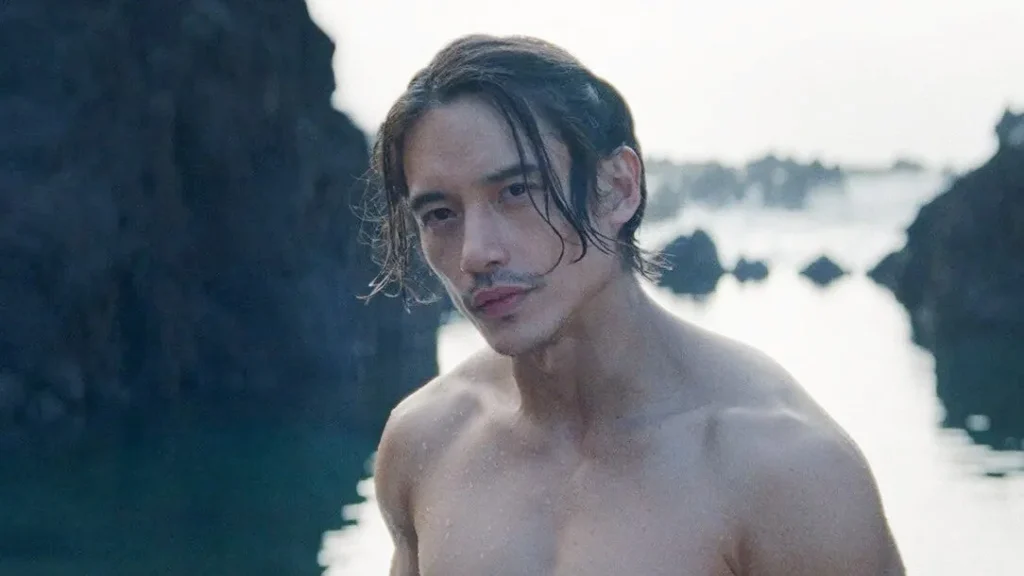



On April 28, shortly before noon, Win White, a 29-year-old Navy veteran and former digital creator, logged onto the social media platform X to address a part of his life he had hoped was behind him. To his 65,000 followers—many of whom were unaware of his previous tenure in the adult entertainment industry—White posted a series of earnest requests. He asked that users refrain from sharing explicit content he had produced during his time on OnlyFans. "I’m asking humbly that we all refrain from sharing content from before," he wrote. "I know where I’ve been and I think I’m entitled to a life after that at least."
The catalyst for White’s public plea was a series of direct messages he received that morning alerting him to an old video clip circulating online. Despite his efforts to scrub his digital footprint—which included deleting his OnlyFans account and a secondary X account dedicated to his adult work in 2023—the ephemeral nature of the internet proved to be a myth. White, who is currently residing in Washington, D.C., and training to become an Emergency Medical Technician (EMT), expressed a sense of panic regarding the resurfacing of his past. He noted that his work in the adult sector was a brief chapter intended to gain financial independence during a difficult personal period, not a lifelong career choice.
White’s experience is not an isolated incident. It serves as a flashpoint for a burgeoning national conversation regarding the boundaries of consent, the permanence of the digital footprint, and the ethical responsibilities of consumers in the creator economy. As thousands of individuals who joined subscription-based platforms during the pandemic-era boom now seek to transition into traditional career paths, they are finding that the "delete" button offers little protection against the persistence of the internet’s collective memory.
The Evolution of the Subscription-Based Creator Model
To understand the predicament faced by individuals like White, it is necessary to examine the meteoric rise of OnlyFans and similar platforms. Launched in 2016, OnlyFans experienced a paradigm shift between 2020 and 2023. Driven by the economic instability of the COVID-19 pandemic and the shift toward remote, independent work, the platform’s creator base swelled to over 3 million individuals by August 2023. For many, including White, the platform represented a low-barrier entry into self-employment.
White joined in September 2022, primarily as a means to establish financial autonomy while exiting a toxic relationship. His output was relatively modest; he produced approximately 40 videos, mostly solo scenes. By 2023, however, the reality of the work began to clash with his personal identity and long-term goals. He described the experience as inauthentic and the financial rewards as insufficient to justify the potential reputational damage. "It was never my day job," White told reporters, emphasizing that the income was used for "extracurricular" expenses rather than wealth building.
This narrative of the "temporary creator" is becoming increasingly common. Data suggests that while a small percentage of top-tier creators earn significant wealth, the vast majority of participants engage with these platforms for short-term financial relief. However, the transition out of the industry is fraught with social and legal hurdles that traditional employment sectors do not share.
The Conflict of Consent: Ongoing Negotiation vs. Digital Ownership
The backlash to White’s request on X highlights a fundamental disagreement over the nature of consent in the digital age. Responses to his posts ranged from supportive to vitriolic. Critics argued that by voluntarily placing content behind a paywall, White forfeited the right to control its distribution once it was "purchased" by the public. One user summarized this sentiment by stating, "Digital footprint lives here and doesn’t leave here," while others suggested that his request was hypocritical given that he had previously profited from the content.
This perspective views adult content as a commodity that, once sold, becomes the property of the consumer’s memory and the internet’s archives. Conversely, advocates for creators argue that consent is an ongoing negotiation. Lynn Comella, a professor at the University of Nevada-Las Vegas who researches sexual politics and consumer capitalism, notes that the modern understanding of consent in sexual encounters—that it can be withdrawn at any time—is increasingly being applied to the "afterlife" of adult work.
"We teach young people that consent is an ongoing negotiation," Comella explained. "What does that mean when it comes to the afterlife of someone’s porn work when they’re now out of the business? I don’t think there’s an easy answer, but it is a conversation worth having."
The ethical friction lies in the distinction between legal ownership and moral decency. While a consumer may have paid for a subscription to view content at a specific time, that payment does not legally grant them the right to redistribute, archive, or weaponize that content against the creator in the future.
The Exodus: A Growing Trend of High-Profile Retirements
White is part of a larger trend of creators "de-transitioning" from adult platforms to pursue other interests, often citing mental health, faith, or career shifts.
- Blac Chyna: The prominent influencer and reality star announced her departure from OnlyFans, citing a desire to set a different example for her children and move toward a more holistic lifestyle.
- John Whaite: The Great British Bake Off winner also stepped away from the platform, navigating the complexities of public perception as he returned to mainstream media.
- Camilla Araujo: Claiming earnings of over $20 million, Araujo announced a planned exit for 2026, pivoting toward mentorship and business ventures.
- Autumn Renea: After earning a reported $10 million, Renea announced her retirement to focus on her faith as a "full-time Christian."
- Fitness Papi: A popular creator with over a million followers, he retired in early 2024, acknowledging that the work had transitioned from "fun" to a taxing "job."
Each of these individuals faces the same challenge: how to reconcile a highly visible, stigmatized past with a new professional or personal identity. For some, like Brandon Karson and the creator known as Julius, the strategy involves "nuking" accounts—deleting all posts and profiles in an attempt to force a fresh start. However, the existence of third-party "leak" sites and the habit of users saving content to private drives makes complete erasure nearly impossible.
Legal Frameworks and the "Right to be Forgotten"
The legal recourse for creators seeking to remove their past work is currently limited, particularly in the United States. In the European Union, the "Right to be Forgotten" (under the General Data Protection Regulation, or GDPR) allows individuals to request that search engines remove links to personal information that is deemed "inadequate, irrelevant, or no longer relevant." This has been a vital tool for former sex workers in Europe to escape stigma and enter new professions.
In contrast, the U.S. legal system prioritizes First Amendment rights and the protection of free speech, making widespread digital erasure difficult. While some states, like California, have enacted "Eraser Laws" that allow minors to remove their own posts, there is no federal equivalent for adults.
However, creators do have one powerful tool: Copyright Law. Under the Digital Millennium Copyright Act (DMCA), creators typically retain the copyright to their original photos and videos unless they have signed a specific work-for-hire contract that stipulates otherwise. OnlyFans’ own terms of service affirm that creators retain ownership of their intellectual property. Therefore, the unauthorized reposting of this content on X, Reddit, or other forums constitutes copyright infringement.
White noted that he had researched his legal options, discovering that he could theoretically issue takedown notices. "That was my material. That was my property," he stated. While he has not yet pursued litigation, the potential for "revenge porn" lawsuits exists if the distribution of the content is intended to harass or cause distress after consent has been revoked.
Broader Implications: The "Wolves in Sheep’s Clothing"
The vitriol directed at White and other retiring creators suggests a deeper societal issue regarding the dehumanization of sex workers. White observed that the aggressive responses to his request revealed a "dangerous" side of the consumer base. He argued that the refusal to respect a simple request for privacy suggests a worldview where a person’s humanity is permanently forfeited once they engage in adult work.
As the creator economy continues to evolve, the case of Win White serves as a cautionary tale about the intersection of technology and personal history. For the millions of people who have used platforms like OnlyFans to navigate economic hardship, the lack of a "Right to be Forgotten" in the U.S. may create a permanent underclass of individuals who are haunted by their digital pasts, regardless of their current contributions to society as EMTs, teachers, or business owners.
The discussion ignited by White’s tweets suggests that the next frontier of digital rights will not just be about data privacy or algorithmic transparency, but about the right to evolve. As White himself concluded, "Pretty much what you naysayers are telling me is that my body isn’t mine once it goes on the internet. And I believe the contrary." Whether the legal and social structures of the 21st century will eventually align with White’s belief remains an open, and increasingly urgent, question.