

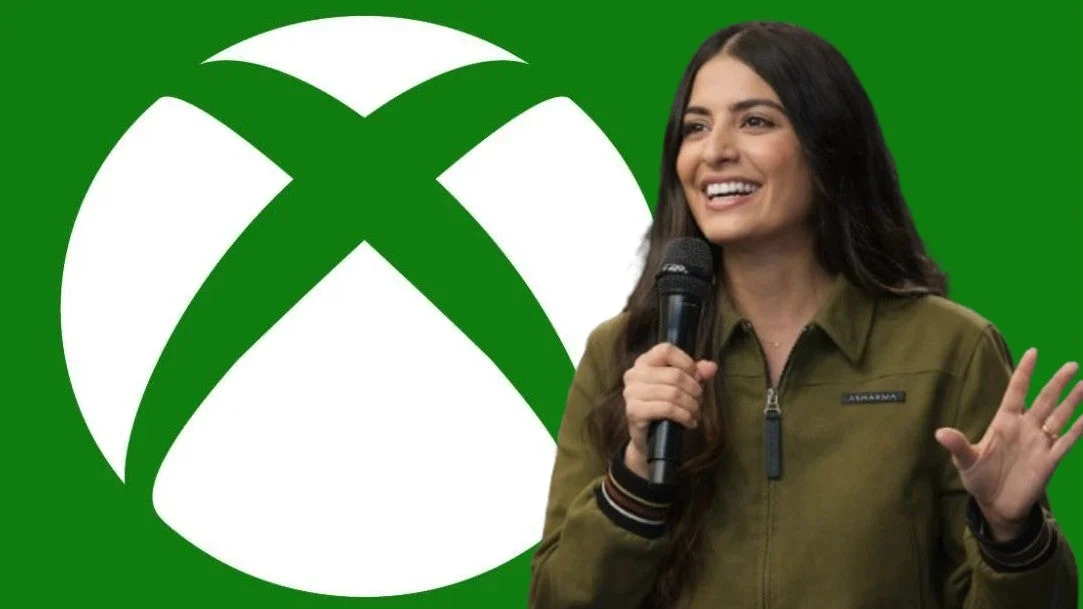
In a rare and closely watched interview following her first 60 days as the head of Microsoft’s gaming division, Xbox CEO Asha Sharma has provided new insights into the company’s evolving strategy, most notably refusing to rule out a return to traditional console exclusivity. Speaking with reporter Stephen Totilo for the Game File newsletter, Sharma’s comments suggest a period of deep internal reflection for the brand as it balances the need for massive software revenue against the necessity of maintaining a competitive hardware ecosystem. This dialogue comes on the heels of a company-wide memo released earlier this week, in which Sharma outlined a vision for "fortifying" the Xbox brand amidst a rapidly shifting industry landscape.
The interview marks a significant moment in Sharma’s young tenure, which began following a major leadership shakeup that saw longtime executive Phil Spencer move into a broader role. Sharma, who previously served as Microsoft’s Core AI president, is now tasked with navigating the fallout of the company’s $68.7 billion acquisition of Activision Blizzard King and the $7.5 billion purchase of ZeniMax Media. These historic investments have placed immense pressure on the gaming division to deliver returns, leading to a recent strategy of bringing formerly exclusive titles, such as Starfield and Sea of Thieves, to rival platforms like the PlayStation 5 and Nintendo Switch.
A Data-Driven Reevaluation of Exclusivity
The most striking takeaway from Sharma’s recent communications is the potential for a shift back toward console exclusivity, a concept that many industry analysts believed Xbox had largely abandoned in favor of a "play anywhere" philosophy. When questioned directly about whether certain titles would remain tethered strictly to Xbox hardware in the future, Sharma adopted a measured, analytical tone. She stated that the company would utilize a "data-driven approach and a strategic-driven approach" to evaluate the platform’s principles before making final calls on specific titles.
Sharma described these choices as "long-swinging decisions that have decade-long impact," emphasizing that her administration is prioritizing long-term brand health over immediate speed. "I want to make the right decision, not the fastest decision," she told Totilo. This rhetoric represents a subtle but firm departure from the "This is an Xbox" marketing campaign recently launched by Microsoft, which sought to define the Xbox brand as a service accessible on televisions, mobile devices, and handhelds, rather than just a physical console.
The ambiguity regarding exclusivity follows a memo in which Sharma noted that Xbox would "reevaluate our approach to exclusivity, windowing, and AI." "Windowing"—the practice of releasing a game on one platform for a set period before moving it to others—has become a standard tactic for competitors like Sony, which often brings its first-party titles to PC years after their initial PlayStation debut. Sharma’s comments suggest that Xbox may be considering a more flexible, case-by-case model rather than the broad multi-platform push seen throughout 2024.
Chronology of the Xbox Strategic Shift
To understand the weight of Sharma’s comments, it is necessary to look at the timeline of Xbox’s strategic maneuvers over the last four years. The current uncertainty is the result of several high-stakes decisions that have redefined the brand’s identity.
- September 2020: Microsoft announces the acquisition of ZeniMax Media (parent company of Bethesda Softworks) for $7.5 billion. At the time, Phil Spencer suggested that exclusivity would be decided on a "case-by-case basis," though major titles like Starfield were eventually confirmed as Xbox and PC exclusives.
- January 2022: Microsoft announces its intent to acquire Activision Blizzard King for $68.7 billion, the largest deal in gaming history. The move triggers nearly two years of regulatory scrutiny from the FTC in the US and the CMA in the UK.
- October 2023: The Activision Blizzard acquisition officially closes. Microsoft becomes the owner of massive franchises like Call of Duty, World of Warcraft, and Candy Crush.
- February 2024: Amidst rumors of declining hardware sales, Xbox leadership holds a "business update" podcast. They announce that four titles—Hi-Fi Rush, Pentiment, Sea of Thieves, and Grounded—will head to PlayStation and Nintendo platforms. This marks the beginning of the "Project Latitude" initiative to expand Xbox software reach.
- Late 2024: Asha Sharma takes over as CEO of Microsoft Gaming. Shortly thereafter, Starfield is released on PlayStation 5, and the company begins a rebranding effort that de-emphasizes the console in its marketing.
Fortifying the Game Pass Ecosystem
Central to Sharma’s vision is the concept of "fortifying Game Pass." The subscription service has long been the cornerstone of Microsoft’s gaming strategy, but growth has slowed in recent years. In February 2024, Microsoft reported that Game Pass had reached 34 million subscribers, a significant number but one that fell short of some internal projections following the massive influx of content from Bethesda and Activision.
Sharma explained that fortifying the service requires a focus on three pillars: growing the subscriber base, increasing player retention, and ensuring customer satisfaction. To achieve this, Microsoft recently implemented a series of price cuts and tier adjustments. "That Game Pass price cut is going to give us all three of these," Sharma noted in the interview.
However, the strategy is not without its complexities. Recent leaks have pointed to a "Starter Edition" tier for Game Pass, which may offer a lower entry price in exchange for a more curated selection of games. This aligns with Sharma’s stated goal of "affordability." By diversifying the entry points into the ecosystem, Xbox hopes to capture markets where the high cost of a $500 console or a $17-a-month subscription remains a barrier to entry.
Hardware Investment and the Next Generation
Despite the focus on software and services, Sharma was quick to reaffirm Microsoft’s commitment to physical hardware. "We are investing in it [the current generation] as a first-class experience again," she said. This statement is particularly relevant as rumors circulate regarding "Project Helix," a rumored next-generation console project that could potentially bridge the gap between console and PC architecture more seamlessly than ever before.
Matt Booty, Xbox Head of Content, joined Sharma during the interview to echo these sentiments. He promised a "predictable cadence" and a "robust roadmap" for Xbox studios, aiming for a consistent flow of high-quality titles that justify owning the hardware. This focus on "quality" is seen by many as a response to the mixed critical reception of some recent first-party efforts and the need to restore confidence in the Xbox brand.
Sharma also touched upon the "reality of the market," acknowledging that while she cannot make specific promises regarding future price points, her goal is to innovate in ways that offer more affordable devices. This could potentially include cloud-based "pucks" or handheld devices, though no official hardware announcements were made.
Analysis of Implications: The $69 Billion Pressure Cooker
The shift in tone under Sharma’s leadership can be viewed as a pragmatic response to the financial realities facing Microsoft’s gaming division. Having spent nearly $80 billion on acquisitions in less than five years, the division is no longer a small experimental arm of Microsoft; it is a major revenue driver that must answer to shareholders.
The dilemma for Sharma is twofold. If Xbox continues to release all of its major titles on PlayStation, it risks making its own hardware redundant. Why buy an Xbox if you can play Halo, Gears of War, and Indiana Jones on a PS5 alongside Sony’s own exclusives? Conversely, if Xbox reverts to strict exclusivity, it leaves billions of dollars in potential software sales on the table—revenue that is desperately needed to recoup the costs of the Activision Blizzard deal.
Industry analysts suggest that Sharma may be looking toward a "tiered exclusivity" model. Under this system, smaller titles or live-service games (like Sea of Thieves) would remain multi-platform to maximize player counts, while "system sellers" (like the next Elder Scrolls or Fable) might be kept exclusive to Xbox and PC to drive hardware sales and Game Pass subscriptions.
The Road Ahead: A New Identity for Xbox
The recent reveal of a new, simplified Xbox logo—one that moves away from the traditional Microsoft corporate aesthetic—further signals a desire to give the gaming brand its own distinct identity. Coupled with the leaked "Starter Edition" of Game Pass and Sharma’s "data-driven" rhetoric, the picture emerging is one of a brand in transition.
As Sharma enters her third month as CEO, the gaming community remains divided. Long-time fans are looking for a reason to stay loyal to the green brand, while the broader market is watching to see if Microsoft can truly turn Xbox into the "Netflix of Gaming." For now, Sharma is keeping her cards close to her chest.
"We’ll share more when we’re ready," she concluded, leaving the industry to speculate on whether the next "call" she makes will involve bringing Xbox back to its roots of exclusivity or pushing even further into a platform-agnostic future. What is certain is that the decisions made in the coming months will define the trajectory of Xbox for the next decade, determining whether it remains a dominant hardware manufacturer or evolves into the world’s largest third-party publisher.