Quiver Distribution has officially unveiled the US trailer for The Birthday Party, an eagerly anticipated island thriller helmed by Spanish filmmaker Miguel Ángel Jiménez, known for his distinctive works such as Seagull, The Night Watchman, and Window to the Sea. The film, which first garnered attention at the Locarno Film Festival last year, is slated for a theatrical and Video-on-Demand (VOD) release across the United States on June 5, 2026. This cinematic offering promises a compelling narrative, deeply rooted in themes of power, legacy, and the corrosive nature of privilege, all set against the visually stunning yet psychologically suffocating backdrop of a private Mediterranean island in the late 1970s.
A Deep Dive into the Narrative and Character
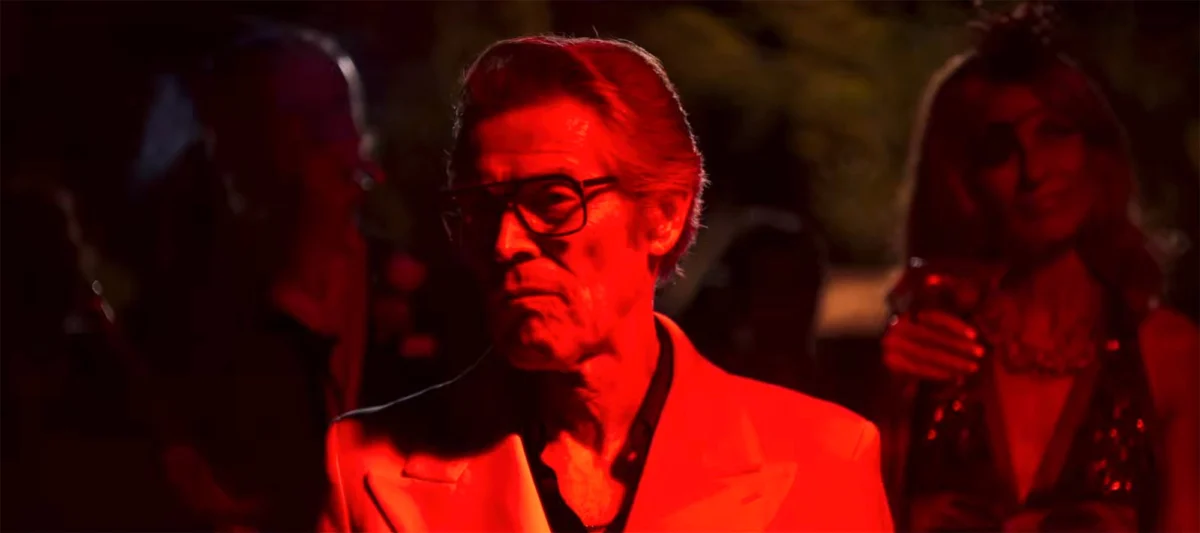
At the heart of The Birthday Party is Willem Dafoe’s portrayal of Marcos Timoleon, a character explicitly described as an "Aristotle Onassis-like tycoon." This comparison immediately conjures images of immense wealth, significant geopolitical influence, and a life lived on a grand, often ostentatious, scale. Onassis, a legendary Greek shipping magnate, was synonymous with a certain brand of larger-than-life capitalism and complex personal relationships, including his marriage to Jacqueline Kennedy. By invoking such a figure, director Jiménez signals that Marcos Timoleon is not merely a rich man, but a titan whose personal empire is inextricably linked to his identity and control.
The film centers around Timoleon’s meticulously planned celebration of his daughter Sofia’s 25th birthday on his exclusive private island. Sofia, played by Vic Carmen Sonne, is not just his daughter but also his sole heiress, making the occasion laden with symbolic weight regarding succession and the continuation of the Timoleon dynasty. However, the idyllic setting quickly becomes a crucible for unforeseen events that threaten to dismantle Marcos’s carefully constructed world and challenge the very foundations of his existence. The director himself articulates the film’s core tensions, stating, "The Birthday Party is a film about power, legacy, love mistaken for possession, and the quiet violence within privilege – set on a paradise island that slowly reveals itself as a prison." This statement encapsulates the psychological depth and inherent conflict that viewers can expect.
Willem Dafoe’s Magnetic Portrayal

Willem Dafoe, a revered actor known for his chameleon-like ability to inhabit complex and often morally ambiguous characters, is a critical component of The Birthday Party‘s appeal. His extensive filmography includes iconic roles that range from the villainous Green Goblin in Spider-Man to the deeply philosophical artist Vincent van Gogh in At Eternity’s Gate, and the enigmatic lighthouse keeper in The Lighthouse. Dafoe’s performances are frequently characterized by an intense physicality and an ability to convey profound internal turmoil, making him an ideal choice for the prickly and complex lead role of Marcos Timoleon.
The character of Timoleon demands an actor capable of projecting both formidable power and underlying vulnerability. As a tycoon accustomed to ruthless control, Marcos finds his authority jeopardized, leading to a potential unraveling that Dafoe is exceptionally equipped to portray. His presence alone elevates the film, promising a nuanced exploration of a man facing an existential crisis amidst opulent surroundings. The dynamic between Marcos and Sofia, hinted to reach a "heartbreaking climax," will undoubtedly be a central emotional anchor, with Dafoe’s intensity likely to amplify the paternal struggle against a daughter asserting her own destiny.
The Allure and Confinement of the Mediterranean Setting
The choice of a late 1970s Mediterranean setting is not merely aesthetic but deeply thematic. This era, preceding widespread digital communication and globalized information flow, allowed for a certain isolation and insularity, particularly for individuals of immense wealth who could retreat to private enclaves. The Mediterranean itself, often romanticized for its azure waters, sun-drenched landscapes, and ancient history, provides a stark contrast to the unfolding drama. This duality of paradise and prison, as described by Jiménez, is a powerful metaphor for the gilded cage that privilege can construct.
The visual language of the late 1970s, from fashion to architecture and social customs, will likely contribute significantly to the film’s atmosphere. This period was marked by shifting social norms, rising individualism, and a burgeoning sense of rebellion against established orders, particularly among younger generations. These societal undercurrents could subtly amplify the generational conflict between Marcos and Sofia, where Sofia’s "important news" might represent a challenge to her father’s traditional views of legacy and control. The private island, while offering ultimate freedom and luxury, simultaneously becomes a confined stage where personal and familial tensions cannot escape, forcing confrontation.
The Creative Team and Literary Origins

The Birthday Party is a collaborative effort, with the screenplay co-written by director Miguel Ángel Jiménez, Giorgos Karnavas, and Nicos Panagiotopoulos. Significantly, the film is based on a novel by Panos Karnezis, a critically acclaimed Greek author known for his evocative prose and explorations of Greek history and culture. The adaptation of a novel suggests a richly developed narrative and character arcs, providing a solid literary foundation for the cinematic interpretation. Karnezis’s work often delves into the complexities of human nature and societal structures, themes that align perfectly with the film’s stated intentions.
Director Miguel Ángel Jiménez’s previous films, such as Ori, Seagull, The Night Watchman, A God in Each Lentil, and Window to the Sea, indicate a filmmaker with a consistent interest in character-driven narratives and often a contemplative or introspective approach. His experience in crafting atmospheric and emotionally resonant stories bodes well for his handling of the psychological thriller elements within The Birthday Party. The ensemble cast supporting Dafoe and Sonne includes talented actors such as Joe Cole, Emma Suárez, Christos Stergioglou, Antonis Tsiotsiopoulos, and Elsa Lekakou, promising a strong collective performance that will flesh out the various "agendas" of the party guests vying for Marcos’s attention.
The film’s production involves several international companies: Heretic (Greece), Fasten Films (Spain), Lemming Film (Netherlands), and Raucous Pictures (UK). This multinational collaboration underscores the film’s European origins and its ambition to reach a global audience, leveraging diverse creative and financial resources. Such co-productions are common in independent cinema, often bringing together varied perspectives and expertise to enrich the final product.
Festival Acclaim and US Distribution Strategy
The Birthday Party first captivated audiences at the 2025 Locarno Film Festival, a prestigious event renowned for its commitment to showcasing innovative and auteur-driven cinema. A premiere at Locarno signals critical recognition and an artistic merit that often precedes broader international distribution. The festival circuit allows films to build buzz, attract international sales, and establish their credentials before a wider commercial release. The fact that the film also screened at "a few other film festivals around Europe" further solidifies its critical reception and artistic standing within the independent film community.
Quiver Distribution, known for acquiring and distributing independent films across various genres, is handling the US release. Their strategy of a simultaneous "select US theaters + on VOD" release on June 5, 2026, reflects a contemporary approach to film distribution, balancing the desire for a traditional cinematic experience with the accessibility and convenience of home viewing. This hybrid model allows the film to reach a diverse audience, from cinephiles who prefer the big screen to those who opt for on-demand streaming. For independent features, this strategy is often crucial for maximizing audience reach and commercial viability in a competitive market.

Broader Implications and Thematic Resonance
The themes explored in The Birthday Party—power, legacy, control, and the hidden violence of privilege—resonate deeply with contemporary societal concerns. In an era marked by increasing discussions about wealth inequality, dynastic power, and the ethical implications of immense personal fortunes, a film that deconstructs the life of an "Aristotle Onassis-like tycoon" holds particular relevance. The idea of a "paradise island" transforming into a "prison" serves as a potent metaphor for the psychological toll and moral compromises that often accompany unbridled power.
Cinematically, The Birthday Party joins a lineage of films that explore the dark underbelly of affluence and the inherent conflicts within powerful families. From the epic sagas of The Godfather to the sharp social commentary of recent successes like Succession or Parasite, audiences remain fascinated by the intricate dynamics of the ultra-rich and the inevitable consequences of their actions. The thriller genre, when applied to such intimate and character-driven narratives, often magnifies the psychological tension, turning internal struggles into nail-biting external conflicts.
Furthermore, the film’s setting in the late 1970s provides a historical lens through which to examine these timeless themes. It allows for a reflection on how notions of power, family, and control have evolved or persisted over decades. The specific socio-political climate of the Mediterranean during that period, while not explicitly detailed in the synopsis, could subtly inform the narrative, adding layers of context to Marcos Timoleon’s empire and his anxieties about its future.
Conclusion
The Birthday Party emerges as a highly anticipated independent film, promising a sophisticated blend of character study, psychological thriller, and social commentary. With Willem Dafoe in a pivotal role as a powerful but beleaguered tycoon, under the nuanced direction of Miguel Ángel Jiménez, and set against a lavish yet foreboding Mediterranean backdrop, the film is poised to deliver a captivating and thought-provoking experience. Its journey from the esteemed Locarno Film Festival to a strategic US release demonstrates a carefully planned rollout designed to maximize its impact. As June 5, 2026, approaches, audiences are invited to witness the unraveling of a dynasty and confront the unsettling truth that even paradise can harbor a prison.