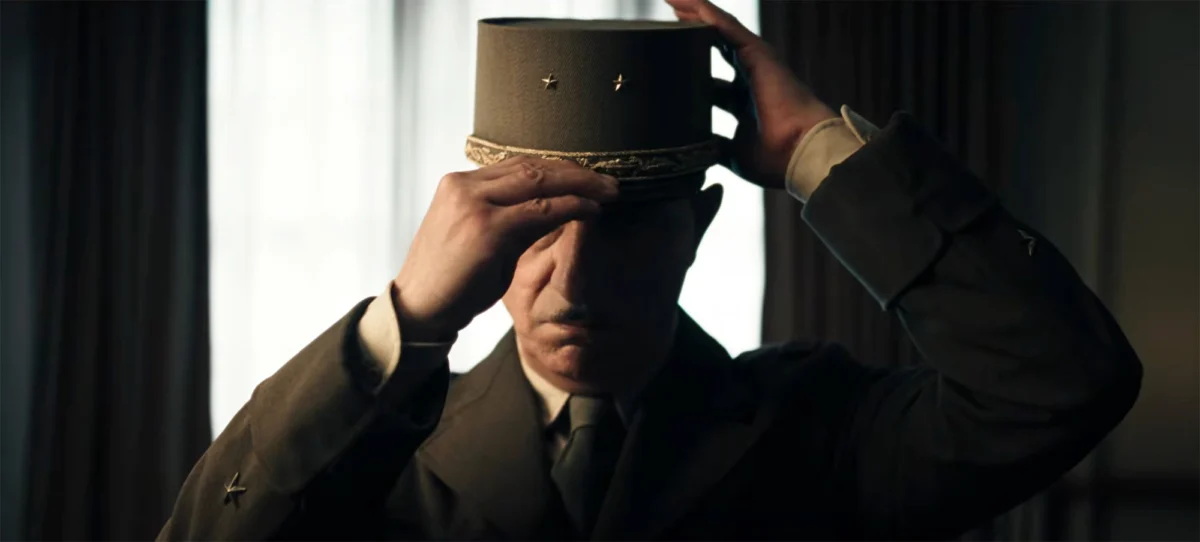
The cinematic world is abuzz with the imminent release of Pathe’s ambitious two-part biographical epic chronicling the life and pivotal leadership of Charles de Gaulle, one of France’s most iconic and transformative figures. Titled De Gaulle: Tilting Iron and De Gaulle: The Sovereign Edge (originally La Bataille de Gaulle: L’Âge de fer and La Bataille de Gaulle: J’écris ton nom in French), these films promise an in-depth exploration of the general and statesman who fundamentally shaped modern France. Directed by acclaimed French filmmaker Antonin Baudry, with Simon Abkarian embodying the formidable De Gaulle, the dual features are slated for a prestigious premiere at the 2026 Cannes Film Festival before their respective French theatrical debuts on June 10th and July 3rd, 2026. The recent unveiling of the main official trailer by Pathe has offered a compelling glimpse into the scale and dramatic intensity of this significant cinematic undertaking, igniting anticipation for a profound historical immersion.
The Enduring Legacy of Charles de Gaulle
Charles de Gaulle (1890-1970) remains an indelible figure in French and world history, his name synonymous with unwavering defiance, national sovereignty, and political renewal. Often recognized globally by the major Parisian airport that bears his name, De Gaulle’s true legacy extends far beyond a mere geographical marker. He was a military strategist, a visionary leader, and the architect of France’s Fifth Republic. His most defining moments, which form the core narrative of these two films, occurred during World War II when France faced its darkest hour. Following the swift collapse of the French army and the signing of an armistice with Nazi Germany in June 1940, De Gaulle, then an obscure brigadier general, refused to accept defeat. From London, he launched his historic appeal on June 18th, rallying the French people to resist occupation and continue the fight as the leader of the Free French Forces. This act of profound courage and conviction, undertaken against immense odds and with seemingly no backing, laid the foundation for France’s eventual liberation and its restoration as a major global power.

Beyond the war, De Gaulle chaired the Provisional Government of the French Republic from 1944 to 1946, overseeing the critical period of national reconstruction and the re-establishment of democratic institutions. His later return to power in 1958, amidst the Algerian crisis, saw him craft a new constitution and found the Fifth Republic, an enduring political system that strengthened the presidency and brought stability to a nation plagued by parliamentary instability. His "certain idea of France"—a vision of a proud, independent, and influential nation—continues to resonate deeply within the French psyche. To condense such a monumental life into a single film would be a disservice, making Pathe’s decision for a two-part epic not just ambitious but historically imperative. This dual structure provides the necessary canvas to explore the complexities of his character, the strategic brilliance of his leadership, and the profound impact of his decisions on the destiny of a nation.
A Dual Cinematic Vision: Production and Direction
The responsibility of bringing De Gaulle’s epic story to the screen falls to Antonin Baudry, a French filmmaker whose previous work, The Wolf’s Call (2019), showcased his ability to craft tense, character-driven narratives within high-stakes environments. Baudry, who also co-wrote the screenplays with Bérénice Vila, is tasked with navigating the delicate balance between historical accuracy and dramatic storytelling. The films are notably based on Julian Jackson’s critically acclaimed book, De Gaulle: A Certain Idea of France, suggesting a commitment to scholarly rigor in their narrative construction. This choice of source material underscores the production’s intention to delve deep into De Gaulle’s philosophy and political thought, rather than merely recounting events.
Pathe, a venerable institution in French cinema, stands as the producing and distributing force behind this colossal project. Under the production stewardship of Axelle Boucaï, Pathe’s involvement signals a significant investment and a clear intent to deliver a definitive cinematic portrayal. Pathe has a long-standing reputation for backing prestigious historical dramas and showcasing French heritage on the global stage, making them an ideal partner for a project of this magnitude. Their commitment to such an expansive narrative, delivered across two features, speaks volumes about their confidence in the material and the creative team.

The casting of Simon Abkarian as Charles de Gaulle is a crucial element of the films’ success. Abkarian, a respected actor known for his commanding presence and versatile performances across French and international cinema, brings a gravitas and intensity befitting the role. Portraying De Gaulle requires not just a physical resemblance but an ability to convey the immense intellectual and emotional weight of a man who carried the hopes of a nation. Abkarian’s selection suggests a focus on the psychological depth and internal struggles of the leader. He is supported by an impressive ensemble cast, including notable talents such as Simon Russell Beale, Florian Lesieur, Benoît Magimel, Mathieu Kassovitz, Loïc Corbery de la Comédie-Française, Anamaria Vartolomei, Niels Schneider, Félix Kysyl, and Karim Leklou. This rich tapestry of actors will undoubtedly bring to life the diverse figures—from allies and adversaries to advisors and family members—who populated De Gaulle’s world, enriching the historical panorama and providing varied perspectives on the tumultuous era. The decision to cast such a strong supporting lineup further emphasizes the production’s commitment to delivering a comprehensive and nuanced historical drama.
Chronology of a Nation’s Defining Moments
The two films meticulously trace De Gaulle’s journey, focusing on distinct yet interconnected periods of his life. De Gaulle: Tilting Iron is set to plunge audiences into the harrowing summer of 1940. The film opens with France’s catastrophic collapse, the signing of the armistice, and the pervasive sense of despair that gripped the nation. It vividly portrays De Gaulle’s solitary, audacious decision to defy Marshal Pétain’s capitulation and flee to London. The central narrative arc of this first installment revolves around his "irrational conviction" that France had not truly laid down its arms. From the desperate plea over BBC radio on June 18th, 1940, to the arduous task of forming and leading the Free French Forces, the film captures the monumental challenge of rallying support, both internationally and clandestinely within occupied France. It illustrates the gradual rise of resistance fighters, rebellious students, and determined soldiers in England, France, and Africa, all united by faith, audacity, and a thirst for freedom against a seemingly unyielding reality. The title "Tilting Iron" powerfully evokes the sheer force of will required to challenge the established order and bend the course of history through sheer determination and an unshakeable belief in a nation’s destiny. The film is expected to cover De Gaulle’s wartime leadership and the struggle for liberation, concluding around 1945, with the Allied victory and the liberation of France.
The second part, De Gaulle: The Sovereign Edge, then transitions to the immediate post-war era and beyond. While the original synopsis indicates the first part covers "initially between 1940 and 1945," the second film is designed to "trace his march towards his political career." This suggests that The Sovereign Edge will explore De Gaulle’s pivotal role in chairing the Provisional Government from 1944 to 1946, focusing on the immense task of restoring democracy, rebuilding a war-torn nation, and asserting France’s position on the international stage. The film will likely delve into the complexities of post-liberation politics, the challenges of national unity, and De Gaulle’s evolving vision for France’s political future. The "Sovereign Edge" in the title points to his unwavering commitment to French sovereignty and his efforts to ensure France’s independence and dignity in a rapidly changing world order. It implies a narrative that moves from military command to political statesmanship, showcasing De Gaulle’s intellectual rigor and his profound impact on the constitutional and political architecture of France that culminated in the Fifth Republic. This two-part structure allows for a comprehensive and nuanced portrayal, ensuring that both his wartime heroism and his post-war political genius receive the detailed attention they deserve.

The French Cinematic Landscape and Historical Biopics
French cinema has a rich tradition of producing compelling historical dramas and biopics, often serving as a mirror for national identity and a vehicle for exploring pivotal moments in the country’s past. Films about historical figures, from Joan of Arc to Napoleon (even if recent ones are not exclusively French productions), have consistently drawn audiences eager to reconnect with their heritage and understand the forces that shaped their present. The De Gaulle films represent a significant entry into this distinguished lineage, promising to be one of the most ambitious French historical productions in recent memory.
The decision to premiere these films at the 2026 Cannes Film Festival further elevates their international profile. Cannes is not merely a festival; it is a global stage where cinematic excellence is recognized, and new narratives are introduced to the world. A premiere there signals critical confidence in the films’ artistic merit and provides an unparalleled platform for securing international distribution. For Pathe, this is a strategic move to ensure that De Gaulle’s story, while deeply French, resonates with a global audience interested in leadership, resistance, and the universal struggle for freedom. The films’ success at Cannes could pave the way for widespread international sales, bringing this crucial chapter of European history to viewers far beyond France’s borders. It positions these features not just as national biopics, but as significant contributions to world cinema’s exploration of 20th-century history.
Anticipated Reception and Critical Outlook

The initial trailer for De Gaulle: Tilting Iron and De Gaulle: The Sovereign Edge has already sparked considerable discussion. While the original assessment noted a potential for the films to appear "staunchly bureaucratic," the trailer also suggests a narrative rich with dramatic tension, personal conviction, and the weight of historical responsibility. The challenge for Baudry and his team will be to transform the complex political and military machinations into an engaging cinematic experience without sacrificing historical fidelity. This delicate balance is often the make-or-break factor for historical biopics. However, the depth of the source material, the caliber of the cast, and Pathe’s production values indicate a strong foundation for overcoming such a challenge.
Historians and critics alike will undoubtedly scrutinize the films for their accuracy, interpretation, and the nuances of De Gaulle’s character. The films are poised to ignite a national conversation in France about De Gaulle’s enduring legacy, his controversies, and his continued relevance in contemporary political discourse. For many, De Gaulle embodies a certain ideal of French leadership—strong, independent, and principled. In a world grappling with shifting geopolitical landscapes, his story of national resilience and unwavering conviction might resonate deeply with audiences seeking inspiration from historical precedents. The films’ theatrical release during the summer of 2026, a period often associated with lighter fare, also underscores Pathe’s confidence in their ability to draw significant audiences for a serious historical epic, cementing its place as a major cultural event.
In conclusion, De Gaulle: Tilting Iron and De Gaulle: The Sovereign Edge represent an ambitious and vital undertaking in French cinema. Through meticulous research, a compelling dual narrative structure, and a stellar cast, these films aim to deliver a comprehensive and impactful portrayal of Charles de Gaulle’s extraordinary life and his indelible mark on France and the world. From the desperate defiance of 1940 to the foundational years of modern French democracy, Pathe’s epic promises not only a gripping historical drama but also a profound reflection on leadership, national identity, and the enduring power of conviction. As the Cannes premiere and summer release dates approach, anticipation continues to build for what is poised to be a landmark cinematic event.