



Financial Performance and the WBD Termination Impact
The first quarter of 2026 was uniquely characterized by the financial aftermath of Netflix’s decision to walk away from its high-profile pursuit of Warner Bros. Discovery’s (WBD) streaming and film assets. While the deal’s collapse in February signaled a strategic shift back toward internal growth, it left a massive mark on the company’s balance sheet. Netflix reported a net income of $5.28 billion, or $1.23 per share, for the quarter—a figure that nearly doubled the $2.89 billion, or 66 cents per share, reported in the first quarter of 2025.
The primary driver for this surge in net income was a $2.8 billion termination fee paid to Netflix following the dissolution of the WBD transaction. This one-time windfall made the reported earnings per share (EPS) difficult to compare against analyst expectations, which had been pegged at 76 cents. Despite the cash influx, the company maintained its full-year revenue guidance of $50.7 billion to $51.7 billion, suggesting that the termination fee would be treated as a non-operating gain rather than a fundamental shift in the company’s revenue-generating capacity.
Chief Financial Officer Spencer Neumann addressed the financial complexities during the earnings call, noting that while the WBD deal is no longer active, its shadow remains on the 2026 budget. Neumann explained that several costs originally slated for 2027 are being accelerated into the current fiscal year. "We are still in the ballpark of the total that we were projecting for total M&A-related expenses in the year," Neumann stated, clarifying that the company is reallocating capital originally earmarked for the acquisition into other operational areas.
The End of the Hastings Era
Perhaps the most significant news for long-term investors was the announcement regarding Reed Hastings. Having already transitioned from his role as CEO in 2023 to serve as Executive Chairman, Hastings will officially exit the board when his term expires in June. This departure marks the end of an era for the company he co-founded in 1997 as a DVD-by-mail service.
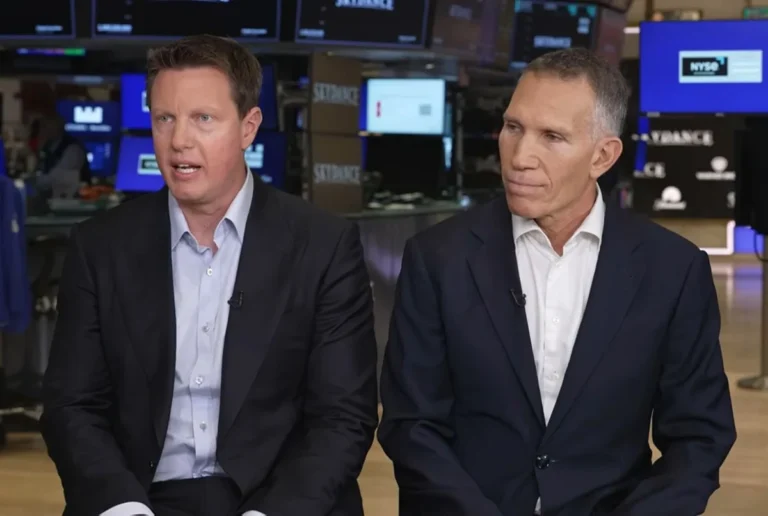
In a letter to shareholders, Hastings reflected on his nearly three-decade journey, citing the global expansion of the service in January 2016 as his "all-time favorite memory." He indicated that his future focus would shift toward philanthropy and other personal ventures. The transition of power appears fully settled under Co-CEOs Ted Sarandos and Greg Peters, who took the reins in 2023. Addressing analyst concerns that Hastings’ departure might be linked to the failed WBD deal, Sarandos was quick to clarify that Hastings was a "big champion" of the acquisition and that the board had been unanimous in its decision-making processes.
Strategic Pivot to Advertising and Live Content
Netflix’s Q1 report reinforced its commitment to diversifying revenue streams beyond traditional subscriptions. The company reiterated its ambitious goal of reaching $3 billion in advertising revenue by the end of 2026. This would represent a doubling of ad revenue year-over-year, validating the company’s 2022 decision to introduce a lower-priced, ad-supported tier.
The "ads-plus-subs" model has become the cornerstone of Netflix’s growth strategy as it navigates a saturated domestic market. To bolster this, the company has implemented aggressive tactics, including a global crackdown on password sharing and a series of price hikes. In March 2026, Netflix raised prices across all its streaming plans, a move that Co-CEO Greg Peters described as "consistent with our plan for the year." Peters emphasized that while price increases naturally lead to some churn or plan-downgrading, the overall "value exchange" remains strong, allowing the company to reinvest in higher-quality content.
Furthermore, Netflix is leaning heavily into live and interactive content to drive engagement. The company reported record-breaking engagement metrics for the first quarter, fueled by its expansion into video podcasts and its broadcast of the World Baseball Classic. The most significant shift, however, is the company’s deepening relationship with the NFL. While Netflix has historically avoided the high costs of traditional sports packages, Sarandos confirmed that the company is in discussions to "expand the relationship" with the league, building on the success of its Christmas Day game broadcasts.
Chronology of Key Events: 2022–2026
To understand Netflix’s current position, it is essential to look at the timeline of strategic shifts that led to the Q1 2026 results:
- April 2022: Netflix reports its first subscriber loss in over a decade, leading to a massive stock sell-off and the announcement of an ad-supported tier.
- November 2022: The ad-supported "Basic with Ads" plan launches in major markets.
- January 2023: Reed Hastings steps down as CEO, moving to the Chairman role; Ted Sarandos and Greg Peters named Co-CEOs.
- May 2023: Netflix begins its global crackdown on password sharing, forcing "extra member" fees.
- Late 2025: Netflix enters formal negotiations to acquire Warner Bros. Discovery’s streaming assets to compete with Disney and Amazon.
- January 2026: Netflix announces it has reached a milestone of 325 million global paid subscribers.
- February 2026: The WBD acquisition is officially called off; Netflix receives a $2.8 billion termination fee.
- March 2026: Netflix announces a price increase across all tiers.
- April 2026: Q1 earnings report reveals a revenue beat, but Hastings announces his final board departure.
Market Reaction and Analyst Sentiment
The 9% drop in share price following the announcement suggests a "sell the news" reaction from the market. While the revenue beat was healthy, investors often react with caution to the departure of a visionary founder. Furthermore, the reliance on a one-time termination fee to boost net income can mask underlying operational pressures.
Analysts have noted that while Netflix’s operating income jumped 18% in the first quarter—aided by "slightly higher-than-planned subscription revenue"—the company is entering a period of high content amortization. Netflix warned that content spending would be heavily weighted in the first half of 2026 due to the timing of major title launches. This implies that profit margins may tighten in the second half of the year as those costs are recognized.
The company’s decision to stop providing quarterly updates on membership numbers has also led to increased scrutiny of its "internal quality engagement metrics." Without raw subscriber counts, Wall Street is forced to rely on revenue and operating margin as the primary gauges of health, making the success of the advertising tier and price hikes even more critical.
Broader Implications for the Streaming Industry
Netflix’s current trajectory serves as a blueprint—and a warning—for the broader streaming industry. The transition from a "growth at all costs" model to a "profitability and diversification" model is now complete. By incorporating advertising, live sports, and podcasts, Netflix is increasingly resembling the traditional media conglomerates it once sought to disrupt.
The failed WBD deal also highlights a cooling period for massive media mergers. Regulatory scrutiny and the complexities of integrating vast content libraries have made organic growth and smaller, strategic partnerships more attractive. Netflix’s pivot back to its own platform—bolstered by a $2.8 billion "break-up" cushion—suggests that the company believes it can maintain its 325-million-subscriber lead without the baggage of a major acquisition.
As Reed Hastings prepares to exit the board in June, he leaves behind a company that has successfully navigated the most turbulent period in its history. Whether the current leadership can maintain this momentum without the founder’s direct oversight remains the central question for investors heading into the second half of 2026. For now, Netflix remains the undisputed leader in the streaming space, even as it asks its members to "contribute more" to fund the next generation of global entertainment.