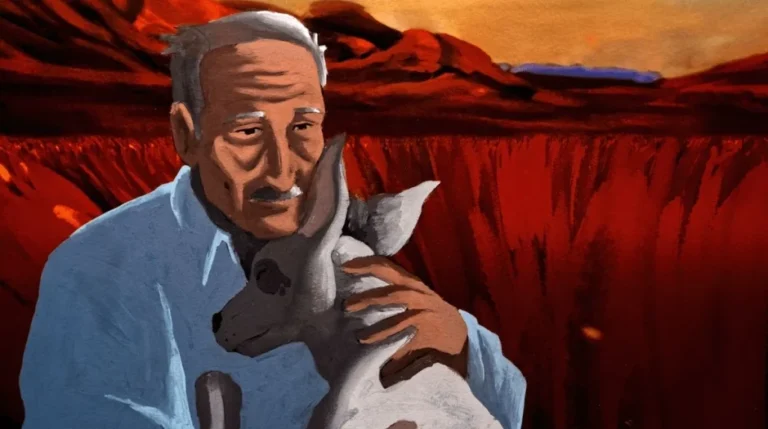

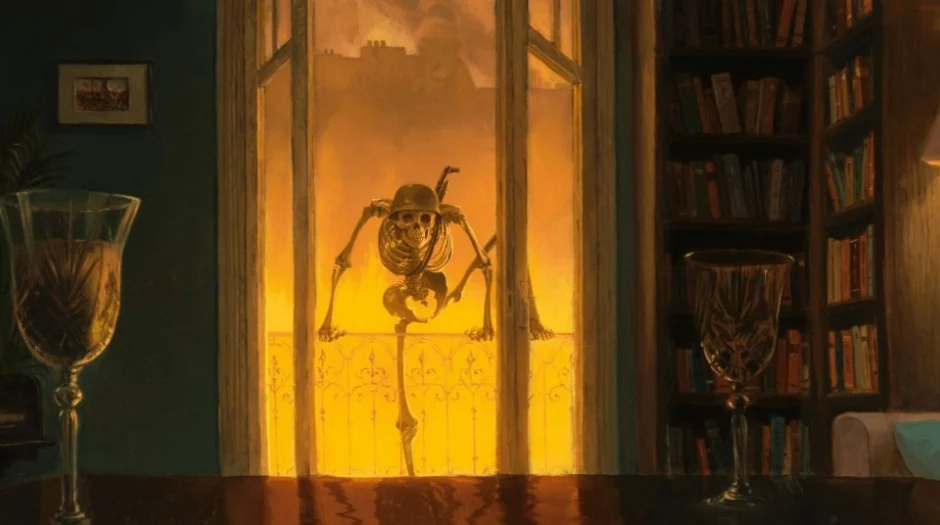
Hisko Hulsing, the acclaimed Dutch animator, director, painter, and composer, is poised to unveil his latest masterpiece, "Danse Macabre," at the prestigious Annecy International Animated Film Festival this week. This short film, a profound visual interpretation of Dmitri Shostakovich’s Allegro from his 10th Symphony, marks the culmination of over a decade of dedicated artistic endeavor. Crafted from approximately 79 original oil paintings, "Danse Macabre" is a testament to Hulsing’s singular vision and the collaborative spirit of an international team of artists hailing from the Netherlands, France, Belgium, Hungary, and South Africa. The film is slated for release on Arte’s media library on June 25 and will be broadcast linearly on June 26 as part of the magazine "Kurzschluss."

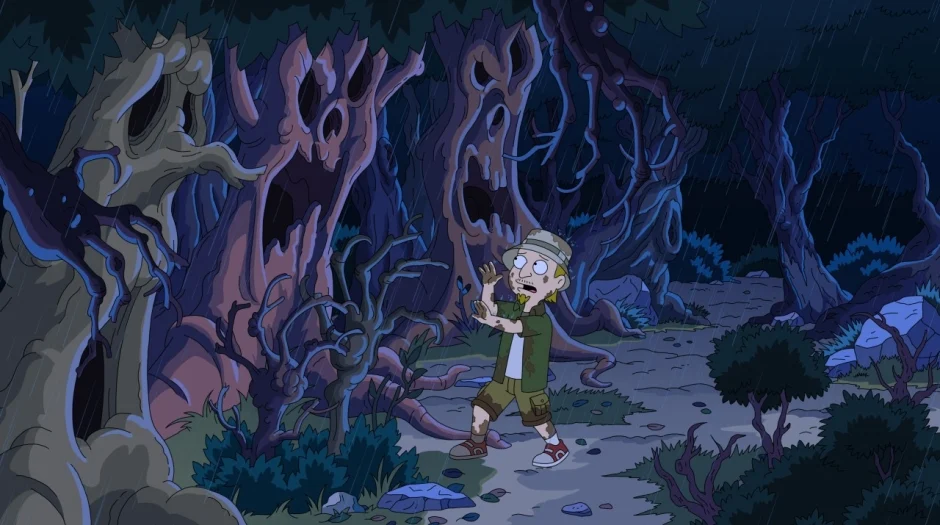
Hulsing, born in Amsterdam in 1971, has carved a formidable reputation in the animation world. His early short films, "Seventeen" (2004) and "Junkyard" (2012), garnered significant attention for their artistic innovation. His contributions to Brett Morgen’s critically acclaimed Kurt Cobain documentary, "Cobain: Montage of Heck" (2015), which earned seven Emmy nominations, brought his distinctive visual style to a wider audience. Further cementing his global recognition, Hulsing’s work on the Prime Video series "Undone" (2019) and the Netflix series "The Sandman," specifically the episode "A Dream of a Thousand Cats" (2022), both received Annie Award nominations, underscoring his versatility and impact across different platforms.
"Danse Macabre" represents a deeply personal and timely artistic statement, drawing inspiration from the somber power of Shostakovich’s music and Hulsing’s observations on the persistent specter of militarism and aggression in the contemporary world. The film’s genesis can be traced back over eleven years, a period marked by Hulsing’s extensive research and artistic development, which included creating a moving storyboard that remained remarkably consistent despite evolving external pressures.
The Genesis of a Masterpiece: A Decade in the Making
The journey of "Danse Macabre" began over a decade ago, a period Hulsing describes as a deep dive into both the composer’s intentions and the unsettling geopolitical currents of the time. Initially, Hulsing’s concept was rooted in a broader critique of what he perceived as the resurrection of fascism globally. However, as he delved deeper into Shostakovich’s life and the historical context of the 10th Symphony, composed in the aftermath of Stalin’s death, his focus sharpened.
"The film is really about the resurrection of fascism, I would say, which is happening all over the world right now," Hulsing stated in an interview with journalist Johannes Wolters. He later refined this, explaining, "I think the film is more about Stalin, actually about Shostakovich’s life in the Stalin era. So, using the word fascism… maybe I should not do that so much, because it is too narrow, it has more to do with the militarization of society, like what has been happening for the last 11 years in Russia."

This reflection on the militarization of society became a central theme. Hulsing noted the uncanny prescience of his initial storyboard, created eleven years prior, which required no alterations despite facing resistance from film funds who perceived it as promoting war. This misunderstanding, he explained, highlights the difficulty in conveying the nuanced anti-war sentiment within his work.
Echoes of History: Shostakovich and the Stalin Era
Shostakovich’s personal experiences under Stalin’s totalitarian regime deeply influenced his musical output, imbuing it with a complex duality of outward conformity and profound inner turmoil. Hulsing draws a parallel between Shostakovich’s precarious existence, where he "used to lay in his bed every night, fully clothed, with his suitcase next to his bed," anticipating arrest, and the broader societal pressures that fuel conflict.

The composer’s struggle to navigate the tightrope between being a "Soviet hero" and facing severe repercussions is reflected in the music’s inherent ambiguity. Hulsing identifies "very, very dark undertones" alongside passages that could be interpreted as propaganda. This tension between darkness and euphoria, fear and excitement, is what captivated Hulsing and forms the core of his visual interpretation. The Allegro from Shostakovich’s 10th Symphony, written shortly after Stalin’s death, is often considered a terrifying portrait of the dictator, though Hulsing suggests a more complex layering of emotions, encompassing panic, fear, and a disquieting sense of excitement.
Visualizing the "Danse Macabre": A Symphony of Conflict
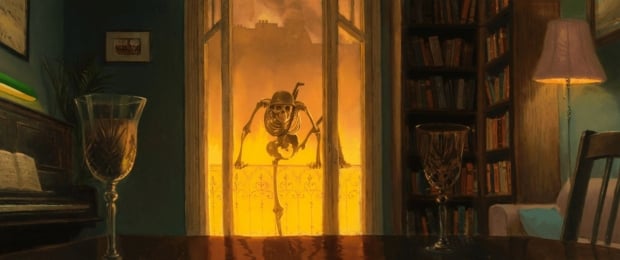
Hulsing employs the music as a narrative force within "Danse Macabre," depicting musicians as "muses" who lead a "dark army" towards a seemingly illuminated destination. However, this light is rendered cynically, hinting at a false promise and sinister intentions. The film’s narrative unfolds with a dead or sleeping soldier being brought to life by the music and the muses, only to transform immediately into a skeleton. This stark imagery serves as a potent metaphor for the Russian soldiers sent to Ukraine, who, Hulsing suggests, are "dead the moment they leave to fight."

The film’s visual structure mirrors the musical progression. The initial shots are imbued with a militaristic order, deliberately evoking the propaganda films of Leni Riefenstahl. These orderly marches descend into chaos, depicting an "army of death" attacking humanity, culminating in soldiers dancing drunkenly over bodies and ultimately hanging their own muses. This descent into anarchy, Hulsing argues, is an inevitable consequence of war, where ideologies devolve into base violence and a struggle for survival.
The Apocalyptic Vision: War as a Universal Nightmare
Beyond its specific political commentary, "Danse Macabre" transcends the confines of a singular conflict to explore war as an "apocalyptic nightmare." Hulsing draws parallels between the obliteration of Gaza and Dresden, arguing that after immense destruction, all towns ultimately resemble ruins. This concept aligns with the literal meaning of "Danse Macabre," where death serves as the ultimate equalizer, rendering all distinctions of wealth or status irrelevant in the face of universal suffering.

The film’s apocalyptic undertones are further amplified by Hulsing’s exploration of societal trends towards what he terms "apocalyptic thinking." He cites figures who espouse end-times ideologies and notes the alarming rise of right-wing extremism and autocratic regimes globally. This reflects a broader concern about humanity’s ethical development lagging behind its technological advancement, leading to a species that possesses destructive capabilities far exceeding its wisdom.
Influences and Artistic Heritage
Hulsing’s artistic lineage is rich and varied, drawing inspiration from a pantheon of visual masters and cinematic innovators. His admiration for Pieter Bruegel the Elder and Hieronymus Bosch is evident in the complex, often unsettling, imagery within his work. He also acknowledges the influence of 17th-century Dutch painters and Francisco Goya, the latter being a pioneer in chronicling the atrocities of war.

Cinematically, Disney’s "Fantasia," particularly "Night on Bald Mountain" and the "Firebird Suite" segment from "Fantasia 2000," left a significant mark on Hulsing’s approach to visualizing music. The raw power and narrative drive of Pink Floyd’s "The Wall" also served as an early inspiration. His appreciation for live-action cinema is evident in his admiration for directors like Roman Polanski, whose films "The Tenant" and "Rosemary’s Baby" explore themes of psychological dread and paranoia, resonating with the darker aspects of "Danse Macabre."
The Technical Prowess: A Fusion of Traditional and Digital Art
The realization of "Danse Macabre" involved an intricate fusion of traditional painting and cutting-edge digital techniques. Hulsing’s decision to move beyond creating mere background paintings to integrating characters directly into his oil paintings was a pivotal shift. This approach, combined with projection mapping tests and the integration of AI tools like Stable Diffusion, underscores his commitment to pushing the boundaries of animated filmmaking.

The production pipeline was a complex, multi-national endeavor involving studios in the Netherlands, France, Belgium, and Hungary, as well as a studio in Africa. Weekly Zoom calls and meticulous attention to detail ensured that each shot, whether derived from storyboards, live-action recordings, or finished paintings, adhered to Hulsing’s precise vision. Despite the challenges of a relatively modest budget of 470,000 Euros for such an ambitious project, the dedication of the international team transformed it into a true passion project, with many individuals contributing beyond their paid roles.
"Danse Macabre" as a Timely Omen
In an era marked by resurgent nationalism, geopolitical tensions, and the specter of conflict, "Danse Macabre" arrives with a profound sense of urgency. The film’s unflinching exploration of the human propensity for violence, the seductive nature of militarism, and the devastating consequences of war resonates deeply with contemporary events. Hulsing’s work serves not merely as a commentary on current affairs but as a timeless examination of the darker facets of the human condition, urging viewers to confront the uncomfortable truths about our collective capacity for destruction. The film’s premiere at Annecy, a global hub for animation, is expected to spark significant dialogue and reflection on these critical themes.