


The landscape of digital racing is undergoing a fundamental shift as Fuse Games, a studio comprised of industry veterans from Criterion Games, prepares to launch Star Wars: Galactic Racer. Led by Matt Webster, the former general manager of the Burnout and Need for Speed franchises, and creative director Kieran Crimmins, the development team is seeking to reintroduce "consequence" into a genre they argue has become overly sanitized by modern conveniences like the "rewind" button. By merging the high-speed intensity of the Star Wars universe with the structural DNA of a roguelite, Fuse Games aims to deliver a "runs-based" experience where failure is not just an obstacle, but a core component of the gameplay loop.
The Philosophy of Consequence in Modern Racing
For the developers at Fuse Games, the evolution of racing games toward accessibility has come at the cost of tension. Matt Webster identifies the ubiquitous "rewind" mechanic—a staple in titles like Forza Horizon and the F1 series—as a primary factor in the erosion of stakes. "Racing is crying out for a bit of consequence," Webster stated during a presentation at the Summer Game Fest in Los Angeles. According to the CEO, crashing should serve as more than a visual spectacle; it should be a learning moment with tangible impact on the player’s progress.
In Star Wars: Galactic Racer, this philosophy is manifested through a roguelite structure. Unlike traditional arcade racers where players restart a track until they achieve a perfect run, Galactic Racer requires players to navigate a series of interconnected events with limited resources. When a vehicle is destroyed or a race is lost, the "run" ends, forcing the player to restart the campaign, albeit with certain permanent upgrades and knowledge gained from previous attempts. This design choice shifts the player’s focus from perfection to survival and strategic aggression.
The Roguelite Loop: Tokens, Rewards, and Darius Pax
The campaign structure of Galactic Racer is built around the concept of "The Galactic League." Players interact with a mechanic character named Darius Pax, who provides the necessary race tokens to enter competitions. These tokens represent the player’s "lives" within a run. In a standard race, a player typically has three opportunities to recover from a crash before their vehicle is deemed irreparable.
The stakes are further heightened by finishing requirements; players must generally secure a top-three position to retain their token and continue the run. Success yields rewards that can be reinvested into ship upgrades, improving performance for subsequent, more difficult stages. If a player fails to meet the criteria or loses their ship entirely, the run terminates. While the order of the planets remains fixed to provide a narrative and difficulty curve, the specific events and "twists" on each planet are randomized, ensuring that no two attempts are identical.

To navigate this campaign, players use a horizontally branching map reminiscent of the sector-based navigation in the indie hit FTL: Faster Than Light. This meta-game adds a layer of strategic decision-making, as players must choose paths that offer the best balance of risk and reward, weighing the potential for high-end parts against the danger of more aggressive opponents or hazardous environmental conditions.
Combat Mechanics and the "Bar Fight" Aesthetic
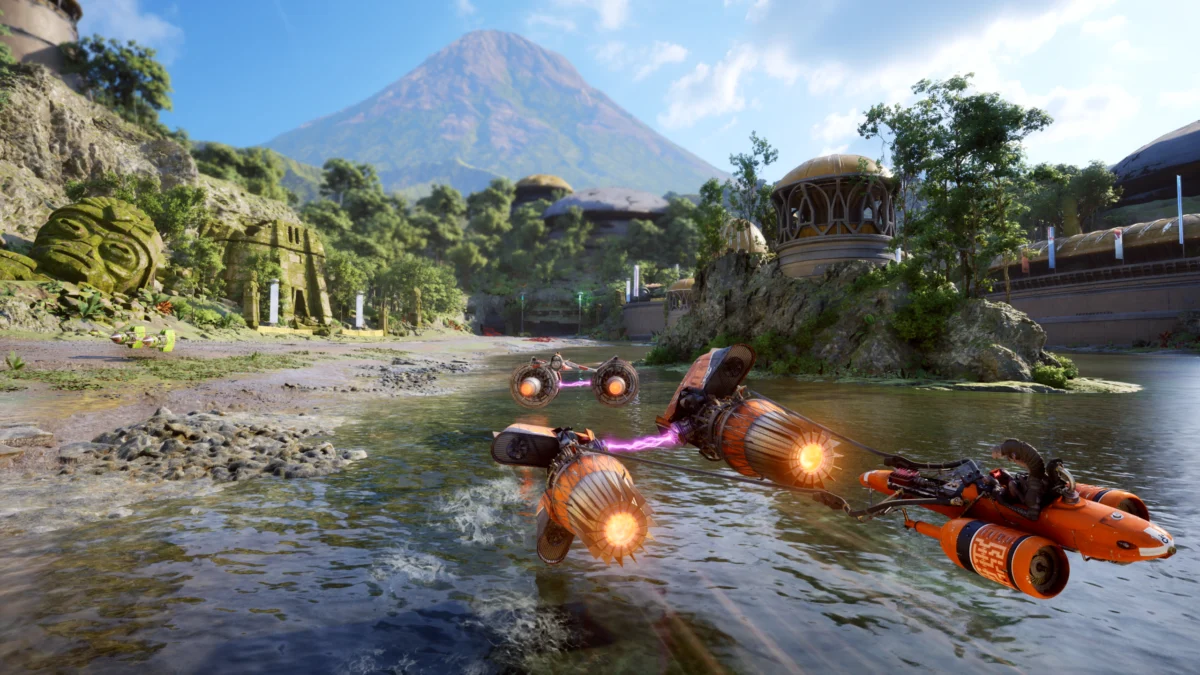
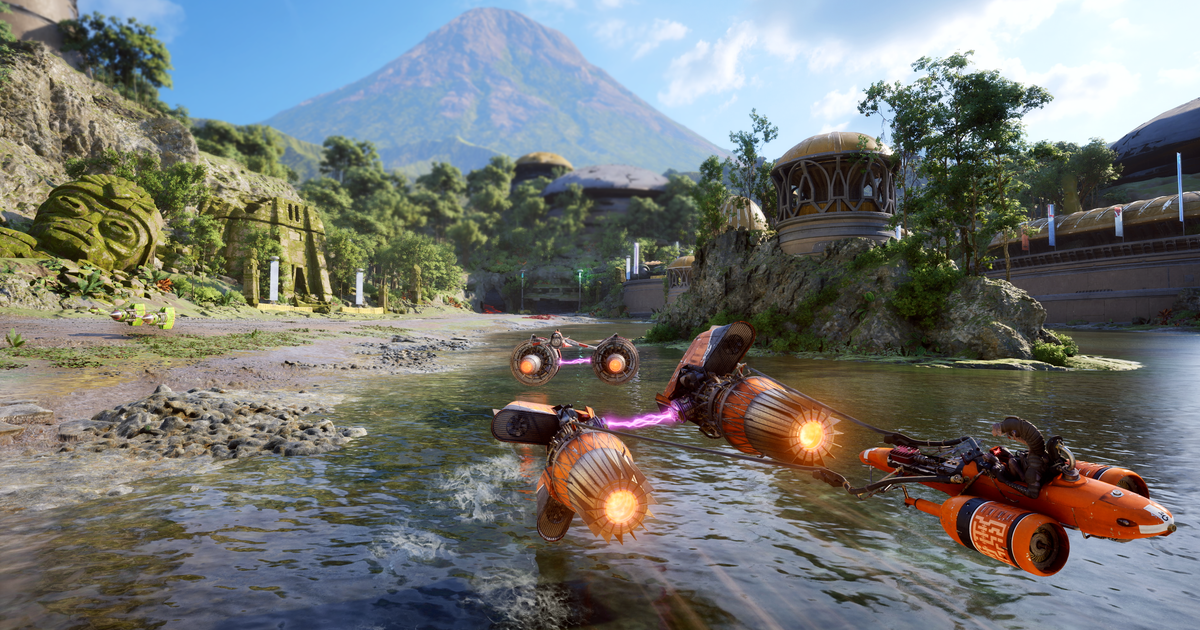
A defining characteristic of Star Wars: Galactic Racer is its embrace of aggressive driving. Creative Director Kieran Crimmins describes the racing experience as a "bar fight" in space, leaning into the "rough and tumble" underbelly of the Star Wars syndicates and the brutal precedent set by the podracing sequences in Star Wars: Episode I – The Phantom Menace.
Unlike many modern simulators that penalize contact between vehicles, Galactic Racer incentivizes it. The game is built to accommodate "elbows out" racing, where ramming an opponent into a wall is considered a legitimate and often necessary tactic for advancement. This aggression is integrated into the game’s core abilities, allowing players to build vehicles specifically designed for combat rather than just pure speed.

The visual feedback of these interactions is a priority for the team. Utilizing the technical expertise gained from the Burnout series—a franchise world-renowned for its "crash technology"—Fuse Games has ensured that every collision is a visceral event. Debris such as panels, engine parts, and cooling vanes fly off vehicles in high-fidelity explosions, while pilots react with arch dialogue to the unfolding chaos.
Technical Innovation: The Skim Speeder and Combinatoric Customization
One of the most significant mechanical additions to the Star Wars racing canon is the "skim speeder." This new vehicle type, created specifically for Galactic Racer, features a unique ability to rotate its chassis from a horizontal to a vertical orientation. This "landscape to portrait" transition allows players to take corners with extreme aggression or navigate narrow gaps that would be impassable for wider podracers or landspeeders.
Supporting these vehicle types is a customization system of unprecedented depth. Crimmins claims that the "combinatorics" of parts—the various ways engines, flywheels, prop shafts, and turbos can be assembled—reach into the trillions of possible combinations. The goal is to provide a level of build complexity usually reserved for deep RPGs or hardcore simulators like Gran Turismo 2, but within the framework of an accessible arcade experience.

The game features 14 distinct "racer styles," which act as classes that modify a player’s base abilities. When combined with the massive array of parts, the system allows for highly specialized builds tailored to specific planetary conditions or playstyles, such as high-durability "tanks" or high-risk, high-reward speedsters.
Heritage and Inspiration: From Episode I Racer to Burnout Paradise
While Galactic Racer introduces new mechanics, it is deeply rooted in the history of both the Star Wars IP and the racing genre. The developers cite the 1999 classic Star Wars Episode I: Racer and its sequel, Racer Revenge, as primary inspirations. The team even revisited these titles during the early stages of development to deconstruct their boost mechanics and sense of speed.
The influence of Burnout Paradise is equally evident. Webster and Crimmins view Galactic Racer as an attempt to capture "lightning in a bottle" once again by pushing the boundaries of the arcade genre. Just as Paradise explored the expression of arcade racing in an open world, Galactic Racer explores the expression of racing through the lens of consequence and roguelite progression.

The game also revives the "Galactic Conquest" concept from the original Star Wars: Battlefront series. By giving individual races a broader context within a planetary campaign, Fuse Games provides a sense of meaning to every victory and defeat. This structure transforms a series of isolated races into a cohesive narrative of a pilot’s rise through the criminal underworld of the Star Wars galaxy.
The Arcade Renaissance and Market Implications
The announcement of Star Wars: Galactic Racer comes at a time when the arcade racing genre is experiencing a significant resurgence. Following years of dominance by "sim-cade" titles like Forza Horizon, the industry is seeing a return to purer, more immediate experiences. Recent and upcoming releases such as Hot Wheels Unleashed, the revival of Crazy Taxi, and new entries in the Stuntman franchise suggest a growing appetite for games that prioritize "the joy of discovery" and "fantasy fulfillment" over technical realism.
Industry analysts suggest that the combination of the Star Wars license and the roguelite genre could broaden the appeal of racing games to a demographic that typically favors action or strategy titles. By marketing the game as a "runs-based" experience, Fuse Games is positioning Galactic Racer alongside popular modern titles like Hades or Dead Cells, potentially tapping into a player base that values replayability and incremental progression.

Conclusion and Future Outlook
Star Wars: Galactic Racer represents a bold attempt to modernize the arcade racer by looking backward at the high-stakes design of the past and forward at the procedural structures of the present. With its focus on visceral spectacle, deep customization, and the "consequence" of failure, the title aims to fill a void in the current gaming market.
The project also serves as a high-profile debut for Fuse Games. By leveraging the "DNA of the studio"—a lineage that traces back to the peak of the arcade racing era—Webster and Crimmins are betting that players are ready to embrace the "fun of failure." As the game moves toward its official release, the industry will be watching to see if this blend of Star Wars lore and roguelite tension can indeed move the genre forward.
Star Wars: Galactic Racer will feature four primary modes at launch, including the core roguelite campaign, an Arcade mode for traditional podracing, and robust online multiplayer options. Fans will be able to pilot iconic vehicles and new creations across recognizable planets like Jakku and Tatooine, as well as several new locations yet to be revealed. Through this ambitious project, Fuse Games isn’t just making a racing game; they are attempting to restore the sense of danger to the digital driver’s seat.