The cinematic landscape is often populated by characters who navigate life’s complexities with a blend of raw energy and unwavering camaraderie. "Shana," the latest offering from director and writer Lila Pinell, delves into this territory, presenting a compelling portrait of a young woman grappling with escalating personal crises, amplified by the recent loss of her grandmother and the looming presence of a recently released, toxic partner. The film, clocking in at a brisk 80 minutes, explores the intersection of personal struggles, familial bonds, and the indelible impact of past trauma, anchored by a powerful central performance.
The Narrative Unfolds: Shana’s Tumultuous Present
At its core, "Shana" centers on its titular protagonist, portrayed with visceral intensity by Eva Huault. Shana lives a life on the fringes of conventional society in Paris. While holding down a seemingly steady, albeit unglamorous, job at a quick-service restaurant, her primary, and most precarious, source of income involves acting as a proxy for her boyfriend, Moïse (Sékouba Doucouré), who is currently incarcerated. Moïse, despite his physical absence, exerts a significant, almost suffocating, influence over Shana, employing a manipulative combination of threats and emotional appeals to ensure she continues his illicit operations. This dynamic forms a significant source of conflict, as those around Shana—her friends, family, and perhaps even discerning observers of the narrative—perceive Moïse as a detrimental force, a sentiment Shana, in her youthful conviction, often dismisses.
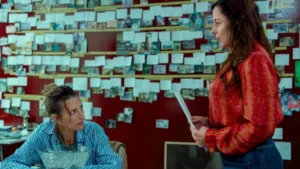
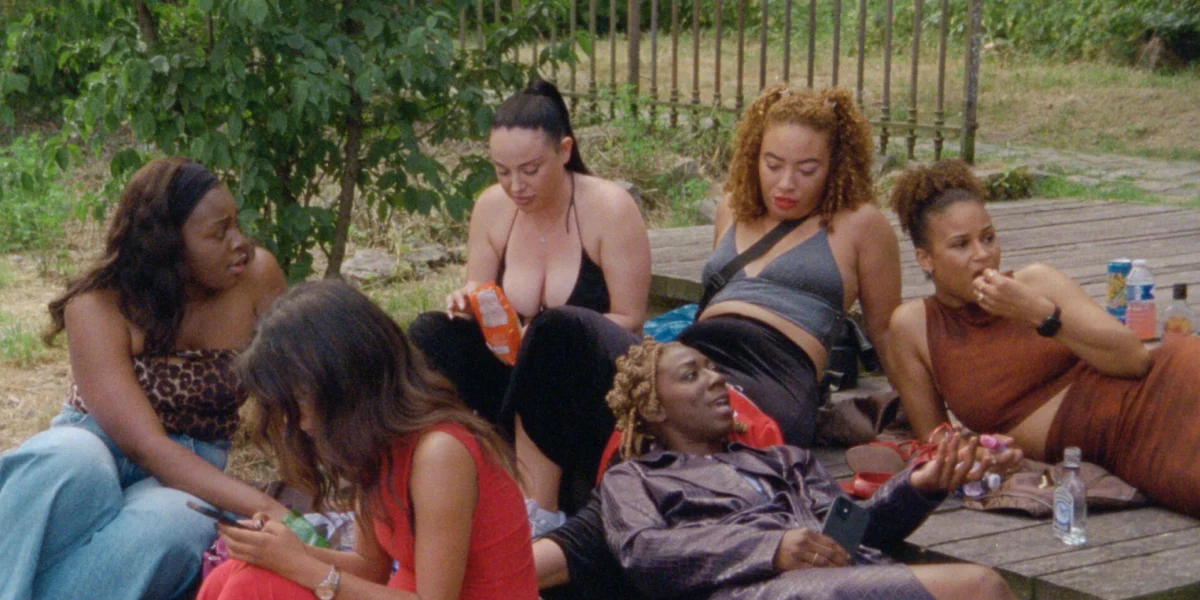
The film eschews a linear, plot-driven structure in favor of a more observational, almost ethnographic, approach. It trails Shana through her daily routines, her interactions with her close-knit group of friends, and her obligatory family engagements. These seemingly mundane moments are frequently punctuated by explosive confrontations, highlighting Shana’s volatile temperament. Her tendency to escalate from zero to ten in a matter of seconds, as one character aptly describes it, renders her both a challenging and, at times, frustrating figure to witness. Her abrasive nature and quick temper are on full display, whether the dispute revolves around drug money or a trivial board game. Shana’s default response is often to resort to shouting until her demands are met or, more frequently, to storm out, leaving a trail of unresolved tension in her wake.
However, it is Huault’s unwavering commitment to portraying the multifaceted nature of Shana that prevents the character from becoming purely unwatchable or off-putting. She masterfully embodies Shana’s flaws alongside her less apparent positive attributes, revealing an individual who is not only impassioned but also deeply wounded. This internal struggle surfaces most powerfully during a public confrontation with her mother, a scene that unflinchingly dredges up the painful vestiges of Shana’s childhood. The film posits that while many individuals carry their own burdens of past trauma, Shana’s history is particularly harrowing, offering a compelling explanation for her present-day disposition. While this understanding does not condone her more selfish or antisocial behaviors, it underscores the film’s commitment to depicting the complex realities of individuals who, despite their often unseemly actions, possess sympathetic personal narratives. The film suggests that to ignore such individuals for the sake of comfort is a disservice to a more nuanced understanding of human experience.
Artistic Vision and Thematic Resonance
Director Lila Pinell employs a deliberate and artistically rich approach to filmmaking. Her directorial choices, characterized by flashy yet unobtrusive editing techniques, contribute to the film’s elevated aesthetic. Notably, the film features stunning dissolves, particularly within a scene imbued with a stressful, almost hallucinogenic quality, which effectively mirrors Shana’s internal turmoil. Pinell’s camera often lingers on Shana’s hands, with a particular fascination for her long nails, capturing them tapping restlessly on hard surfaces. This visual motif, while seemingly minor, adds a subtle layer of texture to the narrative.
This visual emphasis is complemented by the film’s musical score, which utilizes sparse percussion. The selections evoke a similar atmospheric tension found in Stanley Kubrick’s later works, such as "The Shining" and "Eyes Wide Shut," creating a sense of unease that underscores the inherent stress of Shana’s circumstances. Despite the undeniably high-stakes nature of the plot, Pinell skillfully balances this intensity with an overarching energy that can be described as, paradoxically, almost pleasantly disorienting. Outdoor scenes are bathed in natural sunlight, providing a visual counterpoint to Shana’s internal darkness. This juxtaposition suggests that Shana, perhaps blinded by her learned experiences and predispositions, is often oblivious to the world’s inherent beauty, opting instead to focus on the negative.
Shana’s frequent pronouncements of "I couldn’t care less" and "I couldn’t give a shit" during verbal altercations are a testament to her outward bravura. However, the film subtly suggests that these declarations are a defense mechanism. Her grammatical inaccuracies, in fact, betray a deeper emotional truth: she does care, profoundly so. The film intricately illustrates how her difficult past, shaped by both self-inflicted and externally imposed circumstances, has profoundly informed and continues to affect her tumultuous present. "Shana" is not an easy film to watch; the relentless cycle of drama can become numbing. Yet, its undeniable honesty and unflinching portrayal of a complex character make it a powerful piece of cinema, a testament to the value of artistic truthfulness in storytelling.
Key Figures and Creative Force
The film’s success is undeniably indebted to the ensemble cast, which includes Eva Huault in the pivotal role of Shana. Supporting performances are provided by Noémie Lvovsky, Inès Gherib, Anaïs Monah, Bettina De Van, Geneviève Krief, and Sékouba Doucouré, each contributing to the richly textured world of the narrative. The creative vision behind "Shana" is entirely attributable to Lila Pinell, who not only directs but also pens the screenplay, demonstrating a singular artistic voice.
Thematic Undercurrents and Societal Mirroring
The character of Shana resonates with a broader societal archetype: the individual seemingly predisposed to self-destructive choices. These choices, often not born of malice but of an internal compass that consistently veers towards hardship, can be frustrating to observe. Cinema has a long tradition of exploring such characters, as their inherent struggles provide fertile ground for dramatic narratives. However, "Shana" distinguishes itself by delving into the why behind these choices, linking them to a formative past and the pervasive influence of circumstance. The film implicitly asks audiences to consider the societal factors that contribute to such cycles of behavior, prompting a reflection on how external pressures and internal wounds can shape individual destinies.
The inheritance of a protective ring from her grandmother, intended to ward off the evil eye, serves as a symbolic element within the narrative. While ostensibly a mystical artifact, its presence can be interpreted as a metaphor for the protective instincts and ancestral wisdom that Shana might unconsciously seek or be offered. In the face of her escalating troubles, particularly with Moïse’s release from prison, this inherited token becomes a tangible representation of a desire for protection and a potential source of solace, even if its efficacy remains ambiguous within the film’s realist framework.
Broader Implications and Artistic Merit
"Shana" offers a stark portrayal of urban life and the challenges faced by individuals navigating difficult circumstances. The film’s artistic merit lies in its unflinching honesty and its ability to elicit empathy for a character who, despite her flaws, is undeniably human. By refusing to shy away from the complexities of Shana’s life, Lila Pinell has crafted a film that is both thought-provoking and emotionally resonant. The narrative serves as a reminder that behind every seemingly self-destructive choice, there may be a story of pain, resilience, and the enduring human capacity for both struggle and survival. The film’s 80-minute runtime allows for a focused and impactful exploration of these themes, leaving a lasting impression on the viewer. The interplay of performances, visual artistry, and thematic depth solidifies "Shana" as a significant contribution to contemporary cinema, offering a window into the lives of those often overlooked.