

The landscape of the American media industry shifted significantly on Friday as Paramount Skydance solidified its position as the successor to Warner Bros. Discovery (WBD), marking the conclusion of a tumultuous bidding war that saw the world’s largest streaming service, Netflix, retreat from the fray. The Warner Bros. Discovery board of directors formally announced that Paramount’s revised offer of $31 per share represented a "superior proposal" to the existing bid from Netflix, effectively ending a months-long saga of hostile takeovers and strategic counter-offers.
The deal, which values the combined entity at a premium significantly higher than previous estimates, comes at a time of intense consolidation within the entertainment sector. Paramount’s successful bid was characterized by a aggressive financial structure, including a $7 billion breakup fee intended to mitigate regulatory concerns and the immediate payment of a $2.8 billion penalty that Warner Bros. Discovery owed to Netflix for terminating their previous agreement. As Paramount prepares for a rigorous federal review, the industry is weighing the implications of a merger that unites some of the most iconic brands in cinema, news, and sports.
The Evolution of a Hostile Takeover: A Timeline of the Deal
The path to the current agreement began in late 2025, when Paramount, under the leadership of Skydance CEO David Ellison, launched a surprise hostile bid for Warner Bros. Discovery. At the time, the media industry was reeling from stagnant advertising revenues and the high costs of the "streaming wars."
In December 2025, Netflix emerged as a white knight for WBD, offering a bid of $27.75 per share. The Netflix offer was initially viewed favorably by the WBD board, as it promised a cleaner transition for the company’s prestigious studio and streaming assets. However, Paramount remained undeterred, leveraging its deep ties to legacy media and its extensive portfolio of linear television networks.
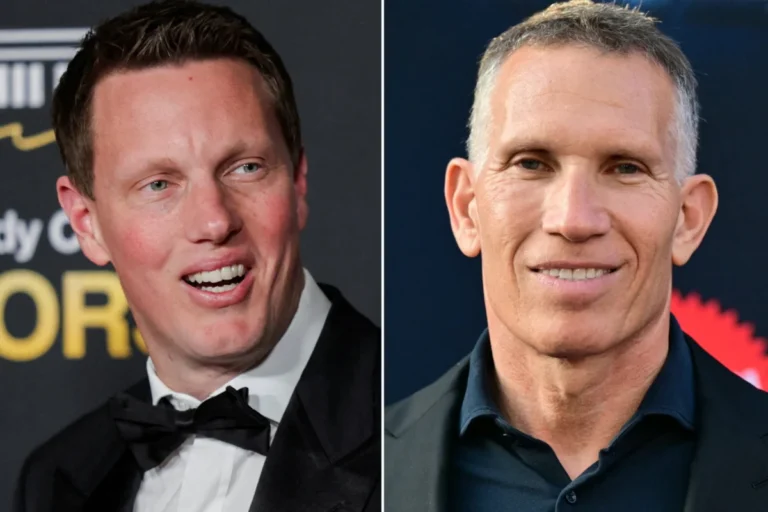
By early February 2026, Paramount raised its offer to $30 per share, a move that forced Netflix to reconsider its financial commitment. The final blow came this week when Paramount escalated its bid to $31 per share. Netflix co-CEOs Ted Sarandos and Greg Peters addressed the withdrawal on Thursday, stating that matching Paramount’s offer was "no longer financially attractive" for the streamer’s shareholders. Netflix’s exit cleared the final hurdle for David Ellison, whose vision for a consolidated "New Paramount" now includes the vast library of Warner Bros., the HBO brand, and the CNN news network.
Financial Architecture and the Role of Sovereign Wealth
The Paramount-Skydance bid is notable not only for its price tag but for its complex funding sources. According to recent SEC filings, the deal is supported by a consortium of international investors, including sovereign wealth funds from Saudi Arabia, Abu Dhabi (United Arab Emirates), and Qatar.
This involvement has drawn scrutiny from transparency advocates and some members of Congress. To address these concerns, Paramount has asserted that these foreign entities have agreed to forgo all governance rights. This means the funds will not have seats on the board of directors nor any influence over editorial decisions at sensitive assets like CNN or CBS News.
The $7 billion breakup fee is one of the largest in the history of media acquisitions. It serves as a "regulatory insurance policy," signaling Paramount’s confidence that the deal will pass muster with the Department of Justice (DOJ). Furthermore, the $2.8 billion already paid to cover WBD’s obligations to Netflix demonstrates a level of liquidity and commitment that ultimately swayed the WBD board away from the streaming giant.
Regulatory Obstacles: Horizontal Consolidation vs. Streaming Monopolies
While the removal of Netflix from the bidding process eliminates concerns about a "streaming monopoly," it introduces new antitrust questions regarding "horizontal consolidation." Media analysts suggest that a Netflix-WBD merger would have primarily impacted the digital distribution market, potentially leading to higher subscription prices for consumers.
In contrast, the Paramount-WBD merger represents a massive consolidation of traditional media assets. The combined company will control:

- Broadcast and Cable: CBS, CNN, TBS, TNT, MTV, and Nickelodeon.
- Streaming: A combined platform merging Paramount+ (78.9 million subscribers) and HBO Max (131.6 million subscribers).
- Film Studios: The historic Paramount Pictures and Warner Bros. Pictures.
- Intellectual Property: A powerhouse of franchises including Star Trek, DC Comics, Harry Potter, and Mission: Impossible.
Paren Knadjian, a partner at advisory firm EisnerAmper, noted that the focus of regulators will likely shift from library content to market power in advertising and sports broadcasting. "The concentration of intellectual property under one roof is unprecedented," Knadjian said. "The ability of this new entity to dictate terms to cable providers and advertisers will be a primary point of contention for the DOJ."
The Political Dimension: Ties to the Administration
The regulatory path for Paramount is further complicated—or perhaps eased—by political connections. David Ellison is the son of Oracle co-founder Larry Ellison, a figure known for his professional relationship with President Donald Trump. Furthermore, SEC filings revealed that Jared Kushner, the President’s son-in-law, is among those backing the Paramount bid.
These connections have led some analysts to speculate that Paramount enjoys a stronger political standing with the current administration than Netflix, which has occasionally been a target of populist rhetoric. However, the deal still faces significant opposition from the progressive wing of the Democratic Party. Senator Elizabeth Warren (D-Mass.) described the merger as an "antitrust disaster" that threatens to reduce choices for American families.
At the state level, California Attorney General Rob Bonta has launched an investigation, warning that the merger is "not a done deal." The California Department of Justice is expected to review the impact on the state’s massive entertainment workforce and the potential for job losses resulting from "synergies" between the two companies.
Strategic Rationale: Why Paramount Wanted It All
One of the defining differences between the Netflix and Paramount bids was the scope of the acquisition. Netflix was primarily interested in WBD’s "future-facing" assets: its film studio and the HBO Max streaming service. Netflix had little interest in the declining, though still profitable, linear television networks like CNN or the Turner cable channels.
Paramount, however, sought to acquire WBD in its entirety. This "all-in" strategy is based on the belief that scale is the only way to survive the current contraction in the media market. By combining the advertising sales teams of CBS and Warner’s cable networks, Paramount aims to create an indispensable partner for global brands. Additionally, the merger provides a massive boost to its sports portfolio, combining CBS’s NFL and NCAA rights with WBD’s NBA and MLB contracts.
Analysts from Raymond James suggested that while the path is not a "cakewalk," the Paramount deal is "more palatable all-in" for regulators than a Netflix tie-up. They argued that the preservation of the linear ecosystem—rather than its cannibalization by a pure-play streamer—might be viewed more favorably by a government concerned about the total collapse of the traditional media economy.
Market Reaction and Future Implications
The financial markets reacted with cautious optimism to the news. WBD shares saw a modest uptick as the uncertainty of the bidding war concluded, while Paramount shares remained volatile as investors weighed the long-term debt implications of the $31-per-share price point.
Morningstar analysts characterized the outcome as the "best possible result" for Warner shareholders, noting that the $31 cash offer provides immediate value and resolves the "uncertainty surrounding the risk of the network business."
As the two companies move toward a formal filing with the Department of Justice, the entertainment industry enters a period of profound transition. If approved, the "New Paramount" will stand as a titan capable of rivaling The Walt Disney Company in both cultural influence and market capitalization. However, the road to closing the deal remains fraught with political hurdles, state-level investigations, and the daunting task of integrating two of the oldest and most complex corporate cultures in Hollywood history.
The ultimate success of the deal will likely depend on the concessions Paramount is willing to make. To satisfy antitrust concerns, the company may be forced to divest certain cable networks or agree to "must-carry" provisions that protect smaller cable operators. Regardless of the final terms, the era of the "Big Six" Hollywood studios has officially transitioned into an era of even tighter consolidation, leaving few independent players left on the field.