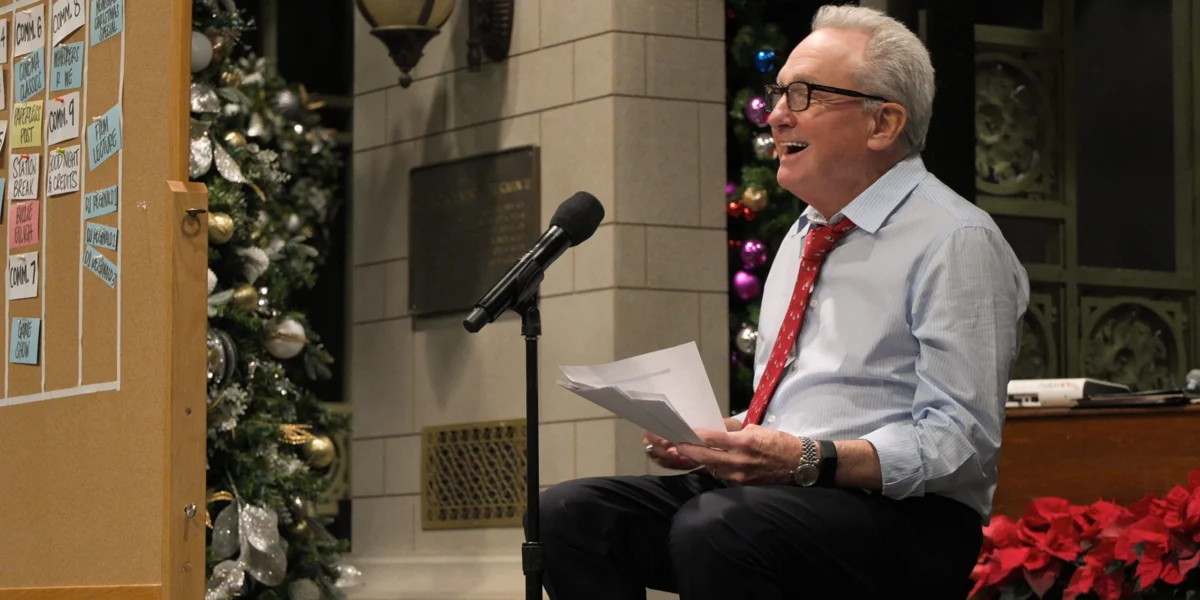
Lorne Michaels has etched his name into the annals of entertainment history, not merely as a producer, but as a cultural architect who fundamentally reshaped television, comedy, and the very fabric of popular culture. For over four decades, his unwavering stewardship of "Saturday Night Live" (SNL) has served as a launchpad for generations of comedic talent, a mirror to societal shifts, and a consistent source of groundbreaking humor. The recently released documentary, "Lorne," directed by Morgan Neville, offers a compelling, albeit carefully curated, glimpse into the life and enduring legacy of the man behind this television phenomenon.
The Genesis of a Phenomenon: From Early Visions to Studio 8H
The narrative of Lorne Michaels’ impact begins with his audacious vision for "Saturday Night Live," a show that debuted on October 11, 1975. In an era dominated by more staid programming, Michaels dared to create a live, late-night sketch comedy show that was irreverent, topical, and unafraid to push boundaries. This was not an overnight success, but a carefully constructed experiment that quickly found its footing, attracting a groundbreaking ensemble of performers and writers. The show’s initial success was fueled by its willingness to tackle contemporary issues, from politics to social trends, through sharp satire and memorable characters.
Michaels’ journey to SNL was not without its formative experiences. Before launching the iconic NBC program, he honed his production skills in Canada, creating and producing the sketch comedy series "The Hart & Crombie Show" and later "The Sunshine Hour." These early forays provided him with invaluable insights into the demands of live television and the art of comedic timing. Crucially, his work on "The Lily Tomlin Show" in the early 1970s, which earned him an Emmy Award, demonstrated his burgeoning talent as a producer and his ability to shepherd diverse comedic voices. This pre-SNL success underscores that by the time he embarked on his most famous endeavor, Michaels was already an established, award-winning producer, a fact that often gets overshadowed by the sheer magnitude of SNL’s enduring popularity.
The documentary "Lorne" aims to explore the multifaceted career of Michaels, drawing on interviews with a constellation of stars who have passed through the hallowed halls of Studio 8H. The extensive cast list includes Jimmy Fallon, Tina Fey, Seth Meyers, John Mulaney, Mike Myers, Conan O’Brien, Chris Rock, Maya Rudolph, Andy Samberg, Kristen Wiig, and even musical icon Paul Simon, whose personal writings about Michaels have become a curious footnote in the producer’s mythology. The film’s creative team, led by director and writer Morgan Neville, alongside writers Alan Lowe and Jake Hostetter, undertook the ambitious task of distilling over 100 minutes of content into a comprehensive portrait.
The SNL Machine: A Week in the Life of Genius
One of the most effective narrative devices employed in "Lorne" is its structural parallel to a typical SNL production week. The documentary seamlessly weaves together the frantic energy of a show in progress with reflective flashbacks that illuminate Michaels’ personal history. This approach offers viewers an unparalleled, behind-the-scenes look at the inner workings of Studio 8H in Rockefeller Center, a space that has become synonymous with comedic innovation. The day-to-day grind of writing, rehearsing, and performing sketches, all within the tight confines of a live broadcast, is palpable.
This organizational strategy, while intuitive, occasionally leads to temporal disjunctions. For instance, a poignant anecdote from Lily Tomlin about Michaels’ early confidence as a producer, which predates SNL, is revealed late in the film. While this story is valuable, its late placement robs earlier segments of crucial context, particularly the fact that Michaels was already an Emmy-winning producer when he launched SNL. This chronological layering, though intended to create a richer tapestry, sometimes disrupts the linear flow of biographical information, leaving the audience to piece together a more complete picture.
The film’s narrative also grapples with the inherent challenges of authorized biographies. Subjects who grant access often prefer a more sanitized version of their past, and Michaels, known for his guarded nature, is no exception. His legendary reticence about personal matters is a defining characteristic, making him a figure of immense fascination for those interested in comedy, television, and Hollywood history. Tales of eliciting a rare laugh from Michaels are often recounted in hushed tones, akin to religious experiences. The documentary acknowledges this mystique early on, with one interviewee suggesting to Neville that the most fruitful approach would be to gather everyone else’s stories and then have Michaels react to them. Neville’s embrace of this strategy, leveraging his extensive access to SNL alumni, producers, writers, friends, and family, allows the film to bypass Michaels’ direct personal reticence, transforming it into a strength.
Navigating the Myth: Unseen Chapters and Unacknowledged Contributions
Despite its comprehensive scope, "Lorne" sidesteps certain significant aspects of Michaels’ extensive career. Notably absent is any mention of Broadway Video, the prolific production company Michaels founded. This omission is particularly striking given Broadway Video’s role in producing not only SNL but also a vast array of other successful television shows and films. Furthermore, while the documentary dedicates considerable time to "Wayne’s World," a film that spun off from an SNL sketch, it overlooks other film productions based on SNL material or starring SNL alumni.
The film’s singular focus on "Saturday Night Live" as Michaels’ primary legacy, while understandable given its immense cultural impact, also leads to an incomplete portrayal of his broader professional footprint. Michaels is also the executive producer of NBC’s "The Tonight Show Starring Jimmy Fallon" and "Late Night with Seth Meyers." His influence extends to the critically acclaimed Canadian sketch series "The Kids in the Hall," which, while mentioned in passing through its film "Brain Candy," is not recognized for its own independent production value under Michaels’ umbrella. The documentary also omits "The New Show," an SNL follow-up that was canceled after just nine episodes immediately before Michaels’ return to SNL following a hiatus. This hiatus occurred after the network fired most of the cast in 1980, a pivotal moment in SNL’s history that is touched upon but not fully explored in the context of Michaels’ broader production ventures.
The film’s dedication to portraying Michaels as a singular figure, solely associated with SNL, while simultaneously highlighting his current busyness, creates a subtle contradiction. While it is physically true that he may not be involved in the minute-to-minute decisions of every show he produces, disregarding the breadth of his résumé paints an incomplete picture. The documentary’s approach, driven by the constraint of Michaels’ limited personal input, suggests a narrative that prioritizes the known entity – SNL – over the full spectrum of his entrepreneurial and creative endeavors.
The Enduring Power of Humor and a Guarded Genius
The documentary’s overall tone is one of affectionate tribute, characterized by a loose, humorous vibe that effectively papers over any perceived narrative shortcomings. This lighthearted approach feels entirely appropriate for a subject who has dedicated his career to making people laugh. The film posits that while Michaels may have erected formidable walls around himself, his core identity remains that of someone driven to create laughter and possessing an uncanny instinct for what will achieve that goal.
For viewers seeking the definitive "secret" to Michaels’ success, "Lorne" might prove somewhat elusive. However, for ardent fans of "Saturday Night Live" or the countless comedians who have honed their craft under his tutelage, the documentary is an invaluable resource. It offers a treasure trove of behind-the-scenes footage and anecdotal insights into the life of SNL’s fearless leader, delivered by those who know him best. While these individuals may not claim to know him intimately, Neville masterfully constructs a compelling narrative, akin to piecing together a jigsaw puzzle, to illuminate the enigma of Lorne Michaels.
Even with some missing pieces, the film’s boundless good humor, embodied by Chris Parnell’s wry narration and Robert Smigel’s charmingly snarky animated interludes, provides a valuable perspective. By observing Michaels’ interactions with those closest to him, the documentary offers a nuanced understanding of his personality, largely on his own terms. This is a significant accomplishment, even if the film occasionally feels more entertaining than purely informative. In its own way, this balance feels precisely right for a documentary about Lorne Michaels. The film’s 101-minute runtime allows for a deep dive, yet leaves the audience with a sense of the enduring mystery and creative force that is Lorne Michaels, the man who continues to define the landscape of American comedy.
Broader Impact and Cultural Resonance
The legacy of Lorne Michaels extends far beyond the confines of "Saturday Night Live." He has cultivated a unique ecosystem for comedic talent, providing a platform for experimentation and growth that has had a ripple effect across the entire entertainment industry. The careers launched by SNL under his guidance have gone on to shape film, television, and stand-up comedy for decades. Figures like Tina Fey and Seth Meyers have become household names and successful showrunners in their own right, while others like John Mulaney have achieved significant acclaim in stand-up and writing.
Michaels’ ability to identify and nurture raw talent is a testament to his keen eye and understanding of the comedic landscape. He has consistently adapted to changing cultural tides, ensuring that SNL remains relevant and a reflection of the times. This adaptability, coupled with his unwavering commitment to quality, has allowed the show to weather numerous cast turnovers, network shifts, and evolving audience tastes. The documentary’s exploration of this sustained success, even with its limitations, underscores the profound and lasting impact of Michaels’ vision on contemporary culture. His influence is not just in the jokes told or the sketches performed, but in the very way comedy is conceived, produced, and consumed in the modern era.