
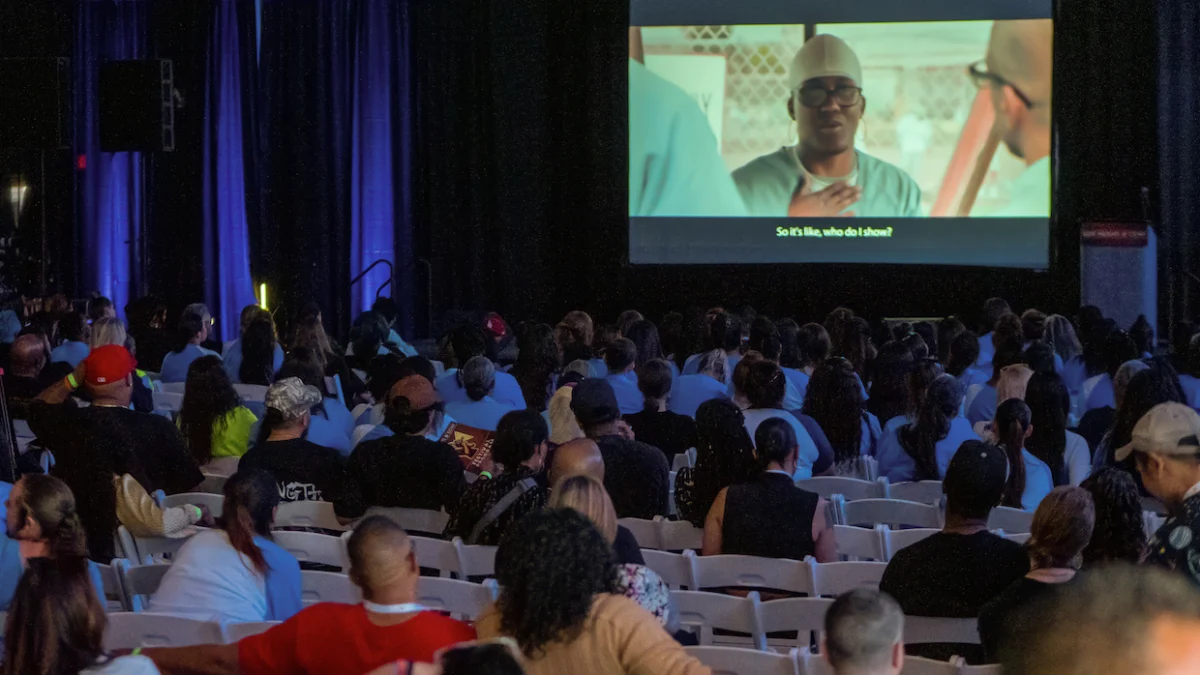
The San Quentin Film Festival (SQFF) achieved a significant milestone in its mission to bridge the gap between the incarcerated and the cinematic industry by hosting its inaugural event at the Central California Women’s Facility (CCWF) in Chowchilla. This expansion marks the first time the festival, which originated at the San Quentin Rehabilitation Center, has extended its programming to a women’s correctional institution. The event brought together a high-profile delegation of Hollywood directors, producers, and actors to engage with over 300 incarcerated women, showcasing award-winning films and providing a platform for incarcerated creators to pitch original projects to industry executives.
A Strategic Expansion of Prison Arts Programming
The San Quentin Film Festival was established to provide a professional platform for incarcerated filmmakers and writers, moving beyond traditional rehabilitative arts to offer direct engagement with the entertainment industry. Founded by playwright Cori Thomas and formerly incarcerated journalist Jesse Vasquez, the festival has quickly become a focal point for "inside-outside" collaboration. The decision to bring the festival to CCWF, the largest women’s prison in California, underscores a growing recognition of the unique narratives and challenges faced by incarcerated women.
The event at Chowchilla was the result of extensive coordination between the SQFF leadership, the Pollen Initiative—an organization dedicated to empowering incarcerated voices through media—and the California Department of Corrections and Rehabilitation (CDCR). Warden Anissa De La Cruz and Public Information Officer Lt. Monique Williams provided the necessary administrative support to transform the facility’s visitation room and gymnasium into a functional screening venue and red-carpet environment.
The Intersection of Industry and Incarceration
The presence of industry heavyweights at CCWF signaled a serious commitment to the festival’s competitive elements. The jury and panel participants included Academy Award-nominated director Dee Rees (Mudbound), Emmy-winning host W. Kamau Bell, Minari producer Christina Oh, and veteran cinematographer Amy Vincent. Their participation was not merely ceremonial; they served as active jurors for the festival’s screenplay and documentary pitch competitions, which are open exclusively to incarcerated writers.
The day’s itinerary featured a curated program of short films, including the documentary Oscar’s Return, which had previously won the jury award for Best Documentary Short at the primary San Quentin event. The film follows the journey of Oscar, a man who served 25 years on a life sentence beginning as a juvenile, as he navigates the complexities of reentry in Los Angeles. The screening was followed by a narrative short titled So, Boom, which elicited a high level of engagement and emotional response from the audience.
Chronology of the CCWF Film Festival Event
The event began with rigorous security protocols as guests, including filmmakers and industry executives, were processed through multiple checkpoints at the Chowchilla facility. Despite the stark environment defined by twenty-foot barbed-wire fences and armed surveillance, the interior of the facility offered glimpses of the inmates’ efforts to maintain humanity, such as a meticulously tended rose garden and a playground area.
By mid-morning, the CCWF gymnasium was transformed into a screening hall. A gospel choir composed of incarcerated women opened the festivities, followed by a red-carpet session where incarcerated organizers and jurors were photographed alongside Hollywood professionals. This symbolic gesture aimed to disrupt the traditional power dynamics between the "free world" and the "inside world."
The afternoon was dedicated to the "Women in Film" panel, moderated by Lakisa “Kiki” Crowder, a member of the CCWF Journalism Guild. The panel discussed the technical and emotional aspects of storytelling, emphasizing the importance of "compassionate witnessing"—the act of documenting a subject’s life without judgment.
The day concluded with the Narrative Pitch Competition. Krysten Webber was announced as the winner, receiving accolades from a jury that evaluates scripts professionally. The event ended abruptly as the facility’s mandatory headcount and movement schedules took precedence, highlighting the persistent reality of institutional life even during moments of creative achievement.
Data and Context: The State of Incarcerated Women in California
The expansion of SQFF to CCWF comes at a time of heightened scrutiny regarding the conditions and rehabilitative opportunities for women in the California penal system. According to the CDCR, as of early 2024, California’s female inmate population remains a focal point for reentry reform initiatives. Research consistently indicates that arts-in-corrections programs can lead to a significant reduction in disciplinary infractions and lower recidivism rates.

Data from the California Arts Council suggests that inmates who participate in intensive creative writing and filmmaking programs develop critical "soft skills," such as collaboration, empathy, and professional communication, which are vital for successful reentry. The CCWF event specifically addressed the "invisible class" of incarcerated women, who often receive less media attention and fewer resources compared to their male counterparts in facilities like San Quentin.
Case Study in Reentry: Oscar’s Return
The screening of Oscar’s Return served as a focal point for discussions on the challenges of life after prison. The film’s protagonist, Oscar, attended the screening in person, providing a rare opportunity for the women at CCWF to interact with someone who had successfully paroled after a multi-decade sentence.
Oscar’s story highlights the role of trauma-informed mindfulness and community support in the reentry process. Having spent more of his life inside than out, Oscar’s transition involved learning to "trust the world again," a process illustrated in the film through his work training dogs. This resonated deeply with the CCWF audience, as the facility hosts its own dog-training program. Incarcerated women noted that the film gave them tangible hope for finding specialized employment upon their release.
Official Responses and Industry Impact
The response from the CDCR and the visiting industry professionals was overwhelmingly positive, though marked by a sober acknowledgment of the systemic barriers that remain. Warden Anissa De La Cruz emphasized that the mission of such programs is to "ensure public safety and successful reentry" by providing inmates with a sense of purpose and a connection to the outside world.
Industry participants reflected on the high caliber of the work presented. Producer Christina Oh and director Christine Swanson noted that the scripts and pitches delivered by the women at CCWF were competitive with those found in major film markets. "The work is the work," stated co-founder Cori Thomas, reinforcing the idea that art created within prison walls should be judged by the same standards as art created outside.
However, the event also highlighted the emotional toll of the "inside-outside" divide. Participants noted the stark contrast between the "spirited pep rally" atmosphere of the screenings and the "hollow" feeling of the room once the incarcerated women were summoned back to their housing units for headcount.
Broader Implications and Future Outlook
The success of the SQFF at Chowchilla suggests a scalable model for prison film festivals across the United States. By involving the Pollen Initiative and API RISE (an organization focusing on the intersection of immigration and incarceration), the festival has integrated a social justice framework into its cinematic mission.
The implications for the film industry are also notable. As Hollywood faces technological shifts such as the rise of AI and changing distribution models, the raw, authentic storytelling emerging from prisons offers a unique source of original content. For the incarcerated, these programs offer more than just a creative outlet; they provide a professional identity. As winner Krysten Webber noted, within the context of the festival, she is an "award-winning writer" rather than just an inmate.
The San Quentin Film Festival plans to continue its residency at both San Quentin and CCWF, with the goal of establishing a permanent circuit for incarcerated cinema. The long-term impact will be measured by the success of its participants—like Oscar and Krysten—as they attempt to translate their creative achievements into stable, productive lives beyond the barbed wire.
The event at CCWF serves as a reminder that while the institution focuses on security and "successful reentry," the human element of care and community remains a powerful force within the prison walls. The "bless yous" that echoed through the gymnasium after a simple sneeze, as noted by attendees, symbolize a reflex of care that institutionalization has failed to suppress. Through the lens of the San Quentin Film Festival, these gestures are being transformed into a professional movement that demands the attention of the global film community.