



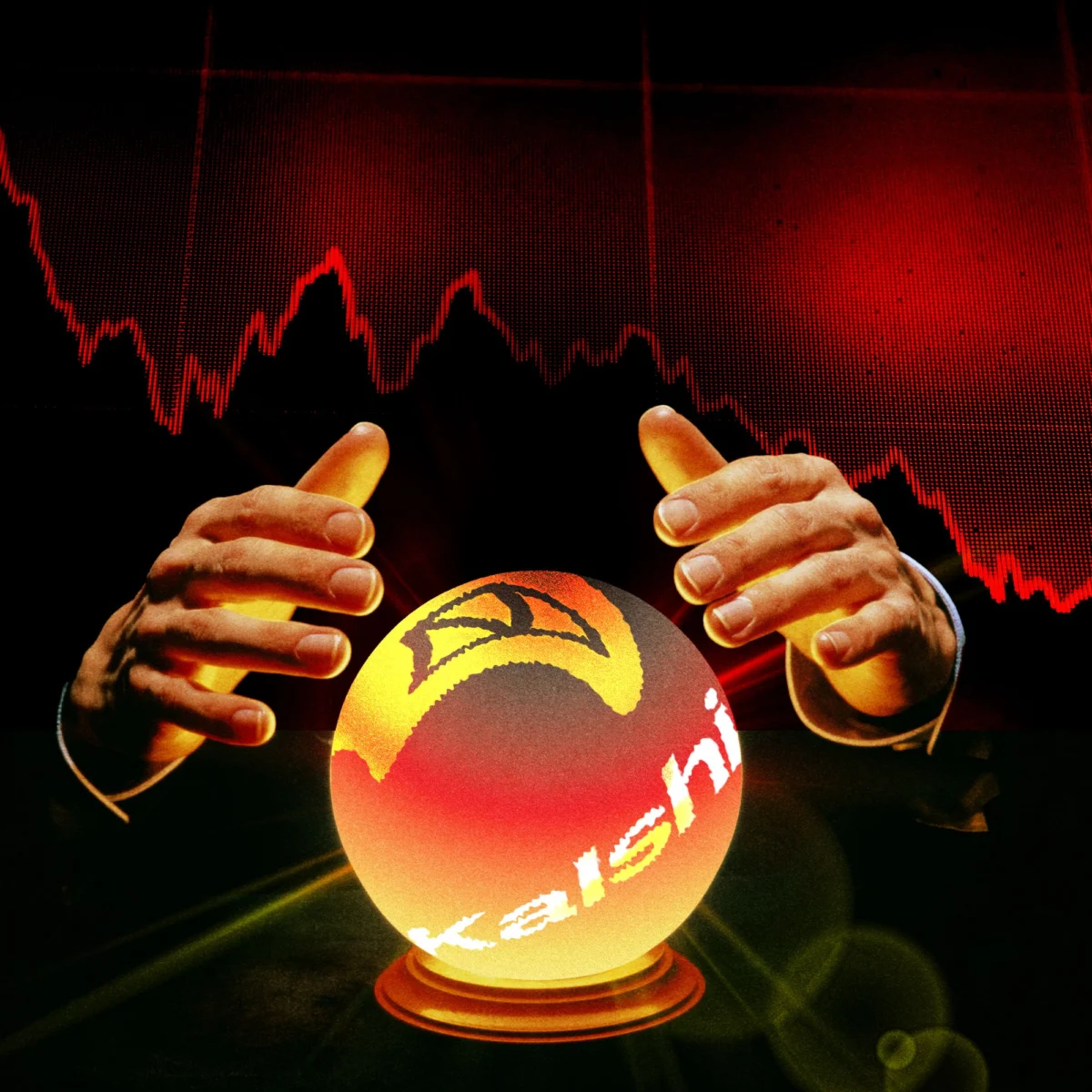
On June 11, the prediction market platform Kalshi released a high-profile advertisement featuring Timothée Chalamet, the Academy Award-nominated actor and prominent New York Knicks supporter. The marketing campaign was viewed by industry observers as a defining moment for the sector, drawing immediate comparisons to the 2022 Super Bowl, an event characterized by a deluge of celebrity-endorsed cryptocurrency advertisements. However, while the public-facing side of prediction markets seeks mainstream cultural relevance through celebrity partnerships, the internal community of forecasters and theorists remains deeply divided over the industry’s trajectory.
At Manifest, a prominent annual festival for prediction markets held recently in Berkeley, California, the Chalamet advertisement was met with a surprising lack of recognition among core participants. Attendees—a demographic consisting of academics, startup founders, and professional market players—expressed a primary concern not with celebrity branding, but with the systemic risks and ethical dilemmas facing the burgeoning industry. This disconnect highlights a fundamental tension: the rift between "forecasting philosophers," who view these markets as essential tools for the collective good and truth-seeking, and the general public, which increasingly views them as high-stakes venues for sports wagering.
The Philosophical Epicenter: Manifest and the Rationalist Movement
The 2024 iteration of Manifest took place at Lighthaven, a sprawling, Tudor-style compound in Berkeley that serves as a hub for the rationalist movement. This intellectual community is characterized by its focus on "effective altruism," the mitigation of existential risks—particularly those involving artificial intelligence—and the use of probabilistic reasoning to navigate global challenges.
The atmosphere at the festival was described as eclectic and intellectually dense. While the attendee base skewed male, the programming was diverse, ranging from technical sessions on market liquidity to discussions on AI safety and personal optimization. Despite the high-stakes nature of global prediction platforms, the festival featured its own localized economy. Participants utilized Manifold, a play-money platform, to wager on event-specific outcomes, such as whether a participant would suffer a physical injury during the weekend or if notable figures, such as former Alameda Research CEO Caroline Ellison, would make an appearance. Ellison’s eventual attendance was one of several resolved markets that fueled discussion throughout the weekend.
However, the absence of major industry sponsors signaled a shift in the landscape. While Kalshi and Polymarket had previously sponsored the event, both were absent this year. This withdrawal comes at a time when both companies are experiencing unprecedented growth, facilitating billions of dollars in trades and securing partnerships with major media and financial entities including Bloomberg, CNN, and Robinhood.
The Data Conflict: Information Versus Speculation
The primary source of friction within the community is the overwhelming dominance of sports betting. Proponents of prediction markets have long argued that these platforms provide a "truth-seeking mechanism" by aggregating diverse information into a single, accurate probability. For example, markets regarding geopolitical stability or clinical trial successes are viewed as socially valuable because they provide actionable data for policymakers and researchers.
In contrast, sports betting is viewed by many forecasting purists as a distraction that threatens the legitimacy of the industry. David Bensoussan, a prominent trader who has recorded over $1.6 million in profits on these platforms, questioned the informational value of sports contracts during a Manifest session. "The truth-seeking mechanism that prediction markets can have in terms of making the population more informed—what on Earth does that have to do with sports?" Bensoussan asked.
Supporting data suggests that sports wagering is the primary engine of volume for these platforms. Between July 2023 and mid-2024, sports-related contracts accounted for approximately 80 percent of trading volume on Kalshi and 39 percent on Polymarket. While Kalshi representatives noted that sports volume fluctuates—citing figures of 53 percent during early June—the reliance on athletic outcomes remains a central pillar of their business model.
Ethical Concerns and the "Degenerate Gambling" Narrative
The rapid expansion of these platforms has drawn scrutiny from researchers and public health advocates. Dan Schwarz, co-founder and CEO of FutureSearch and former architect of Google’s internal prediction market, has characterized the current trend as "degenerate gambling." The legalization of online sportsbooks like FanDuel and DraftKings in the United States has already led to increased concerns regarding gambling addiction, and critics argue that prediction markets are adopting similar "predatory" designs.
A study published in the journal Science in April 2024 reinforced these concerns, stating that the "gambling-like design" of modern prediction markets raises significant public health issues. The researchers also warned that instead of providing objective information, these markets could be susceptible to "democratic manipulation." These fears are not merely theoretical; recent incidents of alleged insider trading on platforms like Polymarket have highlighted the vulnerabilities inherent in decentralized or lightly regulated betting environments.
The Industry’s Defense: Peer-to-Peer vs. The House
In response to allegations of predatory behavior, Kalshi and similar platforms argue that their structural design fundamentally distinguishes them from traditional casinos or sportsbooks. Jacki McGavick, a spokesperson for Kalshi, emphasized that the platform operates as an exchange rather than a "house."
"Sports betting operates like a casino, where everyone is playing against the ‘house,’" McGavick stated. "Kalshi works like the stock market, with customers trading against other customers. Unlike a casino, Kalshi doesn’t win when our customers lose."
By positioning themselves as financial exchanges rather than gambling sites, these companies hope to navigate a complex regulatory environment. However, the distinction is often lost on the public and regulators. Several states have already initiated lawsuits aimed at banning these markets, citing consumer protection concerns and the potential for market manipulation.
Political Strategy and the Lobbying Offensive
To counter regulatory headwinds, the industry is increasingly adopting the "crypto playbook"—building political influence through targeted lobbying and the formation of trade groups. The recently established Coalition for Prediction Markets is a key player in this effort. The group is advised by former Democratic lawmakers and includes leadership from major crypto-financial firms.
The goal of this lobbying effort is to secure a favorable regulatory framework that allows prediction markets to coexist with traditional financial markets. Some industry insiders, like Schwarz, suggest a more radical path: a potential compromise where the U.S. government bans sports gambling while allowing "utility-based" prediction markets to remain. Such a move would devastate the current revenue models of Kalshi and Polymarket but could preserve the "truth-seeking" mission that the rationalist community prizes.
The Case for Utility: Geopolitics and Healthcare
Despite the controversies surrounding sports betting, the Manifest festival highlighted several areas where prediction markets are delivering unique value. One of the most significant developments discussed was the use of markets to predict geopolitical outcomes. During the festival, news of a deal between the United States and Iran to open the Strait of Hormuz became a focal point for traders.
"If you’re some sort of decision-maker or some policymaker high up in DC, and you have to do something about Israel or Iran, a betting market is plausibly useful," Bensoussan noted. The ability to see a real-time, financially-backed probability of conflict or diplomatic success provides a level of nuance that traditional polling or intelligence briefings may lack.
Another promising application is in the field of medical research. Endpoint Arena, a relatively new platform, offers contracts on the success rates of clinical trials. Michael Fischer, the founder of Endpoint Arena, argues that while sports markets are of limited social utility, knowing the probability of a drug’s success is "extremely useful" for insurance companies, investors, and even patients. By allowing insurance companies to hedge their risks or providing researchers with a clearer picture of a drug’s potential, these markets could theoretically streamline the path to medical breakthroughs.
Conclusion: A Precarious Crossroads
The prediction market industry currently stands at a crossroads. On one hand, it is experiencing a surge in mainstream adoption, fueled by celebrity endorsements and a political climate that has, thus far, been relatively permissive. On the other hand, the industry faces an identity crisis that threatens its long-term viability.
The tension observed at Manifest suggests that the very features that have made these platforms a global phenomenon—the thrill of high-stakes wagering and the accessibility of sports betting—may ultimately lead to their downfall if they are perceived as nothing more than sophisticated gambling tools. For the "forecasting philosophers," the goal remains to decouple the "signal" of useful information from the "noise" of speculative gambling. Whether the industry can successfully navigate this divide, or if it will be consumed by the same regulatory and social backlash that has impacted the cryptocurrency sector, remains the ultimate unresolved market.