
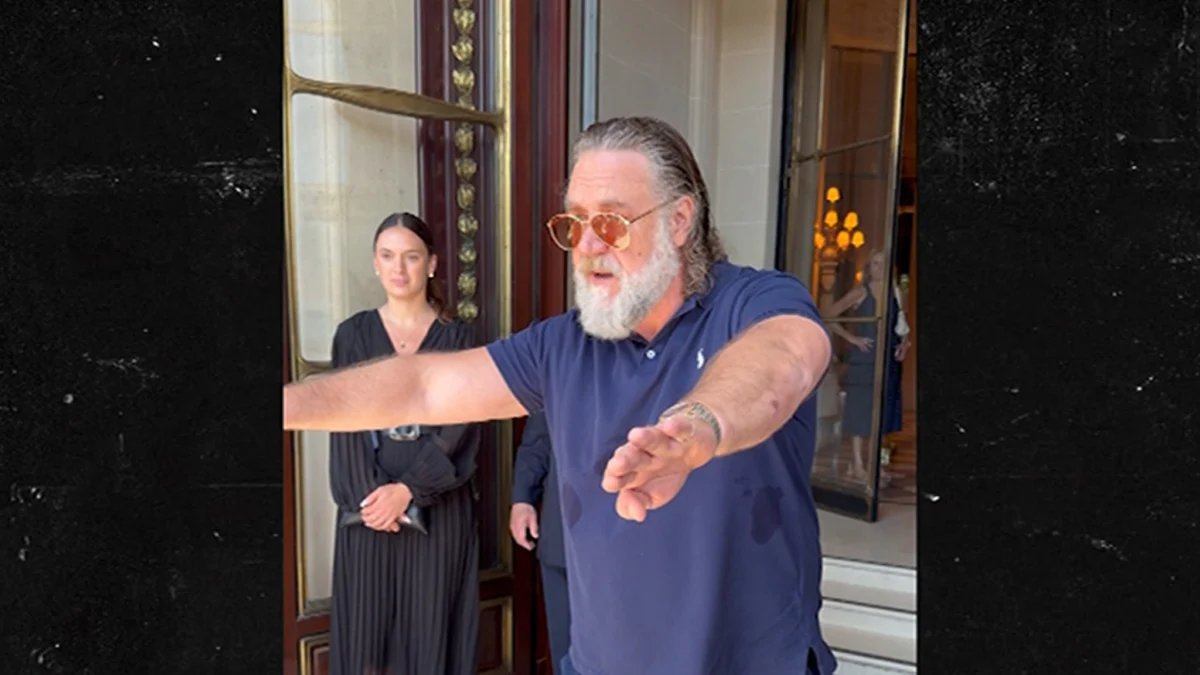
In an incident underscoring the persistent tension between celebrity accessibility and personal boundaries, acclaimed actor Russell Crowe reportedly issued a stern warning to a group of insistent autograph seekers outside a Paris hotel. The encounter, which took place recently, saw the Academy Award winner express palpable frustration as a crowd pressed too closely, prompting him to demand space and respect for personal boundaries. The event highlights broader discussions surrounding fan etiquette, celebrity privacy, and the evolving dynamics of public interactions in the digital age.
The Incident Unfolds in Paris
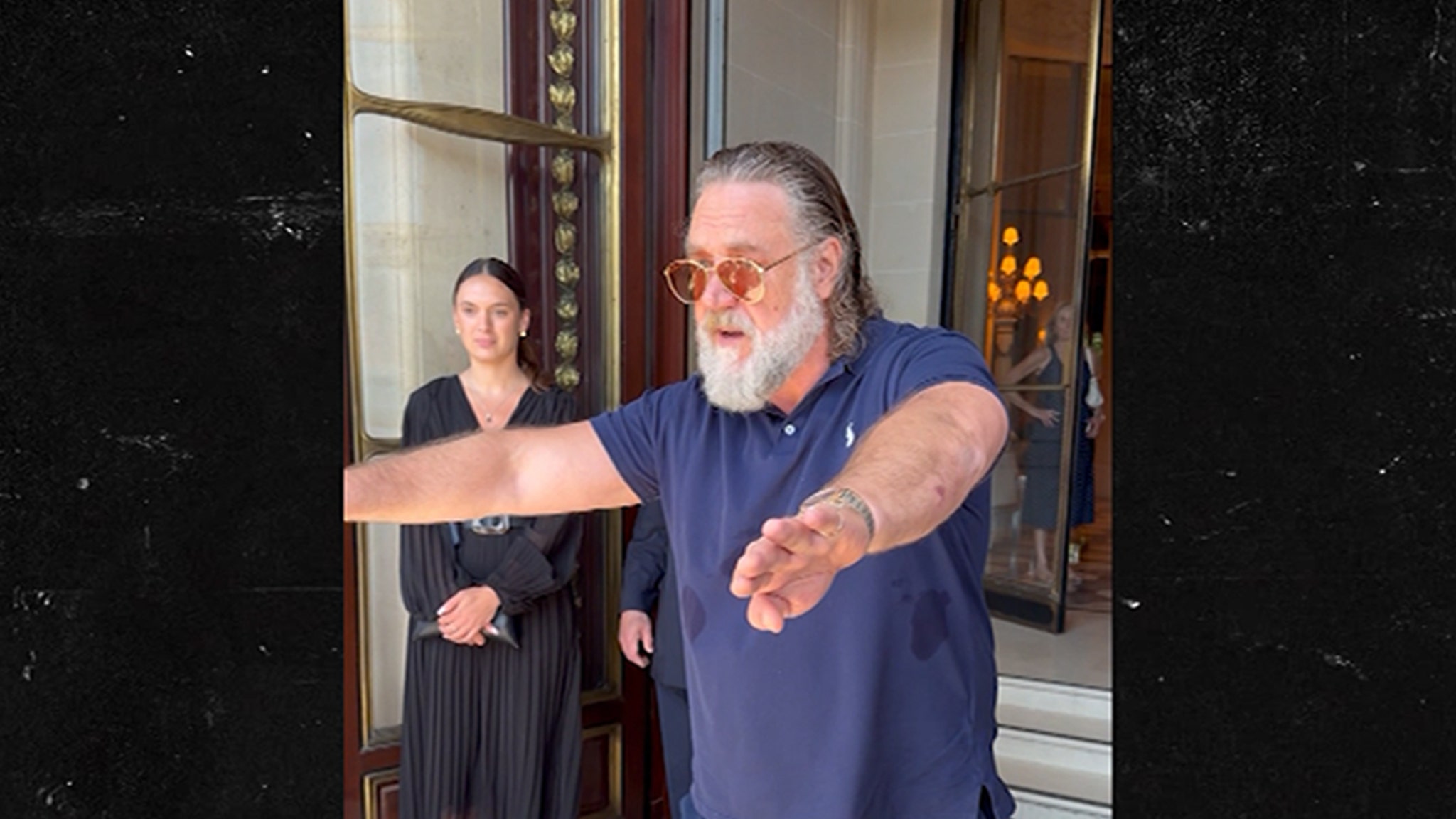
The confrontation occurred as Crowe was attempting to navigate a public space, believed to be the vicinity of his hotel in the French capital. While the precise time of day has not been officially confirmed, photographic evidence suggests it was during daylight hours, attracting a noticeable gathering of individuals. What began as a standard celebrity appearance for a crowd eager for a signature or a photograph quickly escalated when the physical proximity of the individuals became uncomfortably close for the actor.
According to video footage and eyewitness accounts, the situation reached a critical point when Crowe, visibly perturbed by the encroaching crowd, directly addressed the individuals. His voice, known for its commanding presence in his cinematic roles, was heard delivering an unequivocal directive: "Stay where you are, don’t f***in push in on me. I’ll come to you. Give everyone space." This initial admonition sought to re-establish order and ensure a safe distance between himself and the gathering.
However, the actor felt compelled to reinforce his stance, articulating a clear policy for future interactions. "As soon as somebody is a d***, I’m gone. We clear?" he stated, leaving no ambiguity about his willingness to disengage entirely if respectful conduct was not maintained. This pronouncement served as a definitive boundary, signaling that his patience had limits and that aggressive behavior would result in the termination of any potential interaction. Reports indicate that despite these firm warnings, Crowe remained "checked out," and a subsequent attempt by a fan to request a specific type of autograph was met with a flat refusal, underscoring the lasting impact of the initial encroachment on his willingness to engage further.
A History of Celebrity-Fan Dynamics
The interaction between celebrities and their admirers has undergone significant transformations over decades. In earlier eras, fan interactions were often limited to structured events, formal appearances, or chance encounters from a respectful distance. The advent of mass media, particularly the rise of fan magazines and television, brought celebrities closer to the public consciousness, fostering a sense of familiarity. However, this familiarity was largely mediated, maintaining a certain mystique around public figures.
With the proliferation of personal cameras, and more recently, smartphones capable of high-quality photography and video recording, the nature of fan encounters has become increasingly spontaneous and intrusive. The expectation of immediate access and the desire for shareable content on social media platforms have contributed to a culture where personal boundaries are frequently tested. This shift has given rise to the phenomenon of "autograph hounds" and professional memorabilia sellers, who often operate with a commercial incentive, differing significantly from genuine fans seeking a personal memento. These individuals, driven by potential resale value, can exhibit more aggressive and persistent behaviors, further blurring the lines of appropriate conduct.
Moreover, the omnipresence of paparazzi and the constant public scrutiny faced by celebrities contribute to a heightened sense of vulnerability. Every public outing can become a potential media event, leading to a defensive posture from public figures who are perpetually under surveillance. The incident involving Russell Crowe in Paris can be seen as a direct consequence of these evolving dynamics, where the spontaneous enthusiasm of some fans, combined with the commercial interests of others, can create an environment perceived as overwhelming or threatening by the celebrity.
Crowe’s Distinct Public Persona
Russell Crowe’s public persona is largely shaped by his powerful and often intense roles in films such as "Gladiator," "A Beautiful Mind," and "L.A. Confidential." His on-screen characters frequently embody strength, resolve, and a no-nonsense attitude, qualities that have become synonymous with his public image. This strong persona, while contributing to his appeal, also sets certain expectations for how he might react in high-pressure situations.
Throughout his career, Crowe has been known for being outspoken and, at times, involved in highly publicized altercations. Incidents reported in the past, though separate from his professional work, have contributed to a perception of him as an individual who does not shy away from confronting situations directly when he feels his boundaries are being violated. This history provides crucial context for understanding his firm response in Paris. It suggests that his reaction was not an isolated outburst but rather consistent with a long-standing pattern of asserting his personal space and demanding respect.
For a celebrity with such a pronounced public image, the line between character and individual can blur in the public’s eye. Fans, consciously or unconsciously, might project aspects of his formidable on-screen characters onto his real-life interactions. This can lead to a misunderstanding of his personal boundaries or an underestimation of his need for privacy, further complicating spontaneous public encounters. His direct communication in Paris, therefore, can be interpreted as a deliberate effort to manage these perceptions and clearly define the terms of engagement on his own terms.
Chronology of a Tense Encounter
The sequence of events leading to Crowe’s public admonition can be reconstructed to understand the escalation of tension.
- Arrival and Initial Gathering: Russell Crowe’s presence at the Paris hotel attracted a crowd, as is common for high-profile celebrities. Initially, the gathering likely consisted of a mix of genuine fans, curious onlookers, and professional autograph seekers, all hoping for an interaction.
- Increased Proximity: As Crowe began to move, possibly towards a vehicle or into the hotel lobby, the crowd reportedly began "edging way too close." This physical encroachment is often the catalyst for celebrity discomfort, as it erodes personal space and can be perceived as a security risk.
- First Warning: Feeling the pressure of the crowd, Crowe delivered his initial, strong verbal warning: "Stay where you are, don’t f***in push in on me. I’ll come to you. Give everyone space." This statement aimed to halt the forward momentum of the crowd and establish a respectful buffer zone. His offer to "come to you" indicated a willingness to engage, but only on his terms and with appropriate distance.
- Policy Articulation: Observing that his initial warning might not have been fully heeded or to prevent future transgressions, Crowe then articulated his clear policy: "As soon as somebody is a d***, I’m gone. We clear?" This definitive statement served as an ultimatum, placing the responsibility for continued interaction squarely on the crowd’s behavior.
- Continued Disengagement: Despite these clear instructions, Crowe reportedly remained "fully checked out," indicating that the earlier encroachment had already negatively impacted his mood and willingness to engage. The atmosphere had shifted from potential interaction to one of guarded detachment.
- Rejection of Specific Request: The final reported detail of the incident involved a fan attempting to make a specific, perhaps more demanding, request for an autograph. This request was "flat-out rejected," reinforcing Crowe’s decision to minimize further engagement after the initial breach of his boundaries.
- Departure: Following these exchanges, Crowe concluded his interaction, likely moving away from the area, leaving behind a crowd that had been given a clear lesson in celebrity boundaries.
The Economics and Ethics of Autograph Seeking
The practice of autograph seeking, particularly by those who intend to resell the items, introduces a complex economic dimension to celebrity-fan interactions. Signed memorabilia can command significant prices on the secondary market, creating a strong incentive for individuals to aggressively pursue celebrities. This commercial motivation often leads to behaviors that prioritize the acquisition of a signature over respectful interaction, sometimes involving repeated approaches, blocking pathways, or disregarding personal space.
Ethically, the question arises whether celebrities, by virtue of their public profession, implicitly consent to such intrusions. While public figures understand that their lives are subject to a certain degree of public interest, there is a broad consensus that this does not negate their fundamental right to personal space, safety, and privacy. The distinction between a genuine fan seeking a cherished memento and a professional "autograph hound" driven by profit is crucial in this ethical debate. The latter often contributes to a more aggressive and less authentic interaction, eroding the positive aspects of celebrity-fan relationships.
The legal frameworks governing public interactions with celebrities vary by jurisdiction. In many places, while simply asking for an autograph is not illegal, persistent harassment, obstruction, or physical contact without consent can constitute offenses. The presence of security personnel around celebrities is often a direct response to the need to manage these boundaries and prevent situations from escalating beyond verbal warnings.
The Celebrity’s Right to Personal Space
At the core of the Paris incident is the fundamental right to personal space, a concept often overlooked in the frenzy of celebrity encounters. For public figures, the constant erosion of this space can have significant psychological impacts, leading to feelings of being objectified, overwhelmed, or even threatened. The expectation that celebrities should always be amiable and accessible, regardless of circumstances, places an undue burden on individuals who are, ultimately, human beings with the same need for privacy and respect as anyone else.
Crowe’s explicit demand for "space" and his warning against being "pushed in on" are direct assertions of this right. His willingness to disengage ("I’m gone") serves as a protective mechanism, allowing him to regain control over his immediate environment when boundaries are breached. This proactive approach, while sometimes perceived as "unfriendly" by those seeking an interaction, is a necessary measure for many celebrities to maintain their well-being and sense of autonomy in the public eye.
The incident serves as a stark reminder that celebrity status does not nullify basic human rights. Respect for personal space is not merely a courtesy but a fundamental aspect of dignified human interaction. When this respect is absent, the encounter transforms from an opportunity for connection into a source of stress and potential conflict.
Industry Perspectives on Fan Management
From an industry standpoint, managing fan interactions is a delicate balancing act. Publicists and security teams are tasked with facilitating positive public engagement while simultaneously ensuring the celebrity’s safety and well-being. This often involves planning controlled meet-and-greet events, establishing clear perimeters, and providing security escorts. However, spontaneous encounters, such as the one in Paris, are much harder to control.
The entertainment industry generally encourages positive fan engagement, recognizing its importance for maintaining a celebrity’s public profile and career longevity. However, there is a growing acknowledgment of the need to educate both fans and the public about appropriate conduct. Security protocols have evolved significantly, moving beyond simply protecting celebrities from physical harm to also safeguarding their mental and emotional space.
For publicists, incidents like Crowe’s outburst present a challenge. While the directness might be seen as uncompromising, it also sends a clear message about boundaries, potentially deterring future aggressive behavior. The goal is to strike a balance where celebrities can interact genuinely with their fans without feeling besieged or unsafe, a challenge that continues to evolve with changing media landscapes and fan behaviors.
Public Reaction and Implications
The incident involving Russell Crowe in Paris is likely to elicit varied public reactions. For some, Crowe’s firm stance will be seen as entirely justified, a necessary assertion of personal boundaries in the face of intrusive behavior. These individuals may commend his honesty and directness, viewing it as a realistic response to the pressures celebrities face. His "gladiator"-like metaphor, as referenced in the original report, resonates with his established tough persona, reinforcing an image of someone who stands his ground.
Conversely, some may view his reaction as overly harsh or dismissive of fan enthusiasm. There is often an expectation that celebrities should always be gracious and accommodating, regardless of the circumstances. This perspective, however, often overlooks the cumulative stress of constant public attention and the distinction between genuine admiration and aggressive pursuit.
The broader implication of this incident extends to the ongoing discourse about fan culture and celebrity etiquette. It serves as a potent reminder that the "celebrity-fan contract" is not unilateral; it requires mutual respect and understanding. Such events contribute to a re-evaluation of what constitutes appropriate behavior in public encounters, prompting fans to consider the impact of their actions on the individuals they admire. It also highlights the responsibility of individuals to discern between a public figure’s professional role and their personal right to peace and privacy.
Conclusion: Redefining the Fan-Celebrity Compact
Russell Crowe’s unequivocal response to pushy autograph seekers in Paris serves as a significant touchstone in the ongoing debate about celebrity boundaries and fan behavior. It underscores the critical need for personal space and respect, even for those in the public eye. The incident is not merely about a celebrity’s frustration; it is a microcosm of the larger challenges posed by evolving media landscapes, commercial incentives in memorabilia collection, and the often-unspoken rules of engagement between public figures and their admirers.
As the lines between public and private life continue to blur, such encounters highlight the imperative for a redefined fan-celebrity compact—one built on mutual respect, clear boundaries, and an understanding that celebrity status does not diminish an individual’s right to dignity and personal safety. The "back off or I’m gone" policy, while blunt, encapsulates a sentiment shared by many public figures who seek to navigate their careers with integrity while preserving their essential human need for peace and autonomy. The ultimate lesson from Paris is clear: genuine admiration thrives best in an environment of respect, where the pursuit of a memento never overshadows the fundamental rights of the individual.