


The film, a high-concept, dark comedy set against the fading, sun-bleached luxury of Punta del Este, made its world premiere on October 8 at the 70th BFI London Film Festival. Produced as an Uruguayan-Argentine co-production and managed by sales agent Alpha Violet, the feature is being positioned as a highly stylized satire that interrogates the fragile intersection of human avarice and domestic loyalty.
The Premise: An Absurd Inheritance
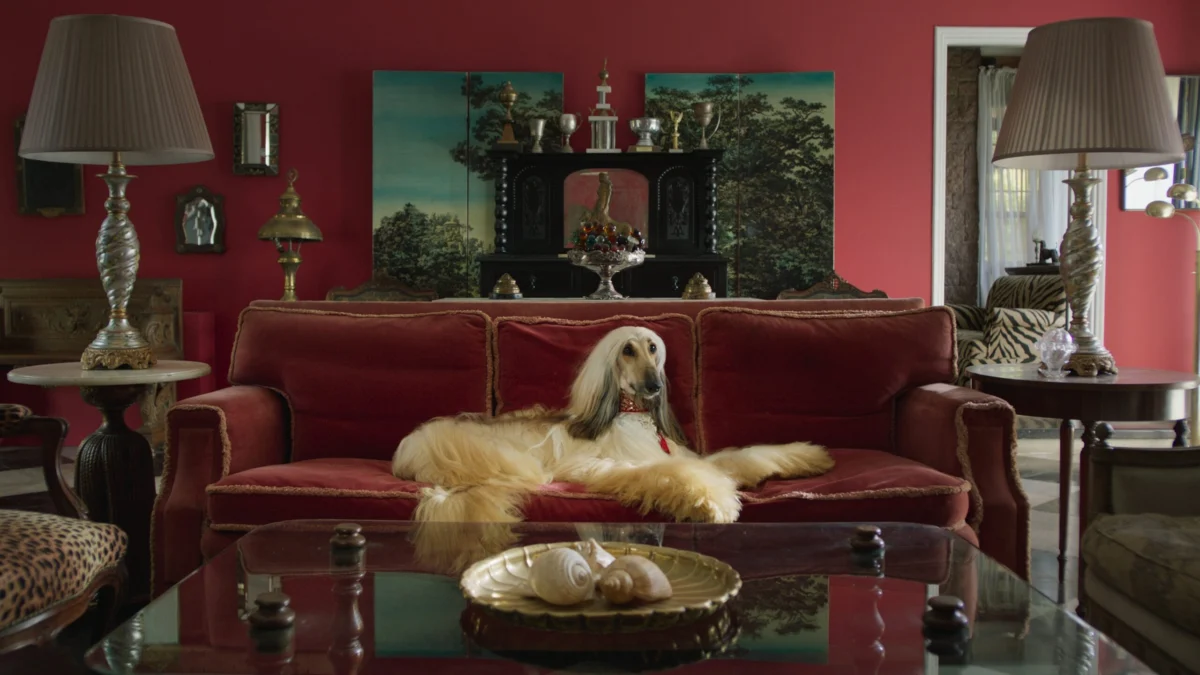
The narrative centers on a peculiar domestic triangle involving a wealthy, aging Argentine socialite named Isabel, her long-term live-in butler and former lover, Jaime, and the true protagonist of the film’s titular focus: Prince, an award-winning Afghan hound. The film’s inciting incident occurs when Isabel dies unexpectedly in her swimming pool, setting into motion a legal and moral crisis.
The terms of her will are intentionally farcical yet legally binding: the entirety of her sprawling coastal estate is bequeathed to Prince, with Jaime designated as the dog’s sole guardian. The catch, designed to keep her human relatives at bay, is that the estate can only be liquidated or claimed by her estranged family upon the death of the dog. This setup transforms the villa into a pressure-cooker environment as Isabel’s estranged son and granddaughter arrive, intent on accelerating the dog’s demise to secure their inheritance. Simultaneously, Jaime is forced to confront his own estranged son, Diego, bringing long-buried personal conflicts to the fore.
The Vision of Federico Borgia
Federico Borgia, previously known for his collaborative work on Clever (2015) and The Champion of the World (2019) with Guillermo Madeiro, notes that the inspiration for Prince was born from his personal migration from the urban landscape of Montevideo to the touristic, socio-economically stratified environment of Punta del Este.
In an interview, Borgia describes the region as a space where "social classes mix up," creating a tension between the working class—who facilitate the lifestyle—and the affluent class that pays for such services. The director utilized this setting to conduct a "game of observation," documenting the bizarre rituals of the wealthy and the unseen labor that maintains their comfort.
The thematic seed of the Afghan hound was planted in Borgia’s childhood. He recalls accompanying his mother to a professional dog groomer, where he observed the owners of show dogs waiting in suits. The juxtaposition of these individuals—who appeared like high-powered lawyers despite their preoccupation with canine aesthetics—struck a chord that eventually evolved into the script’s central motif.

Production and Casting Challenges
The film features an ensemble cast led by Roberto Suárez as Jaime, alongside Maitina De Marco and Esteban Bigliardi. The casting process was a deliberate blend of established talent and fresh faces. Borgia had long sought to collaborate with Suárez, citing his reputation as both a formidable actor and a significant theater creator. Suárez’s involvement extended beyond performance; the actor was deeply embedded in the creative process, contributing ideas to various script iterations.
Regarding the film’s four-legged star, Borgia acknowledges the logistical hurdles of working with a breed notorious for its lack of trainability. While popular, the Afghan hound typically ranks low on canine intelligence and obedience indices compared to breeds like the Border Collie or the German Shepherd. However, through a fortuitous connection with a local breeder, the production secured a dog whose temperament was described as "labrador-like." Beyond a minor incident where the dog fell into the pool, requiring hours of grooming recovery, the production team reported that the dog was consistently professional throughout the shoot.
Contextualizing the Festival Premiere
The BFI London Film Festival, now in its 70th iteration, serves as a premier global platform for diverse storytelling. By selecting Prince for its world premiere, the festival highlights the growing prominence of Uruguayan cinema in the international market. The LFF has historically acted as a gateway for Latin American films to reach European and North American distributors, and Alpha Violet’s involvement suggests a strong commercial ambition for the film.
Socio-Economic Commentary and Cinematic Style
While the plot leans into the absurd, Prince is fundamentally a critique of class structures. The "kitsch comedy" label used by the festival reflects the film’s aesthetic—a visual language that emphasizes the decaying glamour of the coastal villa. The domestic arrangement between the butler, the lover, and the employer is intentionally left undefined, mirroring the murky power dynamics between the wealthy and the service class.
The film operates as a microcosm of society: the villa is an island of wealth where the rules are dictated by an animal, rendering the humans—the inheritors and the caretakers—secondary in importance. This inversion of power is where the film finds its black humor. The tension between Jaime, who is protective of the dog as a surrogate for his own life’s work, and the relatives, who view the dog as a mere obstacle to wealth, provides the primary dramatic engine.
Analysis: The Universal Appeal of Avarice
The core themes of Prince transcend its specific geographical setting. The concept of the "inheritance trap" is a recurring trope in literature and film, but Borgia’s approach shifts the focus from the legal battle to the psychological cost of maintaining a lifestyle built on service and artifice.
Economically, the film highlights the vulnerability of domestic staff in high-net-worth households. Jaime’s position is precarious; his entire life is tied to a dog that represents the whims of a deceased employer. When the biological family arrives, the class divide is exacerbated, turning the villa into a site of psychological warfare. The film’s success will likely hinge on its ability to balance the inherent absurdity of its premise with the genuine emotional stakes of the human characters involved.

Future Outlook for the Filmmaker
Despite the pressures of film production, which Borgia describes as an "addiction," the director remains uncertain about his next project. His process is one of cycles; having completed Prince, he currently lacks a firm roadmap for his next feature, a common sentiment among independent filmmakers who undergo the intense, years-long labor of bringing a vision to fruition.
However, the industry reception of Prince suggests that Borgia’s voice is one that will continue to resonate within the global festival circuit. His ability to weave real-world observations—the grooming salons, the stratified social dynamics of seaside resorts—into a cohesive, stylized narrative suggests a maturing auteur who is increasingly adept at using the camera to dissect the absurdities of the human condition.
Industry Implications
The film’s performance at the BFI London Film Festival will serve as a critical bellwether for its future theatrical release. In an era where mid-budget, high-concept dramas face significant competition from blockbusters, Prince relies on its unique premise and stylistic flair to carve out a niche. If successful, it may open doors for more Uruguayan-Argentine co-productions, encouraging cross-border investment and fostering a broader audience for regional Latin American narratives.
As of the date of the premiere, critics have noted the film’s precise visual aesthetic, which complements its script’s biting wit. The decision to feature the dog not just as a prop, but as a central, non-human character, underscores the film’s commitment to its absurdist framework. Whether audiences will view the dog as a mere tool of the plot or as a symbolic representation of the wealthy elite’s detachment remains a point for post-viewing discourse.
For now, Prince stands as a testament to the power of observant filmmaking—a reminder that, in the right hands, the most ridiculous premises can be used to reveal the most uncomfortable truths about society, inheritance, and the bonds we form with those who serve our interests. As the festival concludes, the industry will watch closely to see if the dog, and his guardian, can indeed command the attention of the global market.