Vertical has officially unveiled the US trailer for Rich Flu, an ambitious dark thriller originating from Spain and the United Kingdom, slated for release in select theaters and on VOD platforms starting June 5th, 2026. This apocalyptic virus narrative, helmed by acclaimed Spanish filmmaker Galder Gaztelu-Urrutia, known for his incisive social commentary in The Platform and The Platform 2, presents a chilling premise: a deadly pandemic that exclusively targets the world’s wealthiest individuals, progressively descending the economic ladder. The film, which features a notable ensemble cast including Mary Elizabeth Winstead, Rafe Spall, Lorraine Bracco, and Timothy Spall, promises a provocative exploration of class, survival, and the fragility of global economic systems.
A Provocative Premise: Wealth as a Death Sentence
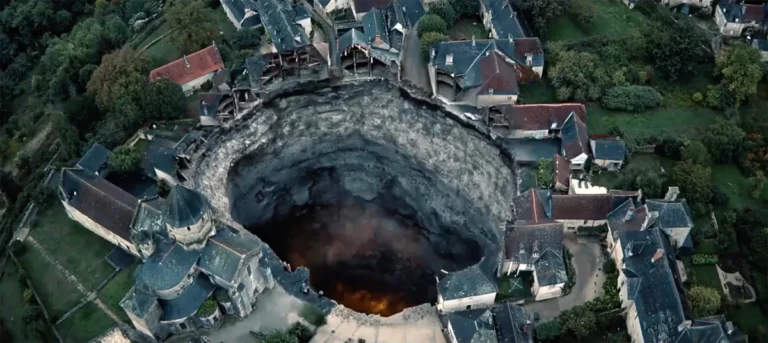
The core conceit of Rich Flu is both audacious and unsettling. The narrative unfolds as a mysterious and virulent disease begins claiming the lives of the super-rich. Initially, billionaires are the victims, followed by multi-millionaires, creating a descending scale of economic targets. This unprecedented biological threat instigates global panic, not just among the affluent, but across all strata of society as the world grapples with the implications of such a selective contagion.
The film delves into the immediate societal reactions to this phenomenon. The official synopsis details an initial phase where the masses, often resentful of vast wealth disparities, greet the demise of these fortunes with a sense of grim satisfaction or even joy. However, this fleeting triumph quickly dissolves into widespread chaos as the collapse of vast economic empires triggers a domino effect across global stock markets, employment sectors, and overall economic stability. The first world, intricately dependent on the structures built by the very individuals now being targeted, finds itself spiraling into unprecedented disorder.
At the heart of this unfolding catastrophe is Laura, portrayed by Mary Elizabeth Winstead. As the world teeters on the brink, and society’s disdain for the top one percent escalates into outright hostility, Laura is forced to confront a terrifying reality: her family’s wealth, once a source of security, has become a perilous liability. Her struggle to protect her loved ones in a world where financial prosperity is synonymous with a death sentence forms the emotional core of the narrative, examining the personal toll of a global crisis that redefines value and vulnerability. The film cleverly leverages the inherent mystery of how such a virus selectively targets individuals based on their net worth, positioning it as a fantastical element designed to amplify its allegorical power rather than a scientifically plausible event, urging viewers to focus on its symbolic implications.

Galder Gaztelu-Urrutia’s Signature Social Critique
Galder Gaztelu-Urrutia’s involvement immediately signals a film rich in allegorical depth and unflinching social critique. His previous works, The Platform (2019) and its 2024 sequel The Platform 2, garnered significant international attention for their stark portrayal of class stratification, resource allocation, and human behavior under extreme duress. Both films, set within a vertical prison system where food descends from the top, forced inmates to grapple with issues of greed, empathy, and collective responsibility. The Platform was lauded for its visceral depiction of systemic inequality, becoming a resonant metaphor for capitalist society.
Rich Flu appears to be a natural, albeit more expansive, evolution of these themes. Where The Platform confined its social experiment to a single, allegorical structure, Rich Flu projects its critique onto a global scale. The virus itself becomes the ultimate equalizer, or perhaps, the ultimate re-balancer, challenging the fundamental assumptions of wealth, power, and privilege. Gaztelu-Urrutia’s directorial vision consistently seeks to dissect the mechanisms of societal oppression and human resilience, making him an ideal filmmaker to tackle a concept as inherently provocative as Rich Flu. His ability to weave compelling narratives around high-concept, dystopian scenarios ensures that Rich Flu is likely to be more than just a horror-thriller; it is poised to be a searing commentary on contemporary socio-economic anxieties.
A Distinguished International Cast
The film boasts an impressive international cast, bringing significant talent and gravitas to its high-stakes narrative. Mary Elizabeth Winstead, known for her diverse roles in films like Birds of Prey, Fargo, and Scott Pilgrim vs. the World, leads the ensemble as Laura. Winstead’s capacity to portray complex, resilient characters makes her a compelling choice for a role that demands both emotional depth and a strong sense of urgency.
Joining her is Rafe Spall, an accomplished British actor recognized for his work in Life of Pi, The Big Short, and the "White Christmas" episode of Black Mirror. His presence adds another layer of dramatic intensity to the unfolding crisis. Veteran actress Lorraine Bracco, celebrated for her iconic roles as Dr. Jennifer Melfi in The Sopranos and Karen Hill in Goodfellas, is also featured, promising a performance imbued with her characteristic strength and nuance. The cast further includes Dixie Egerickx, Cédric Domboy, Timothy Spall (Rafe’s father, a BAFTA-winning actor known for Mr. Turner and the Harry Potter series), and Jonah Hauer-King. This rich mix of seasoned veterans and rising stars underscores the film’s ambitious scope and the production’s commitment to delivering powerful performances. The collaborative nature of this international cast and crew highlights the global appeal and resonance of the film’s themes, reflecting a trend in modern cinema to transcend national boundaries in storytelling.
Production Timeline and Festival Recognition
Rich Flu‘s journey to its US release has been a measured one. The film first premiered at the prestigious Sitges Film Festival in 2024, a renowned event for fantasy and horror cinema that often serves as a launchpad for genre-bending works. Its selection for Sitges, known for championing innovative and challenging films, immediately signaled its potential to resonate with a discerning audience. Following its debut, Rich Flu continued its festival circuit, screening at other significant events such as Beyond Fest and the Toronto International Film Festival (TIFF). These festival appearances provided early critical exposure and generated buzz within the industry, positioning it as a film to watch.

The two-year gap between its initial festival premieres in 2024 and its broader US release in June 2026 is not uncommon for independent and international productions. This timeframe can be attributed to various factors, including securing distribution deals, strategic timing for market release, and potential finalizations in post-production. Vertical’s acquisition of the US distribution rights indicates a belief in the film’s commercial viability and its ability to connect with a wider American audience, particularly given the enduring popularity of dystopian thrillers and socially conscious genre films.
Critical Reception and Market Context
Early critical reception for Rich Flu has been mixed, as indicated by aggregators like Rotten Tomatoes. This varied response is often characteristic of films with high-concept premises that challenge conventional narratives or delve into provocative social commentary. While some critics may laud its audacious premise and thematic depth, others might find its allegorical elements or specific plot mechanisms less convincing, particularly regarding the fantastical nature of the virus’s targeting mechanism. Such polarizing reactions are not necessarily detrimental; they often fuel discussion and generate curiosity, particularly for films by directors known for pushing boundaries.
The market for dystopian thrillers and virus outbreak films has seen significant shifts, especially in the wake of real-world global pandemics. While the genre has always held a certain fascination, recent events have lent a new layer of poignancy and relevance to stories about widespread contagion and societal breakdown. Rich Flu distinguishes itself by injecting a potent socio-economic dimension into the traditional virus narrative. Unlike films that focus solely on the biological threat and survival, Rich Flu uses the pandemic as a catalyst to dissect the intricate and often fraught relationship between wealth, power, and human morality. This unique angle could attract viewers seeking films that offer more than just suspense, but also intellectual stimulation and a reflection of contemporary global anxieties. Vertical’s strategy of a hybrid theatrical and VOD release aims to maximize reach, catering to both traditional cinema-goers and the growing audience for home entertainment, a common approach for independent films with a strong niche appeal.
Broader Societal Implications and Allegory
Beyond its thrilling plot, Rich Flu serves as a powerful allegory for profound societal anxieties. The concept of a virus that targets wealth directly confronts the escalating global issue of economic inequality. In an era marked by increasing wealth concentration and widespread discussions about the responsibilities of the ultra-rich, the film taps into a collective consciousness that questions the sustainability and ethics of extreme financial disparity. The initial "joyful welcome" from the masses, as described in the synopsis, speaks volumes about underlying societal tensions and the sentiment of "eat the rich" that has gained traction in popular discourse.
However, the film wisely moves beyond simple retribution. By depicting the subsequent collapse of economic stability and the descent into chaos, Rich Flu illustrates the intricate, often unseen, interdependencies within a globalized capitalist system. It forces viewers to confront the uncomfortable truth that even the systems we criticize are often the ones that provide a fragile semblance of order. The film prompts critical questions: What is the true value of wealth when it becomes a liability? What happens to society when its perceived pillars are removed? And how do individuals reconcile their personal survival with broader societal collapse?

Rich Flu challenges conventional notions of value, security, and power. It suggests that true resilience might lie not in accumulated wealth, but in adaptability, community, and perhaps, a re-evaluation of what truly constitutes a "rich" life. Gaztelu-Urrutia’s vision appears to be one that uses a fantastical premise to hold a mirror up to very real, very pressing global concerns, inviting audiences to engage with uncomfortable truths about their own world. The film could spark conversations about economic reform, social justice, and the collective responsibility required to maintain a functional society, even when confronted with unimaginable pressures.
Conclusion
With its audacious premise, a director known for incisive social commentary, and a compelling ensemble cast, Rich Flu stands out as a significant entry in the dystopian thriller genre. It promises not only a gripping narrative of survival against an unprecedented pandemic but also a potent allegorical examination of wealth, power, and societal fragility. As the film prepares for its US debut on June 5th, 2026, it invites audiences to contemplate a world where the very definition of fortune is turned on its head, urging a deeper reflection on the structures that govern our lives and the potential consequences when they are irrevocably disrupted. For those seeking a film that entertains while simultaneously provoking thought and discussion, Rich Flu is poised to be a compelling and timely cinematic experience.