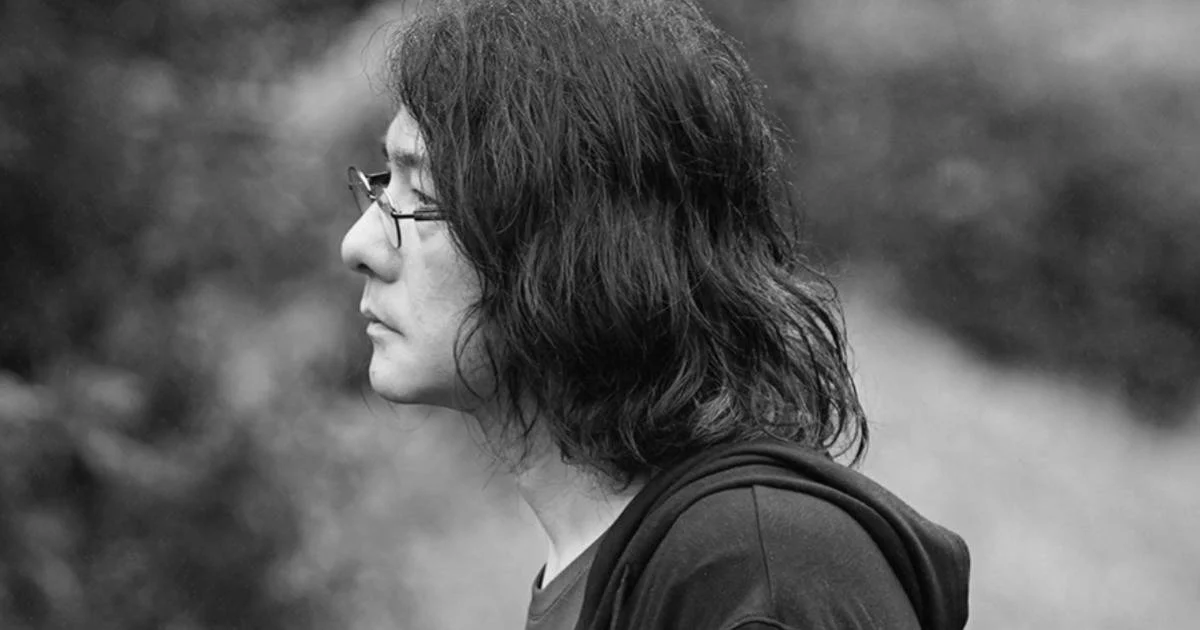
Shunji Iwai’s enduring masterpiece, "Love Letter," continues to captivate audiences and inspire filmmakers over three decades after its initial release. This cinematic gem, recently honored with a stunning 4K restoration and celebrated with revival screenings at Metrograph, has solidified its place as one of the most beloved directorial debuts of the 1990s. The film’s profound exploration of memory, loneliness, and the enduring power of human connection has resonated across generations, prompting a deeper examination of its themes in a rapidly evolving world. In an exclusive interview following the film’s re-emergence, Iwai shared his reflections on the timeless appeal of "Love Letter," the evolution of communication, and the complex nature of memory itself.
The Genesis of a Timeless Narrative
Released in 1995, "Love Letter" was a revelation, weaving a delicate tapestry of intertwined destinies through a series of poignant correspondences. The film tells the story of Hiroko Watanabe, who, while grieving the recent death of her fiancé, Hiroshi Fujii, discovers his old library card. On a whim, she writes a letter to his former address, a house that is now occupied by a woman with the same name, also named Hiroko. This chance encounter sparks an epistolary exchange that unearths shared memories, unspoken emotions, and the lingering specter of lost love.
Iwai’s directorial debut quickly distinguished itself with its signature style: a deeply emotional and visually distinctive approach that masterfully blends memory, music, longing, and the introspective landscapes of his characters’ inner lives. Films like "All About Lily Chou-Chou" and "Swallowtail Butterfly" further cemented his reputation as a cinematic poet, but "Love Letter" achieved a singular resonance, becoming a touchstone of 1990s Japanese cinema and a global phenomenon.
A Miraculous Enduring Presence
Reflecting on the film’s extraordinary longevity, Iwai expressed a sense of profound gratitude and disbelief. "When I made it, I never imagined that people would still be watching it 30 years later," he admitted. "To be honest, I don’t think I was thinking about 30 years into the future at all back then. Most films have a very short shelf life. New films continue to emerge, and older ones gradually disappear. So the fact that ‘Love Letter’ continues to find young audiences today feels almost miraculous to me. I’m very grateful for that."
This sentiment underscores the ephemeral nature of cinematic consumption. In an era saturated with content, the ability of a film like "Love Letter" to transcend fleeting trends and connect with contemporary viewers speaks volumes about its universal themes and artistic integrity. The recent 4K restoration, meticulously undertaken to preserve and enhance the film’s visual fidelity, has undoubtedly played a role in its renewed appreciation, allowing audiences to experience its subtle beauty with a clarity that honors Iwai’s original vision. Metrograph’s description of the film as "one of the most beloved directorial debuts of the 1990s" further validates its enduring impact.
The Architecture of Memory and the Power of Reconstruction
Central to Iwai’s oeuvre, and particularly to "Love Letter," is the intricate exploration of memory. The film artfully blurs the lines between recollection, fantasy, and the lived reality of its characters. Iwai’s fascination with memory stems from deeply personal experiences. "I have a memory from when I was a child," he shared. "I didn’t like milk growing up, and my mother once said to me, ‘But you were breastfeeding just recently.’ I think I was around three years old at the time, and I remember being frightened by the realization that I couldn’t remember something that had happened only a year earlier. It made me think about how quickly human beings forget things."
This childhood anecdote laid the foundation for a lifelong contemplation of memory’s fluidity and fallibility. "I moved around a lot as a child and attended different schools, and I became deeply afraid that I would eventually forget the people and places from those earlier parts of my life. It almost became a kind of phobia. Since then, I’ve always been fascinated by the question: What exactly is memory?"
For Iwai, filmmaking became a natural conduit for exploring these profound questions. "That’s why filmmaking felt so natural to me," he explained. "Cinema is a medium that records and preserves memory. I think life, death, and memory are probably the three biggest themes in both my films and my life." This perspective elevates "Love Letter" beyond a simple romance; it becomes an intricate study of how we construct our pasts, how we grapple with loss, and how the act of remembering itself shapes our present identities.
Epistolary Echoes in a Digital Age
The titular "Love Letter" serves as more than just a plot device; it functions as a cinematic metaphor for the act of reaching out, of attempting to bridge emotional divides and connect with the past. In an era dominated by instant messaging and social media, the deliberate, intimate nature of letter writing stands in stark contrast. "In my generation, letter writing was still a very normal form of communication," Iwai recalled. "I exchanged letters with friends all the time when I was younger. But what fascinated me was the idea of complete strangers communicating through letters. At the time, that felt almost fantastical to me."
The film’s premise of two strangers forging a deep connection through written correspondence was, at the time of its release, a reflection of a rarer form of human interaction. "I wanted to make a story about two people who didn’t know each other at all, yet slowly formed a connection through writing. Back then, that kind of interaction was extremely rare."
However, the rapid evolution of communication technologies has dramatically altered the landscape. "What’s interesting is that it didn’t even take 30 years for the world to change completely," Iwai observed. "About ten years after ‘Love Letter,’ social media and the internet made it entirely normal for strangers to communicate with each other every day. In a way, I sometimes feel that the mid-1990s may have been the last moment when you could naturally make a contemporary film centered around letter writing."
This shift presents a fascinating paradox. While the specific medium of letter writing may have receded, the underlying human desire for connection and expression remains. The film’s enduring appeal suggests that audiences, regardless of their own communication habits, can still connect with the emotional core of the narrative. "So the fact that young audiences can still watch the film today and be moved by it makes me very happy – although it also feels a little strange."
The Resurgence of Analog and the Unveiling of Human Nature
The phenomenon of younger generations rediscovering and finding meaning in seemingly anachronistic forms like letter writing and vinyl records is a trend Iwai finds particularly compelling. "Yes, that is very interesting to me," he stated. This cultural reawakration suggests a yearning for tangible experiences and a deeper engagement with art and communication in an increasingly digital and often superficial world.
Iwai draws a parallel between the private act of diary keeping in his youth and the public nature of online self-expression today. "When I was younger, many people kept diaries, but those were deeply private things that you would never show to anyone else. Today, people write about their daily lives publicly for audiences they don’t even know. I honestly think that’s something humanity has never experienced before."
He posits that the true revelation of social media lies not in its technological innovation but in what it exposes about human behavior. "What fascinates me is not necessarily the invention of social media itself, but rather what it reveals about human beings. In everyday life, people rarely talk to strangers on trains or in elevators. And if you overhear somebody’s conversation, you don’t suddenly interrupt and tell them they’re using a word incorrectly. But online, people do that constantly. They insert themselves into conversations they were never invited into. In a way, that’s frightening. But it’s also deeply human."
This observation highlights a fundamental tension in online interactions: the amplification of both connection and conflict. Iwai suggests that these behaviors are not entirely new but rather an ancient human impulse manifesting in a novel environment. "I sometimes think that if you gave social media to someone from a thousand years ago, they would probably use it in exactly the same way we do today. There’s something very strange – and very revealing – about human nature in that."
The Evocative Language of Music
Beyond narrative and dialogue, music plays an indispensable role in "Love Letter," serving as an emotional undercurrent that amplifies the film’s poignant atmosphere. Iwai views music not as an explanatory tool but as a vital element that harmonizes the film’s emotional landscape. "I don’t think of music as something explanatory or didactic. For me, music functions more as a harmonizing element within the film. I think about it in the same way that I might think about snow in a scene, or a vast landscape, or the ocean. Sometimes a scene simply requires those elements in order to fully exist emotionally."
The carefully curated score, often featuring Toshihiro Ueno’s evocative compositions, imbues "Love Letter" with a profound sense of melancholy, nostalgia, and unspoken yearning. "The harmony, melody, and atmosphere created by music are essential to expressing what I want the audience to feel," Iwai concluded. This deliberate use of music underscores his mastery in creating immersive cinematic experiences that appeal directly to the viewer’s emotions.
Legacy and the Solitary Pursuit of Art
As "Love Letter" continues to be hailed as a definitive film of the 1990s, Iwai reflects on its legacy with a profound sense of humility. "I’m very thankful for it, although I honestly don’t fully understand why the film has endured in the way it has." He describes filmmaking as an inherently solitary endeavor, even amidst collaboration. "For me, filmmaking has always been quite a lonely process – even back when I was a university student. Of course, there are collaborators around you, but discovering the core of a film – its spirit, its emotional center – is something deeply personal. It feels almost like the work of a philosopher confronting an idea alone."
This introspective approach to filmmaking has been a constant throughout his career. "In my case, I happened to enjoy that loneliness. I enjoyed spending time thinking carefully about stories and images and emotions." The enduring success of "Love Letter" has not only brought him critical acclaim but also provided him with the crucial opportunity to continue his artistic journey. "So the fact that ‘Love Letter’ is still loved after 30 years truly feels miraculous to me. And beyond that, the film also allowed me to continue making films throughout my life. Many people don’t get that opportunity."
The impact of "Love Letter" extends beyond its individual artistic merit; it has provided Iwai with the sustained platform to create further cinematic works, enriching the landscape of global cinema. His gratitude for the struggles and triumphs involved in its creation is palpable. "That’s why I feel grateful that I struggled through the process of making ‘Love Letter.’ It ultimately gave me the career – and the life – that I have today." As "Love Letter" continues to find new audiences and inspire a fresh wave of appreciation, its timeless themes of memory, connection, and the quiet beauty of human experience remain as relevant and moving as ever.