


The development of the highly anticipated video game Star Wars Eclipse has reportedly reached a critical juncture as staff at the French development studio Quantic Dream have initiated strike action. The industrial dispute centers on a planned "reorganization" that would see the layoff of 115 developers following the recent failure and subsequent closure of the studio’s experimental title, Spellcasters Chronicles. Striking employees have issued a stark warning to management and the public, asserting that the ambitious Star Wars project "literally cannot be finished" if the studio proceeds with the proposed headcount reductions.
This unrest follows a tumultuous period for Quantic Dream, which was acquired by the Chinese technology giant NetEase in 2022. While the studio has historically been known for narrative-driven titles such as Heavy Rain and Detroit: Become Human, Star Wars Eclipse represents its most significant undertaking to date, marking its first foray into the massive Star Wars intellectual property. However, the internal friction between labor and management now threatens to derail one of the most high-profile projects currently in production under the Lucasfilm Games umbrella.
The Catalyst: The Failure of Spellcasters Chronicles
The immediate cause of the current labor crisis is the dissolution of the team behind Spellcasters Chronicles, a genre-blending title described as a "MOBA-with-flying" game. Launched into early access in February 2024, the game failed to capture a sustainable player base or critical momentum. In April, Quantic Dream announced it would be shuttering the project and embarking on a corporate reorganization.
At the time of the announcement, Quantic Dream management insisted that the cancellation of Spellcasters Chronicles would have no negative impact on the development of Star Wars Eclipse. The official narrative suggested that resources would be streamlined to focus on the studio’s flagship projects. However, workers on the picket line tell a different story. They claim that the 115 individuals currently slated for redundancy are not surplus to requirements but are instead essential to the labor-intensive production of a modern AAA title.
According to reports from GameKult and Videogameschronicle, developers have been "inactive" for approximately a month while the layoff process looms. The striking staff argue that this month of lost production could have been utilized to train these employees on the proprietary tools and engine specific to Star Wars Eclipse, thereby bolstering a team they describe as chronically understaffed.
A Warning to Management and Lucasfilm Games
The timing of the strike was calculated to maximize visibility, coinciding with an official visit from representatives of Lucasfilm Games. By striking during a high-level site visit, the staff intended to signal to Disney and Lucasfilm that the project’s health is in jeopardy.
"It’s far from being an act of sabotage," one developer stated during the protest. "On the contrary, we’re trying to save Star Wars Eclipse. We could manage to release it with 115 additional people, and that wouldn’t be ‘overstaffed’: it’s what’s needed."
The worker further elaborated on the systemic issues within the gaming industry, noting that management often relies on the "passion" of developers to bridge the gap created by insufficient staffing. This reliance frequently leads to "crunch"—the practice of working extreme overtime hours to meet deadlines. The striking workers contend that the current plan to remove over 100 staff members will make the completion of Star Wars Eclipse impossible without subjecting the remaining team to unsustainable levels of professional and personal strain.

Another striking employee echoed these sentiments, stating that as things currently stand, the game is functionally impossible to complete on its projected trajectory. "We absolutely need the 115 people who have been inactive for a month already. We want to strongly alert management and tell them to look at all these people who are eager to work but aren’t, on the day of an official visit."
The Ambition and Context of Star Wars Eclipse
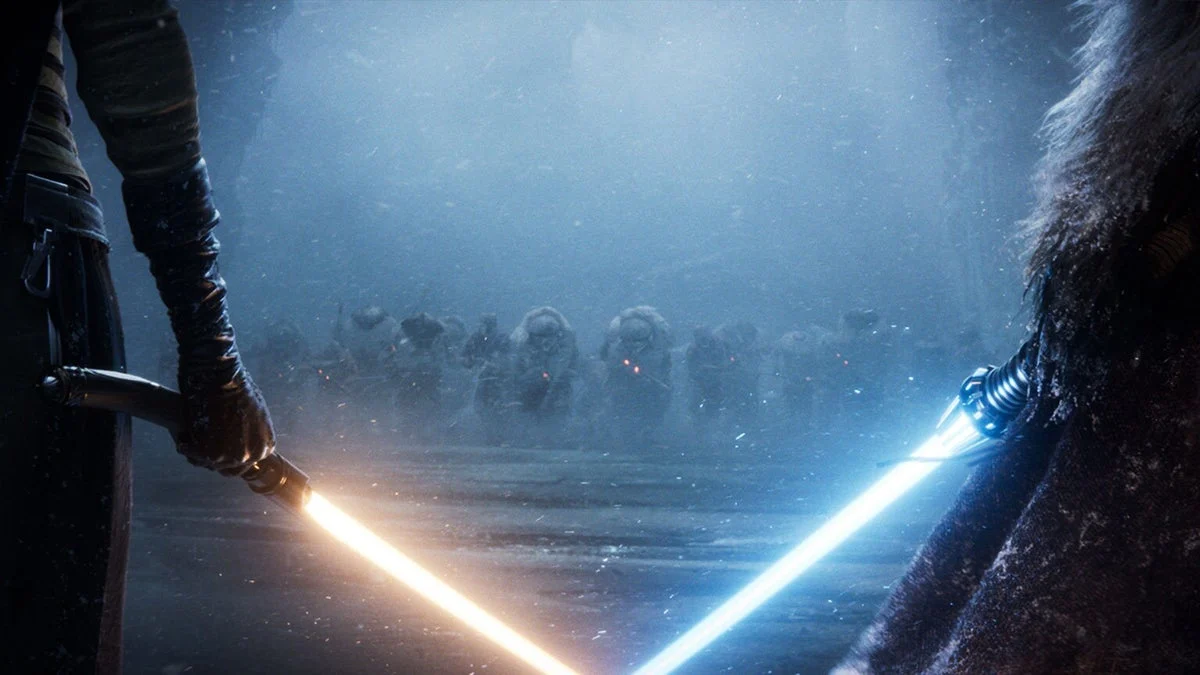
Announced during The Game Awards in 2021 with a visually stunning cinematic trailer, Star Wars Eclipse is set in the "High Republic" era. This period of Star Wars lore takes place approximately 200 years before the events of The Phantom Menace, a time when the Galactic Republic and the Jedi Order were at the height of their influence.
The game is intended to be an action-adventure title with the branching narrative paths that have become Quantic Dream’s signature. Because it is set in a relatively unexplored era of the Star Wars timeline, the project offers immense creative freedom but also requires significant world-building and asset creation.
The High Republic has been a cornerstone of Disney’s recent Star Wars strategy, spanning novels, comic books, and the live-action series The Acolyte. Star Wars Eclipse was positioned as the interactive centerpiece of this initiative. A cancellation or significant delay would not only be a blow to Quantic Dream’s reputation but would also leave a substantial gap in the Star Wars multimedia roadmap.
A Timeline of Uncertainty
The development of Star Wars Eclipse has been dogged by rumors and reports of difficulty since its reveal. Shortly after the 2021 announcement, industry insiders suggested that the game was at least three to four years away from release, with some estimates pushing the window even further back.
Reports circulated that Quantic Dream was struggling to attract new talent due to past controversies surrounding the studio’s workplace culture. In 2018, the studio was the subject of several investigative reports by French outlets Le Monde and Mediapart, which alleged a toxic environment characterized by inappropriate jokes, overwork, and a lack of diversity. While Quantic Dream and its founders, David Cage and Guillaume de Fondaumière, vehemently denied these allegations and pursued legal action against the publications, the reports created a lingering cloud over the studio’s recruitment efforts.
The 2022 acquisition by NetEase was seen by many as a potential turning point, providing the studio with the financial stability and resources of a global gaming giant. However, the current layoffs suggest that even with NetEase’s backing, the studio is facing the same economic pressures that have led to tens of thousands of job losses across the gaming industry in 2023 and 2024.
Supporting Data: The Broader Industry Crisis
The situation at Quantic Dream does not exist in a vacuum. The video game industry is currently grappling with a massive contraction following the rapid expansion seen during the COVID-19 pandemic. In 2023 alone, over 10,000 workers were laid off across the sector. By the first half of 2024, that number had already been surpassed, with major cuts at companies like Sony, Microsoft, Electronic Arts, and Riot Games.
The trend of "right-sizing" or "restructuring" has become a common euphemism for mass layoffs intended to satisfy investors and parent companies. In Quantic Dream’s case, the failure of Spellcasters Chronicles provided a corporate justification for the reduction in force. However, the unique nature of game development—where specialized skills are not always easily transferable between different types of projects—means that losing 115 staff members can effectively gut the pipeline for other projects, even if those projects are technically in a different stage of production.

Official Responses and Implications
As of the time of writing, Quantic Dream’s senior management has not issued a formal rebuttal to the specific claims made by the striking workers regarding the viability of Star Wars Eclipse. The studio’s previous stance remains that the reorganization is a necessary step following the closure of Spellcasters Chronicles and that Star Wars Eclipse remains a priority.
Lucasfilm Games has also remained silent on the matter. As the licensor, Disney/Lucasfilm typically maintains a distance from the internal labor relations of its third-party developers, but the public nature of the strike and the direct warning regarding the game’s completion may force a reevaluation of the partnership.
If the striking workers are correct and the game cannot be finished with the current staffing plan, Quantic Dream faces several grim possibilities:
- Project Cancellation: The most drastic outcome, which would result in the loss of years of work and significant financial investment.
- Delay and Re-staffing: Postponing the game indefinitely to hire and train new staff, which would be costly and further damage the studio’s standing.
- Outsourcing: Moving large portions of the development to other NetEase-owned studios or external contractors, which could compromise the creative vision of the project.
Analysis: The High Stakes of Labor in Game Development
The strike at Quantic Dream highlights an evolving dynamic in the video game industry: the increasing vocalization of labor rights. For decades, the "passion" mentioned by the striking developer was used as a tool to justify long hours and precarious employment. However, the rise of unionization efforts at studios like Zenimax, Raven Software, and CD Projekt Red suggests that the workforce is no longer willing to accept "crunch" as an inevitable part of the job.
The warning that Star Wars Eclipse "literally cannot be finished" is a powerful rhetorical tool, but it is also a practical assessment of the complexity of modern game engines. Star Wars Eclipse is being built on Quantic Dream’s proprietary technology. This engine is highly specialized for performance capture and cinematic storytelling. Losing 115 people who understand the studio’s workflow and technical limitations is not a loss that can be easily mitigated by hiring fresh graduates or shifting personnel from unrelated departments.
The industry will be watching closely to see how NetEase and Quantic Dream management respond to the picket line. If the layoffs proceed and Star Wars Eclipse subsequently enters "development hell" or is cancelled, it will serve as a cautionary tale about the dangers of prioritizing short-term reorganization over the long-term stability of specialized development teams.
For the fans awaiting their chance to explore the High Republic era, the news is a sobering reminder that the "galaxy far, far away" is built by thousands of workers on the ground, and without them, the stars may never align for Star Wars Eclipse.