


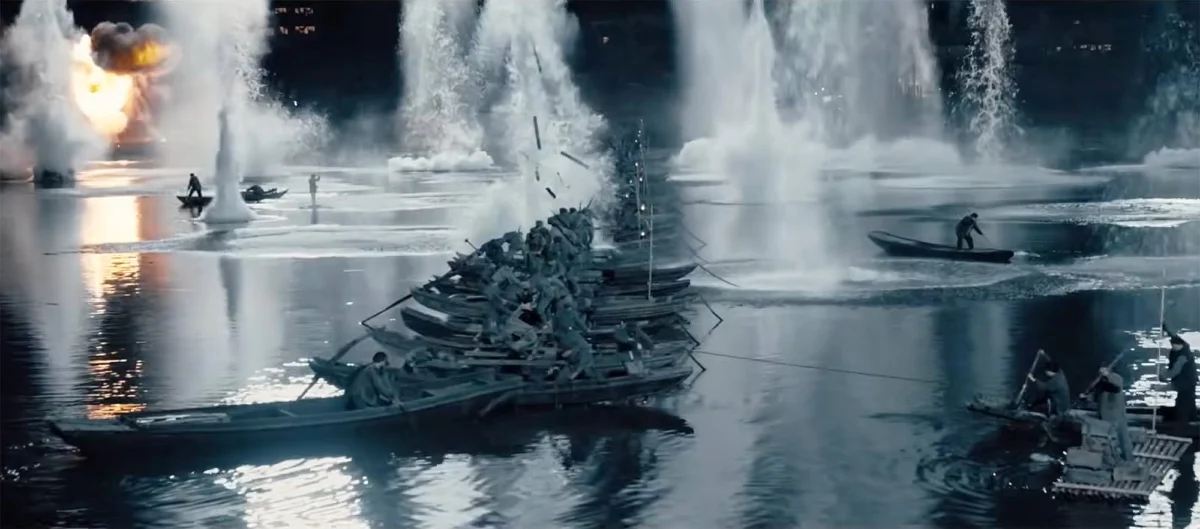
The North American cinematic landscape is set to welcome a formidable new historical epic as Well Go USA Entertainment has officially released the trailer for Crossing, a Chinese war film also known as Four Crossings. Directed by Xu Zhanxiong, this ambitious production delves into one of the most strategically significant and perilous chapters of the Chinese Red Army’s Long March: the legendary Battle of Chishui River in 1935. Slated for a limited theatrical release in the United States this July, following its premiere in China, Crossing promises a grand-scale depiction of military strategy, unwavering devotion, and profound sacrifice amidst the chaos of war, centered on Mao Zedong’s brilliant maneuvers to evade a 400,000-troop encirclement. The film, starring an ensemble cast including Ye Liu, Lei Wang, Yosh Yu, and Zhifei Wang, aims to immerse audiences in a pivotal moment that reshaped the trajectory of the Chinese revolution, offering a compelling narrative on the triumph of strategic ingenuity against overwhelming odds.
A Cinematic Journey into a Pivotal Historical Encounter
Crossing plunges viewers into the heart of the Chinese Red Army’s desperate struggle for survival during the Long March. The film’s core narrative unfolds against the backdrop of a formidable encirclement by 400,000 Nationalist troops, a critical juncture that threatened the very existence of the Communist forces. At the epicenter of this struggle is the strategic brilliance attributed to Mao Zedong, who orchestrated a series of complex river crossings across the Chishui River—four times, to be precise—to outmaneuver and confuse the enemy. This tactical masterpiece is not merely a backdrop but the very engine of the film’s plot, highlighting the ingenuity and resilience required to defy seemingly insurmountable military pressure.
Beyond the grand strategic movements, Crossing also endeavors to explore the profound human element of conflict. The synopsis hints at a poignant subplot involving an old soldier, bound by a sacred vow, and a homeless orphan, fighting merely to survive. Their developing bond on the frontlines is poised to illuminate the true meaning of devotion and sacrifice, providing an intimate counterpoint to the expansive battle sequences. This dual focus—on both the macro-level military strategy and the micro-level human experience—is a common thread in historical epics, aiming to make the monumental events relatable through personal journeys of courage and resilience. The film’s tagline, "Remarkable achievements can only be achieved by outstanding figures," underscores this emphasis on exceptional leadership and individual heroism in the face of adversity.
The Battle of Chishui River: A Strategic Masterpiece of the Long March
To fully appreciate the narrative of Crossing, it is essential to understand the historical context of the Battle of Chishui River, a critical episode within the broader saga of the Long March. The Long March, which began in October 1934, was a monumental military retreat undertaken by the Chinese Red Army, the armed forces of the Communist Party of China, to evade the pursuit and encirclement by the Nationalist Army (Kuomintang, KMT) forces of Chiang Kai-shek. The initial stages of the march were disastrous for the Red Army, culminating in the bloody Battle of Xiang River in November-December 1934, where they suffered devastating casualties, losing over half of their fighting force. This catastrophic defeat led to a critical reassessment of military leadership and strategy within the Communist Party.

It was during this period of extreme vulnerability that Mao Zedong’s strategic acumen came to the forefront. At the Zunyi Conference in January 1935, Mao’s proposals for mobile warfare and strategic flexibility gained traction, leading to his ascent to a more prominent leadership role. Facing relentless pursuit and multiple encirclement campaigns by Chiang Kai-shek’s vastly superior forces, the Red Army found itself in Guizhou province, near the Chishui River. The river, with its rugged terrain and treacherous crossings, became the stage for one of the most brilliant and complex maneuvers in military history.
Between January and May 1935, Mao orchestrated four distinct crossings of the Chishui River, each designed to deceive, exhaust, and outmaneuver the Nationalist forces.
- First Crossing (January 1935): The Red Army crossed into Sichuan, aiming to link up with other Communist forces, but found the KMT heavily entrenched.
- Second Crossing (February 1935): Mao reversed course, recrossing the Chishui back into Guizhou, catching the pursuing KMT off guard and inflicting significant losses on isolated KMT units. This move allowed the Red Army to temporarily escape the immediate threat.
- Third Crossing (March 1935): The Red Army moved north again, feigning an advance towards Sichuan, drawing KMT forces in that direction.
- Fourth Crossing (March 1935): In a swift and decisive move, Mao once again reversed direction, recrossing the Chishui for the fourth and final time, heading south into Guizhou. This maneuver completely disoriented the Nationalist commanders, allowing the Red Army to break free from the encirclement and secure a vital route towards Yunnan.
The Battle of Chishui River was not a conventional battle with a single decisive engagement but a prolonged campaign of strategic deception, rapid movements, and psychological warfare. It was a testament to Mao Zedong’s tactical genius and his ability to adapt to fluid battlefield conditions, often against the advice of more conventional military strategists within his own ranks. This series of crossings not only saved the Red Army from annihilation but also solidified Mao’s position as the undisputed military leader of the Communist Party, a leadership that would ultimately lead to the founding of the People’s Republic of China in 1949. The event remains a cornerstone of revolutionary history in China, frequently celebrated as a triumph of strategic brilliance and revolutionary spirit.
Crafting the Epic: Production, Direction, and Star Power
The cinematic realization of such a monumental historical event requires a director with a clear vision and a production team capable of executing it on a grand scale. Xu Zhanxiong, the Chinese filmmaker at the helm of Crossing, brings a notable filmography that includes Wild Grass, The Pioneer, and Burning Stars. These previous works suggest a director familiar with narratives that explore human struggle, historical context, and dramatic tension, preparing him for the challenge of depicting the scale and intensity of the Chishui campaign. His direction in Crossing is expected to blend epic battle sequences with poignant human drama, reflecting the dual narrative focus of the film.
The cast assembled for Crossing features prominent names in Chinese cinema, indicating a high-caliber production. Ye Liu, known for his versatile performances in films like Dark Blue Almost Black and The Founding of an Army, is a highly respected actor whose presence adds significant weight to the ensemble. Lei Wang, Yosh Yu, and Zhifei Wang are also established figures, bringing their collective experience to portray the diverse characters caught in the crucible of war. Their performances will be crucial in conveying the immense emotional and physical toll of the Long March, grounding the historical spectacle in relatable human experiences.

The trailer itself provides a compelling preview of the film’s production values. It showcases vast landscapes, meticulously recreated period costumes, and what appears to be a significant commitment to depicting large-scale military engagements. From sweeping aerial shots of marching armies to intense close-ups of soldiers in combat, the visuals suggest that Crossing aims to be a visually immersive experience. Such epic war films often rely on a combination of practical effects and cutting-edge visual effects to bring historical battles to life, and Crossing appears to be no exception, promising a cinematic spectacle that befits the scale of the events it portrays. Produced by Dong Yu, known for his involvement in numerous significant Chinese film projects, the backing points to a substantial investment in bringing this pivotal story to the big screen with authenticity and grandeur.
Well Go USA and the North American Market for Chinese Epics
Well Go USA Entertainment’s decision to distribute Crossing in North America underscores its ongoing commitment to bringing diverse and high-quality international cinema to a broader audience. As a leading distributor of Asian films, Well Go USA has a proven track record of introducing critically acclaimed and commercially successful titles from China, South Korea, and other regions to the Western market. Their release strategy, typically involving a limited theatrical run followed by digital and home video distribution, allows niche films to find their dedicated audience while maximizing exposure.
The North American market for Chinese historical epics has seen fluctuating but notable interest over the years. Films such as Red Cliff, The Eight Hundred, and The Battle at Lake Changjin have demonstrated that there is an appetite for grand-scale historical narratives that offer insights into Chinese history and culture. These films often resonate with audiences due to their impressive production values, compelling storytelling, and the universal themes of heroism, sacrifice, and national identity they explore. Crossing enters this landscape, aiming to capture the attention of history enthusiasts, fans of war dramas, and those interested in experiencing a different perspective on 20th-century history.
The film’s release timeline—premiering in China before its limited US run on July 10th, 2026—is a standard practice that allows for critical reception and box office performance in its home market to build anticipation internationally. For Well Go USA, Crossing represents an opportunity to add another significant title to its catalog of Asian blockbusters, further cementing its position as a gateway for international cinema in North America. The official trailer, sourced directly from YouTube, serves as the primary marketing tool, offering a powerful first impression of the film’s intensity and scope to potential audiences.
Broader Cultural Significance and Implications
Films like Crossing carry a significance that extends beyond mere entertainment; they are powerful tools for shaping national identity, interpreting historical events, and fostering cultural memory. In China, historical epics, particularly those centered on the revolutionary period, play a crucial role in celebrating foundational myths and reinforcing narratives of national resilience and strategic triumph. Crossing, by focusing on the Battle of Chishui River and Mao Zedong’s leadership, aligns with a broader trend in Chinese cinema to produce grand historical accounts that commemorate pivotal moments and figures in the nation’s revolutionary past. These films often emphasize themes of unity, sacrifice, and the strategic brilliance that led to the establishment of modern China.

For international audiences, Crossing offers a window into a specific historical narrative that might be less familiar in the West. It provides an opportunity to engage with a different cultural perspective on warfare, leadership, and the human cost of conflict. While some narratives in national cinema may be perceived through a lens of state endorsement or "propaganda," it is equally important to recognize them as reflections of a nation’s self-perception and its chosen way of remembering its own history. Engaging with such films can facilitate a deeper understanding of historical contexts and cultural values, even if those interpretations differ from Western academic perspectives.
The enduring appeal of heroic narratives, regardless of their cultural origin, speaks to universal human desires for stories of courage, perseverance, and the triumph of the human spirit. Crossing, with its tale of an army on the brink of annihilation finding salvation through strategic genius and the unwavering commitment of its soldiers, taps into these universal themes. It offers not just a recounting of facts but an emotional experience designed to evoke admiration for the figures and sacrifices depicted. As the film prepares for its global release, it stands as a testament to the power of cinema to transcend borders and bring compelling historical sagas to life for a worldwide audience.
The official US trailer, now available, provides a compelling glimpse into the visual grandeur and emotional depth awaiting audiences. With its extensive cast, acclaimed director, and the backing of Well Go USA, Crossing is poised to make a significant impact on the international cinematic stage, offering a rich and detailed portrayal of a defining moment in Chinese history. Film enthusiasts and history buffs alike are encouraged to mark their calendars for July 10th, 2026, when Xu Zhanxiong’s Crossing will debut in select US theaters, promising an immersive and epic journey into the legendary Battle of Chishui River. Further information, including additional screenings and updates, can be found on Well Go USA’s official website.