

Night Nurse, the provocative 2026 psychological drama directed by Georgia Bernstein, has emerged as one of the most polarizing and critically discussed titles following its premiere in the NEXT competition at the Sundance Film Festival. Blending the sterile, out-of-time atmosphere of a memory-care facility with dark, transgressive psychosexual motifs, the film avoids the traditional narrative safety nets often favored at major domestic festivals. Instead, it offers an unsettling exploration of isolation, transactional intimacy, and elder fraud, anchored by a deliberate visual style and sharp character dynamics. Ahead of its scheduled July 10 wide release via distributor IFC Films, the film is drawing critical comparisons to the works of provocative auteurs like David Cronenberg, Atom Egoyan, and Catherine Breillat, while establishing Bernstein as a distinct new voice in American independent cinema.
Main Facts and Narrative Premise
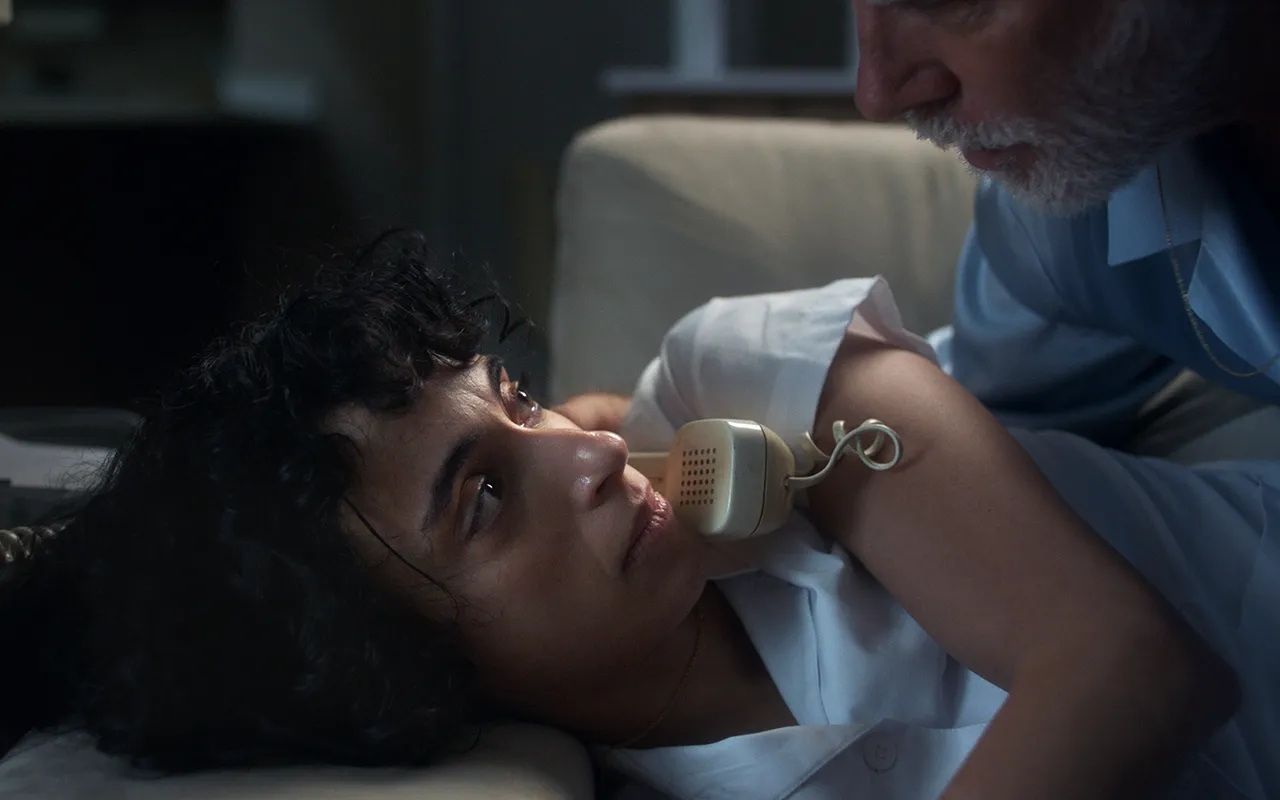
The plot of Night Nurse centers on Eleni, played by Cemre Paksoy, a newly hired nurse navigating the grueling and repetitive environment of a residential memory-care facility. During her overnight shifts, Eleni is tasked with caring for Douglas, portrayed by Bruce McKenzie, a patient currently being evaluated for early-onset Alzheimer’s disease. Rather than maintaining professional boundaries, Eleni is rapidly drawn into Douglas’s orbit, eventually becoming his active accomplice in a predatory phone scam targeting other elderly individuals. Posing as a distressed granddaughter in urgent need of financial assistance, the duo exploits the vulnerability of senior citizens.
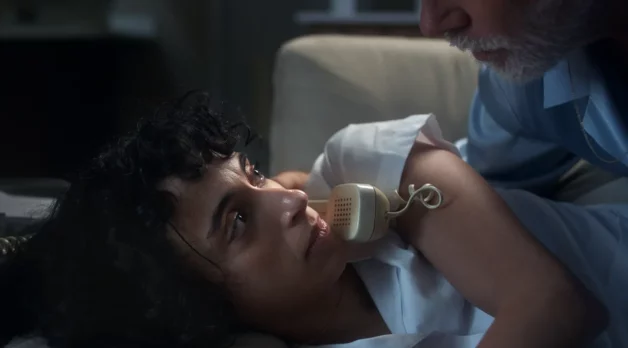
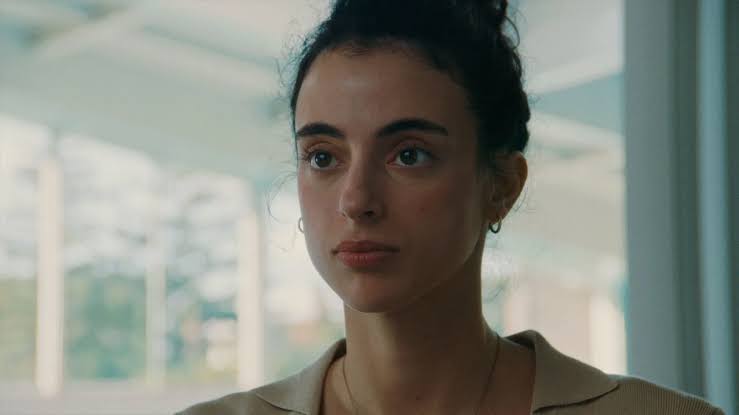
This illicit partnership quickly evolves beyond mere monetary gain. Both Eleni and Douglas derive a potent sexual thrill and a profound sense of validation from their confidence game. A central thematic anchor of the narrative is voiced by Mona, played by Éléonore Hendricks, who observes to Eleni, "It’s amazing to be needed, isn’t it? It feels good to mean something to somebody." Bernstein’s screenplay examines this primal human instinct to its most problematic and logical extremes, probing how individuals grappling with emotional numbness find distorted purpose through mutual exploitation.
Production Chronology and Collaborative Development
The genesis of Night Nurse is deeply rooted in the regional independent filmmaking ecosystem of Chicago, reflecting an unconventional production pipeline that bridged academic mentorship with grassroots execution. Georgia Bernstein, who previously served as a producer on Alex Phillips’ features All Jacked Up and Full of Worms (2022) and Anything That Moves (2025), developed the project alongside fellow producers Eddie Linker and Liane Cunje.
Following the production of Anything That Moves, Linker—a Chicago-based producer—was scheduled to teach a practical course at Northwestern University and requested a script to use as a real-world curriculum subject. Partnering with producer Veronica Barbosa, Bernstein and Linker transformed the preproduction phase of Night Nurse into a hands-on university class. Students were instructed in the pragmatic mechanics of low-budget independent filmmaking, including establishing an LLC, building financial budgets, and successfully navigating regional tax credit applications. By the conclusion of the academic quarter, the foundational preproduction work for the feature film was complete, solidifying relationships within the local Chicago artistic community.
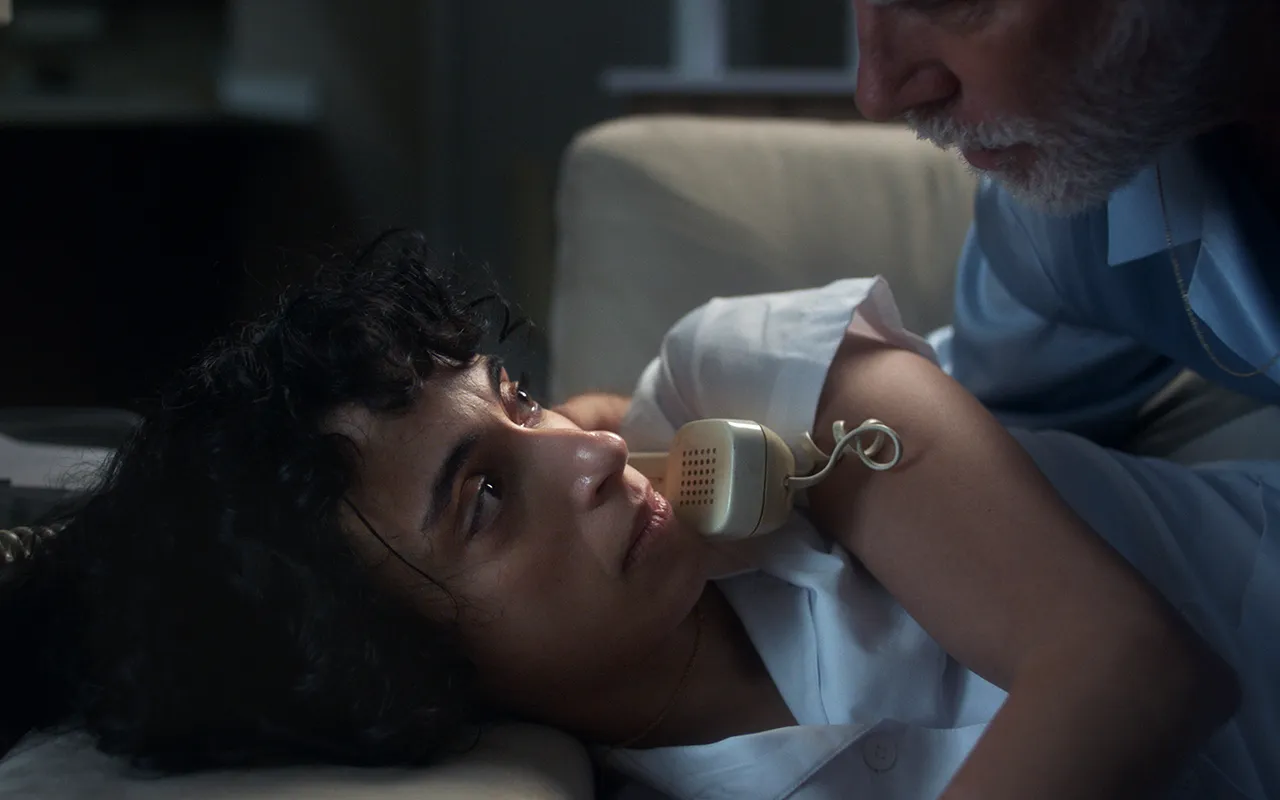
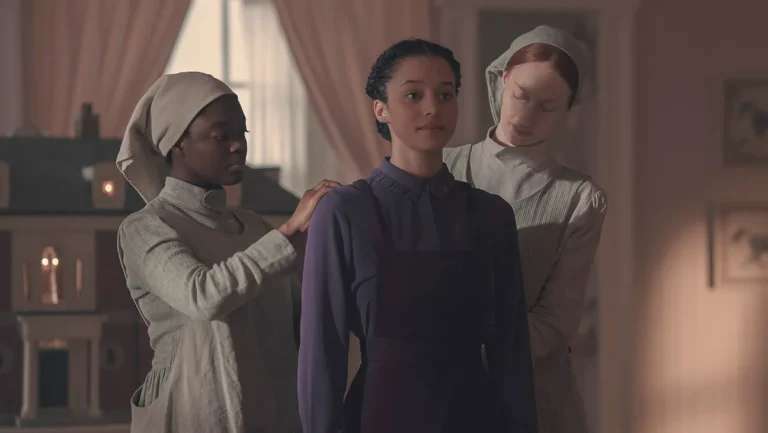
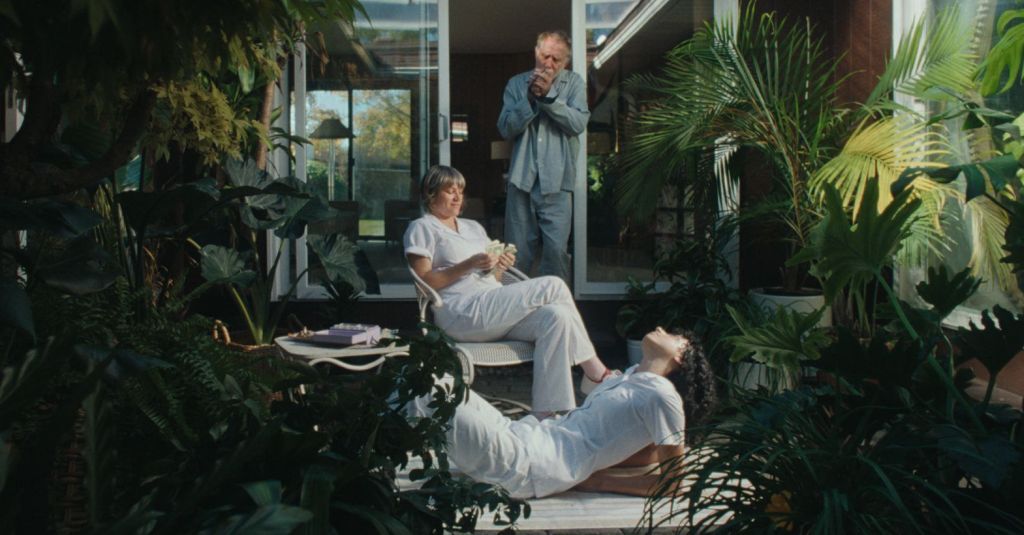
Principal photography relied heavily on practical constraints that ultimately defined the film’s aesthetic identity. The majority of the production took place inside Bernstein’s late grandmother’s suburban Chicago house. The script was intentionally tailored to the architectural specifics of the residence, utilizing the spatial progression from room to room and into the atrium. This logistical choice heavily influenced the film’s atmosphere of temporal disorientation. The set design deliberately blurred historical markers, incorporating 1970s interior wallpaper alongside legacy landline telephones, while deliberately omitting contemporary smartphones to create an ambiguous, floating timeline.
Visual Methodology and Influences
To achieve the film’s distinctive look, Bernstein recruited cinematographer Lidia Nikonova, whose previous work on Lucy Kerr’s Family Portrait (2024) signaled a shared artistic sensibility. Rejecting the handheld immediacy of modern low-budget aesthetics, Bernstein and Nikonova elected to shoot almost entirely on a camera dolly. This deliberate choice introduced a deliberate weight and slow-paced cadence to the frame, recalling the formal precision of European arthouse cinema.
"I didn’t want to shoot like a low-budget film; I wanted to shoot like Fassbinder. I wanted to make it feel big," Bernstein explained during discussions surrounding the film’s release. The deliberate, measured tracking shots, combined with a humid, claustrophobic suburban atmosphere, position Night Nurse within a lineage of psychological thrillers that prioritize mood and spatial unease over conventional narrative exposition.
The auditory landscape further reinforces this sense of entrapment. Composers Steven B. Jackson and Samm Clapp, who previously collaborated on Bernstein’s produced features, developed a score heavily influenced by Francis Ford Coppola’s The Conversation (1974). Utilizing live instrumentation performed directly to picture—featuring prominent contributions from the piano and flute—the musical motifs establish a cyclical, inescapable rhythm that mirrors the repetitive daily routines of the retirement facility’s residents.
Casting and Character Construction
With the exception of the role of Douglas, every character in Night Nurse was written specifically for performers with whom Bernstein shared prior creative or personal relationships. The casting process for Douglas, however, required an extensive search for an older male presence capable of evoking classical Hollywood archetypes.
"I wrote that part thinking it was like Cassavetes or Humphrey Bogart or something—some kind of older man that doesn’t exist anymore," Bernstein noted. Through mutual acquaintances, Bruce McKenzie was introduced to the project, bringing an unexpected nuance and spontaneity that recalibrated the character’s dynamic with Paksoy’s Eleni. Supporting roles were populated by established figures within Chicago’s artistic community, including performance artist Colleen Rose Trundy, ensuring a tight-knit ensemble capable of handling the heavy dramatic lifting required during the production’s compressed schedule. Notably, due to scheduling constraints, the production executed its most intimate and psychologically demanding scenes—including the pivotal phone scam sequences—during the first week of principal photography, setting an uncompromising tone for the remainder of the shoot.
Critical Analysis, Broader Impact, and Industry Implications
Night Nurse arrives at a time when audiences and critics are increasingly receptive to uncompromising explorations of moral ambiguity and institutional decay. By transplanting the conventions of classic nurseploitation cinema—specifically drawing inspiration from Roger Corman’s 1970s trilogy, including Stephanie Rothman’s The Student Nurses—into a contemporary memory-care setting, the film subverts genre expectations.
Industry analysts note that the film’s acquisition by IFC Films for a wide theatrical release on July 10 reflects a growing commercial appetite for elevated, genre-adjacent arthouse thrillers that defy easy categorization. By refusing to offer moral absolutes or comfortable resolutions regarding Eleni and Douglas’s predatory partnership, Bernstein invites viewers to confront the uncomfortable realities of emotional dependency among society’s most vulnerable populations. As Night Nurse transitions from its festival origins to commercial exhibition, its success underscores the viability of regional, community-driven production models in fostering bold, director-driven American independent cinema.