

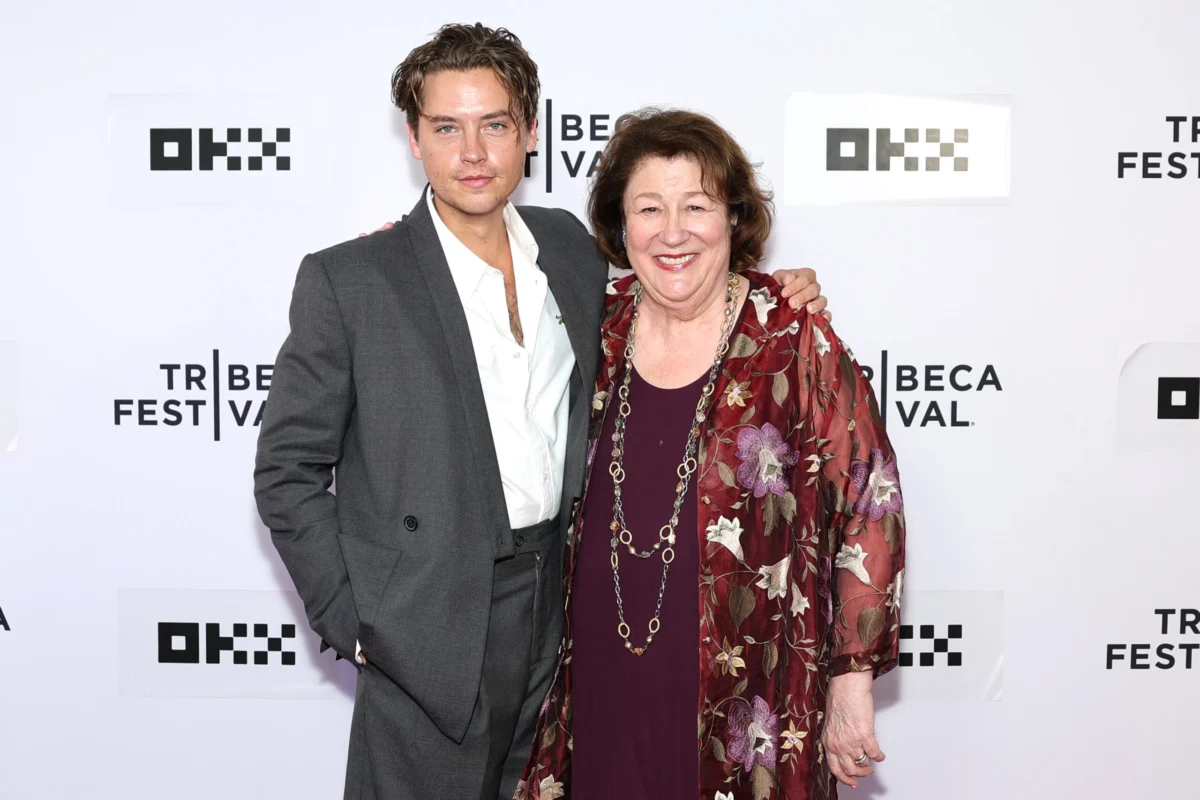
The cinematic landscape is currently abuzz with an early, yet emphatic, declaration: Margo Martindale, long celebrated as an "esteemed character actress," has delivered a lead performance in David Drake’s independent drama The Long Haul that critics are already touting as Oscar-worthy. This powerful turn, which premiered at the Tribeca Film Festival, not only redefines Martindale’s illustrious career but also spotlights the pressing challenges faced by profound, human-centric independent films in securing vital distribution in an increasingly commodified industry. The consensus among early viewers is clear: a performance of this caliber, in a film of this resonance, cannot be allowed to languish without a buyer.
A Career Redefined: From Esteemed Character Actress to Lead Luminary
For years, the phrase "esteemed character actress" has been inextricably linked with Margo Martindale, a moniker famously cemented by the animated series Bojack Horseman. This affectionate label, while acknowledging her undeniable talent and ubiquitous presence, inadvertently placed her in a category that, until now, had not included a leading film role. Martindale’s extensive filmography is a testament to her versatility and depth, encompassing a remarkable range of characters that have left indelible marks on audiences. From her Emmy-winning turns as Mags Bennett in FX’s Justified and Claudia in FX’s The Americans, to her memorable roles in films like Million Dollar Baby, August: Osage County, and more recently, Cocaine Bear, Martindale has consistently elevated every project she touches. She has embodied figures of formidable power, unsettling menace, poignant vulnerability, and surprising humor, earning a reputation as one of the most reliable and captivating performers in Hollywood.
However, The Long Haul marks a significant departure. It casts Martindale as the singular anchor, presenting her in virtually every frame and demanding a sustained emotional and physical performance that transcends her previous, albeit brilliant, supporting work. This shift challenges the very definition bestowed upon her by pop culture, urging a re-evaluation of her capabilities. The film, in the words of one early review, necessitates a new descriptor: "Tour de force gut-punch lead actress" – a title that better encapsulates the raw power and emotional complexity she brings to her latest role.
"The Long Haul": A Portrait of Resilience and Reflection
The Long Haul introduces audiences to Carol Jane, or CJ, a septuagenarian independent truck driver navigating the unforgiving realities of a modern world that increasingly marginalizes her traditional way of life. The film paints a stark picture of economic precarity, where independent truckers face immense pressure from larger conglomerates, the demands of online integration, and even the burgeoning "trucker influencer" subculture – a landscape far removed from CJ’s analogue existence. Haunted by an unspoken past yet stubbornly unbroken, CJ is a character of profound resilience, willing to tolerate a certain degree of hardship but quick to respond with fierce defiance when pushed too far.
The film has drawn comparisons to Chloé Zhao’s Oscar-winning Nomadland, sharing a thematic core of economic struggle intertwined with a spiritual journey on the open road. Both films explore lives lived on the margins of society, grappling with personal demons and the search for meaning amidst transience. However, The Long Haul distinguishes itself with a more intensely personal narrative, focusing less on community and more on CJ’s solitary odyssey. Her journey is punctuated by encounters with a diverse and compelling supporting cast, including Stephen Root as an old family friend, Yalitza Aparicio (of Roma fame) as an enigmatic prostitute, and Cole Sprouse as a contemporary "trucker-bro." These performances, while excellent, serve to illuminate CJ’s central struggle, highlighting her as an indelible lead character – a working-class woman over 70, a demographic rarely afforded such nuanced and central representation in mainstream cinema.
Martindale herself expressed a deep connection to the material. "I think it’s one of the most beautiful scripts I ever read," she stated, noting that the script "made me cry. It rang every bell that I loved, it had silence, it could just sit there. It never spelled anything out. You had to just wait and see and discover what’s going on." This profound connection is evident in her performance, which is described as quiet yet powerful, a slow-burn character study that reveals layers of trauma and resilience.
An Oscar Campaign in June? The Unprecedented Buzz
The call for Martindale’s Oscar nomination, coming as early as June, is a testament to the undeniable impact of her performance. While the Academy Awards race typically heats up in the fall, extraordinary early-year performances occasionally break through the noise, forcing critics and industry insiders to take notice long before traditional campaign cycles begin. Recent examples include performances from films like Sound of Metal or Minari, which garnered early buzz that sustained through the season. Martindale’s portrayal of CJ is being positioned in this rare category, a performance so viscerally authentic and emotionally resonant that it transcends seasonal timing.
The film’s quiet power and Martindale’s ability to imbue CJ with such lived-in history suggest a performance that resonates with the Academy’s preference for raw, character-driven acting. Her nuanced depiction of a woman navigating both external hardships and internal scars speaks to the kind of complex human drama often recognized by major awards bodies. The fact that this is her first lead film role only adds to the narrative appeal, potentially positioning her as a "long overdue" contender. When asked about the prospect of an awards campaign, Martindale responded with an emphatic "Big time," even acknowledging the demanding grind involved. This eagerness underscores her belief in the film and her performance.
The Crucial Hurdle: Distribution in a Challenging Indie Market
Despite the fervent critical acclaim for Martindale and The Long Haul, the film currently faces a daunting challenge: it has yet to secure a distributor. This reality is, tragically, not uncommon for independent dramas, particularly those featuring septuagenarian lead actresses and exploring nuanced, character-driven narratives rather than high-concept plots or established franchises. The independent film market has grown increasingly difficult in recent years. Post-pandemic, distributors and streaming platforms have largely prioritized genre fare, IP-driven content, or star-studded spectacles that promise immediate commercial returns. Quiet, reflective dramas, even those with powerful performances, often struggle to find a home.
Data from organizations like the Sundance Institute and the Independent Film & Television Alliance (IFTA) consistently highlight the dwindling opportunities for theatrical releases for smaller independent films. Many are relegated directly to streaming platforms, often with minimal marketing budgets, making it difficult to cut through the vast content landscape. For a film like The Long Haul, which thrives on its authenticity and human connection, a thoughtful distribution strategy is paramount. It requires a buyer willing to champion its artistic merit, understand its potential resonance with mature audiences, and invest in a campaign that can translate critical buzz into viewership. The current situation, where a film of this quality struggles to find a buyer, is not merely surprising; it reflects a broader, concerning trend in how artistic merit is valued against commercial viability in the contemporary film industry.
David Drake: An Autodidact’s Anti-AI Vision
The unique voice and perspective of The Long Haul are deeply rooted in its director, David Drake. Drake’s journey into filmmaking is as unconventional as his film’s thematic depth. Raised in a rural, blue-collar town north of New York City, Drake never attended college, a path not encouraged by his Jehovah’s Witness mother. Instead, he was shaped by his autodidact truck-driver father, who read him poetry from the cab, instilling a profound appreciation for language and narrative. Drake’s early career involved working as a machinist after high school before moving to Northern England, where he continued in blue-collar jobs, met his wife, and built a life that he believes is essential to his ability to be a filmmaker without the financial pressures of living in major film hubs.
In recent years, Drake transitioned to photography and design, a career path that provided the financial means and artistic inspiration for The Long Haul. His photographic work included shooting album covers for The 1975, particularly for their 2016 record "I Like It When You Sleep, for You Are So Beautiful Yet So Unaware of It," a process that involved extensive travel, especially across the American West. This experience undoubtedly informed the visual language and authentic settings of his debut feature.
Drake’s worldview is also strikingly pertinent to current industry discussions. When asked about a popular AI model, he reportedly didn’t know what it was. This seemingly simple fact underscores a profound philosophy embedded in The Long Haul: its inherent resistance to the digital. CJ’s reliance on a CB radio over modern technology is not merely a plot point explaining her economic struggles; it’s a symbolic anchor for the film’s larger message about the value of human connection and tangible reality. The movie, by existing as a "beautifully handmade and exquisitely human piece," inadvertently serves as an "anti-AI film." It subtly asks whether society should rush headlong into a machine-thinking future, championing instead the decluttering of the digital and a return to human-centric storytelling. Drake’s craft, from "hand-crafted wardrobes" to "people-chosen locations," feels like a direct counterpoint to the increasingly automated and algorithm-driven aspects of modern content creation.
Martindale’s Enduring Work Ethic and the Broader Implications
Margo Martindale’s professional life is a testament to an unwavering dedication to her craft. At nearly 75, she maintains an incredibly demanding schedule. She is currently balancing multiple productions, including the second season of Ryan Murphy’s All’s Fair, where she plays an "Ina Garten sort of character," and the upcoming Prison Break reboot. Her relentless work ethic is such that she is delaying surgery for a burst eardrum, a condition that would require a six-week hiatus from flying and, consequently, from acting. This anecdote not only highlights her commitment but also underscores the often-unseen physical demands placed on working actors, even those in their later years.
Martindale’s journey with The Long Haul has significant implications for the industry. Her powerful lead performance could pave the way for more nuanced roles for older women, challenging ageist casting trends. The film itself, with its authentic portrayal of a working-class septuagenarian, offers a vital counter-narrative to the often youth-obsessed and genre-driven mainstream. Its struggle for distribution, however, points to a larger systemic issue: the imperative for the industry to recognize and invest in diverse stories and voices, even if they don’t fit conventional commercial molds.
In a world increasingly saturated with algorithm-generated content and visual effects spectacles, The Long Haul offers a powerful, quiet antidote. It is a reminder of the enduring power of human stories, meticulously crafted by human hands and performed by actors who embody their roles with profound truth. As Martindale herself articulated, "We do need more human stories, we really, really do, or we’re going to see it all slip away." The film, and Martindale’s performance within it, stand as a beacon for what independent cinema can achieve. The urgent hope, shared by critics, the filmmaker, and the star alike, is that a distributor will recognize this intrinsic value and provide The Long Haul the platform it so richly deserves, ensuring Margo Martindale’s extraordinary lead turn receives the widespread recognition—and potential Oscar nomination—it has already earned.