The latest offering from Happy Madison Productions for Netflix, "Roommates," has premiered to a mixed critical reception, with observers noting a significant disconnect between its central characters and an overall struggle to deliver consistent comedic impact. Despite boasting an impressive roster of comedic talent both in front of and behind the camera, the film, released in April 2026, appears to grapple with fundamental issues of script cohesion and character development, echoing criticisms leveled at some of Happy Madison’s previous streaming endeavors.
The Latest from Happy Madison on Netflix
"Roommates" arrives on Netflix as part of the prolific partnership between Adam Sandler’s Happy Madison Productions and the global streaming giant. This collaboration has yielded a steady stream of original comedies since its inception, with 2025 alone seeing the release of "Kinda Pregnant," starring Amy Schumer, and the highly anticipated sequel, "Happy Gilmore 2." The production of "Roommates" signals a continuation of this strategy, aiming to leverage established comedic brands and talent to attract and retain subscribers. Adam Sandler and Tim Herlihy, long-time collaborators and architects of the Happy Madison comedic universe, serve as producers, indicating the film’s alignment with the studio’s distinctive style, even with a fresh generation of talent at its core.
The directorial reins for "Roommates" were handed to Chandler Levack, a Canadian filmmaker whose previous work, "I Like Movies," garnered critical acclaim. Levack is also slated for another release in Spring 2026, "Mile End Kicks," a project that earned her recognition as a "Director to Watch" by the Palm Springs International Film Festival. This choice of director suggests an attempt to infuse the Happy Madison formula with a fresh perspective, potentially blending the studio’s broad appeal with a more nuanced, character-driven comedic sensibility. The screenplay was penned by current "Saturday Night Live" scribes Jimmy Fowlie and Ceara Jane O’Sullivan, a duo celebrated for their contributions to sketches such as the memorable "Domingo" segment. Their involvement promised a sharp, contemporary comedic voice, ostensibly designed to resonate with a college-aged demographic.
Plot Synopsis and Core Conflict
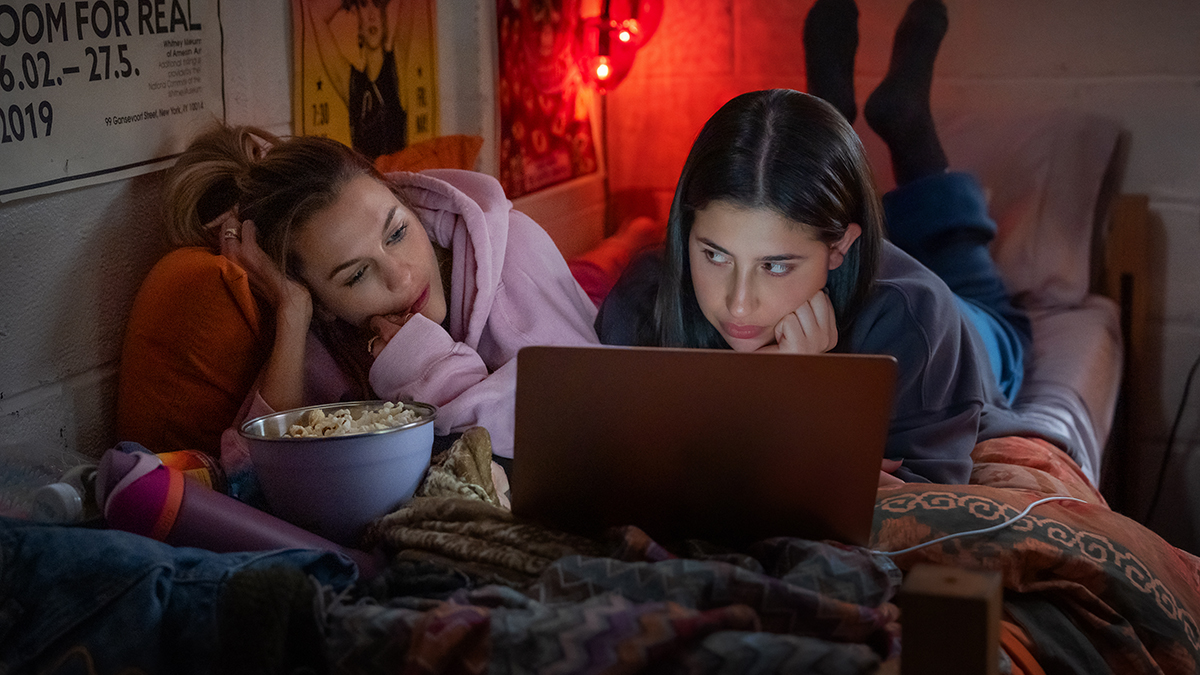
The narrative of "Roommates" centers on Devon, portrayed by Sadie Sandler, an incoming college freshman eager to shed the social anxieties and unfulfilling friendships of her high school years. Devon’s ambition is to forge meaningful new connections, a journey she hopes to begin with her new roommate, Chelsea, played by Chloe East. Chelsea is introduced as a free-spirited, "zero f-cks given" personality, a stark contrast to Devon’s more reserved demeanor.
The initial phase of their cohabitation, following college orientation and the excitement of moving in, sees Devon and Chelsea hitting it off. However, this honeymoon period rapidly devolves into a tense "war of passive aggression." The film explores whether these two disparate personalities can overcome their escalating conflicts to salvage a nascent friendship, or if their relationship is destined for a "death by 1000 cuts," a complete breakdown of their living arrangement and any potential bond. This classic "odd couple" premise is a well-trodden path in comedy, requiring strong character arcs and compelling chemistry to succeed.
A Comedy Ensemble with Uneven Delivery
Beyond the central duo, "Roommates" features a significant ensemble of seasoned comedic actors, a hallmark of many Happy Madison productions. Natasha Lyonne ("Poker Face") and Nick Kroll ("The League," "Big Mouth") take on the roles of Devon’s parents, providing parental counterpoints to the college drama. "Saturday Night Live" cast members Sarah Sherman and Martin Herlihy appear in various on-campus roles, contributing to the film’s supporting comedic framework. Additionally, veteran performers such as Janeane Garofalo, Carol Kane, and frequent Adam Sandler collaborator Steve Buscemi round out the cast in smaller, yet notable, supporting capacities.

Despite this wealth of talent, critical observations suggest that the film struggles to fully capitalize on its ensemble. The review specifically highlights that the "best jokes & characters are written on the edges," indicating that the supporting cast often outperforms the leads in terms of comedic impact. For instance, early scenes featuring a cafeteria worker’s reaction to a valedictorian speech, or the chaotic introduction to another set of roommates played by Ivy Wolk ("English Teacher") and Storm Reid ("Euphoria," "The Last of Us"), are cited as moments of genuine humor. However, these flashes of brilliance are reportedly sparse, with the core dynamic between Devon and Chelsea failing to generate consistent laughter or compelling dramatic tension. Nick Kroll, in particular, is noted for his strenuous efforts to elevate underdeveloped material, a testament to his commitment despite the script’s limitations.
Challenges in Comedic Chemistry and Script Cohesion
A central criticism leveled against "Roommates" is its inability to forge a believable and engaging connection between Devon and Chelsea. The premise hinges on the friction and eventual understanding between two vastly different individuals, but the film reportedly fails to invest meaning in this "core relationship." Instead of a humorous exploration of contrasting personalities, the dynamic devolves into mutual disengagement and destruction, leaving audiences with little to glean from their interactions.
The original review points to a "lack of chemistry in its leads" and a "lack of strong jokes, situational or otherwise" as primary detriments. While comedies can often compensate for thin plots with robust humor and charismatic performances, "Roommates" is described as deficient in both. Chelsea, intended as the abrasive and chaotic foil to Devon, reportedly does not translate into a significant source of humor or charm. The comedic moments that do land, such as a pregnant woman inadvertently taking a shot or Martin Herlihy’s character, George, delivering a deadpan line while dressed as a Funyun bag, are isolated incidents rather than integral parts of a cohesive comedic narrative. This scarcity of effective humor, particularly within the central storyline, renders the film "tonally unappealing for the genre."
Furthermore, the narrative arc is critiqued for its "wildly unearned left turn of an ending with no redeeming value," suggesting a structural issue that undermines any potential character growth or thematic resolution. The film’s struggle to portray the complex "onboarding of the college roommate relationship," especially among young women, is acknowledged as a flawed attempt, ultimately failing to provide the necessary groundwork for a compelling narrative.
Happy Madison’s Evolving Partnership with Netflix
The critical reception of "Roommates" prompts a broader discussion about Happy Madison’s long-standing and lucrative partnership with Netflix. Since signing an initial four-movie deal in 2014, which has since been renewed multiple times, Adam Sandler’s production company has become a cornerstone of Netflix’s original comedy content strategy. This deal has been immensely successful in terms of viewership, with Sandler’s films consistently ranking among Netflix’s most-watched titles globally. For example, "Murder Mystery" (2019) and its sequel "Murder Mystery 2" (2023) garnered massive audiences, demonstrating the enduring appeal of Sandler’s brand.
However, critical reception for many of these productions has been consistently lukewarm, with recurring themes of "stars all around, lacking plot cohesion/remarkable characters, & simply not funny enough to make up for it." "Roommates" appears to fall into this pattern, suggesting that while the Happy Madison formula reliably attracts viewers, it may not consistently deliver critical acclaim or innovative storytelling. This raises questions about Netflix’s long-term strategy: whether sheer volume and brand recognition outweigh the pursuit of consistently high-quality, critically lauded comedic content. The emphasis on familiar faces and established comedic formulas, while appealing to a broad audience, sometimes risks producing films that are perceived as disposable rather than memorable.
The Director and Writing Team Behind the Scenes
Chandler Levack’s involvement as director was initially seen as a promising sign for "Roommates." Her debut feature, "I Like Movies," released in 2022, was a coming-of-age comedy-drama that earned positive reviews for its authentic portrayal of adolescence and cinephilia. Her recognition as a "Director to Watch" underscores her talent for character-driven narratives. However, adapting her style to the broader, often more formulaic demands of a Happy Madison production for Netflix might have presented a significant challenge. The critical assessment of "Roommates" suggests that Levack’s distinctive voice may have been diluted or constrained within the studio’s framework, failing to fully elevate the material.
Similarly, the writing team of Jimmy Fowlie and Ceara Jane O’Sullivan, fresh from their successes on "Saturday Night Live," brought a reputation for sharp, topical humor. Their work on "SNL" is characterized by quick-witted sketches and character-driven bits. The transition from short-form sketch comedy to a feature-length narrative, however, can be complex. Crafting sustained character arcs and a cohesive plot over 100 minutes requires a different skill set, and the critique of "Roommates" suggests that the script struggled in this regard, relying more on isolated jokes than a strong, overarching comedic structure.
Sadie Sandler’s Developing Career
The film’s reception also inevitably touches upon the burgeoning career of Sadie Sandler. As the daughter of Adam Sandler, she belongs to a group often referred to as "nepo babies" – children of established Hollywood talent leveraging their family connections. This term, while often loaded with cynicism, overlooks the individual talent and hard work many such individuals put into their craft. Sadie Sandler has previously been singled out for her performances, particularly in "You Are So Not Invited to My Bat Mitzvah," where she was deemed a "co-MVP," and in "Jay Kelly," where she played a "serviceable smaller part."
The review explicitly defends Sadie Sandler’s performance in "Roommates," asserting that the role does not "serve her best abilities – strong comedic timing & biting wit – and doesn’t set her up well on the page to deliver anything worth remembering." This suggests that any perceived shortcomings in her performance are more attributable to the script and character writing than to her inherent acting capabilities. The reviewer expresses hope that the film’s struggles will not lead to a "referendum on the lead," advocating for more suitable roles that can showcase her comedic strengths as her career progresses. This nuanced perspective separates the actor’s potential from the material she is given, a crucial distinction in an industry often quick to judge young talent. The implicit, and at times explicit, commentary on "Nepo Babies" within the film itself, despite featuring a cast rich with children of established Hollywood talent, adds another layer of meta-critique to the production.
Broader Implications for Streaming Comedies
"Roommates" serves as a case study for the broader challenges facing streaming comedies in the current media landscape. With the proliferation of content, the demand for original films is high, but the pressure to deliver consistently high-quality comedic narratives can be immense. Many streaming comedies are designed for casual viewing, often prioritizing broad appeal and familiar tropes over groundbreaking originality or profound character work. This can lead to films that, while perfectly watchable, struggle to leave a lasting impression or garner significant critical praise.
The film’s reported failure to provide "the basics to get through a breezy 100-minute studio comedy without considering pulling the plug" highlights a common pitfall: the assumption that a star-studded cast and a well-known production house are sufficient to carry a weak script. The importance of strong writing, compelling character arcs, and genuine comedic chemistry remains paramount, regardless of the platform. For Netflix, which continues to invest heavily in original content, "Roommates" underscores the ongoing balancing act between quantity and quality, and the elusive nature of crafting a truly memorable and critically successful streaming comedy.
Conclusion: A Mixed Bag for "Roommates"
In conclusion, "Roommates" emerges as a film characterized by untapped potential and missed opportunities. Despite the involvement of esteemed producers like Adam Sandler and Tim Herlihy, a critically recognized director in Chandler Levack, and talented writers from "Saturday Night Live," the movie reportedly fails to coalesce into a compelling or consistently funny experience. The central dynamic between Devon and Chelsea, intended as the heart of the comedy, is described as lacking chemistry and meaningful engagement, while the script struggles with both humor and narrative coherence.
While fleeting moments of comedic brilliance from supporting players like Martin Herlihy and early scenes involving Ivy Wolk and Storm Reid provide some respite, these are insufficient to elevate the film as a whole. The film’s issues are seen as indicative of broader challenges within the Happy Madison/Netflix partnership, where commercial viability sometimes overshadows critical depth. For Sadie Sandler, the film represents a role that did not fully leverage her talents, but her promising career trajectory remains largely unmarred. Ultimately, "Roommates" stands as another instance where a wealth of comedic talent could not overcome the limitations of a script that struggled to find its comedic purpose or forge a strong, resonant connection at its core.