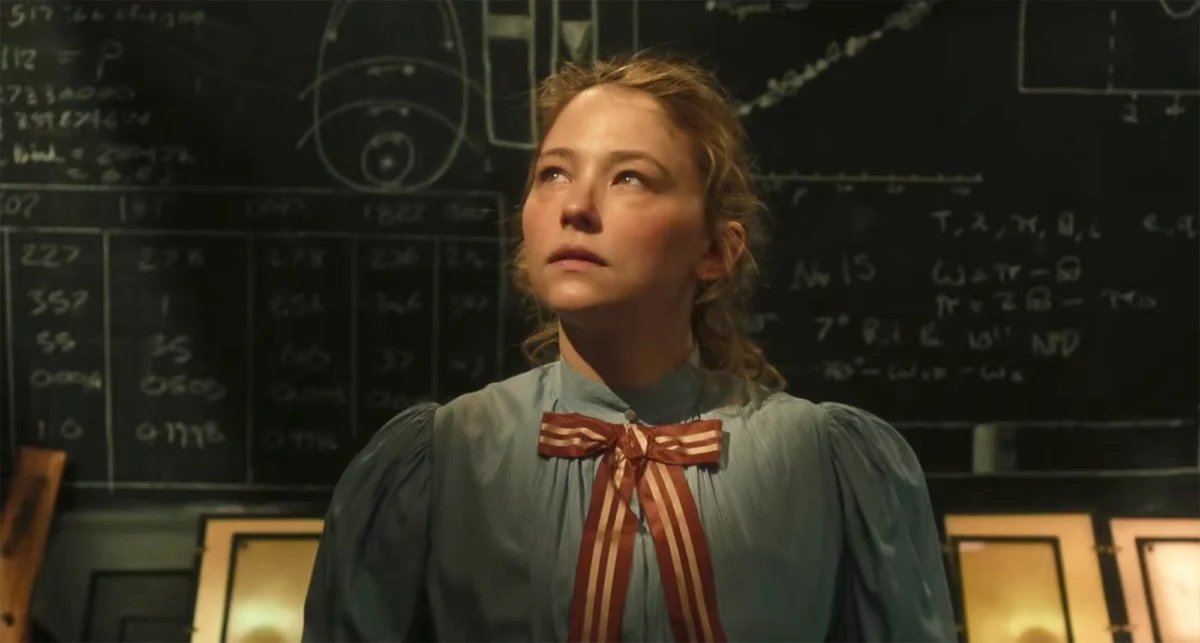
West End Films has officially released the full trailer for Virginia Woolf’s Night & Day, a highly anticipated cinematic adaptation of the renowned author’s 1919 novel. The film is slated for a UK theatrical release beginning June 19, 2026, promising a fresh, "un-romantic comedy" take on Woolf’s early work. The trailer, first debuted via YouTube, offers audiences a glimpse into the Edwardian era, following the fiercely independent astronomer Katharine Hilbery as she navigates societal pressures and personal ambitions in a world resistant to female autonomy.
The Adaptation Unveiled: A Modern Take on a Classic
The newly released trailer provides a vivid preview of director Tina Gharavi’s vision for Virginia Woolf’s Night & Day. It opens with a poignant line, "One day all of this will vanish — with brick and mortar and dogma!", immediately signaling the film’s thematic depth and its challenge to established norms. At its core, the film is described as an "un-romantic comedy," a categorization that hints at a nuanced exploration of love, marriage, and personal freedom, rather than a conventional romantic narrative. This approach is particularly intriguing given Woolf’s own complex relationship with traditional gender roles and societal expectations throughout her life and work.
The story centers on Katharine Hilbery, portrayed by Haley Bennett, an astronomer passionately dedicated to her intellectual pursuits and determined to avoid the confines of romantic love and marriage. Set in Britain at the turn of the 20th century, the narrative directly confronts the patriarchal attitudes prevalent during the Edwardian era, a period characterized by significant social upheaval and the nascent women’s suffrage movement. As the trailer progresses, it hints at shifting romantic loyalties, pushing Katharine to question deeply held beliefs about love, ambition, and her rightful place in the world. The film aims to deliver a "modern update" to Woolf’s story, ensuring its inherent "spunk" and relevance resonate with contemporary audiences while remaining faithful to the original novel’s spirit.
Director’s Vision and Creative Team
The creative helm of Virginia Woolf’s Night & Day is international filmmaker Tina Gharavi, whose previous works include I Am Nasrine (2012) and Tribalism Is Killing Us (2016). Gharavi is known for her distinctive narrative voice and her exploration of complex social themes, making her a compelling choice to interpret Woolf’s intricate prose and feminist undertones. Her experience in crafting character-driven stories with a strong social conscience suggests a nuanced approach to Katharine Hilbery’s journey and the broader societal critique embedded within the novel.
The screenplay, adapted from Woolf’s 1919 novel, was penned by Justine Waddell, who also serves as a producer on the project. The task of translating Woolf’s dense, often stream-of-consciousness prose into a cinematic script is formidable. Waddell’s involvement as both screenwriter and producer indicates a deep commitment to preserving the essence of the original work while making it accessible and engaging for a modern film audience. The production team further includes Christopher Figg, Julie Link, Philipp G. Steffens, and Meg Thomson, bringing together a diverse group of experienced producers to bring this literary adaptation to life. The film is a collaboration between Vue Lumiere and West End Films, underscoring its international appeal and the significant investment in its production and distribution.

The Literary Foundation: Virginia Woolf’s "Night and Day"
To fully appreciate the cinematic adaptation, it is crucial to understand its literary origins. Night and Day, published in 1919, is Virginia Woolf’s second novel. While it is often overshadowed by her later, more experimental works like Mrs Dalloway, To the Lighthouse, and A Room of One’s Own, Night and Day holds significant importance in her bibliography. It represents a transitional phase in Woolf’s writing, moving from a more traditional narrative style towards the innovative modernism that would define her later career.
The novel delves into the lives of four main characters in Edwardian London: Katharine Hilbery, a highly intelligent woman torn between intellectual pursuits and societal expectations; Ralph Denham, a working-class lawyer and aspiring writer; Mary Datchet, a suffrage activist; and William Rodney, a poet engaged to Katharine. Woolf uses these characters to explore a myriad of themes central to her broader body of work: the conflict between public and private selves, the nature of love and friendship, the constraints of social conventions, and particularly, the evolving role of women in society.
Katharine Hilbery, with her passion for mathematics and astronomy, embodies the "New Woman" archetype of the early 20th century – a woman seeking intellectual fulfillment and independence beyond the traditional roles of wife and mother. Woolf meticulously contrasts the "day" world of social expectations, manners, and superficial interactions with the "night" world of internal thoughts, genuine emotions, and intellectual solitude. The novel’s exploration of these dichotomies provides a rich psychological landscape for a cinematic adaptation. Its focus on a woman resisting marriage for intellectual freedom was, and remains, a powerful statement on personal agency. The novel’s subtle humor and keen observations of human behavior align perfectly with the "un-romantic comedy" label the film has adopted, suggesting a faithful capture of Woolf’s wit amidst her serious social commentary.
The Edwardian Canvas: Setting the Scene
The film’s setting in Britain at the turn of the 20th century, specifically the Edwardian era (roughly 1901-1910), is critical to its narrative and thematic resonance. This period was a fascinating interlude between the rigid Victorian age and the cataclysmic events of World War I. While outwardly characterized by opulence, social stratification, and a seeming stability, it was also a time of profound underlying change and simmering discontent.
The patriarchal attitudes that Katharine Hilbery confronts were deeply entrenched. Women, particularly those of the upper and middle classes, were primarily expected to marry, manage households, and raise children. Educational opportunities for women were expanding, but professional careers, especially in fields like science, remained largely inaccessible or viewed as unfeminine. The women’s suffrage movement was gaining momentum, with figures like Mary Datchet in the novel symbolizing the growing demand for political and social equality.
Science, particularly astronomy, was an emerging field of fascination. While men dominated professional astronomy, women played crucial, often uncredited, roles as "computers" – meticulously analyzing astronomical data. Katharine Hilbery’s aspiration to be an astronomer challenges these norms directly, placing her at the forefront of a societal shift. The film’s depiction of these historical realities provides a vital backdrop, emphasizing the radical nature of Katharine’s choices and the courage required to defy prevailing dogma. The visual aesthetic of the trailer, with its period costumes and stately homes, immerses viewers in this historical context, highlighting the contrast between external grandeur and internal struggle.

Star Power: The Ensemble Cast
The cast assembled for Virginia Woolf’s Night & Day brings together a compelling mix of established talent and rising stars, promising a dynamic ensemble performance.
Haley Bennett takes on the pivotal role of Katharine Hilbery. Bennett has built a strong filmography with diverse roles in films such as The Girl on the Train, The Magnificent Seven, and Swallow, where she showcased her ability to portray complex, internal struggles and resilient female characters. Her casting as an independent astronomer who prioritizes intellect over romance is particularly fitting, given her track record of strong, nuanced performances. Her portrayal will be key to capturing Katharine’s blend of intellectual brilliance, social awkwardness, and quiet rebellion.
Joining Bennett are:
- Elyas M’Barek: A prominent German-Austrian actor known for his roles in comedies and dramas, his presence suggests a significant male role, possibly one of Katharine’s romantic interests or intellectual foils.
- Jennifer Saunders: A beloved British comedian, actress, and writer, famous for her work in Absolutely Fabulous. Her involvement often signals a role with sharp wit or a comedic edge, potentially playing an older, perhaps more conventional, female figure who offers a contrast to Katharine.
- Lily Allen: The acclaimed singer-songwriter and actress, known for her distinctive personality and growing presence in film and television. Her role could add a contemporary sensibility or another layer of complexity to the ensemble.
- Jack Whitehall: The popular British comedian and actor, cast as William. Whitehall often brings a blend of charm and comedic timing to his roles. Given William’s character in the novel as a poet initially engaged to Katharine, Whitehall’s casting might lend a lighter, more self-deprecating air to a character who is ultimately not Katharine’s intellectual match.
- Timothy Spall: A veteran British actor renowned for his versatile character work in films like Mr. Turner (for which he won Best Actor at Cannes) and the Harry Potter series. Spall is cast as Katharine’s father. His presence guarantees a performance of considerable depth, likely portraying a patriarchal figure who, despite his love for his daughter, embodies the traditional expectations she seeks to escape.
This diverse cast promises a rich interplay of personalities and acting styles, crucial for bringing Woolf’s multi-faceted characters to life.
Translating Woolf to Screen: Challenges and Opportunities
Adapting Virginia Woolf’s novels for the screen is inherently challenging. Her distinctive literary style, characterized by stream-of-consciousness narration, profound psychological insight, and often subtle plot developments, does not always translate directly into a visual medium. The internal monologue, a hallmark of Woolf’s writing, must be externalized through visual storytelling, dialogue, and performance without losing its depth.
The "un-romantic comedy" framing offers a unique opportunity to address these challenges. By embracing the comedic elements inherent in social satire and the absurdity of rigid conventions, the film can create engaging dialogue and situations that reveal character and theme. The visual medium also allows for a powerful depiction of the Edwardian setting, from the grandeur of London drawing-rooms to the quiet solitude of Katharine’s astronomical studies, providing a sensory experience that complements Woolf’s descriptive prose.

Furthermore, the film’s "modern update" approach suggests that while respecting the historical context, Gharavi and Waddell may infuse the narrative with a contemporary sensibility that resonates with current discussions about gender equality, career versus family, and individual autonomy. This approach can make the film relevant to a new generation of viewers who might not be familiar with Woolf’s original text, thereby broadening her legacy.
Critical Anticipation and Broader Impact
While critical reviews will only emerge closer to the release date, anticipation for Virginia Woolf’s Night & Day is considerable. Literary adaptations, especially of classic texts, always generate significant interest, particularly when they involve a director with a distinct vision and a high-caliber cast. The film’s focus on themes of female independence, intellectual pursuit, and challenging societal norms ensures its relevance in today’s cultural landscape.
The film has the potential to reignite interest in Night and Day, a novel often overlooked in favor of Woolf’s later masterpieces. By bringing Katharine Hilbery’s story to a wider audience, the adaptation can shed new light on Woolf’s early explorations of feminist ideas and her foundational contributions to modernist literature. Moreover, the portrayal of a female astronomer in the early 20th century could inspire conversations about the historical struggles of women in STEM fields and celebrate the pioneers who defied expectations.
The UK release on June 19, 2026, positions the film as a significant summer offering, potentially appealing to audiences seeking intelligent, character-driven dramas with a historical backdrop. While specific international release dates have not yet been announced, the involvement of international producers and a cast with global recognition suggests a wider distribution strategy will likely follow the UK debut. The film stands as a testament to the enduring power of Virginia Woolf’s work and its continued capacity to provoke thought and inspire new artistic interpretations.
In conclusion, Virginia Woolf’s Night & Day appears to be a thoughtful and spirited adaptation that seeks to honor its literary source while infusing it with contemporary energy. The combination of Tina Gharavi’s directorial vision, Justine Waddell’s nuanced screenplay, and a stellar ensemble cast led by Haley Bennett, all set against the rich tapestry of the Edwardian era, positions this film as a must-watch for fans of literary cinema and those interested in timeless stories of independence and self-discovery.