

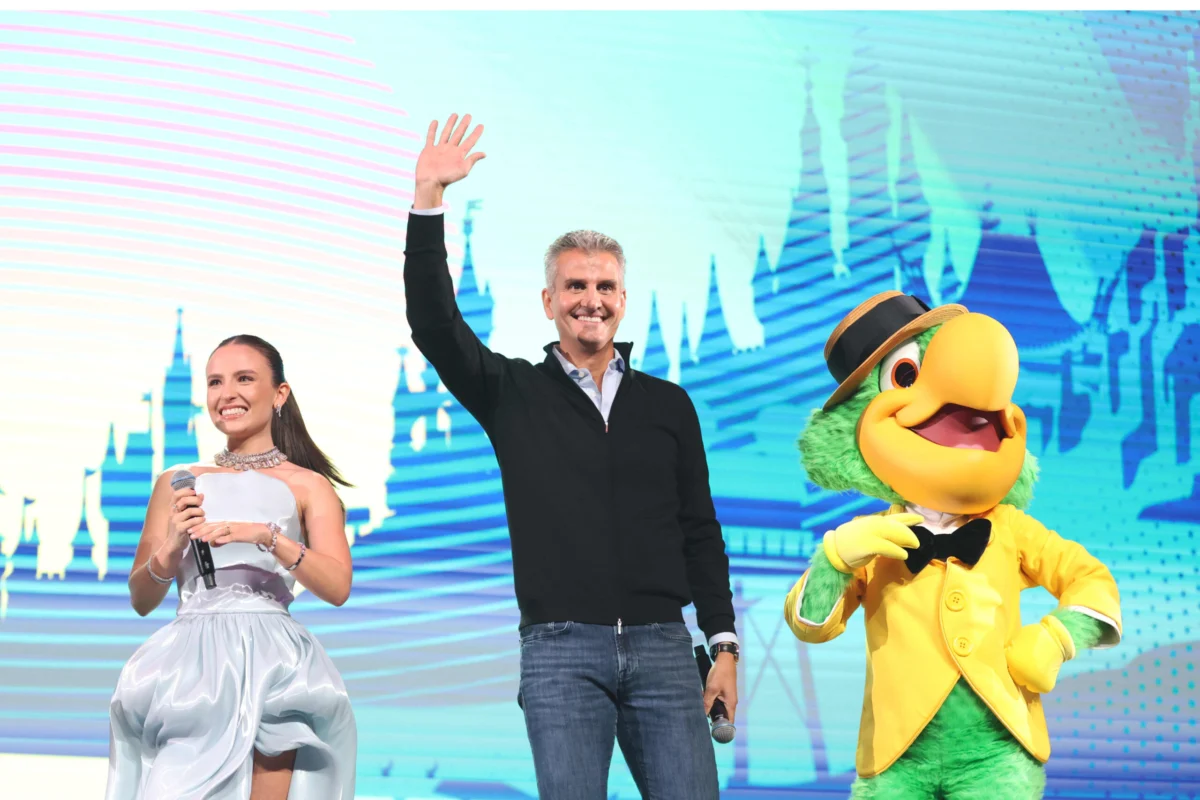
The Walt Disney Company officially entered a new era on Wednesday as Josh D’Amaro assumed the role of Chief Executive Officer, succeeding Bob Iger in a transition that concludes one of the most closely watched succession sagas in modern corporate history. D’Amaro, who previously served as the Chairman of Disney Experiences, took the helm during the company’s annual shareholder meeting, signaling a shift in focus toward technological integration, global park expansion, and a unified creative strategy. The leadership change comes at a pivotal moment for the century-old entertainment titan, as it seeks to balance the preservation of its storied legacy with the aggressive demands of a rapidly evolving digital and experiential landscape.
D’Amaro’s appointment follows a rigorous selection process and a period of strategic restructuring led by Iger, who returned to the company in late 2022 to stabilize operations following the turbulent tenure of Bob Chapek. In his first official communication to the global workforce, D’Amaro expressed both humility and a sense of urgency, acknowledging the complexities of the current media environment while emphasizing the unique market position Disney occupies. As the company moves forward, the new CEO faces the immediate challenge of satisfying Wall Street investors, who have seen Disney’s stock decline by more than 10% year-to-date despite strong performance in core business segments.
A Career Defined by the Disney Experience
Josh D’Amaro, 55, is a veteran of the company, having joined Disney in 1998. His trajectory through the corporate ranks has been defined by a deep immersion in the "Experiences" side of the business, which encompasses theme parks, resorts, cruise lines, and consumer products. Under his leadership as Chairman of Disney Experiences, the division emerged as a primary engine of growth and a reliable source of revenue, even as the broader media industry grappled with the decline of linear television and the high costs of building streaming infrastructure.
D’Amaro’s tenure in the parks division was marked by significant capital investments and a focus on "storyliving"—the concept of allowing guests to inhabit the worlds of Disney’s intellectual property. This background is expected to inform his approach to the CEO role, as he has frequently advocated for the seamless integration of digital storytelling with physical experiences. His popularity among "cast members" (Disney’s term for employees) and his reputation for being a visible, hands-on leader were cited by the board as key factors in his selection. Iger himself endorsed D’Amaro as an "exceptional leader" who possesses the necessary vision to navigate the company through its next phase of innovation.
The Iger Legacy and the Final Handoff
The departure of Bob Iger marks the end of an era that spanned two decades and transformed Disney into a global powerhouse through the acquisitions of Pixar, Marvel, Lucasfilm, and 21st Century Fox. Iger’s second stint as CEO was characterized by a "turnaround" mandate, which involved significant cost-cutting measures, a reorganization of the company’s creative units, and a drive toward streaming profitability. During the shareholder meeting, Iger reflected on the weight of the role, noting that he never expected to lead the company twice but felt a profound responsibility to set the stage for long-term stability.
While D’Amaro takes over the day-to-day operations immediately, Iger will remain with the company as a senior advisor and board member until his official retirement on December 31. This extended transition period is intended to provide continuity and ensure that D’Amaro has the benefit of Iger’s institutional knowledge as he settles into the role. The transition is also viewed as a corrective measure to the 2020 handoff to Bob Chapek, which was marred by internal friction and a perceived disconnect between leadership and the company’s creative culture.
Financial Performance and Market Realities
D’Amaro inherits a company that is operating from a position of operational strength but facing significant market pressure. Disney’s most recent quarterly earnings highlighted the dual pillars of its current success: theme parks and streaming. The company’s streaming business, led by Disney+ and Hulu, has achieved consecutive quarters of profitability, a milestone that was once viewed with skepticism by industry analysts. This success has been bolstered by the integration of Hulu into the Disney+ ecosystem, a move D’Amaro described as the "digital centerpiece" of the company.
However, the 10% year-to-date decline in stock price suggests that investors remain concerned about the broader disruption of the media industry. Consolidation among competitors and the shifting habits of consumers have created a volatile environment. D’Amaro’s immediate task will be to prove that Disney’s "category of one" status can translate into sustained shareholder value. To do this, the company has embarked on a massive investment cycle, including a $60 billion commitment to its parks and experiences over the next decade. Key projects include the expansion of the Disneyland Resort in California, new cruise ships, and the development of a theme park and resort in Abu Dhabi, United Arab Emirates—a strategic move to capture the growing tourism market in the Middle East.

The 2025 Box Office Resurgence
A significant tailwind for D’Amaro’s first year is the company’s renewed dominance at the box office. After a period of underperformance in 2023 and early 2024, Disney returned to the top of the charts in 2025 with a slate of hits that resonated with global audiences. The live-action reimagining of Lilo & Stitch, the sequel to Zootopia, and the latest installment of the Avatar franchise provided a much-needed boost to the studio’s reputation and bottom line.
These successes underscore D’Amaro’s stated priority of "creative excellence as the North Star." By leveraging established intellectual property while embracing high-quality storytelling, the company aims to maintain its theatrical relevance in an age where streaming often takes precedence. D’Amaro has signaled that the creative units will have the autonomy they need to take "smart risks," while also being held to high standards of performance and craftsmanship.
Strategic Priorities: Storytelling, Technology, and Unity
In his inaugural memo to employees, D’Amaro outlined three core pillars that will define his leadership. The first is a commitment to storytelling, which he describes as the foundation of every decision the company makes. This includes not only film and television but also the way stories are told through ESPN’s sports coverage, music, and interactive experiences.
The second pillar is the aggressive embrace of technology. D’Amaro views innovation not as a threat to tradition, but as a tool to unlock new possibilities. This includes the use of advanced data analytics to personalize the guest experience in parks and the application of cutting-edge visual effects to enhance storytelling. He emphasized that technology should be used "thoughtfully" to empower creators rather than replace them.
The third pillar is the "One Disney" philosophy. D’Amaro aims to break down the silos between the company’s various divisions—films, streaming, parks, and consumer products—to create a more cohesive ecosystem. The goal is to ensure that when a consumer engages with a Disney story in one medium, they are seamlessly guided toward other touchpoints within the brand. This integrated approach is seen as Disney’s greatest competitive advantage against tech giants and traditional media rivals alike.
Global Expansion and the International Landscape
Under D’Amaro’s leadership, Disney is expected to accelerate its international growth strategy. The company has already seen success with its international originals on Disney+, releasing seven major projects outside the U.S. in the past year alone. By tailoring content to local markets and expanding its physical presence in regions like the Middle East and Asia, Disney aims to diversify its revenue streams and mitigate the impact of domestic market saturation.
The Abu Dhabi expansion is particularly noteworthy, as it represents a partnership that could serve as a blueprint for future international ventures. As the global middle class expands, the demand for high-end, branded entertainment experiences is expected to rise, and D’Amaro’s background in the parks division makes him uniquely qualified to oversee this expansion.
Industry Implications and Future Outlook
The transition at Disney is being watched closely by the entire entertainment industry. As peers like Warner Bros. Discovery, Paramount Global, and NBCUniversal navigate their own mergers and strategic pivots, Disney’s ability to execute a smooth leadership transition will be a litmus test for the sector’s stability. D’Amaro’s focus on "ambition, optimism, and absolute confidence" serves as a counter-narrative to the prevailing sense of uncertainty in the media business.
As Josh D’Amaro begins his tenure, the "Peter Pan’s Flight" anecdote he shared with employees—recalling the joy and family connection he felt during his first visit to Disneyland—serves as a reminder of the emotional weight the Disney brand carries. His challenge will be to maintain that sense of magic while managing the cold realities of a multibillion-dollar global corporation. With Bob Iger’s mentorship and a robust portfolio of assets, D’Amaro is positioned to lead Disney into a second century that is as influential as its first. The success of this new chapter will ultimately be measured by the company’s ability to innovate without losing the "joy" that has defined it for generations.