


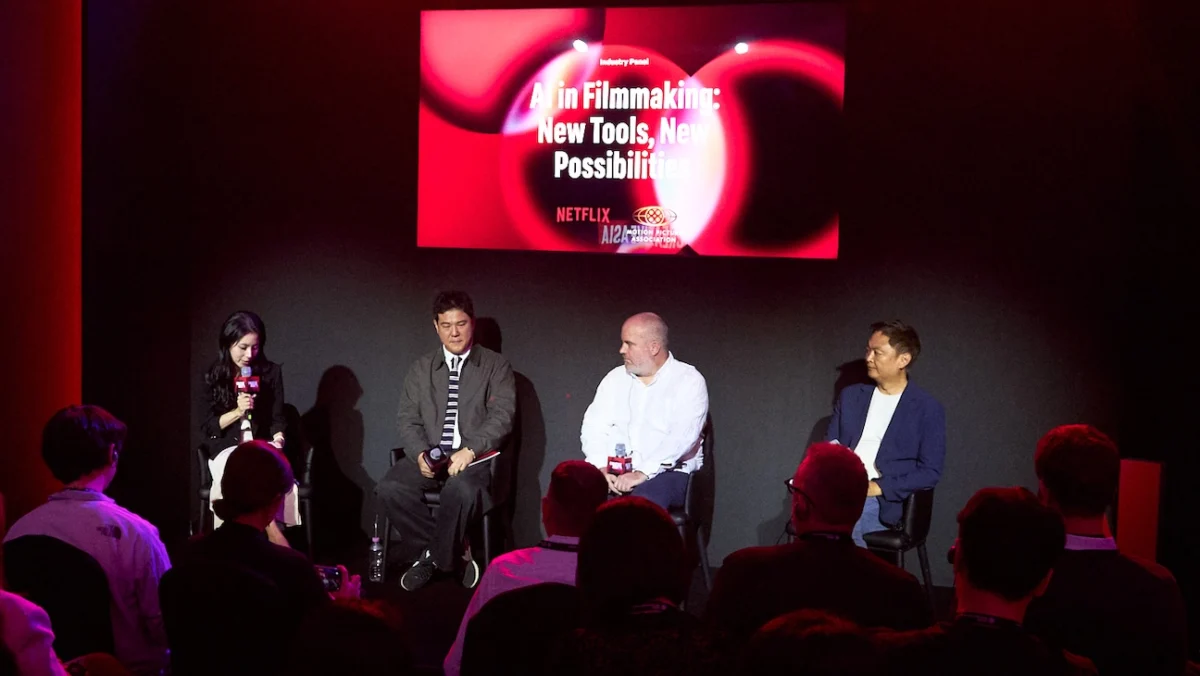
The global entertainment industry finds itself at a critical crossroads regarding the integration of generative artificial intelligence, a reality underscored during a high-level industry discussion at the Busan International Film Festival (BIFF) this past Saturday. During a panel co-hosted by Netflix and the Motion Picture Association (MPA), senior executives confirmed that the streaming giant has already incorporated AI-driven tools into the production workflows of approximately 300 individual titles. This disclosure provides a rare, quantified glimpse into how major studios are operationalizing emerging technologies to reshape the economics and aesthetics of modern filmmaking.
A New Paradigm in Production Workflows
Sung Q Lee, Netflix’s senior director of production for the Asia-Pacific region, delineated the specific segments of the creative pipeline currently being augmented by machine learning and generative models. According to Lee, the technology is no longer relegated to experimental labs but has become a staple in previsualization, production design, set-dressing conceptualization, non-linear editing, and the labor-intensive field of visual effects (VFX).
The shift represents a move toward what the industry calls "assistive AI," where the focus is not on replacing human creators but on expanding their functional capacity. "The question that matters to me isn’t ‘How much AI can we put into this title?’ but ‘What more can this title do with AI’s help?’" Lee noted during the Creative Asia event. His remarks suggest a strategic philosophy where AI serves as a force multiplier for creative teams, allowing them to overcome traditional logistical or budgetary barriers that have historically limited the scope of regional content.
Chronology of AI Adoption in Asian Cinema
The discourse at BIFF highlighted a distinct cultural divergence in how the technology is perceived. While Hollywood guilds and creative unions have spent much of the last two years locked in tense negotiations regarding intellectual property protections and the displacement of human labor, the Asian creative sector—particularly in South Korea—has shown a greater appetite for rapid experimentation.
A notable milestone in this timeline was the 2023 release of Run to the West, co-directed by Kang Yun-sung and AI filmmaker Kwon Han-seul. Marketed as Korea’s first fully AI-assisted feature, the project served as a "proof of concept" that met with mixed results. While the film struggled at the box office, grossing approximately $100,000, it provided a foundational learning experience for the industry. Kang noted that the rapid evolution of generative models meant the film’s visual quality appeared dated by the time it reached audiences—a testament to the blistering pace of technological advancement in the sector.
Despite the commercial underperformance, Kang remains a vocal proponent of the technology. He is currently overseeing the production of The Gulf of Aden, an action film that utilizes generative tools from China’s Kling AI. By integrating these tools, Kang estimates a production cost reduction of roughly 40 percent. This is achieved not merely through the automation of VFX, but by streamlining the entire shoot and eliminating the "buried" creative concepts that were previously discarded due to financial constraints.
Economic and Operational Implications
The financial potential of AI in film production is a primary driver of this shift. For many independent filmmakers and mid-tier studios, the barrier to entry for high-concept, visual-heavy storytelling has historically been prohibitive. If, as Kang suggests, AI can reduce production budgets by nearly half, it could lead to a democratization of high-end production values.
Kimball Thurston, chief technology officer at Wētā FX, reinforced the concept of "assistive AI" during the panel. He described the current state of technology as a tool for reducing "simple, repetitive tasks." For Wētā FX, the goal is to leverage AI to provide directors and cinematographers with immediate visualization. By identifying errors in the pre-production or layout phase, the technology allows for course corrections long before the final rendering process begins, saving significant time and resources.
However, the economic implications are double-edged. While proponents argue that AI saves projects from being canceled, industry analysts warn that the widespread adoption of such tools necessitates a reevaluation of labor structures. If a film can be produced with 40 percent fewer resources, the industry must determine how that value is redistributed and how entry-level positions—which often serve as the training ground for future directors and editors—are impacted.
The "Why" vs. The "How"
Despite the efficiency gains, a recurring theme among the panelists was the necessity of human "creative judgment." Netflix’s Sung Q Lee emphasized a clear distinction between the "how" and the "why" of filmmaking. Technological revolutions—from the advent of sound to the transition from film to digital—have always focused on the "how," or how to execute a vision more effectively. The "why," however, remains an exclusively human endeavor.
"When it comes to conveying emotion, ultimately, a human has to touch it," Lee stated. "AI can get many jobs done, but does it touch human emotion? The human touch is critical and necessary." This sentiment reflects a broader industry consensus that while AI can synthesize data and generate visuals, it lacks the lived experience and cultural context required to imbue a story with genuine resonance.
Comparative Industry Perspectives
The contrast between the skepticism prevalent in Hollywood and the optimism in the Asian market is rooted in structural differences. In Hollywood, the debate is heavily influenced by union contracts, concerns over the training of large language models on copyrighted work, and the protection of "human-authored" content. Conversely, the Asian market’s enthusiasm is often linked to the intense competition for audience attention in a saturated digital landscape.
For studios like Netflix, which operate on a global scale, navigating these disparate regional attitudes is a significant management challenge. The company is currently balancing its aggressive use of AI in technical and post-production workflows with the need to satisfy stringent regulatory and labor environments in the United States and Europe.
Broader Impact and Future Outlook
The integration of AI into 300 Netflix titles suggests that the technology has already reached a level of maturity where it is considered a reliable component of studio infrastructure. As the technology continues to evolve, several key trends are likely to emerge:
- Iterative Production Cycles: As seen in The Gulf of Aden, the traditional "pre-production, production, post-production" silos may collapse. AI allows for a more iterative, continuous process where designs can be tested and modified in real-time.
- Budget Normalization: If 40 percent cost reductions become industry standard, the threshold for what constitutes a "viable" project will shift, potentially leading to an influx of mid-budget films that were previously deemed too risky.
- The Premium on Human Authorship: As AI-generated content becomes more ubiquitous, the premium on films that explicitly emphasize a unique, human-centric creative voice may increase. The industry may see a bifurcation between "AI-assisted mass-market content" and "human-authored prestige works."
The panel at the Busan International Film Festival made one thing clear: the genie is out of the bottle. The question facing the film industry is no longer whether to use AI, but how to integrate it in a way that respects the history of the medium while embracing the efficiency of the future. As Netflix and other major players continue to scale their use of these tools, the industry will be watching closely to see if the "human touch" can indeed be preserved in an era of algorithmic assistance. The balance between technological speed and emotional depth will likely define the next decade of cinema, determining whether AI serves as a bridge to new creative frontiers or a ceiling on artistic originality.