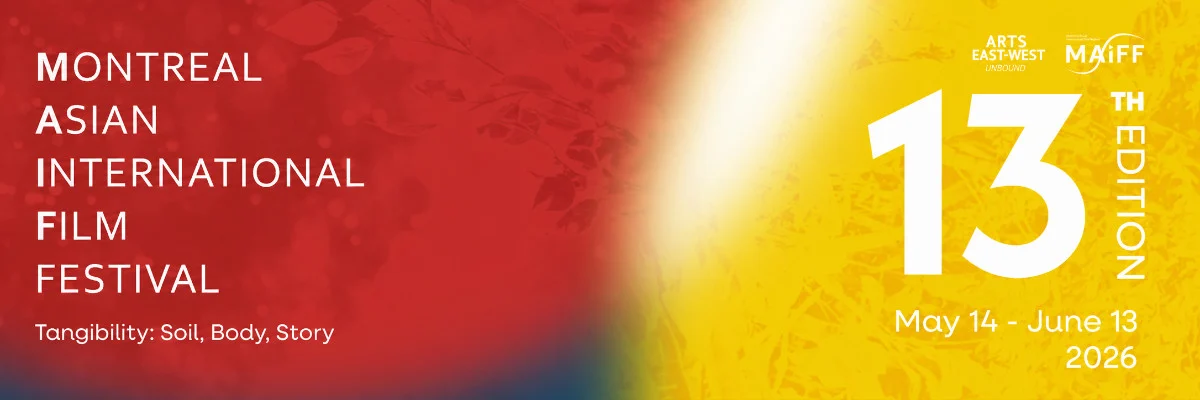
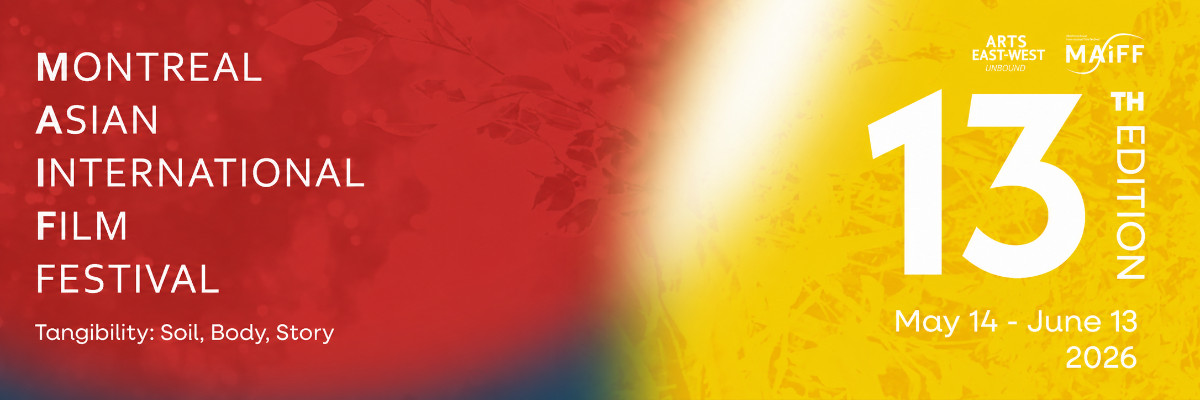
Arts East-West marks a significant milestone this year, celebrating three decades of fostering cultural exchange and artistic appreciation by presenting the 13th edition of the Montreal Asian International Film Festival (MAiFF). Running until June 13, 2026, across nine distinct venues in Tiohtià:ke/Montréal, this year’s festival is not just an anniversary celebration but also a bold declaration of evolution, officially inaugurating the transformation of the Korean Film Festival Canada (KFFC) into the broader MAiFF platform. Launched during Asian Heritage Month, this expansive edition promises a rich tapestry of over 60 arthouse films and engaging events, all curated under the evocative 2026-2027 theme: Tangibility: Soil, Body, Stories.
The festival’s programming is thoughtfully divided into three distinct categories, each representing a facet of Arts East-West’s enduring commitment to showcasing Asian and Asian-Canadian arts over its 30-year history. These categories are KFFC, AmérAsia, and East Meets West. This tripartite structure allows for a comprehensive exploration of cinematic narratives from a diverse array of countries, including Canada, China, Germany, Hong Kong, Iran, Japan, Korea, Vietnam, Australia, the United States, and importantly, films from First Nations communities. The chosen venues are as varied as the films themselves, encompassing institutions like Ciné-Musée, Ciné-Musée Moderne, Ciné-Musée du Parc, the Goethe-Institut Montreal, Ada X, Groupe Intervention Vidéo, Place Ville Marie, the Korean Community Association of Montreal, and Providence St-Dominique, underscoring the festival’s widespread integration within the city’s cultural landscape.
A Legacy of Cultural Diplomacy and Cinematic Exploration
Arts East-West’s journey began in 1996, a period when the landscape of international film festivals in Canada was still developing, particularly for non-Western cinematic traditions. The organization recognized an opportunity to bridge cultural divides and introduce Montreal audiences to the depth and diversity of Asian filmmaking. The Korean Film Festival Canada (KFFC), established as one of its flagship initiatives, gained a dedicated following for its meticulous curation of Korean cinema, highlighting both established masters and emerging talents. The evolution into the Montreal Asian International Film Festival (MAiFF) signifies a strategic expansion, aiming to encompass a wider spectrum of Asian cinematic voices and themes, reflecting the growing interconnectedness of global film and the increasing demand for diverse storytelling. This rebranding is more than just a name change; it represents a commitment to a more inclusive and comprehensive vision of Asian cinema in one of Canada’s most multicultural cities.
The theme "Tangibility: Soil, Body, Stories" for the 2026-2027 season is particularly resonant. It suggests a focus on films that explore the elemental aspects of human experience, the connection to the land, the physicality of life, and the narratives that shape our identities. This theme allows for a rich exploration of how filmmakers grapple with issues of heritage, displacement, identity, and the human condition through tangible elements.
Key Highlights and Programming Details
This year’s MAiFF is rich with opportunities for both in-person and online engagement. A significant offering is the "Ahn Sung-Ki Retrospective," available for free online from May 25 to June 13. In collaboration with the Korean Film Archive (KOFA), this retrospective provides an invaluable opportunity for audiences worldwide to explore the extensive filmography of the esteemed Korean actor Ahn Sung-Ki, a figure who has profoundly shaped Korean cinema over several decades. His career, spanning numerous iconic roles, offers a window into the evolution of Korean filmmaking and societal shifts.
The in-person programming kicks off with a compelling "Double Bill: Canadian/Quebec Premieres" on May 26 at the Goethe-Institut Montreal. This session features David Quach’s "Dad vs Bees" (2026) and Yan Kuao’s "Jet Lag in Summer" (2025), offering early glimpses into contemporary Canadian and Quebecois cinematic productions with Asian connections. These premieres are crucial for fostering local talent and providing a platform for their work to reach a wider audience, contributing to the growing discourse around diversity in Canadian cinema.
A particularly insightful program is "New Wave Asian Cinema," scheduled for May 30 at Ciné-Musée du Parc and June 8 at Ciné-Musée Moderne. This curatorial selection delves into the sociopolitical upheavals of the late 1980s and 1990s across Asia, examining how these transformative periods were captured and interpreted on screen. Featuring seminal works such as Wong Kar-wai’s "Days of Being Wild" (1990) and Iwai Shunji’s "Love Letter" (1995), this program offers a critical retrospective on a pivotal era in Asian filmmaking, showcasing directors who redefined cinematic language and explored complex human emotions against a backdrop of rapid societal change. The inclusion of these films, which have achieved global cult status, highlights MAiFF’s commitment to presenting cinema of artistic and historical significance.
Fostering Dialogue and Recognizing Emerging Talent
Beyond film screenings, MAiFF emphasizes the importance of dialogue and critical engagement. A key event is the panel discussion titled "Interconnecting Dialogues: Navigating Montreal’s Cross-Cultural Landscape," scheduled for June 12 at the Goethe-Institut Montreal. Moderated by Guy Rodgers, this panel aims to foster a crucial conversation about bridging generational and sectoral divides within the arts community, as well as strengthening connections between diverse cultural communities in Montreal. Such discussions are vital for building a more inclusive and collaborative artistic ecosystem, ensuring that emerging voices are heard and that established institutions remain responsive to the evolving needs of the community.
The festival culminates with the Canadian premiere of Choi Jeongdan’s "In the Sea of Strange Thoughts" (2025) as its closing film on June 13 at Ciné-Musée Moderne. The director will be in attendance, offering audiences a unique opportunity for direct engagement. This film, which had its world premiere at the Busan International Film Festival in 2025 and recently garnered two awards at the Moscow International Film Festival in April 2026, represents a significant achievement for its director. As Choi Jeongdan’s debut feature, it is also a strong contender in MAiFF’s Dancheong Competition, underscoring the festival’s role in championing new cinematic talent.
The Dancheong Competition: Honouring Narrative Innovation
The "Dancheong Competition" is a central pillar of MAiFF, named after the ancient Korean art of painting wooden temples and palaces with intricate, vibrant colors. This metaphor beautifully encapsulates the competition’s aim: to celebrate emerging filmmakers who are "painting bold new narratives in cinema." This year marks the fourth consecutive year of the Dancheong Competition, and it holds particular significance as it is now the official name of MAiFF’s competitive section, a testament to its established reputation.
The competition proudly presents the Grand Prize of Dancheong and seven Silk Thread awards, recognizing exceptional emerging directors in both short and feature film categories. A total of eight awards will be bestowed, highlighting the breadth of talent MAiFF seeks to acknowledge. A unique aspect of this competition is that all eight selected films are already award recipients from other esteemed festivals, meaning the jury’s task is not to discover talent, but to decide which specific award each deserving film will receive. The eight films selected for the Dancheong Competition were announced at the Opening Ceremony on May 14th, and the winners will be revealed at the Closing Ceremony on June 13th, creating anticipation for the recognition of groundbreaking new voices in cinema.
Broader Implications and Community Engagement
The expansion of the Korean Film Festival Canada into the Montreal Asian International Film Festival is a strategic move that reflects current trends in global cinema and audience demand. As Asian cinema continues to gain international acclaim and influence, MAiFF is positioning itself as a vital hub for its dissemination and discussion in North America. The festival’s multi-venue approach across Tiohtià:ke/Montréal not only makes it accessible but also weaves it into the fabric of the city’s diverse neighborhoods.
The inclusion of First Nations filmmakers and stories is a particularly commendable aspect of this year’s edition. It signifies a deeper commitment to reconciliation and the recognition of Indigenous narratives within the broader context of Canadian arts and culture. By presenting films from First Nations communities alongside those from Asian diasporas, MAiFF fosters a more nuanced understanding of multiculturalism and the interconnectedness of global Indigenous experiences.
The sentiment expressed by Frédéric Loury, Director & Founder of Art Souterrain, resonates deeply with the festival’s mission: "In Montreal, a city defined by its diversity and vibrancy, initiatives like MAiFF remind us of the importance of connecting cultures, sharing stories, and embracing multiple viewpoints. Contemporary Asian cinema, with its visual power and sensitivity, allows us to explore the complexity of our society while fostering curiosity and openness to the world." This statement underscores the festival’s role not just as a cinematic event, but as a catalyst for intercultural understanding and a broader appreciation of global perspectives.
The extensive list of participating filmmakers, writers, moderators, and panel guests, though not fully detailed in the initial release, signifies a robust engagement with the artistic community. These individuals, representing a wide range of backgrounds and expertise, contribute significantly to the intellectual and artistic richness of the festival, fostering a dynamic environment for learning, debate, and networking. The success of MAiFF in its 13th edition, building on 30 years of Arts East-West’s dedication, promises to further solidify Montreal’s reputation as a leading city for international film and cultural exchange. The festival’s commitment to showcasing a diverse range of Asian cinematic voices, from established retrospectives to emerging talent in competition, ensures its continued relevance and impact in the years to come.