Valeska Grisebach’s latest cinematic offering, "The Dreamed Adventure," presents a narrative set against the evocative backdrop of the Bulgarian border region, a nexus of cultural and geopolitical complexity where Bulgaria, Greece, and Turkey converge. The film centers on Veska (Yana Radeva), a woman whose life is intricately woven into this liminal space. When a friend, Said (Syuleyman Alilov Letifo), finds himself entangled in a precarious situation, Veska agrees to undertake a clandestine operation on his behalf. This decision, born out of loyalty and a veiled confrontation with her own desires, propels her into a perilous undertaking that tests her resolve and forces her to navigate a landscape fraught with both personal and external dangers. The film, with a running time of 162 minutes, is an extended exploration of this journey, featuring performances from Yana Radeva, Syuleyman Alilov Letifo, and Velko Frandev, all under the directorial and writing helm of Valeska Grisebach.
While the title might suggest a fantastical or whimsical escapade, the film’s execution leans towards a deliberate, almost meditative pacing. Grisebach eschews conventional narrative propulsion in favor of a more observational approach, inviting the audience to immerse themselves in the milieu and the psychological undercurrents of its characters. The film’s deliberate tempo has been a point of discussion, with some critics characterizing it as "languid" and others as "deliberate," a testament to its unconventional storytelling methods. The narrative unfolds with a measured pace, prioritizing atmosphere and character introspection over rapid plot development, a choice that defines its unique cinematic identity.
The story commences with the arrival of Said in the Bulgarian town of Svilengrad, a place he has not visited in many years. His return is motivated by a clandestine transaction involving diesel fuel, procured from a local figure known by the moniker "The Raven." This initial setup immediately grounds the film in the realities of the border region, hinting at the illicit economies and informal networks that often thrive in such transitional zones. Svilengrad, a town situated near the historic Kapitan Andreevo border crossing, has historically been a significant point of transit and trade, and its dusty, understated character serves as a potent visual metaphor for the film’s thematic concerns. The region’s proximity to multiple national borders has also made it a conduit for various forms of cross-border activity, both legal and clandestine, a context that underpins Said’s initial mission.
Shortly after his arrival, Said experiences the theft of his vehicle, an event that is met with a curiously muted reaction. This lack of overt distress from Said serves as an early indicator of the film’s understated emotional palette and its overall subdued energy. This subdued response, while perhaps foreshadowing the film’s broader emotional restraint, also subtly introduces the idea that Said may be accustomed to, or resigned to, such adversities, a common sentiment in regions where daily life can be unpredictable.
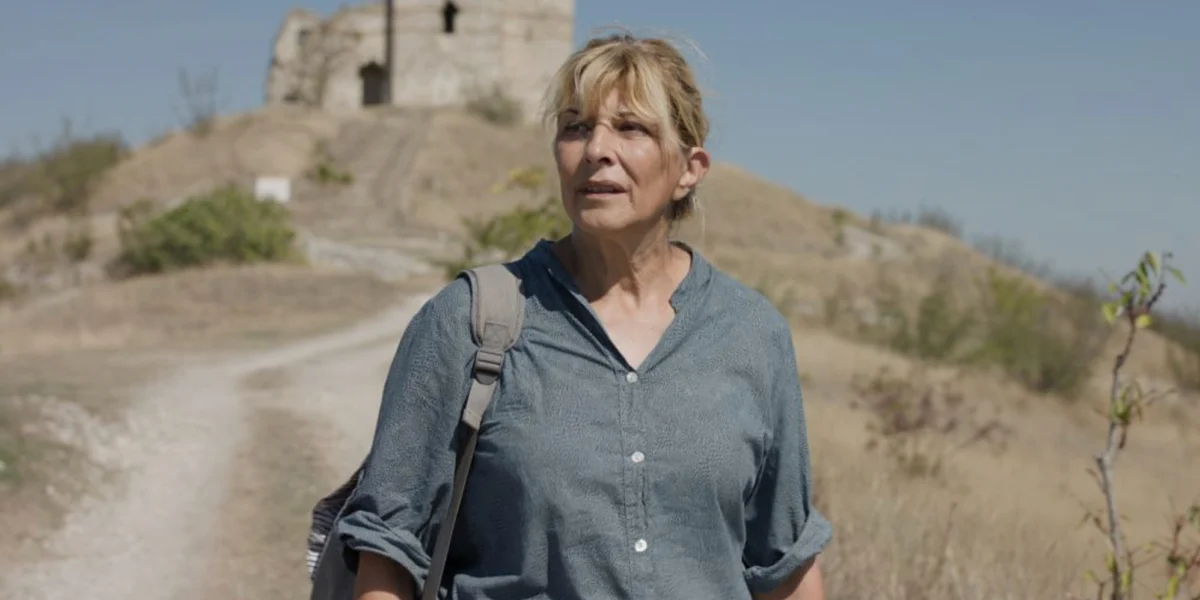
Fortuitously, Said encounters Veska, an archaeologist who is overseeing an excavation at nearby ruins. Veska, portrayed by Yana Radeva, represents a grounded presence, her profession suggesting an engagement with the past and a deep understanding of the region’s historical layers. Their reunion, however, is brief. Said soon disappears, leaving Veska in a precarious position. Faced with the sudden vacuum left by Said’s departure, and motivated by a sense of obligation or perhaps a deeper, unarticulated connection, Veska makes the significant decision to assume Said’s ill-defined, potentially illegal deal. This pivotal moment shifts the narrative’s focus from Said to Veska, initiating her own journey, which, despite the film’s titular suggestion of adventure, unfolds more as a protracted, introspective progression.
The transition in perspective from Said to Veska introduces a destabilizing element to the narrative, adding a layer of intrigue to the clandestine undertaking. This narrative pivot, while unexpected, momentarily heightens the audience’s engagement, offering a glimpse into the potential complexities of the underground dealings. However, the film’s consistently unhurried pace works to temper any burgeoning suspense, ensuring that the unfolding events remain within its characteristic deliberate rhythm.
Veska’s awareness of the inherent dangers is articulated when she remarks to Said, "You’re getting into deep water. Can you swim?" This question highlights the perilous nature of the transaction and the risks involved. Yet, Veska herself displays an almost unshakeable composure and a remarkable lack of overt fear. This resilience, as the film gradually reveals, is deeply rooted in her personal history and the tumultuous experiences of the 1990s. The transitional period in Eastern Europe following the fall of communism was a time of significant upheaval, economic instability, and societal restructuring across the region, including Bulgaria. Many individuals, particularly those in border areas, were forced to adapt to rapidly changing circumstances, often facing hardship and uncertainty. This era is frequently evoked throughout the film, particularly in conversations with other women, underscoring how this "memorably rocky era" forged a distinct resilience in those who navigated its challenges.
Veska’s past experiences, particularly during this difficult period, have evidently fortified her. This internal strength allows her to confront veiled threats from local figures, such as Iliya (played by Stoicho Kostadinov), a local crime boss with whom Veska shares a history. Kostadinov’s portrayal is noted for its blend of charm and intimidation, adding a layer of nuanced menace to the film’s antagonist. Veska’s history with Iliya suggests a complex web of past interactions and potential lingering tensions within the community, a common characteristic of close-knit or isolated regions.
Throughout the film, Veska navigates her environment with a quiet assurance, moving through various locations and social circles with the practiced ease of a seasoned investigator. Her resourcefulness and underlying decency are presented as her primary tools for progression. The sense of immediate danger is notably low for much of the film, which contributes to its overall languid atmosphere. Instead of high-stakes confrontations, Veska engages in a process of observation and immersion, moving through the plot without a discernible sense of urgency, even as she pursues a goal. This lack of urgency mirrors Said’s earlier non-reaction to his stolen car, suggesting a shared characteristic of stoicism or perhaps a profound sense of detachment from immediate material concerns.
The film’s narrative structure is episodic, marked by Veska’s encounters with various individuals and groups. These interactions often lead to prolonged conversations, many of which delve into the region’s recent, often painful, history. While these extended dialogues are intended to explore the lingering effects of the past and the region’s collective memory, they can, at times, feel repetitive. The extended nature of these conversations, coupled with long stretches where characters are depicted simply observing their surroundings, contributes to the film’s deliberate pacing, which some viewers might find challenging. The intention behind these scenes is to foster a deeper understanding of the socio-political landscape and the historical weight carried by its inhabitants, but the execution prioritizes atmosphere and reflection over narrative momentum.
Yana Radeva’s performance as Veska is central to the film’s understated power. This marked her debut acting role, and her performance is characterized by a grounded authenticity, avoiding ostentatious displays or polished mannerisms. Her nuanced portrayal allows the audience to connect with Veska’s internal world, even as the external narrative unfolds at a measured pace. While much of her screen time is dedicated to subtle observations and quiet movements, later in the film, Radeva is afforded opportunities to reveal a deeper ferocity, a testament to the strength that lies beneath Veska’s placid exterior as the stakes of her situation escalate. This emergence of hidden strength is a crucial element in the film’s exploration of character development and resilience.
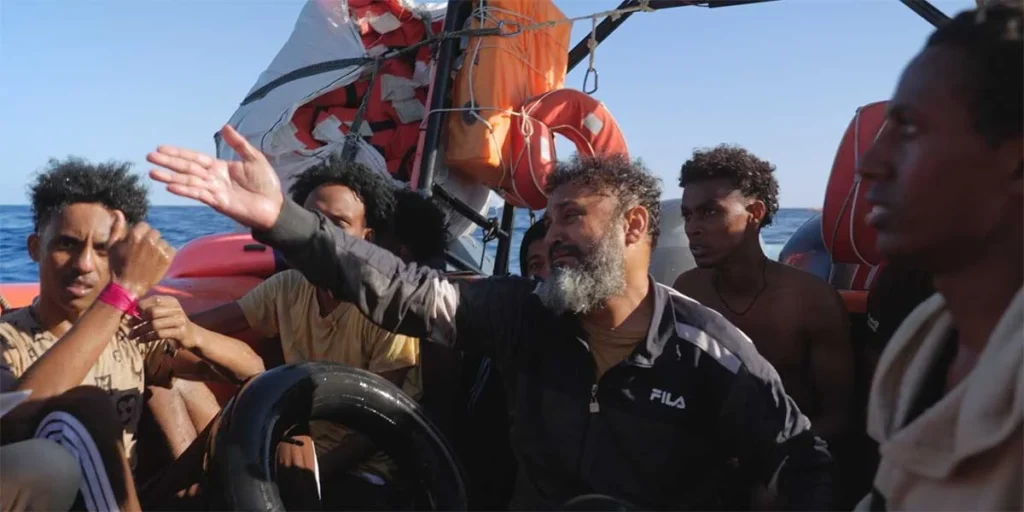
"The Dreamed Adventure" strategically incorporates elements that hint at broader, more dramatic narratives operating on the periphery. The film alludes to the smuggling of immigrants across the nearby Turkish border, a significant issue in the region, and makes a passing reference to Said being a "Pomak," an ethnic minority group historically subjected to forced assimilation into "Bulgarianism." These references introduce potent thematic threads concerning migration, identity, and cultural subjugation. However, Grisebach chooses to only briefly touch upon these potentially explosive subjects, leaving them largely unexplored. This deliberate choice to keep these elements in the background allows the focus to remain on Veska’s personal journey and her immediate experiences, rather than venturing into broader geopolitical commentary.
On a technical level, Grisebach’s filmmaking choices reinforce the film’s distinct style. The absence of a musical score is a notable decision, amplifying the natural soundscape of the border region and contributing to the film’s immersive quality. The camerawork, often described as "seemingly unmotivated," further enhances the observational and unhurried feel, eschewing conventional cinematic dynamism for a more vérité-like approach. These stylistic choices, combined with the film’s inherently low energy, contribute to an experience that prioritizes introspection and atmosphere, a characteristic that has led some to describe it as a film that might encourage a viewer to drift into their own thoughts or even, as one critic wryly put it, "a snooze."
The film’s exploration of the border region is not merely geographical but also thematic. The area has historically been a complex zone of cultural exchange, political tension, and economic disparity. For centuries, this region has been a frontier, shaped by empires, shifting borders, and the movement of peoples. The legacy of Ottoman rule, followed by the Cold War divisions and the subsequent transition to democracy, has left indelible marks on the social and economic fabric of these communities. The presence of diverse ethnic groups, including Bulgarians, Turks, and the Pomak community, adds another layer of complexity, often marked by historical periods of both coexistence and conflict. The film’s narrative, embedded within this specific context, implicitly touches upon the enduring legacies of these historical forces, particularly the challenges of maintaining cultural identity and navigating inter-ethnic relations in a region often defined by its liminality.
The economic realities of border regions also play a subtle yet significant role. The trade in goods, including potentially illicit ones like diesel fuel, reflects the economic opportunities and challenges inherent in such areas. The informal economy often flourishes where formal structures are less robust, creating a landscape where individuals like Said and "The Raven" can operate. The film’s understated depiction of these activities suggests an acknowledgment of these realities without sensationalizing them, allowing them to serve as background elements that inform the characters’ motivations and the film’s overall atmosphere.
The film’s runtime of 162 minutes underscores Grisebach’s commitment to allowing the narrative and its thematic concerns to unfold at their own pace. This extended duration allows for deep immersion into Veska’s world and the specificities of her environment. It is a deliberate choice that invites viewers to engage with the film on a different level, one that prioritizes contemplation and atmospheric immersion over conventional plot-driven engagement. In essence, "The Dreamed Adventure" is not a film that rushes its audience; rather, it beckons them to slow down, to observe, and to absorb the nuances of its carefully constructed world. The performances, particularly Radeva’s subtle yet powerful portrayal, are crucial in anchoring this deliberate pacing, ensuring that the character’s internal journey remains compelling even amidst the film’s external quietude. The film’s impact lies not in explosive revelations or rapid plot twists, but in its sustained evocation of a specific place, its history, and the quiet resilience of its inhabitants.