


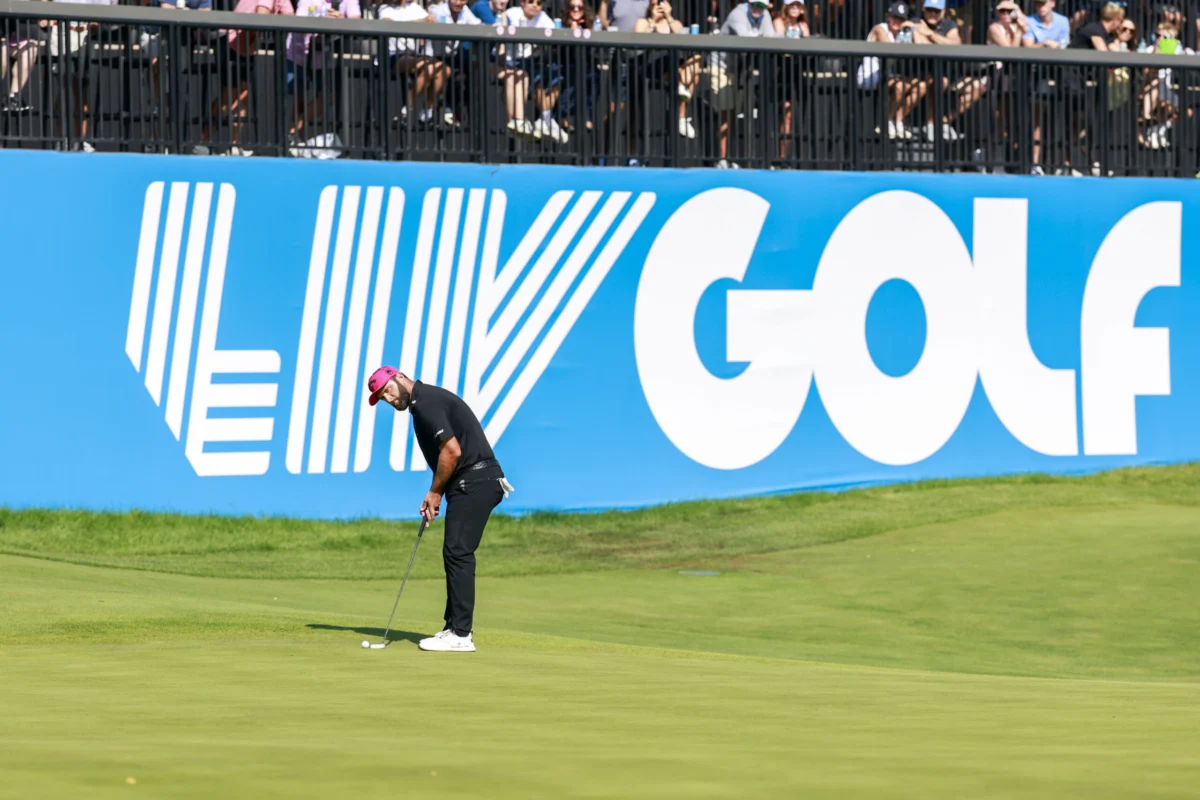
LIV Golf, the professional circuit that dramatically upended the global golf landscape, has officially filed for Chapter 11 bankruptcy protection in the United States Bankruptcy Court for the District of New Jersey. This move, confirmed Tuesday, marks a watershed moment for the venture, which has operated under the financial umbrella of Saudi Arabia’s Public Investment Fund (PIF) since its inception. The filing comes as the league faces an impending "funding cliff" and attempts to pivot toward a new, decentralized ownership model that centers its professional athletes as primary stakeholders.
The restructuring support agreement, brokered with BC Partner Advisors LP—the credit arm of the private equity firm BC Partners—serves as the cornerstone of the league’s survival strategy. Under the terms of this agreement, the organization aims to emerge from bankruptcy proceedings with a revamped balance sheet and a ownership structure that shifts control away from its sovereign wealth fund roots and into the hands of the players themselves.
A Chronology of Financial Volatility
The trajectory of LIV Golf has been defined by extreme capital expenditure and constant geopolitical scrutiny. Launched in 2022, the league was designed to challenge the hegemony of the PGA Tour by offering unprecedented prize purses and signing bonuses, which attracted high-profile talent such as Jon Rahm, Brooks Koepka, and Dustin Johnson.
The chronology of its financial instability became increasingly transparent throughout 2026:
- April 2026: CNBC reports that the PIF intends to terminate its financial backing of LIV Golf at the conclusion of the 2026 competitive season. This announcement effectively set a terminal deadline for the league’s existing business model.
- May 2026: LIV Golf launches an aggressive investor roadshow, seeking to raise $350 million from private stakeholders to bridge the gap between the PIF exit and a potential self-sustaining future.
- June 2026: CEO Scott O’Neil publicly reaffirms the organization’s reliance on PIF support, telling stakeholders that the league must trust in the sovereign wealth fund’s commitment through the end of the year, despite mounting concerns regarding a funding cliff.
- August 2026: The league formally files for Chapter 11 bankruptcy protection, seeking court oversight to manage its transition and debt obligations while securing $49.6 million in debtor-in-possession (DIP) financing from the PIF to maintain operations during the restructuring.
The Shift to Player-Centric Ownership
Perhaps the most significant element of the bankruptcy filing is the proposed transition of ownership. According to official disclosures, the league is currently in advanced negotiations to restructure itself as a majority player-owned entity. This model represents a fundamental departure from the traditional sports ownership paradigm, where private equity or corporate entities typically hold the reins.
Industry analysts suggest this move serves two purposes: it provides a compelling incentive for top-tier talent to remain committed to the tour despite the uncertainty, and it attempts to align the interests of the performers with the long-term commercial viability of the league. However, the success of such a model depends entirely on the league’s ability to generate independent revenue streams—namely broadcasting rights, sponsorships, and gate receipts—that do not rely on a direct cash infusion from the Saudi government.
Supporting Data and Financial Context
The fiscal realities facing LIV Golf are substantial. Since its inception, the league has burned through billions of dollars, with signing bonuses alone accounting for hundreds of millions of dollars in upfront costs. The transition from a subsidized entity to a self-funded league is a monumental challenge in the modern sports economy.
The $49.6 million in bankruptcy financing provided by the PIF is intended as a bridge. It ensures that tournaments, staff salaries, and vendor obligations are met while the bankruptcy court reviews the restructuring plan. Once the process concludes, BC Partners Credit and a consortium of minority stakeholders are expected to step in to provide the necessary liquidity for the next phase of the league’s operations.
The broader golf market remains volatile. The proposed merger between the PGA Tour and LIV Golf, first announced in June 2023, remains a subject of ongoing legal and regulatory scrutiny. The failure to finalize this merger has left LIV in a state of operational limbo, forcing the league to pursue the bankruptcy route as a means of survival rather than continuing to rely on a diminishing source of external funding.
Official Responses and Strategic Outlook
Scott O’Neil, CEO of LIV Golf, characterized the filing as a strategic necessity rather than a sign of defeat. In a statement released Tuesday, O’Neil emphasized that the bankruptcy court provides the necessary framework to insulate the league from immediate financial pressure while negotiating the terms of its future.
"This process gives us the structure and time to pursue a landmark transaction and begin the next chapter of LIV Golf—one built around the fans, an innovative, player-first ownership model, and a part of the global golf ecosystem," O’Neil stated. "We are excited about what lies ahead and yet, there is still much to accomplish in the months ahead."
Market observers, however, maintain a cautious outlook. The challenge of rebranding LIV Golf as a standalone, commercially viable product in a saturated market remains significant. The league must navigate not only its internal restructuring but also the lingering skepticism of sponsors and media partners who have been wary of the league’s origins and its turbulent history with the traditional establishment.
Broader Implications for Professional Golf
The bankruptcy of LIV Golf carries profound implications for the sport of golf globally. For years, the rivalry between the PGA Tour and LIV has fractured the professional game, drawing lines between players and creating a polarized fan base. If LIV successfully emerges from bankruptcy as a streamlined, player-owned entity, it may signal a new era of professional sports organization, one that could force the PGA Tour to reevaluate its own governance and player compensation structures.
Conversely, if the restructuring efforts fail to attract sufficient secondary investment, the bankruptcy could lead to a total liquidation of assets, effectively bringing an end to the experiment. Such an outcome would likely trigger a mass exodus of players back to the PGA Tour or other international circuits, fundamentally altering the landscape once again.
Furthermore, the involvement of BC Partners highlights the growing role of private equity in professional sports. As leagues look for ways to monetize their assets and secure long-term capital, the bankruptcy court has become an unlikely venue for financial engineering. The case of LIV Golf will likely be studied for years by sports executives and financial analysts alike as a cautionary tale of the risks inherent in rapid, subsidy-driven expansion.
As the case moves forward in the District of New Jersey, the focus will shift to the specific terms of the restructuring agreement and the willingness of minority stakeholders to commit capital to a league that has yet to prove its profitability. For the players—many of whom are currently in the middle of their season—the uncertainty is a significant distraction. The coming months will determine whether LIV Golf survives as a permanent fixture in the global sports ecosystem or becomes a historic footnote in the evolution of professional golf.