


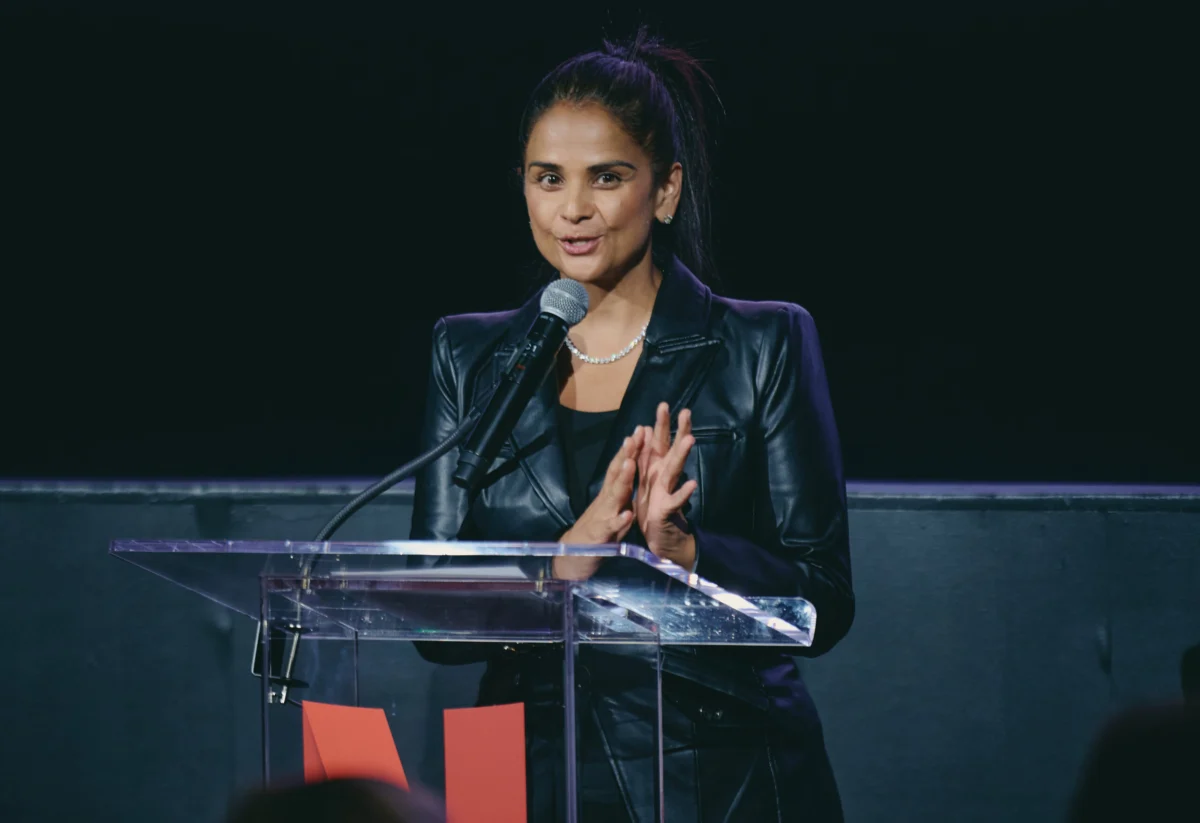
Netflix’s strategic entry into the live sports arena represents a fundamental shift in how the world’s largest subscription video-on-demand service approaches non-fiction programming. While competitors like Amazon Prime Video and various linear broadcasters have aggressively pursued massive, multi-game rights packages, Netflix Chief Content Officer Bela Bajaria has solidified a more surgical, high-impact approach. For Netflix, the value of a live sports broadcast is not measured by the total number of hours consumed, but by its ability to generate "appointment viewing" that permeates the global cultural zeitgeist.
This philosophy was on full display in early September 2026, when Netflix broadcast the first-ever regular-season NFL game to be played in Australia. The matchup between the San Francisco 49ers and the Los Angeles Rams, which resulted in a 27-7 victory for the 49ers, served as a case study for the platform’s "event-based" programming model. By securing exclusive global rights to a marquee game played in a unique international location, Netflix leveraged its massive, pre-existing global footprint to create a singular, unmissable experience.
The Evolution of the Netflix Sports Playbook
The company’s foray into live sports has been characterized by a deliberate departure from the traditional television business model. For decades, networks like NBC, CBS, and ESPN have built their infrastructure around the constant, rhythmic churn of weekly game packages. Netflix, conversely, treats sports as premium content assets that must function similarly to its blockbuster original films or hit series.
According to Bajaria, an "event" is defined by its capacity to spark conversation. This is why the company’s current sports portfolio includes a diverse array of spectacles: the Christmas Day NFL games, the World Baseball Classic in Japan, the high-stakes Home Run Derby, and even individual feats of human endurance, such as Alex Honnold’s climb of Taipei 101. By curating these specific, high-drama moments, Netflix avoids the massive financial commitments required for traditional full-season NFL packages while maintaining high engagement levels.
The contrast with traditional broadcast is stark. When asked whether a perennial powerhouse like NBC’s "Sunday Night Football"—the highest-rated primetime program for 15 consecutive years—would fit the Netflix mold, Bajaria underscored the platform’s budgetary priorities. She noted that if she were to allocate the funds necessary to acquire a top-tier weekly NFL package, it would require a significant portion of the company’s $20 billion annual content budget, potentially cannibalizing the resources used to produce the scripted television and film that drive the platform’s core subscriber growth.
A Chronology of Strategic Expansion
Netflix’s trajectory in live sports has accelerated significantly over the past 24 months. The following timeline outlines the key milestones in the platform’s development:
- Mid-2025: Following a record-setting year for traditional sports broadcasting, industry analysts began tracking Netflix’s interest in high-value, event-based sports properties.
- Early 2026: Netflix co-CEO Ted Sarandos signaled a cautious approach, emphasizing that the company would not overspend on sports rights that did not offer a clear, unique value proposition.
- July 2026: Reports confirmed that Netflix secured the U.S. and Canadian rights to the 2027 and 2031 FIFA Women’s World Cup for approximately $200 million, marking a major commitment to international soccer.
- September 2026: The historic NFL game in Melbourne, Australia, showcased the platform’s ability to handle high-concurrency, global live broadcasts.
- Late 2026: Netflix announced a five-game NFL slate for the 2026-27 season, including Thanksgiving Eve and Christmas Day fixtures, focusing on high-visibility calendar holidays.
The NFL and the Future of Rights Distribution
The broader media landscape is watching the NFL closely, as the league’s media rights landscape is set for potential disruption after the 2029-30 season. NFL Commissioner Roger Goodell has indicated that the league remains open to evolving its distribution model, potentially by restructuring its established game packages.
For Netflix, the prospect of an international-specific package is particularly enticing. As the NFL pushes for greater global reach, the league is hosting an increasing number of games abroad—nine in the 2026 season alone, with projections of 10 for the following year. Bajaria noted that given Netflix’s established global subscriber base, such a package would provide a natural, high-synergy opportunity to expand their sports footprint without deviating from their event-centric strategy.

Furthermore, Netflix’s interest in the FIFA Men’s World Cup for 2030 and 2034 remains a point of significant industry interest. Securing the rights to one of the world’s most-watched events would cement Netflix’s status as a major player in the global sports ecosystem, leveraging the same "cultural zeitgeist" momentum that the platform seeks to capture with its smaller, more specialized sports projects.
The Emerging Trend of "Ingestion" and Platform Partnerships
As legacy media companies and streaming platforms continue to compete for attention, a new phenomenon—content ingestion—is beginning to reshape the industry. In July 2026, YouTube made waves by announcing it would integrate content from NBCUniversal’s Peacock into its Premium subscription platform. This move signaled a potential shift toward a "super-aggregator" model, where viewers access multiple live sources through a single interface.
Netflix is currently testing the waters with a similar arrangement in France, where it has partnered with TF1 Group to embed live content. Bajaria characterized this as a strategic experiment, acknowledging that the business of media distribution is in a state of flux. The relationship between Netflix and NBCUniversal is particularly illustrative; the two firms already collaborate on film licensing and production for live events, such as the Australia NFL game. This existing rapport provides a foundation for more complex integration strategies down the line.
Competitive Positioning vs. YouTube
Despite the rising prominence of short-form video and the massive market share held by platforms like YouTube, Netflix remains steadfast in its commitment to long-form storytelling. According to Nielsen data from July 2026, YouTube accounted for 14.2% of all streaming viewership, while Netflix held 7.8%.
Some industry critics have suggested that Netflix must pivot toward short-form, user-generated content to capture the attention of younger demographics. Bajaria rejected this premise entirely. She argued that the narrative that younger generations only consume short-form media is a fundamental misunderstanding of audience behavior.
"When we make things for young people that they feel are really authentic and great, they will come," Bajaria said. She maintained that Netflix’s business model—centered on supporting filmmakers and investing in high-quality series and films—is the most sustainable path for the company. By treating live sports as an extension of this high-quality, event-based model rather than a pivot toward short-form content, Netflix is positioning itself to remain a dominant force in home entertainment.
Implications for the Future of Media
The strategy Netflix is employing has profound implications for the future of the media industry. By focusing on the "unmissable" nature of content, the platform is essentially attempting to recreate the social utility of television in an era of fragmentation.
The success of this strategy rests on three pillars:
- Selectivity: By avoiding high-volume, low-margin rights, Netflix preserves its capital for projects that offer maximum "buzzy" potential.
- Synergy: Leveraging its global audience allows Netflix to monetize niche sports in ways that local broadcasters cannot.
- Infrastructure: By partnering with traditional broadcasters like NBC for production, Netflix mitigates the technical risks associated with live broadcasting while maintaining control over the user experience.
As the industry moves toward 2030, the battle for the consumer’s time will likely intensify. While competitors scramble to aggregate the widest possible library of content, Netflix’s disciplined, event-focused approach serves as a reminder that in the attention economy, the most valuable commodity is not quantity, but cultural relevance. The platform’s ability to remain "appointment TV" in a world of on-demand convenience will be the ultimate test of its long-term strategy.